Quick Reads for Your Fast Paced Life

Lots of people start the summer with impressive reading plans. But as we know, life is busy, and finding time to read can often be a challenge. If you think it’s hard to find something of quality to read that’s under 200 pages, you’re not alone, but guess what? There are a lot of quick reads at CPL that are also good books. You could read any of these in a weekend, keep a few on hand to read when you get a few minutes of downtime. Summer Reading for the win!

  1. The Grownup by Gillian Flynn (63 pages). No time for Gone Girl? This Edgar Award winning short story by the same author is creepy goodness, compacted.
  2. Train Dreams by Denis Johnson (116 pages). Suffused with the history and landscapes of the American West, this book captures the disappearance of a distinctly American way of life.
  3. The Buddha in the Attic by Julie Otsuka (129 pages). Follows the stories of six Japanese mail-order brides whose new lives in early twentieth-century San Francisco.
  4. Heather, the Totality by Matthew Weiner (138 pages.) The story of a collision course between a dangerous young man and a privileged couple who compete for their daughter’s attention.
  5. We Have Always Lived in the Castle by Shirley Jackson (146 pages). A deliciously unsettling novel about a perverse, isolated, and possibly murderous family and the struggle that ensues when a cousin arrives at their estate. A classic.
  6. Sisters by Lily Tuck (156 pages). A new wife struggles with her unrelenting obsession with her husband’s first wife.
  7. Convenience Store Woman by Sayaka Murata (163 pages). A Japanese woman who has been working at a convenience store for eighteen years finds friendship with an alienated, cynical, and bitter young man who becomes her coworker.
  8. Our Souls at Night by Kent Haruf (179 pages). A bittersweet yet inspiring story of a man and a woman who, in advanced age, come together to wrestle with the events of their lives and their hopes for the imminent future.
  9. The Vegetarian by Han Kang (188 pages). A darkly allegorical tale of a woman who decides to stop eating meat, is denounced a subversive, and becomes estranged from those closest to her.
  10. Goodbye, Vitamin by Rachel Khong (196 pages). Newly dumped by her fiance, Ruth moves back in with her parents, whose decline is both comical and poignant.

Teen Book Reviews: Warcross & Call Down the Hawk

Teens: did you know that you can earn community service credit for writing a book review and submitting it to us? Today, we’ll hear from two teens who did just that. Find out more about how to earn community service hours from home at cheshirelibrary.org/teens/.

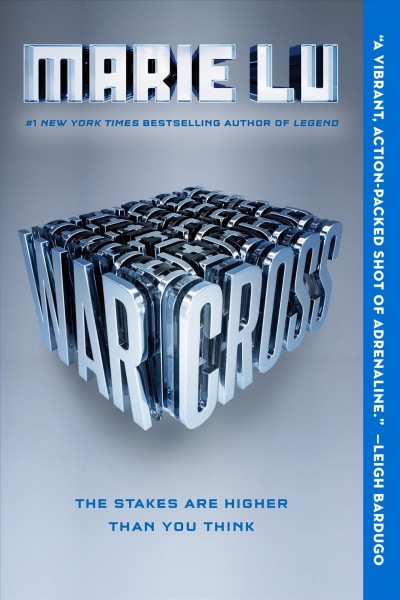
Warcross by Marie Lu. Reviewed by Ella K.

Warcross is a book perfect for teens and young adults who enjoy science fiction and future societies. The story is set in a world where a young fourteen-year-old boy, Hideo Tanaka invents a pair of highly sophisticated virtual reality glasses called the NeuroLink. The glasses work by tricking the brain into thinking what it is seeing is real. In order to market the product, Tanaka also creates a video game that can be played within the virtual reality construct. This game, called Warcross, involves two teams battling to steal the other’s gem, called an Artifact, while avoiding a series of obstacles and the other team.

Emika Chen, a struggling hacker makes money in the only way that she can with her criminal record, as a bounty hunter. After failing to get a $5000 bounty that would have saved her from eviction, Emika turns to that fake reality to escape her problems. In the process, she accidentally hacks her way into the Warcross international tournament and makes the news worldwide. After this display of talent in hacking into one of the world’s most secure systems, Emika is invited by Hideo Tanaka himself to visit his headquarters in Japan. He offers her a ten million dollar reward to discover the identity of a hacker, nicknamed Zero, who he believes is a threat to the entire NeuroLink system. Emika has to use her hacking abilities, wit, and deception skills in order to remain undercover and thwart Zero.

The creation of this science fiction world is a shift away from the dystopian works that most know Marie Lu for, specifically her work in the Legend series. In this story, Lu showcases her writing and world building abilities by creating a world that many video game players dream of. The book’s plot is enticing outside of the new society that the reader gets to experience. While the betrayals and spy work that the reader gets to experience is captivating, the addition of a romance seems cliche in the midst of the situation that Emika finds herself in. It is well written, but Emika has been a powerful and independent person for most of her life. Her troubled childhood ensured it. Her interest in a powerful man takes away from that aspect of her character in a way. Overall, this hardly takes away from the book, and some readers, particularly those interested in romance, will enjoy the addition.

4 stars.

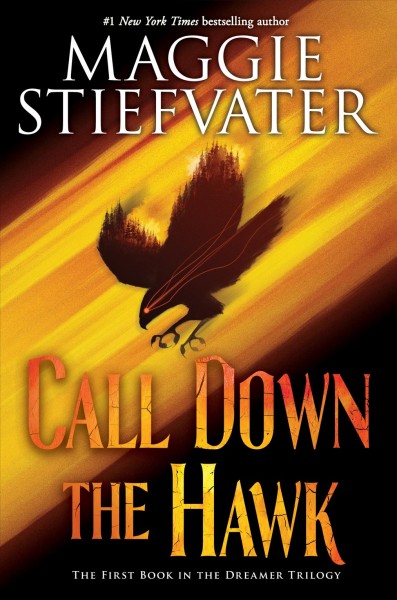
Call Down the Hawk by Maggie Stiefvater. Reviewed by Mia V.

Call Down The Hawk, the first book in the Dreamer Trilogy by Maggie Stiefvater, is a spin-off from the Raven Cycle series, following Ronan Lynch. The original Raven gang has all been split apart due to college, with Adam studying at Harvard, Gansey and Blue taking a gap year to travel and Ronan going off on his own. In the second book of the Raven Cycle, we find out that Ronan can pull objects and creatures (such as his pet raven, Chainsaw) out of his dreams. This power is incredibly rare and powerful, which makes Ronan vulnerable to being killed by those who don’t approve of his power or captured in order to make use of this power.

In Call Down The Hawk, however, Ronan’s power seems to be acting strange. Ronan feels as if he is dying if he is not near the ley lines, or the Barn at all times. Ronan also finds he is being hunted again, as threats loom from all different directions. Ronan meets other people with similar dreaming issues as himself, such as Jordan Henessey, who battles her own fears and nightmares which manifest themselves in real life due to her powers. As Ronan runs from those who want him dead, he also tries to help Hennessey deal with her own issues with her power. Call Down The Hawk takes a break from the search for Glendower and instead dives deeper into Ronan’s power and his own personal struggles both with himself and with his family.

I would definitely recommend this book. I would especially recommend it to someone who has read the Raven Cycle and has loved Ronan. Ronan was one of my favorite characters in the Raven Cycle, so I was very excited when Maggie Steifvater’s new Dreamer Trilogy was released and was set to focus more on Ronan. Although I was expecting the book to take a different direction, I still found the plot interesting and exciting.

4 stars.

Short Stuff

I’d like to read more, but I don’t have time to read a long, involved story.

There’s a solution for that. It’s called a short story.

 Short stories are those that can be read in under an hour – often not more than 5,000 words (beyond 7,500 is called a novella, and they are often published alone in little books, like Stephen King’s The Shawshank Redemption,  J.A. Jance’s The Old Blue Line, or Shirley Goodness and Mercy by Debbie Macomber) and they are often grouped together in anthology volumes, anthology meaning, literally, a collection of stories, the same way a CD album is a collection of individual songs.

Short stories are an art form of their own, still carrying the same structures of their longer novel cousins (plot, themes, metaphors, etc) but in a very short package. Some are complete stories (think of Ray Bradbury’s All Summer in a Day, or Shirley Jackson’s The Lottery) while others might just give you a slice of life, a few hours in the life of an individual with no clear beginning and no clear end, leaving you to wonder what might come next (some stories by Anton Chekhov, or Ernest Hemingway’s Hills Like White Elephants). They can be happy or sad, comic or dramatic, or full of irony (The Necklace, by Guy de Maupassant). Sometimes an anthology might consist of short stories on a single theme (love, loss, westerns, adventure), or they could be a mix of anything. And the beauty of an anthology is you can read one or two stories, or the whole thing, depending on your time and interest.

But short stories don’t carry the same weight as novels.

Of course they do! Many writers are known more for their short stories than for their novels – Alice Munro is considered one of the premier short story writers, having won the 2013 Nobel Prize for Literature in part for her short stories. Ray Bradbury is another prolific short-story writer, not quite horror, not quite science fiction, not quite fantasy, just imaginative. His philosophy was to write one short story a week, because out of 52 short stories, you were bound to have three or four that were really good. Short stories are easier to sell, if not to anthologies then to magazines – many a writer got their start in The New Yorker, Collier’s, or Atlantic, let alone Good Housekeeping and Readers’ Digest. Some of the most popular authors – Isaac Asimov, Dashiell Hammett, and Raymond Chandler – carved their name writing for pulp fiction magazines.

Short stories don’t always stay short, either. Many popular films started out as short stories – The Secret Life of Walter Mitty (published in The New Yorker) (Did you realize this one takes place in Waterbury, Connecticut?), All About Eve, 2001: A Space Odyssey, The Curious Case of Benjamin Button, 3:10 to Yuma, Shawshank Redemption, Minority Report, Brokeback Mountain, Rear Window, Total Recall, and many, many others.

A little story can go a long way. If you’re pressed for time, check out the stories in these collections, and more!

Best Short Stories of Jack London

Ray Bradbury Stories: 100 of His Most Celebrated Tales

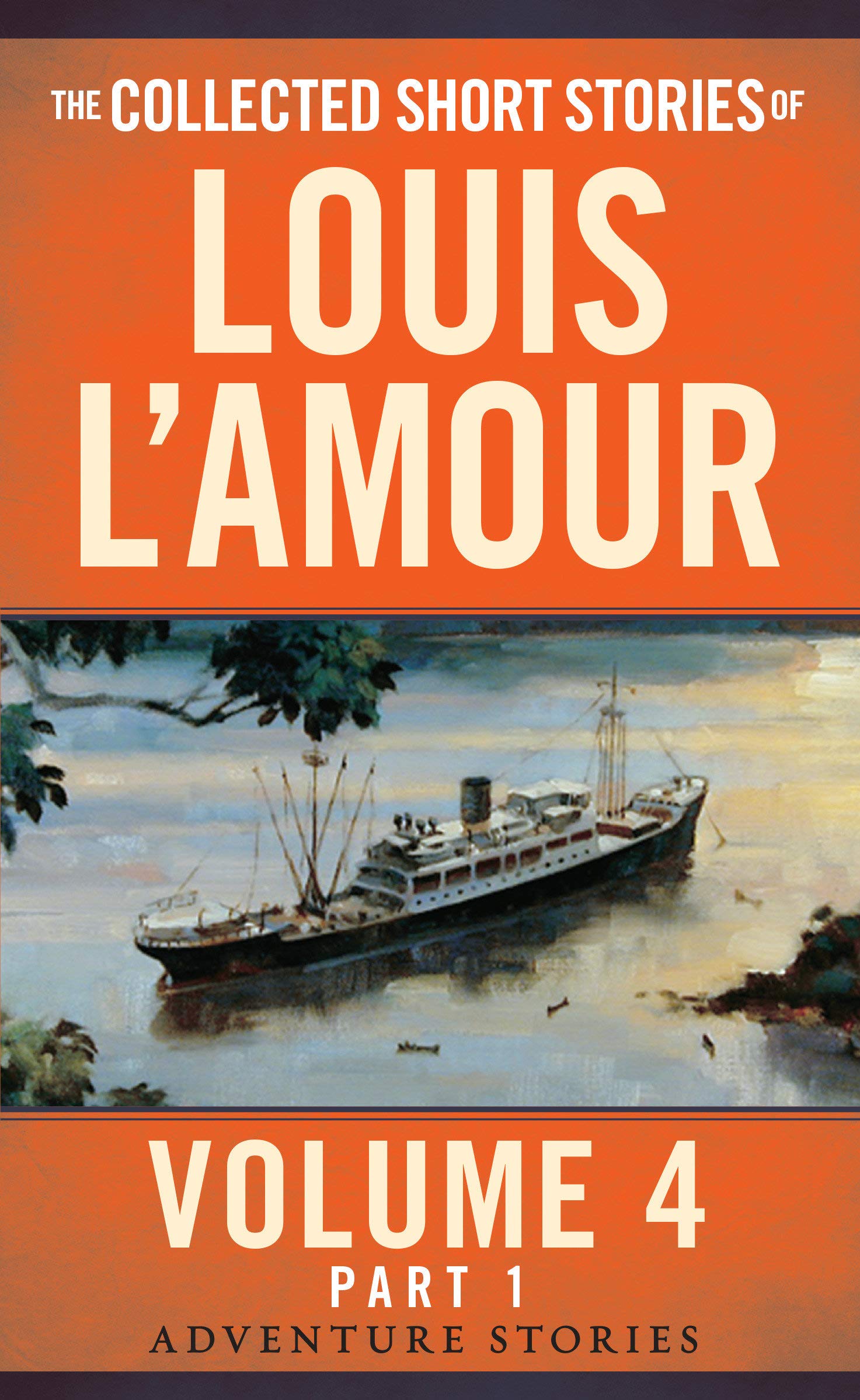
Collected Short Stories of Louis L’Amour, Vol. 4

Children of the Night: Best Short Stories by Black Writers

Dancing Through Life in a Pair of Broken Heels

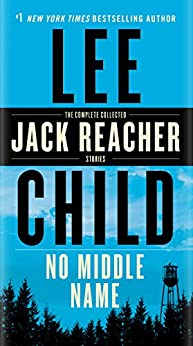
No Middle Name: The Complete Collected Jack Reacher Short Stories

Beautiful Days

Amish Front Porch Stories

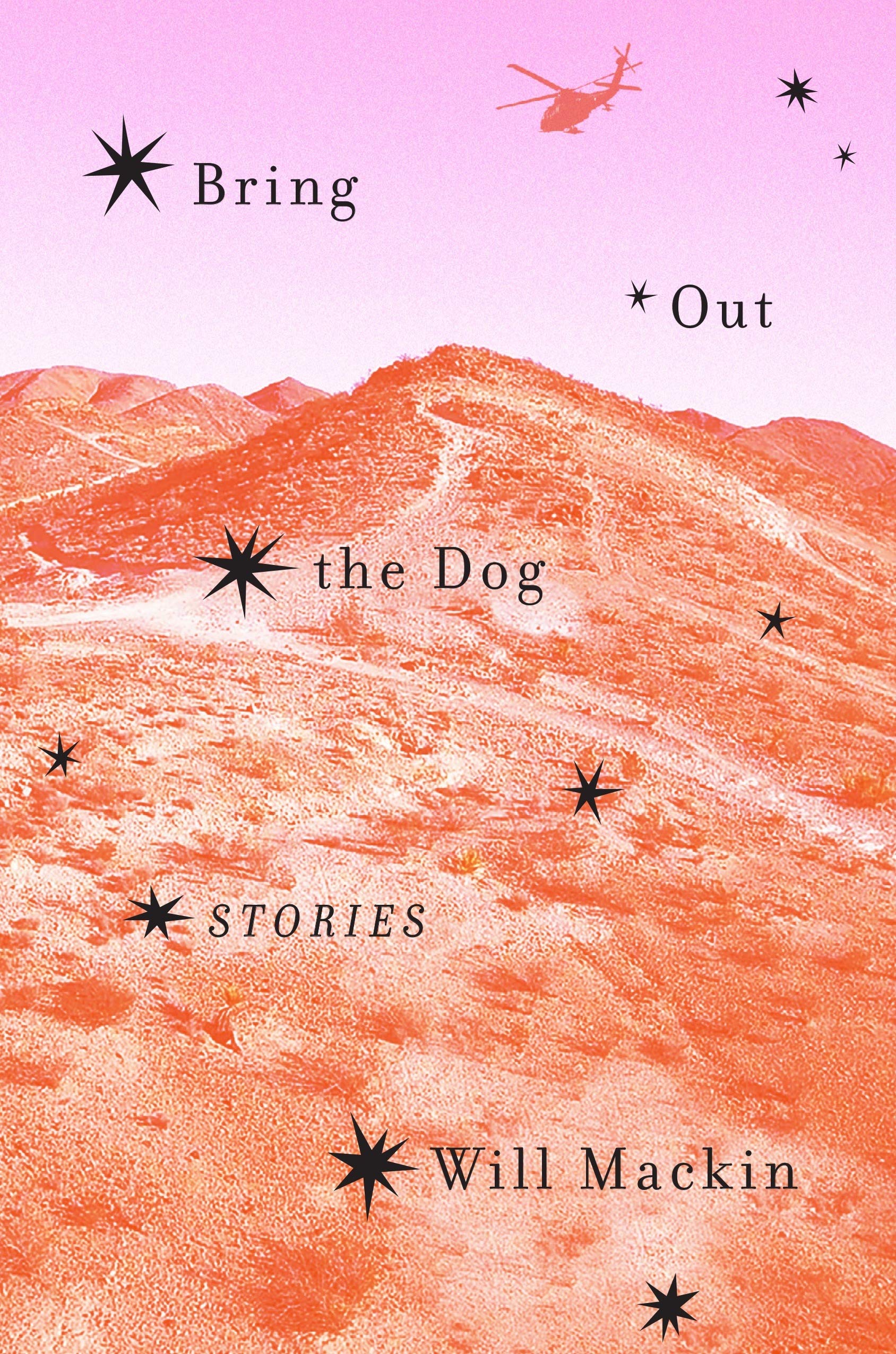
Bring Out the Dog: Stories

Complete Stories of Edgar Allen Poe

Cutting Edge: New Stories of Mystery and Crime by Women Writers

20th Century Ghosts

One Book, Two Readers – Teens Review “They Both Die at the End”

Teens: did you know that you can earn community service credit for writing a book review and submitting it to us? Today, we’ll hear from two teens who did just that, and get their different takes on the same book. Find out more about how to earn community service hours from home at cheshirelibrary.org/teens/.

They Both Die at the End by Adam Silvera. Reviewed by Jessica N.

They Both Die at the End, the title itself is intriguing and Adam Silvera does a fantastic job creating a book that lives up to its engaging title. He allows us as the readers to think and reflect about our own lives and what we would do if we found out that we would be dying in the next 24 hours.

The book starts off with the two main characters, Mateo and Rufus, getting Death-Cast calls that they will be dying that day. This news changes their lives for the little amount of time they have left. They have to figure out how they are going to spend their last day, also known as their “End Day”, and leave their final mark on Earth. The novel also brings up topics of friendship and relationship. The Death-Cast company provides an app for the people that are going to die and allow them to make a new friend, a Last Friend, for the day.

Through this app and each character in the novel, each person has a significant story and the book itself is told from multiple perspectives. So not only are us the readers tasked with reflecting on how they would spend their last day on Earth, if we knew it was our last day, but, we get to see how people of different ages, ethnicities, and popularities spend their last days. This book is an emotional one that is well worth the read, and even though the readers know what is going to happen at the end (the characters both die), the ending is still very gutting and astonishing. Also, the author, Adam Silvera is expanding the story and coming out with two new further novels. The next one (the second one) is projected to come out later this 2022 year and titled The First to Die at the End, so there is something more to look forward to after reading the beautiful story of They Both Die at the End!

4 stars.

They Both Die at the End by Adam Silvera. Reviewed by Claire J.

Overall, this book covered many intriguing events and evoked a variety of emotions. The “ spoiler” being in the title of the book is what drew me to pick it up, still having hope throughout the book that they would both live despite the title. It is a darker book, with themes of violence such as guns, so I do not recommend it for younger readers. The positive portrayal of LGBTQ relationships is evident throughout the book, which was pleasant to read.

Silvera takes the reader on a rollercoaster of emotions as we follow the two main characters rated to die on their last adventures on Earth. Both boys were also trying to run from their own issues aside from death. From sick fathers to running from the police, they were already struggling with the real world struggles. Although the book showed rather interesting plot points, some felt a bit boring, hence why the rating is not as high as expected. The pacing of the book was also rather slow in my opinion, although this could have been due to the fact that I do not typically read books of this genre. Another criticism of the book is that some characters were underdeveloped. Although the two main characters were well rounded with great writing skills used to make them, some other characters I felt were not as developed. Even though they had smaller roles in the overall story of the book, I thought that they could have their characters elaborated on a bit more.

I still greatly enjoyed the book, however, it was a wonderful book to read in my down time! I recommend this book to middle-schoolers and older. For science fiction and fantasy readers looking out to try realistic fiction novels, this book is a great transition.

3 stars.

Graphic Novel Adaptations: Old Stories with a New Twist

Graphic novel adaptations are not new, comic books based on classic literature could be found as early as the 1940’s and 50’s. Lately, however, there’s been a new crop of adaptations in graphic novel format that deserve some attention. While an adaptation of a book can never take the place of the original, it has value as a companion piece to the original, offering a fresh perspective on a well-established tale. This is particularly true of graphic novel adaptations, where illustrations and a change in pace can breathe new life into an older book. Even when a book isn’t all that old, a graphic novel interpretation allows us to see the story from a different angle.

We have a whole bunch of graphic novel adaptations on our shelves, for all ages. Here are some of our favorites.

FOR ADULTS:

The Handmaid’s Tale, original story by Margaret Atwood ; art & adaptation by Renée Nault.

Animal Farm, original story by George Orwell ; adapted and illustrated by Odyr.

The Great Gatsby, original story by F. Scott Fitzgerald ; illustrated by Aya Morton ; text adapted by Fred Fordham

Small Gods : a Discworld graphic novel, original story by Terry Pratchett ; adaptation by Ray Friesen

City of Glass, original story by Paul Auster ; adaptation by Paul Karasik and David Mazzucchelli

American Gods 1: Shadows, story and words by Neil Gaiman ; art by Scott Hampton 

A Game of Thrones, original story by George R.R. Martin ; adapted by Daniel Abraham ; art by Tommy Patterson

FOR TEENS (and adults, too!):

The Hobbit, original story by J.R.R. Tolkien ; adapted by Charles Dixon with Sean Deming : illustrated by David Wenzel

To Kill a Mockingbird, original story by Harper Lee ; adapted and illustrated by Fred Fordham

Jane (based on Jane Eyre by Charlotte Brontë), written by Aline Brosh McKenna ; illustrated by Ramón K. Pérez 

Poe : Stories and Poems, original content by Edgar Allan Poe ; adapted by Gareth Hinds

A Wrinkle in Time, original story by Madeleine L’Engle ; adapted and illustrated by Hope Larson

The Giver, original story by Lois Lowry ; adapted by P. Craig Russell ; illustrated by P. Craig Russell, Galen Showman, Scott Hampton

Speak, by Laurie Halse Anderson ; artwork by Emily Carroll

FOR MIDDLE GRADE READERS:

Meg, Jo, Beth, and Amy (based on Little Women by Louisa May Alcott) ; adapted by Rey Terciero ; pencils by Bre Indigo

Anne Frank’s Diary ; adapted by Ari Folman ; illustrations by David Polonsky

The Graveyard Book, original story by Neil Gaiman ; adapted by: P. Craig Russell ; illustrated by: Kevin Nowlan, P. Craig Russell, Tony Harris, Scott Hampton, Galen Showman, Jill Thompson, Stephen B. Scott

Anne of Green Gables, original story by L. M. Montgomery ; adapted by Mariah Marsden & Brenna Thummler

The Secret Garden on 81st Street (based on The Secret Garden by Frances Hodgson Burnett) ; adapted by Ivy Noelle Weir ; illustrated by Amber Padilla

The Witches, original story by Roald Dahl ; adapted and illustrated by Pénélope Bagieu

Oz : the manga, original story by L. Frank Baum ; adapted by David Hutchison