The X Factor

imagesIndiana Jones and the Temple of Doom created an uproar in the movie industry. While it didn’t meet the criteria for an R rating, the intensity of the violence and its unrelenting action and danger freaked out so many kids and parents and caused so many complaints that the PG-13 rating was born – probably the same people that brought their six year old grandchildren to see Deadpool and didn’t think twice. Before that, there were just four ratings by the Motion Picture Association of America: G (general audience), PG (parental guidance suggested), R (no one under 17 without guardian), and X (now NC-17, meaning No One Under 17 Admitted, no way, no how, this will scar you for life).
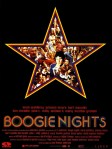
Of course, as a kid, you can’t help but wonder, what’s in an X movie? What could be more violent than people beating each other up? What could be grosser than people naked?  How many more swear words are there? And then the internet was born and we’ve never wondered since.

Surprisingly, though, some of our favorite movies DID have an X rating at the start. Film makers want to be cutting-edge and push envelopes, but an X/NC17 rating c51q55v7qvblan sink an otherwise profitable film because it cuts out the teen crowd that hangs out at theaters every week and also makes some adult film-goers leery. After repeated trips back to the editing room, most of the movies do achieve their golden R rating.

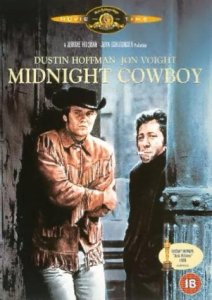
Some, however, never do. Three movies were nominated for Oscars despite their X rating: Midnight Cowboy, A Clockwork Orange, and Last Tango in Paris. Midnight Cowboy actually won the Best Picture Oscar for 1970. When rereleased in 1971, it carried only an R rating, even though not a single edit had been made. It had been given the X rating for “homosexual suggestions,” and that was no longer a criteria. Times were already changing.

Two things are usually to blame for an X rating: extreme violence/gore, or explicit nudity/sexual content. It’s hard to believe, but for all the outcry against The Exorcist (some vi51kp0kgvmdlewers were taken away by ambulance), it only garnered an R rating. (So, in 1969, homosexuality would get you a deadly X rating, but by 1973, demonic possession, gore, blasphemy, and violent sexual situations involving children would not. Go figure.) Sometimes the fix was something so banal as toning down the brightness of the blood (Taxi Driver), which makes you wonder who is actually doing the judging and rating of the films. Others, like Cliffhanger, needed adjustments to almost every single scene. Although Casino cranks in at more than 420 utterances of the Fornication word (that’s almost 2.5 for every minute of film49), it was the violence that created its problems.

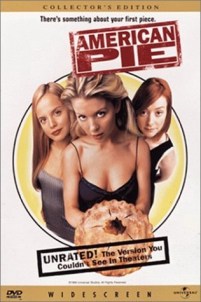
Here is a list of popular films you’ve probably heard of, and probably have seen, that were originally rated X before being edited yet again (American Pie needed four tries) to win the magic R. Some of these are very good films that just happen to be a little more graphic than others. Some of them you knew were headed for trouble just by the title (Freddy Got Fingered), but others, especially twenty years later when there sometimes doesn’t seem to be a limit on sex or violence in movies or on television (Boogie Nights drew trouble for a 10-second shot of a prosthetic penis, yet Life of Brian and Trainspotting didn’t for showing a real one), make you scratch your head at what the fuss was.


Reads for Students Worried About Fitting In

Everyone faces some level of anxiety about being liked, fitting in, or finding their own place in the world. For children and teens that have just started getting into the swing of school for the year, this is especially true.

fitinThese are some books about children struggling with fitting in and finding their own worth in the face of new situations and bullies. More often than not, our main characters discover that everyone has the same worries and that standing out is not such a bad thing. As a bonus for readers that are not facing some of these fears, reading books about others struggling can help them empathize with siblings or classmates. Here are some of my favorites, in no particular order.

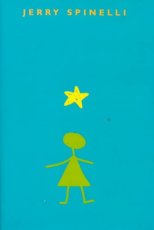
Stargirl by Jerry Spinellifitin2
Smile by Raina Telgemeier
A Mango-Shaped Space by Wendy Mass
Dork Diaries: Tales From a Not-So-Fabulous Life by Rachel Renée Russell
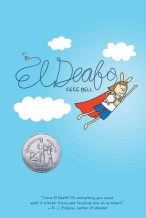
El Deafo by Cece Bell
Locker Hero by Rachel Renée Russell
The Detention Club by David Yoo
American Born Chinese by Gene Luen Yangfitin4
The Loser List by H. N. Kowitt
Out of My Mind by Sharon M. Draper
Inside Out & Back Again by Thanhha Lai
School Spirit by Elizabeth Cody Kimmel
How to Survive Middle School by Donna Gephart
Warp Speed by Lisa Yee
Wonder by R.J. Palacio
Callie’s Rules by Naomi Zuckerfitin6
The Books of Magic by Neil Gaiman
Absolutely Almost by Lisa Graff
The Odd Squad: Bully Bait by Michael Fry
Roller Girl by Victoria Jamieson
Counting by 7s by Holly Goldberg Sloan
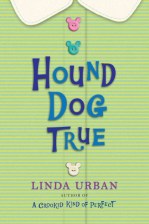
Hound Dog True by Linda Urban
The Strange Case of Origami Yoda by Tom Angleberger
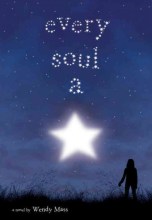
Every Soul a Star by Wendy Massfitin7
Harry Potter and the Sorcerer’s Stone by J.K. Rowling
The Popularity Papers by Amy Ignatow

There are so many wonderful books about fitting in and standing out that I only touched the surface here. Do you have a favorite from your childhood, or that you have recently discovered, that you would like to recommend? If so leave the title in the comments so the rest of us can check it out too.

Whale of a Tail

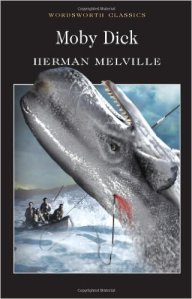
whole-body-of-a-sperm-whaleThe Book of Lists – a wonderful book of eclectic knowledge by David Wallechinsky – lists Moby Dick, by Herman Melville, as the Number One Most Boring Classic of all time.

I can’t disagree.

It’s not an easy read, combining flowery Miltonian prose, poems, sea shanties, Shakespearean asides, and some detailed exposition on whaling. The only way I made it through at all was by looking for the thematic and quote references used in Star Trek: The Wrath of Khan for a term paper (and there are a long list of them).

Don’t judge me. An easy English credit with an A is still an English credit.51K5TZOIvtL._SX318_BO1,204,203,200_

Moby Dick, the story of Captain Ahab’s obsessive pursuit to revenge the loss of his leg to a white whale, was based on a number of true stories – an actual white whale named Mocha-Dick, and the sinking of the whaling ship Essex in the Southern Pacific in 1820. The book was first published in 1851, but never gained ground. By the time of Melville’s death more than 30 years later, only 3,000 copies had been sold.

When cut up and rehashed to a sensible, modern vernacular, Moby Dick is a good, straight adventure novel at heart, the story of a man who feels wronged by a whale and will do anything, risk anything or anyone, to have his revenge, and a giant marine mammal who’s been around enough not to fear a wooden fish filled with pesky mariners. And there have been a number of decent movie adaptions to capture that fatal showdown.

imagesThe most recent, and most intriguing, is In the Heart of the Sea. This one gives the story a twist by going back further, to tell the tale of the Essex, as Melville is learning the facts and trying to write Moby Dick. Starring Chris Hemsworth, current action-hero, it’s a worthy film that covers all the points without getting bogged down in Melville. It’s the story behind the story, so to speak.

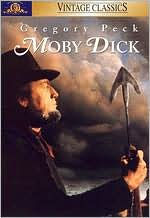
The “classic” Moby Dick tale comes from 1956, starring Gregory Peck, with a screenplay by Ray Bradbury. A masterpiece of its time, it’s dated for today’s audiences.0027616862945_p0_v1_s192x300

A longer but more modern version is 1998’s Miniseries, starring Patrick Stewart as Ahab (and Gregory Peck as Father Mapple, originally played by Orson Welles). Running four hours, it won Gregory Peck an Emmy award for Best Supporting Actor.

If you’ve hacked through Moby Dick, or enjoyed watching one of the films, there are similar books and films certain to keep your whaling interest. Leviathan, by Eric Jay Dolin, will give you a history of whaling in America. In the Heart of the Sea began as a book by detailed historian Nathaniel Philbrick.  War of the Whales by Joshua Horwitz uncovers the true story of an ultrasonic submarine detection program run by the US Navy that was causing whales to beach themselves. To learn more about several different types of whales, try The Grandest of Lives : Eye to Eye with Whales by Douglas H. Chadwick. For stories that mimic Moby Dick but aren’t about whales, try Ray Bradbury’s Leviathan 99, or, of course, Star Trek: The Wrath of Khan. If you want to go for the thematic stretch, you could include the musical Sweeney Todd here, too. “To seek revenge may lead to Hell/ but everyone does it and seldom as well.” Of course, the perfect summer trip is to recreated whaling village Mystic Seaport, where you can walk the decks of the whaler Charles W. Morgan and feel the wind of the sea in your hair.

Whales Charles_W_Morgan_2008aren’t fish. They’re aquatic mammals: they breathe air, give birth to live young (ones that weigh a full ton), and feed them off milk just like any other mammal. They are known to be intelligent, and the scenario of Moby Dick, of such a mammal remembering who may have harmed it and seeking out revenge of its own, is entirely in the realm of possibility.

All’s Faire in Fall

bristol-Renaissance-FaireFall is here again, and with it comes Fair season – Church Fairs, Grange Fairs, State Fairs, Harvest Festivals, and perhaps the most fun of all – The Renaissance Faire.
Renaissance Faires are  newer than you think. The first official “Renaissance Faire” traces back to Los Angeles in 1963, when a school teacher named Phyllis Patterson put one on for a weekend fundraiser for radio station KPFK, and more than 8,000 people showed up. A fall staple was born (because, let’s face it, NO ONE wants to be buried under that many yards of wool, satin, and leather in the middle of July).

Why the Renaissance? Why not Roman Bacchanalias with chariot races? Why not the 1363839072Dark Ages? Why not Pompeiian pageants? Celebrating the gruesome deaths of a city of people might be just a tad morbid. The Dark Ages were – well, Dark. We don’t know much about them, because following the fall of Rome civilization was illiterate, spread out, and little was going on beyond warfare and survival. And Rome? Rome certainly had a lot going for it, but not many speak Latin anymore, and togas, while simple and fun for frat parties, just don’t have the suave flair of swashbuckling boots, rapiers, and villains’ pointed beards and mustaches. The Renaissance has far more possibilities.

Robin-Hood-Men-In-Tights-dracula-and-robin-hood-in-tights-and-loving-it-22205932-320-240Rising up out of the depths of the Black Plague, the Renaissance means, literally, a rebirth. Disenchanted with a church that did not save them from the plague, men turned to science to keep them safe, resulting in great advancements in learning, science, art, music, and warfare. Stretching from 1300 to 1600, the Renaissance saw the rise of DaVinci, of Galileo, Columbus, Martin Luther, the printing press, Magellan, Henry VIII, William Harvey,  the advent of gunpowder, muskets, and the waning of armor and swords. Most Renaissance Faires throw in the likes of Robin Hood (earliest tales date to 1377), and sometimes evejeffpiraten King Arthur, who, although Malory’s history of Le Morte D’Artur is published in 1470, the story from which The Once and Future King is taken,  is believed to have lived, if he’s not merely legend, sometime between 600 and 800. Herein lie the tales of valor, not long before the Three Musketeers, the tales of actual pirates Barbossa and William Kyd, of Dutch corsairs and privateers, and let’s not forget Shakespeare (though Shakespeare’s plays, though written and performed around 1600, were often taken from history much older: King MacBeth actually lived in the 1000’s). That’s a lot of romanticized history to be able to play with, a lot of possibilities for actors to delve into. Hence Renaissance Faires are full of LARPers (live-action role players) and SCA (Society for Creative Anachronism, hard-core medieval recreationists) members running about. Your inner Dragon Master can run amok, and no one will ever know.

unspecifiedSo pull on your hose, strap on your broadsword, lace your corset, and get ready for an imaginative adventure back in time, and if you’re not careful, you just might learn something. Faires can offer a diversity of activities such as Birds of Prey shows, sword forging, glass blowing, theater, jousting, live chess tournaments, musicians, and more, as well as authentic foods, drink, clothing, crafts, and entertainments.  Check out the Connecticut Renaissance Faire, or if you like a drive, try the larger ones like King Richard’s Faire in Massachusetts, or my favorite, The New York Renaissance Faire in Tuxedo, New York. They’re worth the trip!  For a more in-depth experience, check these great books out as well:

Young Adult and Children’s Books by Young Writers

Everyone likes to see a little bit of themselves in the books they read, or the shows or movies they watch, whether it is relating to the author or to pieces of a character’s personality or circumstances. This is especially true for children and teens. One way to easily find some common ground is by reading material written by people of the same age range as the reader. As a bonus, young readers and teens might find inspiration or encouragement in knowing some of the books they love are written by people their age or younger.

bykidsjakeThe Just Jake series for middle grade readers is by Jake Marcionette. He started writing, prompted by his mother, when he was in elementary school. Now in middle school, Jake has three books published and more are sure to be on the way. The three books he currently has are Just Jake, Dog Eat Dog, and Camp Wild Survival. If you want to know more bykidsswordabout Jake and his books, visit his website.

Nancy Yi Fan started writing her first now published book when she was only eleven years old. Now there are three books in her Swordbird series; Swordbird, Sword Mountain, and Sword Quest which takes place 100 years before Swordbird).

bykidseragonChristopher Paolini might not be a teen anymore, but he started writing his first book when he was only 15. Eragon (the first book in his series) was published when he was 18. Eldest, Brisingr, and Inheritance soon followed. In 2007 Eragon was even made into a movie. For more information on Christopher and his series you can explore his website.

bykidsforestAmelia Atwater-Rhodes was writing her first young adult novel at the age of 13. In the Forests of the Night was the first of her books published, though she now has a pretty extensive list of published books. Her other books include;  Demon in my View,  Shattered Mirror,  Midnight Predator, Persistence of Memory, Token of Darkness, All Just Glass, Poison Tree, Hawksong,  Snakecharm, Falcondance, Wolfcry, Wyvernhail, and most recently Bloodkin. Fans and those interested in the author can stay up to date with her by reading her blog; The Den of Shadows.

bykidsschoolAlec Greven wrote his first book at 9! He writes self-help books for other kids. Rules for School is the most recent publication, but he also has written How to Talk to Girls, How to Talk to Dads, and How to Talk to Moms.


Still looking for more? Did you know that a now 52 year old author of over eighty bykidskormanbooks for children and teens wrote his first book at 12, and had it published when he was just 14? Check out Gordon Korman‘s tween age writing in This Can’t be Happening at Macdonald Hall! to see how his first book rates in comparison to his many more current and very popular titles.

Alexandra Adornetto wrote her first book at the age of 13. The start of her second series, Halo was published when she was the ripe old age of 17 in 2010 and has been translated into a variety of languages. She is still writing and publishing steadily. S.E. Hilton‘s well known book, The Outsiders, was published when she was only 18.  Age is no obstacle, it all comes down to talent, determination, and luck!