 Many people are aware that Oprah Winfrey is the richest black woman in America, with a net worth of more than 2.8 billion dollars (which still doesn’t put her in the top 10 richest American women). She is, however, in the top 10 richest self-made billionaire American woman – and the only African-American woman to make the cut. But long before Oprah, there was Sarah Breedlove.
Success Started Early
Breedlove was America’s first self-made female millionaire. Born in 1867, she was an orphan by the age of 7, a domestic by the age of ten, and married her way out at 14. After several marriages that ended in widowhood or divorce, in 1905 Breedlove began her own line of beauty and hair care products for African American women (under the name Madame C.J. Walker), many of whom were going bald because of the harsh lye soaps of the era. The need was great, her products worked, and she went on to become an American philanthropist.
To a degree. Marjorie Joyner was one of her employees. Marjorie became the first African American woman to be issued a patent – for the first machine to permanently wave hair (no Toni kits back then!). However, she never saw a dime for her creation – the royalties and rights went to Madame C.J. Walker! Next time you go to a salon or use a home perm kit, remember to think of Marjorie Joyner.
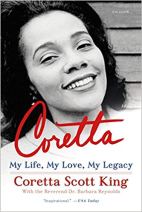
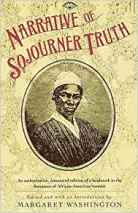
When we think of African-American women in history, we seem to get stuck on Harriet Tubman, Rosa Parks, Sojourner Truth, and Coretta Scott King, but they are just the very tip of the iceberg.
The Long Hard Climb for Recognition
It’s been a slow, hard climb for African-American women. While Hattie McDaniel won a Best-Supporting Actress Oscar for Gone With the Wind in 1939 (the first African American to do so), a Best Actress award didn’t come until Halle Berry won in 2001 for  Monster’s Ball. That’s a long wait. While the first white woman to win the Nobel Prize for Literature was in 1909, the first African-American woman wasn’t until the great Toni Morrison won in 1993. Although actress Nichelle Nichols of Star Trek fame showed African-American women as educated members of space crews in 1966 (and gave television’s first interracial kiss), Mae Jemison, the first African-American woman astronaut, didn’t make it to space until 1992. To this day, African American women are disproportionately victims of more violent crimes than any other group of women – by more than double. While more African-American women are enrolled in college than any other group (9.7%), they make up only 8% of the workforce, and earn only 64¢ on the dollar compared to 78¢ for white women; 21% of African-American women live in poverty, compared to just 9% of white women. Only now, decades later, are we beginning to appreciate the remarkable contributions of African-American women in the fields of science and math, such as Katherine Johnson, Dorothy Vaughan, and Mary Jackson, who helped launch NASA’s space program by doing the math in their heads.
Making Strides
While there is still so far to go in equalizing opportunities for minority women, the 21st  century has shown remarkable gains, with not only Condoleeza Rice becoming National Security Advisor and then Secretary General under President Bush, but with Michelle Obama becoming the First Lady of the United States. African-American women continue to enter politics, with record wins in 2018, including the first African-American women elected to Congress from Minnesota, Massachusetts, and Connecticut. So grab a novel, a biography, a great DVD on the lives and achievements of African American women, and catch up on some of the great history you never learned about in school.










 January began as one of the last months of year, not the first. The start of the Roman calendar (and the astrological one) was March. Back then there were only ten months to the year, totaling 304 days. Between was a miasmic 66 monthless days of “winter.” According to legend, Numa Pompilius, the second King of Rome (after Romulus himself), added January and February to codify that winter term (along with a catch-up month every other year of 22 days).
 to have lived somewhere between 386 CE and 620 CE (if you’re not up on your history, Common Era has replaced the Anno Domini). She takes her aging father’s place in the army, and serves for twelve years without her fellow soldiers realizing she’s a woman. Depending on the source, her name might be

 The steel-driving

 under control of the Habsburgs, a magistrate put his hat on a pole and demanded all citizens bow before it, or be imprisoned. While in town with his son, Tell refused to bow, was arrested and sentenced to death – though, since he was such a marksman, the Magistrate would let him go if he could shoot an apple off his son’s head. Tell did so, was arrested anyway, escaped, and the people rose up in rebellion, in an act considered the founding of the Swiss Confederacy, around 1307. Some historians believe Tell is merely a new twist on an old Danish fable.









 of 2000, he admitted to being a cross-dresser while drinking in a bar. When he left the bar, five men beat him so badly that he spent nine days in a coma, and forty days in the hospital relearning how to walk, talk, and behave. He had permanent memory loss of everything before the beating, and severe post-traumatic stress. His entire life before that night had been erased. Insurance cut off his therapy after a year, and he could not afford to continue on his own.
 Instead, Hogancamp turned to fantasy art. Outside his home in New York State, he created Marwencol, a fantastically detailed Belgian town caught up in World War II, and populated it with excruciatingly detailed 1/6-scale figures (that’s Barbie-sized, if you don’t know. Before his injury, he’d painted miniature aircraft as a hobby, but now his hands shook too much) – including both himself and his attackers. In Marwencol, a safe place populated by women, grisly acts do occur (it’s WWII), but women are the heroes. Through the scenes he set up, Hogancamp worked out a lot of his rage and anger by “killing” his attackers over and over, his own form of therapy to deal with the loss of 38 years of

 Hogancamp’s photos are a child’s dream: proof that your dolls/action figures are having a rich life when you aren’t looking, a voyeuristic peek into a place where anyone can be the hero, the bad guys always lose, and Mom is there to save the day. His photos are eerie in their realism, down to pen-tip bullet holes and nail-polish blood, a dream gone creepy where department store mannequins have replaced people but you can’t always tell at first glance. Take a look at some of his works





 If you’re like me, you’re cringing every time you turn on the news, ope
 ure, Clinton’s affair caused a major row, but flings among presidents are almost as common as presidents eating cheeseburgers. John F. Kennedy’s affairs were kept out of the press, but half the country was winking at his activities.
 America in 1893 was caught in a severe Panic – the pre-1930 name for a Depression. Cleveland felt that a president with a potentially life-threatening issu
 Men of power get to the top position by wielding their power, and the office of the president is no different (I suppose we could let Jimmy Carter off the hook. He’s an anomaly to the rule, and no doubt why he was a somewhat wishy-washy President and often considered not strong enough during the
  Icons come and icons go. Coca Cola survives, but Woolworth’s, the standard of the early 20th century, is now history. What’s popular today may not make the cut to the next generation – few kids today play with Cabbage Patch Dolls, despite the
  wrote first a book of children’s poems (
 between studios? This type of inter-studio film wars has happened numerous times, most recently with

 The Cheshire Library Blog