Revisiting Fiddler on the Roof

My family and I recently saw a live performance of Fiddler on the Roof. It was my daughter’s first time seeing the play and as we discussed it afterwards, I marveled at how my perspective of the show has changed over the years.

I first saw Fiddler in the 1970’s when I was a young girl. I always identified with Tevye’s daughters and their hopes and fears as they dealt with their roles in their traditional village and the changes overtaking their world.

Upon seeing the play again, as the mother of a twenty year old, I discovered that my perspective had shifted. When as a girl I could not understand Golde’s preoccupation with planning her daughters’ futures, as an adult I now saw her point of view. It’s not the “can my daughter make a good match” aspect of Golde that I mean; it’s the concern over the future of a beloved child.

When I was younger I watched as Hodel, the second daughter, boarded the train for Siberia so she could be with the man she loved, and I saw nothing but the romance and the adventure. Now as a parent watching that scene, I cringed at the thought of sending a child off to a far away place, perhaps never to see her again.

And the songs! My sisters and I would often sing the Matchmaker song. Now, as I watched the play, it was Do You Love Me that held my attention and Sunrise, Sunset that brought tears to my eyes.

My daughter was enthusiastic about the show and wanted to see the movie to compare it to the stage production. She borrowed the DVD from the library, along with the Broadway soundtrack.

We spent an enjoyable evening later that week watching the film version and had an animated discussion about Tevye’s daughters and the choices each made. I watched my daughter as she focused on Tevye’s daughters and thought of a stanza from Sunrise, Sunset. Swiftly fly the years…


If you would like to revisit Fiddler on the Roof or perhaps see it for the first time, you can find the movie, soundtrack, and the musical score all at the library.

Fiddler2           Fiddler3          Fiddler5

DVD vs. Blu-ray

Is there really a difference between Blu-ray and regular DVDs, or is it all just a marketing ploy to get you to buy something else, a planned obsolescence that will cost you money for nothing?

Yes and no. It depends on how much you love technology, and how clear you want your movies. Permit me a little technobabble:
burn-cds-dvds-hive   DVDs came out around 1997. They encode data in microscopic bands that are 650 nanometers wide (for comparison, a strand of DNA is 2.5 nanometers wide). Each disc holds about 8 gigabytes of information, which translates out to about three hours of movie time at a resolution of 480 pixels – pixels being a measurement of visual detail. DVDs are read with a red laser. They’ve been out long enough that they are very cheap to manufacture and purchase.

Blu-rays came out around 2006 after a battle with High Definition video format (remember the battle of Betamax?). Blu-rays are read with a blue gallium nitride laser (hence the blue ray). A Blu-ray reads from a band that is only 405 nanometers wide, which means it holds more data – up to 50 gigabytes, or, depending on how it is bluraycoded, between 5 and 23 hours of video on one disc! The resolution, or clarity of picture, on a Blu-ray is 1080 pixels, which means, if you’re watching a blu-ray on a large screen and have good cables connecting the box to your TV, the picture is so clear you start to see the grains of makeup powder on the actors’ faces, or the lines of the edges of the contacts in their eyes. The downside of Blu-rays (other than cost)? They take longer to boot up than a conventional DVD, because they have all that extra data. Blu-ray players can read regular DVDs, but those regular red DVD lasers cannot read blu-rays, so if you do choose to upgrade to a blu-ray player (which can now be bought for as little as $30), your old DVD collection isn’t in any danger.

So how do you like your movies? If you’re a casual watcher who just wants to say “Yes, I saw that,” then carry on with your regular player. DVDs are still very much in the market and aren’t going anywhere very fast. If you live and breathe your movies, nitpick them scene by scene for trivia or like a freeze-frame that’s clear enough to hang on a wall, you may prefer Blu-ray. My husband himself thought it was all hype until he watched Star Wars in Blu-ray, and suddenly saw things he never noticed before. The larger your TV screen, the larger the difference in clarity you will notice with Blu-ray, because of the increased resolution. The picture won’t look like you want to adjust the antenna.

Yes, Blu-ray will be the standard of the future, but it’s not going to happen overnight. Cheshire Library currently purchases as many new releases in both formats (standard DVD and Blu-ray) as the budget will allow. No matter which type of disc player you have, you should be able to find plenty to check out at CPL!

Search our video collection here.

It’s Star Wars Day – May the Fourth be With You!

May 4 is unofficially “Star Wars Day.” It’s the one day a year when Star Wars fans are encouraged to REALLY let their devotion to all things Star Wars out to play. Cheshire Library has got you covered, young Jedis – we have Star Wars items in just about every section of our collection. Here’s a very small taste of what you can find in our corner of the galaxy:

ADULT SCIENCE FICTION:

TEENS:

CHILDREN’S FICTION:

This slideshow requires JavaScript.

EASY READERS:

NON-FICTION:

DVD:


Get Your Irish On – 11 Movies Set in Ireland

I know many people look forward to celebrating St. Patrick’s Day in a crowded pub, but I prefer to mark the occasion a little more quietly. This year, a night at home with an Irish-themed movie (and maybe a glass of Bailey’s!) is the plan, but which film to choose? I’ve narrowed the choices down to these 11 movies set on the Emerald Isle:

1. The Quiet Man. An American prizefighter returns to Ireland in order to forget the past and live peacefully in his village birthplace. He falls in love with the hot-tempered sister of a belligerent neighbor, and trouble ensues over the payment of her dowry.

2. My Left Foot. Born with cerebral palsy, the 10th of 22 children of a Dublin bricklayer and his wife, Christy Brown was doomed to life as a vegetable by physicians in 1932. His strong-willed mother’s love and faith encouraged him to overcome this label. An astounding story of an artist who defeated a physical disability, degrading stereotypes, and poverty to fulfill his dreams.

3. The Commitments. Fueled by raw talent and driven by dreams of glory, a dozen dead-enders from Dublin’s gritty North side share a passion for soul music that takes their band on a wild roller-coaster ride from the streets to the stage.

4. Michael Collins. The life of an Irish man whose dreams inspired hope, whose words ignited passion, and whose courage forged a nation’s destiny. His powerful gifts sparked the fierce battles that led to the Irish Republic that exists today, but his unshaken confidence in those gifts led him to become a victim of the very men he inspired to fight by his side.

5. Leap Year. When Anna’s four-year anniversary to her boyfriend passes without an engagement ring, she decides to take matters into her own hands. Inspired by an Irish tradition that allows women to propose to men on Leap Day, Anna follows Jeremy to Dublin to propose to him. But after landing on the wrong side of Ireland, she must enlist the help of Declan, a handsome and carefree local man, to get her across the country.

6. In the Name of the Father. Fact-based film about Gerry Conlon, a young Irish punk who is caught in the wrong place at the wrong time and forced to confess to a terrorist bombing. He and his father, along with friends of Gerry, are found guilty and sentenced to life in prison. There, his father shows his true strength, and Gerry works to prove their innocence and clear his father’s name.

7. Albert Nobbs. A woman (Glenn Close) passes as a man in order to work and survive in 19th century Ireland. Some thirty years after donning men’s clothing, she finds herself trapped in a prison of her own making.

8. The Crying Game. A 1992 film about a man’s experiences as a member of the IRA, his brief but meaningful encounter with a British prisoner of the group, and his unexpected romantic relationship with the prisoner’s girlfriend, whom he promised he would protect.

9. The Wind That Shakes the Barley. Set during the Irish War of Independence (1919–1922) and the Irish Civil War (1922–1923), this drama tells the fictional story of two County Cork brothers who join the Irish Republican Army to fight for Irish independence from the United Kingdom. It takes its title from the Robert Dwyer Joyce song “The Wind That Shakes the Barley”, a song set during the 1798 rebellion in Ireland and featured early in the film.

10. The Secret of Roan Inish. In this 1994 family film, a young Irish girl longs for the good old days she often hears about, back when the family lived on Roan Inish and had plenty to eat, and back before her younger brother so mysteriously disappeared.

11. Once. A modern-day musical set on the streets of Dublin, this film tells the story of an Irish street musician and a Czech immigrant during an eventful week as they write, rehearse and record songs that reveal their unique love story.

Already Missing “Downton Abbey”? Ten Books to Read While You Wait for Season Five

Ring the footman for more tissues, Downton Abbey is over for another year. <sniff!>

Now that Season 4 has drawn to a close, what will you do to fill the void until the Crawleys return? Here are 10 books that may help ease the pain:

  1. American Heiress by Daisy Goodwin. The story of vivacious Cora Cash, whose early twentieth-century marriage to England’s most eligible duke is overshadowed by his secretive nature and the traps and betrayals of London’s social scene.
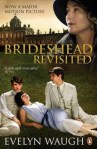
  2. Brideshead Revisited by Evelyn Waugh. The difficult loves of insular Englishman Charles Ryder, and his peculiarly intense relationship with the wealthy but dysfunctional family that inhabited Brideshead.
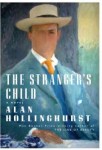
  3. The Stranger’s Child by Alan Hollinghurst. Embraced by the family of his Cambridge schoolmate, Cecil Valance writes an inspiring poem in an autograph album that becomes a staple of every English classroom after he is killed during World War I. (Man Booker Prize-winning author.)
  4. The Fox’s Walk by Annabel Davis-Goff. During World War I, a ten-year-old girl sent to live with her autocratic grandmother in the country gradually discovers that her family’s privilege is purchased at great cost to many other people.
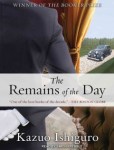
  5. The Remains of the Day by Kazuo Ishiguro. Stevens, an impeccable, quintessential English butler, embarks on a motoring trip through the West Country, on an odyssey that evokes disturbing memories of his thirty years of service to Lord Darlington and of the housekeeper, Miss Kenton.
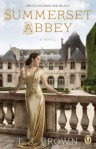
  6. Summerset Abbey by T.J. Brown. Daughters to the second son of the Earl of Summerset, Rowena and Victoria, after their father dies, move in with their uncle’s family in a much more traditional household where they learn about class division and, as war approaches, hope for a more modern future.
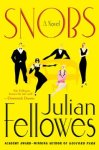
  7. Snobs by Julien Fellowes. Preparing to marry heir Charles Broughton, attractive accountant’s daughter Edith Lavery makes humorous and astute observations about contemporary England’s class system. (By the creator of Downton Abbey.)
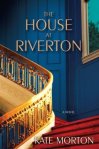
  8. The House at Riverton by Kate Morton. Living out her final days in a nursing home, ninety-eight-year-old Grace remembers the secrets surrounding the 1924 suicide of a young poet during a glittering society party hosted by Grace’s English aristocrat employers, a family that is shattered by war.
  9. A Room With a View by E.M. Forster. British social comedy examines a young heroine’s struggle against Victorian attitudes as she rejects the man her family has encouraged her to marry and chooses, instead, a socially unsuitable fellow she met on holiday in Italy.
  10. Cavendon Hall by Barbara Taylor Bradford. A tale spanning 16 years in Edwardian England finds the centuries-long relationship between the aristocratic Inghams and the Swann family who serves them tested by the outbreak of World War I.

Take heart, Anglophiles, we’ll get through this together!