As long as there have been books, there has been controversy about books. There have been six major book-burnings in the US (yes, America) over Harry Potter, because some people believe a little too much in witches, though, personally, if I believed that strongly in witches, I might just not want to anger them.
But logic doesn’t exist in book burnings, or bannings.
In 1948, in Binghamton, New York , people went door to door gathering and burning comic books, to save youth from their moral depravity. It sparked a nationwide comic-book burning spree, including here in Connecticut.
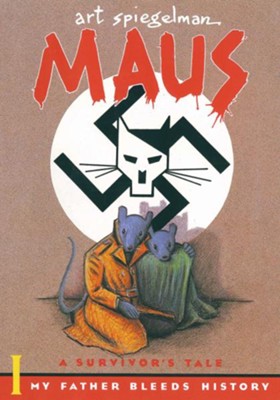
This year’s book fiasco (and this happened on January 10), has been the McMinn County (Tennessee) School Board voting 10-0 to remove the graphic novel Maus from their curriculum, over the use of 8 curse words (the most objectioned being – forgive me if you will, God damn), and the depiction of a naked mouse in a bathtub, with a breast showing. A mouse-breast.
Maus is not drawn as graphic realism; with its heavy line style, it could be cut and printed in woodblocks and look the same.
Maus, by Art Spiegelman, is the winner of a 1992 Pulitzer Prize, the only graphic novel ever to do so. In it (sometimes found in two volumes, sometimes as one combined), Spielman interviews his father, a Polish Jew, as to what it was like to survive the Concentration Camps – his father spent time in both Auschwitz and Dachau, and his mother in Auschwitz. Nazis are portrayed by cats, Jews by mice, Americans by dogs, French by frogs, British as fish, and Swedes as deer.
Spiegelman has a lot of anger toward his father that comes out now and then in the story. His father was, understandably, damaged by the war and not necessarily an empathetic father. Spiegelman’s mother couldn’t rid herself of the experience, and committed suicide when he was 20 (the unfortunate mouse in the bathtub). It’s a true story, an honest story, and Spiegelman’s struggle to make sense of it and his place in the narrative is the struggle we all face trying to understand the Nazi rise to power and the unimaginable atrocities they carried out – atrocities so horrific, the experiences threw open the study of epigenetics on the belief that the DNA of survivors’ children had been altered by the experiences of the parents, though some studies are undecided.
Tennessee withdrew the book from the curriculum just three days before Holocaust remembrance day, citing moral issues that included violence and showing dead mouse children, language, and that naked mouse breast in one panel.
Maus is now the top-selling book in America, thanks to Tennessee’s decision that thirteen year olds learning about the Holocaust in graphic form and seeing mild curse words in print might damage them. Good thing they never saw the photo novel my father, a historian, has of World War II, which is nothing but photographs of the war, including too many horrific images from the various camps, a book which has haunted me since childhood.
The internet, while not reliable for many things, had the best quote: If it was okay for 13 year old Anne Frank to live through it, why is it too disturbing for 13 year old Tennessee children to learn about it?
There are many reasons some books may be objectionable, outside of really bad prose, and yes, it is not unreasonable that some books should have an age limit – after all, movies and video games do. I would not recommend reading “The Exorcist” to a ten year old, even a literate one. The thing to remember is that not everyone can agree on what or why something should be limited, or worse, banned. Always, always, read the banned book, find out what information someone is trying to suppress, why, and then talk about it. If you still find the material objectionable, that’s fine, but you don’t have the right to control its availability to others.
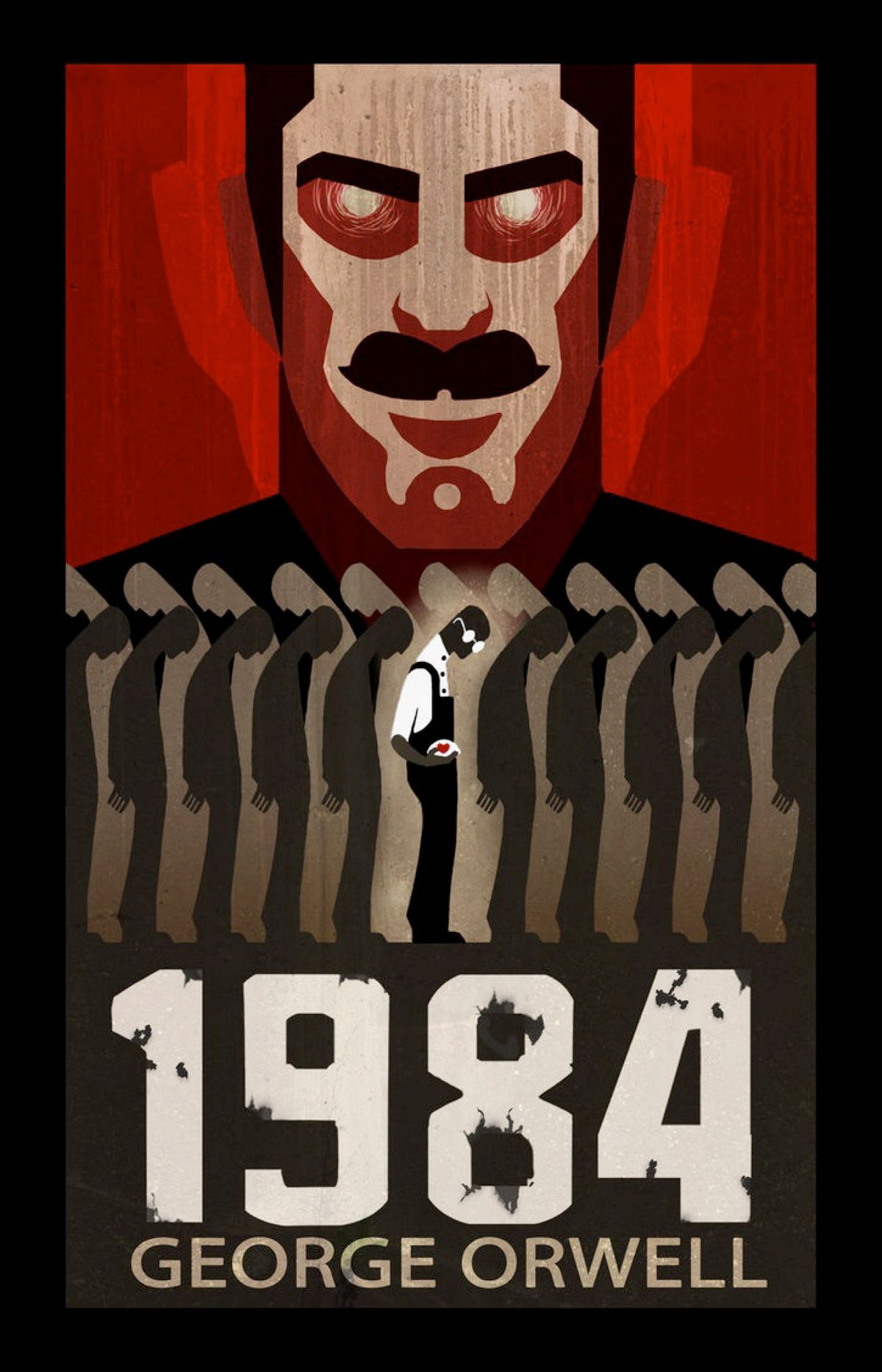
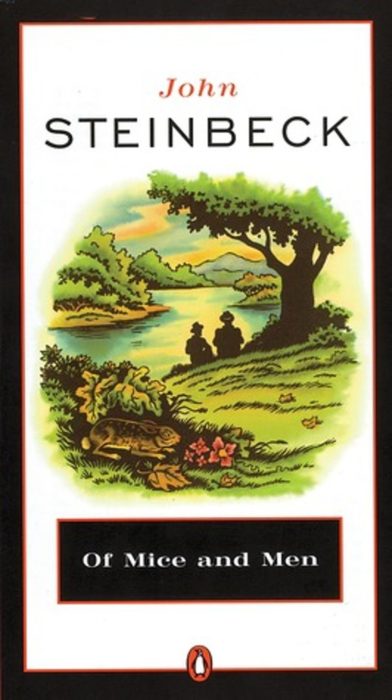
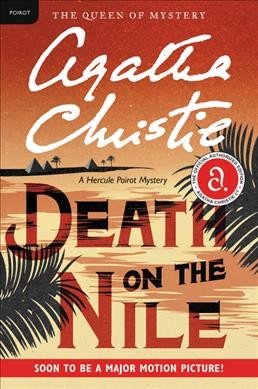
Decide for yourself. Maus is currently sold out on Amazon, but you can join the wait list for the library’s copy here. Meanwhile, check out these commonly banned books – most of which the rest of America considers classics (1984 by Orwell is the #1 banned book in America).
So many screen adaptations, so little time! There are so many books coming to big and small screens this year, it’s easy to lose track or what’s coming out when. We’ve put together a list of some adaptations that we’re really looking forward to this year – some have release dates, some do not, but the list will give us time to read as many books as we can before their adaptations come out! Which books are you most looking forward to seeing on the screen this year?
Raise your hand if you’re traveling for the holidays! Road trips to Pennsylvania are a regular part of the holidays for my family, and good listening material is the key to keeping everyone in the car happy and sane (or as sane as you can be, when traffic stops for no apparent reason). In situations like this, I often turn to fantasy, adventure, and sci-fi audiobooks. The plots move fast enough to keep my attention engaged for long periods, and they’re usually hefty books that will keep me occupied for a while. Plus, otherworldly settings mean that not only can I disconnect from my everyday worries, but it makes it easier for multiple generations to enjoy the same story. You don’t necessarily get that with realistic fiction, which is a popular genre here in the Children’s department, but it’s much more targeted to its specific age group. Four straight hours of fictionalized minutiae of elementary school? Most adults I know would rather spend that time listening to politics podcasts. But four straight hours of a kid who’s raised by ghosts in a graveyard? Tell us more. No, please – make it eight hours.
The following titles have various runtimes to get you to wherever your holiday destination might be – and we’ll even give you some ideas of cities whose travel time from Cheshire is about the same as the book’s runtime. As a bonus, almost all of them are available in our Playaway format, which is a self-contained audiobook player. All you provide is an auxiliary cord with a 3.5mm jack to connect to your car’s stereo, or a regular set of headphones for solo listening. For those of you lucky enough to have Bluetooth connectivity in your car, look for downloadable audiobooks that you can play through your phone.
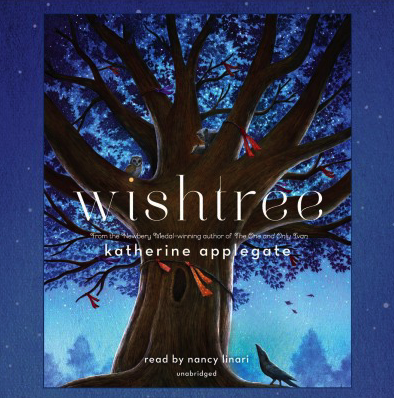
Red is an oak tree who is many rings old. Red is the neighborhood “wishtree”—people write their wishes on pieces of cloth and tie them to Red’s branches. Along with her crow friend Bongo and other animals who seek refuge in Red’s hollows, this “wishtree” watches over the neighborhood.You might say Red has seen it all. Until a new family moves in. Not everyone is welcoming, and Red’s experiences as a wishtree are more important than ever.
Listen while you drive to: Philadelphia, Pennsylvania
Roz the robot discovers that she is alone on a remote, wild island with no memory of where she is from or why she is there, and her only hope of survival is to try to learn about her new environment from the island’s hostile inhabitants.
Many years have passed since the Jedi Knight Luke Skywalker and the Rebel Alliance were victorious over the evil Empire, and the galaxy has been at peace. But now a darkness is rising. The brave men and women of the Resistance must stand against Kylo Ren and the villainous First Order.
The city of Ember was built as a last refuge for the human race. Two hundred years later, the great lamps that light the city are beginning to flicker. When Lina finds part of an ancient message, she’s sure it holds a secret that will save the city. She and her friend Doon must decipher the message before the lights go out on Ember forever!
In 2041 twelve-year-old Dashiell Gibson is a resident of Moon Base Alpha, and at the moment he is faced with a number of problems: coping with the nasty Sjoberg twins, finding out how the commander of the base has managed to disappear from a facility no bigger than a soccer field, and dealing with the alien Zan who communicates with him telepathically from afar–and who is hiding a secret which may threaten the whole Earth.
Listen while you drive to: Pittsburgh, Pennsyvlania
Joining her family in her community’s annual New Year’s Day magic-capturing ceremony, a 12-year-old girl who has always been lucky captures just one tiny jar of magic, revealing the true nature and beliefs of her loved ones.
Through the mysterious powers of a cherished book of stories, twins Alex and Conner leave their modern world behind and find themselves in a foreign land full of wonder and magic where they come face-to-face with the fairy tale characters they grew up reading about. But after a series of encounters with witches, wolves, goblins, and trolls alike, getting back home is going to be harder than they thought.
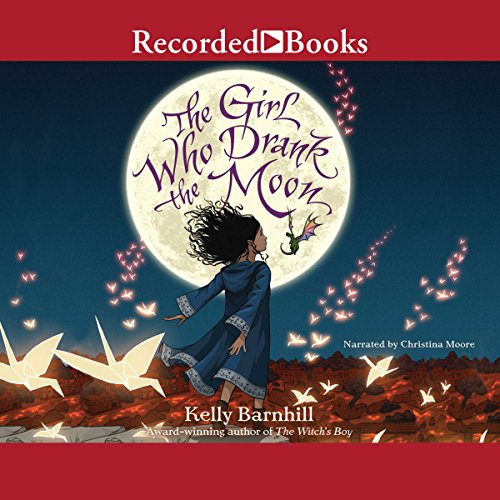
Every year, the people of the Protectorate leave a baby as an offering to the witch who lives in the forest. They hope this sacrifice will keep her from terrorizing their town. But the witch in the Forest, Xan, is kind. She shares her home with a wise Swamp Monster and a Perfectly Tiny Dragon. Xan rescues the children and delivers them to welcoming families on the other side of the forest, nourishing the babies with starlight on the journey. One year, Xan accidentally feeds a baby moonlight instead of starlight, filling the ordinary child with extraordinary magic. Xan decides she must raise this girl, whom she calls Luna, as her own. As Luna’s thirteenth birthday approaches, her magic begins to emerge—with dangerous consequences. Meanwhile, a young man from the Protectorate is determined to free his people by killing the witch.
Listen while you drive to: Kitty Hawk, North Carolina
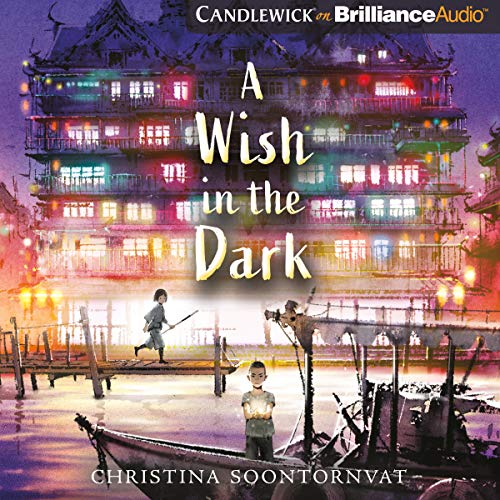
All light in Chattana is created by one man – the Governor, who appeared after the Great Fire to bring peace and order to the city. For Pong, who was born in Namwon Prison, the magical lights represent freedom, and he dreams of the day he will be able to walk among them. But when Pong escapes from prison, he realizes that the world outside is no fairer than the one behind bars. Nok, the prison warden’s perfect daughter, is bent on tracking Pong down and restoring her family’s good name. But as Nok hunts Pong through the alleys and canals of Chattana, she uncovers secrets that make her question the truths she has always held dear. Set in a Thai-inspired fantasy world, this twist on Victor Hugo’s Les Misérables explores the difference between law and justice.
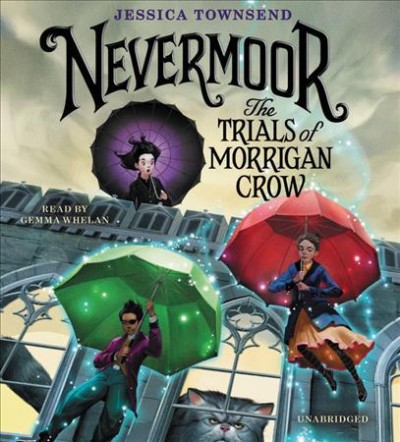
Born on the unluckiest day of the year and blamed for all misfortunes that occur in her community, Morrigan Crow is doomed to die at midnight on her 11th birthday. That is, until she is unexpectedly whisked away by a stranger on horseback who brings her to the magical city of Nevermoor, where she learns she has been chosen to compete for a position with an organization comprised of highly talented individuals. To stay in the safety of Nevermoor for good, Morrigan will need to find a way to pass the tests–or she’ll have to leave the city to confront her deadly fate.
Listen while you drive to: Charlotte, North Carolina
Haunted by the bus accident that ended his best friend’s life, seventh grader Tristan Strong dreads a visit to his grandparents’ Alabama farm before a bizarre living doll snatches away his friend’s notebook and draws him into a world of burning seas, iron monsters and Black folk heroes exhausted from battle. In order to get back home, Tristan and his new allies will need help from the god Anansi – but bartering with the trickster always comes at a price. Can Tristan save this world before he loses more of the things he loves?
At age 12, Sophie learns that the remarkable abilities that have always made her different from others actually identify her as an elf. After being brought to Eternalia to hone her skills, she discovers that she has secrets buried in her memory for which some would kill.
Teens: did you know that you can earn community service credit for writing a book review and submitting it to us? Today, we’ll hear from a teen who did just that. Find out more about how to earn community service hours from home at cheshirelibrary.org/teens/.
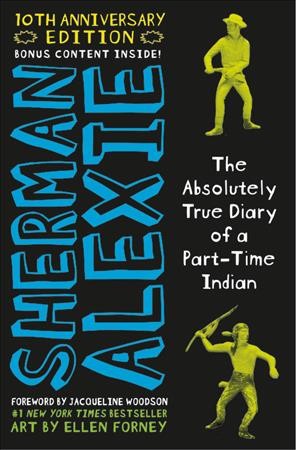
The Absolutely True Diary of a Part-Time Indian is a book about a Native-American boy named Arnold Spirit. Arnold was born with “water in his brain” and lives in the Spokane Indian Reservation in Washington. His reservation is full of drunk and violent people who often die to alcohol overdose. In fact, Arnold said he had been to 42 funerals by the age of 14. Everyone in the reservation has accepted the fact that they are poor and that there’s no hope for them, except Arnold. Arnold realizes that the only way to make it out of his sad life is to go to a predominantly white school in Rearden.
However, things aren’t easy when Arnold begins his high school life in Rearden. Rearden High School is 22 miles away from Arnold’s home, so his dad can only afford to drive Arnold only once or twice a week due to gasoline prices, so Arnold has to dangerously hitchhike with strangers to get to his school. Occasionally, Arnold can’t find anyone to drive him so he has to walk the full 22 miles! And once Arnold gets to school, he has no friends and everyone mocks him. After Arnold finally starts sticking up for himself and fights Roger, the school’s football star, Arnold feels more respected at Rearden and Arnold thinks that he can put his reservation days behind him. He quickly starts making friends with the school brainiac, Gordy, and even Roger becomes friendly with him. Arnold then tries out for the basketball team and actually becomes a starter for the varsity team and their best shooter.
Everything seems to be going well, until the reservation turns on him. People from the Spokane Indian Reservation label him as a traitor and his former best friend, Rowdy, starts hating him. Arnold’s grandmother and sister both die, and Arnold begins to feel depressed. Finally the reservation starts to accept Arnold after he had to endure those tragic losses. Humorous, heart-breaking and amazingly written, The Absolutely True Diary of a Part-Time Indian reflects the life of an teen attempting to break away from the hopeless life he was destined to live.
Holes one of my favorite books and I’d recommend it to readers who enjoy adventure books. Holes is about a kid named Stanley Yelnats who is wrongfully accused of stealing a pair of shoes from a famous baseball player named Clyde “Sweet Feet” Livingston. Clyde Livingston’s shoes were supposed to be donated to charity, but instead Stanley found the old shoes on his way home from school. Stanley was unaware that those shoes belonged to the baseball player so he instead brought them home for an experiment his father was conducting. Once the police found out that Stanley was in possession of the shoes, they arrested him and sent him to Camp Green Lake, which is actually a dessert where the prisoners dig holes from dawn to dusk.
Stanley starts making friends, and one of them is Hector “Zero” Zeroni. Stanley is finds it strange that Zero keeps trying to excessively help him dig holes, until he finds out that Zero was the one who stole Clyde Livingston’s shoes and dumped them on the sidewalk to avoid getting caught. Stanley forgives Zero and they both decide to escape the harsh conditions on Camp Green Lake. As Stanley and Zero make their journey, they make discoveries about Camp Green Lake and why the counselors force the prisoners to dig holes all day long in the desert heat.
I’d rate this novel a 5/5 because of all the details Louis Sachar incorporates into Holes. This book also makes me think about all the people around the world that are wrongfully accused and jailed for things they didn’t do, except that they were in the wrong place at the wrong time. If you enjoy Holes, I’d also recommend Small Steps, which is a book about what happens to some of the boys after they leave Camp Green Lake.
November 11 is Veteran’s Day, a day to celebrate our American veterans: their patriotism, their willingness to serve, and the sacrifices they’ve made. We’ve put together a list meaningful books to read with kids for Veteran’s Day and beyond!
What is Veterans Day?by Elaine Landau. An introduction to Veterans Day with an easy activity.
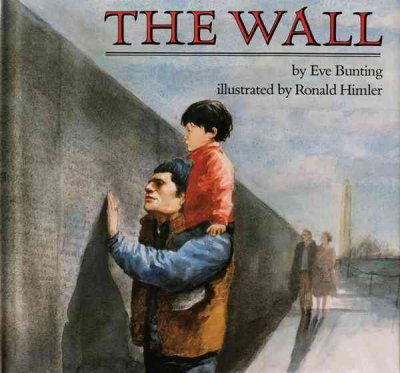
The Wall by Eve Bunting. A boy and his father come from far away to visit the Vietnam War Memorial in Washington and find the name of the boy’s grandfather, who was killed in the conflict.
Brave Like Meby Barbara Kerley. Describes the experiences of a boy and girl who struggle with worries and fears while their parents serve their country during wartime.
Nubs : The True Story of a Mutt, a Marine & a Miracle by Brian Dennis, Kirby Larson, Mary Nethery. The true story of a mutt named Nubs, who was befriended by a marine on duty at the Iraqi border and became so devoted to the marine that he followed him on foot to his next post more than seventy miles away.
Tucky Jo and Little Heart by Patricia Polacco. A young soldier in World War II meets a sweet young girl in the Philippines who helps him remember what he is fighting for as he helps her and others of her village, and many years later she returns his kindness.
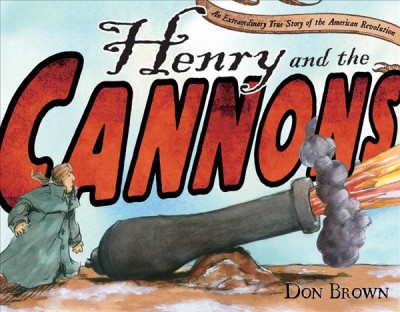
Henry and the Cannons by Don Brown. The true story of bookseller Henry Knox’s heroic contributions during the Revolutionary War, describing how he dragged fifty-nine cannons to Boston across 225 miles filled with danger and hardship.
Gabe : The Dog Who Sniffs Out Dangerby Thea Feldman. Gabe is a real dog who works with the United States military. He has an important job: he uses his sense of smell to find weapons before they hurt anyone. Read his story to find out more about Gabe and what makes him a hero dog.
Sky High : The True Story of Maggie Geeby Marissa Moss. Tells the story of Maggie Gee, from her childhood in the San Francisco Bay Area to becoming one of only two Chinese American Women Airforce Service Pilots (WASPs) to serve during World War II, with powerful illustrations depicting the pilot’s bravery.
Nugget on the Flight Deck by Patricia Newman. Aboard an aircraft carrier, a lieutenant introduces a new aviator to the “lingo” and layout before taking him on a practice dogfight.
America : A Patriotic Primer by Lynne Cheney. Filled with historical quotations and lively illustrations, this alphabet book doubles as an introduction to American history, paying tribute to American diversity, faith, and determination.
























 The Cheshire Library Blog