Every now and then a book comes along and all you can say is, “WOW!”
That’s my reaction to The Riddle of the Labyrinth: The Quest to Crack an Ancient Code, by Margalit Fox.
Ever hear of the minotaur, the half-man, half bull that lived in the center of the labyrinth, built by King Minos on ancient Crete? As 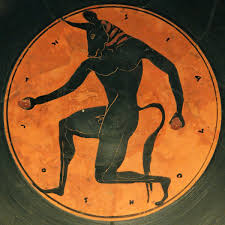 with most myths, this was one of those partly based on fact. There was a palace of Knossos, on ancient Crete (which lies in the middle of the Mediterranean), and there was a King Minos, although the name seems to have been a general title, not a specific person. His palace was huge, hundreds of rooms built, well, in a maze-like fashion. For reasons unknown, the palace burned down sometime between 1450 and 1400 BCE, or about 3400 years ago, and that marked the end of the great Minoan civilization. And this we know for fact because Arthur Evans dug up the palace in Heraklion, Crete, in 1900.
And he found a storeroom.
With more than 2000 written clay tablets, baked by fire, still sitting there.
But what script was it? It wasn’t Egyptian hieroglyphics. It wasn’t Phoenician. It was too old for Ancient Greek. Unraveling the mystery would shed  light on Bronze-age European civilization. Scholars worked on it for years, including one Antiquities professor of Brooklyn College, Alice Kober. Kober, with incredible intelligence, scientific method, and a knack for languages that was almost frightening, through extreme perseverance managed to work out the basics, realizing that the mysterious language – known as Linear B – was written left to right, had different endings for masculine and feminine, and was a syllabary – a language where each symbol (read ‘letter’, if you wish) stood for a syllable of a word, not an individual letter, much like Japanese kana does. Kober poured her life into decoding the script. She came very close, but died before she could finish it.
Enter Michael Ventris, a quirky little upstart twenty years younger, a lonely child prodigy who, like Kober, mastered  languages the way a sponge absorbs water (because everyone should know ancient Hittite and Etruscan). Ventris had been intrigued by Linear B since he was 14, if not outright obsessed. Untrained (he went to a trade school to become an architect, but never took a college class at all), he corresponded with some of the greatest scholars of ancient civilizations, read Kober’s papers, put ideas together, sometimes wrong but sometimes right, and just 18 months – 18 heartbreaking months after Kober’s death, broke through the code of Linear B – a writing system native to Crete, but bent to write an ancient Greek dialect 400 years older than Greek was thought to be. The discoveries of other, similar tablets also written in Linear B on the mainland of Greece and surrounding territories corroborated the information. A whole new era in historical understanding was broken open, and the timeline for civilization had to be pushed back to accommodate it.
This book reads like a fascinating detective novel. I could not put it down. It’s like watching the film of Titanic – you know the ending, but you’re gripping your seat the entire time anyway. Fox’s style is extremely easy to follow and to read – she drops little hints about what’s to come and then speeds ahead, and you can’t stop reading. If you love ancient history, if you love languages, cryptology, biographies of women in science or just a really good story, then read this book. It was truly a pleasure to read it.




























 The Cheshire Library Blog