Quell the Science Fair Fear with Books for Inspiration!

Is it Science Fair season or do you have a child in the house that simply loves science and conducting experiments? Regardless of whether the science project is assigned or done for fun, it can be scary supervising a science experiment! It can be even worse if you never enjoyed science. However, it is important to help encourage the curiosity and interest of our children in all sorts of subjects, so we all keep trying to quell the fear and support their work. Here are some great books to help pick a project and that offer instructions that make the whole process much more enjoyable, and less stressful, for everyone involved.

1. Last-Minute Science Fair Projects: When your Bunsen’s not Burning but the Clock’s Really Ticking by Sudipta Bardhan-Quallen

2. Weather Projects for Young Scientists: Experiments and Science Fair Ideas by Mary Kay Carson

3. The Kid’s Book of Simple Everyday Science by Kelly Doudna

4. First Place Science Fair Projects for Inquisitive Kids by Elizabeth Snoke Harris

5. Water: Green Science Projects for a Sustainable Planet by Robert Gardner

6. Electricity and Magnetism Science Fair Projects: Using Batteries, Balloons, and other Hair-Raising Stuff by Robert Gardner

7. MythBusters Science Fair Book by Samantha Margles

8. Championship Science Fair Projects: 100 Sure-to-Win Experiments by Sudipta Bardhan-Quallen

9. Goal!: Science Projects with Soccer by Madeline Goodstein

10. Super Sensational Science Fair Projects by Michael A. Dispezio; illustrated by Derek Toye

Did you think I could really stop there? There are plenty of great books to help students, parents, and everyone involved, pick a science experiment or project and get started. Here are some more of the best books on the topic in our collection.

This slideshow requires JavaScript.

You might want to check out: Star Wars: Science Fair Book by Samantha Margles, Energy: Green Science Projects About Solar, Wind, and Water Power by Robert Gardner, Science Fair Winners: Crime Scene Science: 20 Projects and Experiments about Clues, Crimes, Criminals, and other Mysterious Things by Karen Romano Young; illustrations by David Goldin, Janice VanCleave’s Machines: Mind-Boggling Experiments You Can Turn into Science Fair Projects, The Complete Handbook of Science Fair Projects by Julianne Blair Bochinski; illustrations by Judy J. Bochinski-DiBiase, Super Science Projects about Earth’s Soil and Water by Robert Gardner; illustrations by Tom Labaff, Bug Science: 20 Projects and Experiments about Arthropods: Insects, Arachnids, Algae, Worms, and Other Small Creatures by Karen Romano Young, Far-Out Science Projects about Earth’s Sun and Moon by Robert Gardner; illustrations by Tom LaBaff, Ace Your Ecology and Environmental Science Project: Great Science Fair Ideas by Robert Gardner, Phyllis J. Perry, and Salvatore Tocci, Yikes! Wow! Yuck!: Fun Experiments for your First Science Fair by Elizabeth Snoke Harris; illustrated by Nora Thompson, Sure-to-Win Science Fair Projects by Joe Rhatigan with Heather Smith, The Everything Kids’ Science Experiments Book: Boil Ice, Float Water, Measure Gravity- Challenge the World Around You! by Tom Robinson, and 100 First-Prize Make-it-Yourself Science Fair Projects by Glen Vecchione.
Doing Time Waiting for Season 2 of “Orange Is The New Black”? Try These Books About Life Behind Bars

Are you a fan of the critically-acclaimed Netflix series Orange Is The New Black? You may know that it is based on the memoir of the same name by Piper Kerman. Heartbreaking, hilarious, and at times enraging, Orange Is the New Black offers a rare look into the lives of women in prison, why it is we lock so many away, and what happens to them when they’re there.

If you like Orange Is The New Black, try some of these other “prison reads” while you’re waiting for Season 2 to be released in June.

Non-Fiction:

Couldn’t Keep it to Myself : Testimonies From Our Imprisoned Sisters by Wally Lamb.

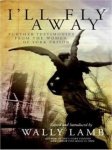
I’ll Fly Away : Further Testimonies From the Women of York Prison by Wally Lamb.

Captive in Iran : a Remarkable True Story of Hope and Triumph Amid the Horror of Tehran’s Brutal Evin Prison by Maryam Rostampour

Prison Baby : a Memoir by Deborah Stein

Women Behind Bars : The Crisis of Women in the U.S. Prison System by Silja J. A. Talvi

A Prison Diary by Jeffrey Archer

Fiction:

The Session by Judith Kelman

End of Story by Peter Abrahams

Love Her Madly by Mary-Ann Tirone Smith

One Flew Over The Cuckoo’s Nest by Ken Kesey

The Green Mile by Stephen King

Pen Pals by Olivia Goldsmith

Want to Try A Greener Spring Cleaning?

Are you suffering from Spring Fever? Looking to clean house and purge your closets and cupboards while opening windows and letting the fresh air in? While the cleaning part might not be my favorite, I certainly enjoy the fresh, clean feel of my house when everything is spic and span. I feel even better when I get all that cleaning done without the use of the chemicals found in many commercial cleaners, which can also cost a small fortune.

The smell of a clean house that smells more like citrus and lavender is much more fun than one that smells like chemicals. It also feels a little safer to me when I know I am not using toxic chemicals around my children or pets, or on the things we all touch on a regular basis. If you are getting set to start your spring cleaning marathon, and want to do so a bit greener this year, here are some books that can offer ideas, recipes, and solutions for a greener clean this Spring.

1. Green-Up Your Cleanup by Jill Potvin Schoff

2. Greening Your Cleaning by Deirdre Imus

3. Green Clean: the Environmentally Sound Guide to Cleaning your Home by Linda Mason Hunter & Mikki Halpin

4. Green Housekeeping: in Which the Nontoxic Avenger Shows you how to Improve your Health and that of your Family While you Save Time, Money, and Perhaps your Sanity by Ellen Sandbeck

5. A Guide to Green Housekeeping: Live a Calmer, Healthier Life, Recycle and Reuse, Clean Naturally, Garden Organically by Christina Strutt

6. Sara Snow’s Fresh Living: the Essential Room-by-Room Guide to a Greener, Healthier Family and Home by Sara Snow

7. The Naturally Clean Home: Over 100 Safe and Easy Herbal Formulas for Nontoxic Cleansers by Karyn Siegel-Maier

8. Easy Green Living: the Ultimate Guide to Simple, Eco-Friendly Choices for you and your Home by Renée Loux

9. The Lazy Environmentalist on a Budget: Save Money, Save Time, Save the Planet by Josh Dorfman

10. The Eco-Living Handbook: a Complete Green Guide for your Home and Life by Sarah Callard and Diane Millis

Middle and Upper Grade Books About Kids Doing Good

Are you trying to encourage volunteer work and the idea of paying it forward with your older children and teens? One of the best ways to do this is to offer role models that behave in the manner you would like them to. Sometimes reading a great book about someone else in a similar situation, or with similar interests, doing good things can inspire those that read the book to follow suit. Here are some novels that might inspire some good deeds.

The Adventures of Blue Avenger by Norma Howe (YA)
On his sixteenth birthday, still trying to cope with the unexpected death of his father, David Schumacher decides–or does he–to change his name to Blue Avenger, hoping to find a way to make a difference in his Oakland neighborhood and in the world.

Regarding the Fountain: a Tale, in Letters, of Liars and Leaks by Kate Klise, with illustrations by M. Sarah Klise (J)
When the principal asks a fifth-grader to write a letter regarding the purchase of a new drinking fountain for their school, he finds that all sorts of chaos results.

Coffeehouse Angel by Suzanne Selfors (YA)
Sixteen-year-old Katrina’s kindness to a man she finds sleeping behind her grandmother’s coffeehouse leads to a strange reward as Malcolm, who is actually a teenage guardian angel, insists on rewarding her by granting her deepest wish.

Loser by Jerry Spinelli (J)
Even though his classmates from first grade on have considered him strange and a loser, Daniel Zinkoff’s optimism and exuberance and the support of his loving family do not allow him to feel that way about himself.

Gracie’s Girl by Ellen Wittlinger (J)
As she starts middle school, Bess volunteers to work on the school musical in hopes of fitting in, but when she and a friend get to know an elderly homeless woman, Bess changes her mind about what is really important.

Again, this list barely scratches the surface of great books about older children and teens doing good things and just being great people. Here are a few more from our collection; Stargirl by Jerry Spinelli (YA), Why Did the Underwear Cross the Road? by Gordon Korman (J), Three Good Deeds by Vande Velde, Vivian (J), and Daddy’s Little Angel by Shani Petroff (YA).

Please mention any titles that we missed in the comment section so that others can enjoy them as well!


Jenn Reads: A Tale of Two Cities

In general, I have a rule when it comes to selecting items for our Cheshire Cats Classics Club to read: it has to be something I have never read before.

There are a couple of reasons for this. First, I like to read something fresh and new along with my clubbers. If I selected something that I’ve read in the past, I likely would not take the time to reread it. Second, the classics I have read are likely those my clubbers have already read, and one of my goals is to introduce

A Tale of Two Cities by Charles Dickens

them to titles and authors they may have never read before. It’s a formula that has worked for 3 1/2 years.

For our March pick, I broke that rule.

A Tale of Two Cities by Charles Dickens is a book I was *supposed* to have read as a senior in high school. Let’s rewind 10 years: It’s April, senior year. I’m in my AP English class and we’ve already read at least 10 books this year. The end of this high school experience is near, and simply say to Charles Dickens: “Nah.” Totally not in my nature as a student to do this, but alas, I had had enough (sorry Mr. M.). So I Sparknoted it.

When I put together the set for the first quarter in 2014 for the Classics Club, I looked back at Tale and thought I should give it another shot. At least this time, I could truly say that I read it and if I didn’t like it, well, then I didn’t like it.

A Tale of Two Cities, written in 1859, was serialized from April to November of that year. Dickens was a master at serialization and was one of the few authors of his time to make money off his books in his lifetime. In general, the story deals with the French Revolution through the eyes of both British and French citizens. Just about everyone, even though who have never read the book before, can quote you the opening line, “It was the worst of times, it was the best of times…” Dickens’ friend and biographer, John Forster, wrote that Tale had the least humor and least remarkable characters of all his novels. Well, at least he was honest.

Writing about the French Revolution during Victorian England was a topic writers used often, and readers were likely sick of it by the time Dickens wrote Tale. Dickens specifically chose the French Revolution for the background of his story because  it fit with the overall message he was trying to convey about social justice in England. His initial inspiration came from (or was stolen from, however you see it) his acting experience in friend and fellow author Wilkie Collin’s play The Frozen Deep, which is about two men, one of whom sacrifices his life so the other can be with the woman they both love. Sound familiar?

There are many parallels to Dickens’ own personal life throughout Tale, including the inspiration for Lucie Manet/Darnay. At the time of writing Tale Dickens had begun an affair with actress Nelly Tiernan, who has a strong resemblance to Lucie. As well, it has been hinted that Charles Darnay and Sidney Carton, who are almost the physically the same person, are Dickens himself.

So what did I think about A Tale of Two Cities? I’m glad I finally slogged through it. In typically Victorian fashion, there is too much time spent on the minutiae, with loooonnnnggg descriptions. In the first half there is little movement or action, and dare I say, no character development. When Lucie and Charles get married, the storyline starts to pick up. However, at that point, we’re almost halfway through the novel.

There was a lot I liked about the book: the end (no spoilers here), the villains (loved to hate them), and the setting. This is a book that takes lots of time to get where it’s going, so it’s something that a reader needs to stay with. Dickens writes with purpose, meaning he is one of those authors who inserts definite themes- he wants you to pick them out.

If you get a chance, check out the new movie which highlights this time in Dickens’ life and his affair with Tiernan called The Invisible Woman.

Rating: 3 stars out of 5 (it’s a hearty 3)

See you in the stacks,
Jenn