Son Risen – Books about Children With Autism

Barry Neil Kaufman’s son Raun was born in 1973, only to be diagnosed with severe autism by the age of one and a half. Refusing to believe the prognosis, the Kaufmans spent hours observing their son, and created their own special program for him long before anyone beyond Lovaas and Bettleheim were making any attempt to teach autistics. Three years later, their son showed no symptoms of autism, not even Aspergers. They named their program the Son-Rise Program, now taught at their foundation, the Autism Treatment Center of America in Sheffield, Mass. You can read their incredible story in Kaufman’s book Son-Rise, or the newer version, Son-Rise: The Miracle Continues, which includes the development of their foundation and follows Raun when he’s older. I warn you, however, the newer version gets a little heavy in the New-Agey/Hippie feel.

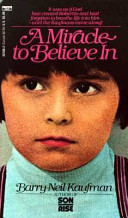
To prove that you didn’t need to start with an infant to get results, Kaufman also wrote up his work with a five-year old boy named Robertito, in the book A Miracle to Believe In. Again, Kaufman’s methods produced a child who came back from the depths of Autism to be a happy, intelligent, socially-adjusted verbal child.51ip9t-N0wL._SX331_BO1,204,203,200_
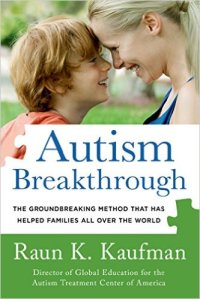
Now Raun Kaufman himself, the director of Global Outreach for the ATCA, has written Autism Breakthrough, a book that details the process the Son-Rise program uses, so you can try it yourself. The basis for the program goes against modern practices – and Kaufman’s explanations make very good sense. In short, autism is a disorder of social-relational behavior; if you can’t fix that, then all the educational training in the world isn’t going to help. The program focuses intensively on connecting with the child by entering their world, and then drawing them out into yours. Once you have social interaction and communication, then education can fall into place easily and logically.

While I am a Kaufman guru – I’ve used many of their methods with a number of “throwaway” kids and made connections like no one else – there are places we’ll have to agree to disagree. Diet is one of them. If your child’s autism is cured by diet, then chances are it wasn’t autism to start with. While organic diets are wholesome and ideal for everyone, I do not recommend “assuming” your child has a difficulty with a food just because someone said so. I do not recommend filling your child with probiotics or supplements unless a doctor has proven there is a serious deficiency. Too much of the wrong thing can be just as bad as a lack of something, and certain vitamins can be toxic in large doses. He doesn’t mention honest-to-goodness physical issues, such as brain disorders, genetic issues (such as Rett’s or Fragile X, often lumped with autism), or seizure disorders. While he does mention that you should not allow your child to do anything unsafe, he makes no attempt to give guidance to parents whose children are severely hyperactive, sleepless, or self-injurious. It’s wonderful, it works, but he glosses over the amount of time it takes to make the program work and have even the most minimal semblance of a life. His own “cure” took a team of people working almost around the clock for more than three years. Most people can’t do that.

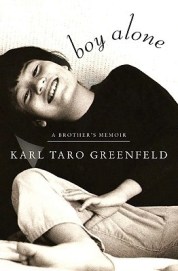
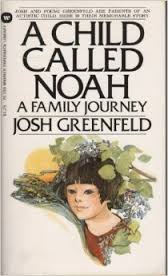
On the opposite side of the spectrum (no pun intended), hunt down A Child Called Noah, by Josh Greenfeld. Greenfeld’s son Noah was born in 1966, just a few years before Raun Kaufman. Noah was also born severely autistic, and his story is much more typical. His father, a screenwriter, documented their family struggles through three volumes, and the other year his brother, Karl Greenfeld, wrote Boy Alone: A Brother’s Memoir, on what it’s like to live in the shadow of an autistic sibling. What he chronicles is much more typical of a family with extreme autism. If your child is not or will not be a miracle, the Greenfelds will let you know you are not alone.

Soak yourself in the Kaufman’s program (he does have a chapter just for dealing with Aspergers). Of all the programs out there, this is one I can stand behind, but like everything else, take it with a grain of salt. Critics complain it is not possible to scientifically measure the program, therefore no aspect of it can be considered valid, others complain it is still a gentle teaching/ABA program under a different name; other parents have not seen such miracle results. Nothing is perfect, nothing works all of the time. But in the land of Autism, even a thirty-percent increase in functional ability is a landmark indeed.
    

  6357288                           index                               content

Girl With The Dragon Tattoo Sequel Coming in September

girlFor those of you who have been impatiently waiting for the new sequel to The Girl with the Dragon Tattoo by Stieg Larsson, The Girl In the Spider’s Web  by David Lagercrantz will be released in September 2015. The publisher’s summary: Late one night, journalist Mikael Blomkvist receives a phone call from a trusted source claiming to have information vital to the United States. The source has been in contact with a young female super hacker–a hacker resembling someone Blomkvist knows all too well. Blomkvist, in desperate need of a scoop for Millennium magazine, turns to Lisbeth Salander for help. She, as usual, has her own agenda.

If you haven’t read the series, below is a summary of the original three books.  And those who have already read them, you might want to refresh your memory and reread them before the new book is released.

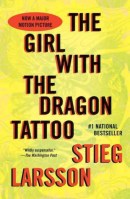
dragonThe Girl With The Dragon Tattoo –  A murder mystery, family saga, love story, and a tale of financial intrigue wrapped into one satisfyingly complex and entertainingly atmospheric novel.Harriet Vanger, scion of one of Sweden’s wealthiest families, disappeared over forty years ago. All these years later, her aged uncle continues to seek the truth. He hires Mikael Blomkvist, a crusading journalist recently trapped by a libel conviction, to investigate. He is aided by the pierced and tattooed punk prodigy Lisbeth Salander. Together they tap into a vein of unfathomable inequity and astonishing corruption.

fireThe Girl Who Played With Fire – Mikael Blomkvist, crusading journalist and publisher of the magazine Millennium, has decided to run a story that will expose an extensive sex trafficking operation between Eastern Europe and Sweden, implicating well-known and highly placed members of Swedish society, business, and government. But he has no idea just how explosive the story will be until, on the eve of publication, the two investigating reporters are murdered. And even more shocking for Blomkvist: the fingerprints found on the murder weapon belong to Lisbeth Salander – the troubled, wise-beyond-her-years genius hacker who came to his aid in The Girl with the Dragon Tattoo, and who now becomes the focus and fierce heart of The Girl Who Played with Fire.  As Blomkvist, alone in his belief in Salander’s innocence, plunges into an investigation of the slayings, Salander herself is drawn into a murderous hunt in which she is the prey, and which compels her to revisit her dark past in an effort to settle with it once and for all.

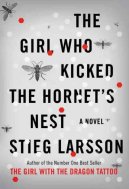
hornetThe Girl Who Kicked The Hornet’s Nest – Lisbeth Salander—the heart of Larsson’s two previous novels—lies in critical condition, a bullet wound to her head, in the intensive care unit of a Swedish city hospital. She’s fighting for her life in more ways than one: if and when she recovers, she’ll be taken back to Stockholm to stand trial for three murders. With the help of her friend, journalist Mikael Blomkvist, she will not only have to prove her innocence, but also identify and denounce those in authority who have allowed the vulnerable, like herself, to suffer abuse and violence. And, on her own, she will plot revenge—against the man who tried to kill her, and the corrupt government institutions that very nearly destroyed her life.

Also available at the library on DVD.

The Girl With The Dragon Tattoo

The Girl Who Played With Fire

The Girl Who Kicked The Hornet’s Nest

8 Reasons to Love Audiobooks (Or Give Them a Try)

Ever notice how your list of books to read never seems to get any shorter? For every title I cross off my list, three more appear, and at this rate it’ll take me at least 20 years to completely finish (I know because I’ve calculated it). I lose precious reading time to obligations like commuting, feeding myself, and keeping my living space somewhat clean. But I recently started listening to audiobooks, and I was able to turn those obligations into perfect opportunities to whittle down my list. I can now go through a book in one day and still get the laundry done!

We have a bunch of books on CD here at the library, but I prefer downloading audiobooks with the OverDrive app on my smartphone. I hook up my phone to my car stereo and don’t have to fumble with CDs while I’m on the highway, and I can keep listening indoors without having to drag a pile of discs with me. Another upside to downloading: no fees! Digital items disappear automatically when the loan period expires so you’ll never get hit with late charges, plus you can’t scratch them up or lose them under a car seat.

Here are some more reasons to love audio:

1) Multitask like a boss. Start up an audiobook and chores will suddenly become much more enjoyable. You can spend an afternoon reorganizing your closets while also tackling titles on your to-read list, like Graham Greene’s The End of the Affair read by Colin Firth. You may even find yourself actually seeking out more chores so you can continue listening!

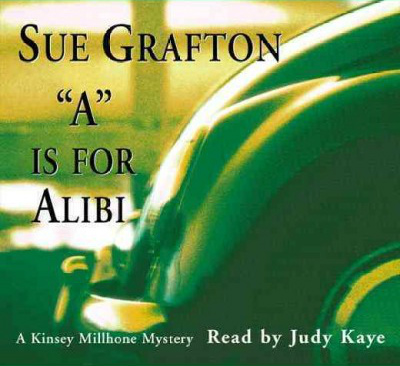
2) Cut your screen time. After a long workday in front of a computer screen, do you really want to veg out in front of another glowing blue screen? Light mysteries like the books in Sue Grafton’s Kinsey Millhone series (A is for Alibi, B is for Body, etc.) offer nice background noise without disrupting your sleep.

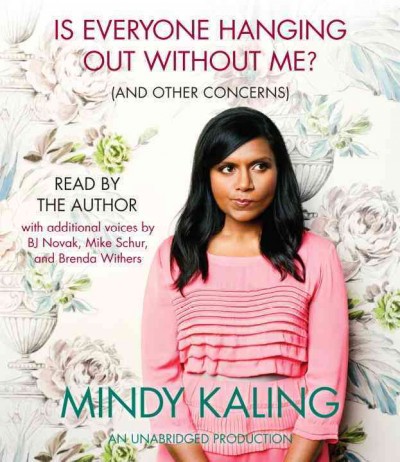
3) A good narrator enhances your experience of the book. Mindy Kaling’s Is Everyone Hanging Out Without Me? is a funny book, but it’s even better when you hear her narration. An adept narrator enhances humor, drama, and other emotions in ways that you can’t replicate when your eyes are zooming across the page. Augusten Burroughs’ memoir Dry had me laughing hysterically one minute, then weeping the next.

4) Long drives seem shorter. It’s tough to stay alert when you’re driving alone, at night, on a really boring road (I’m thinking of you, New Jersey interstate). Picking up something long like The Book Thief by Marcus Zusak will keep your brain engaged and will make any long drive more endurable. Similarly, long workouts on the treadmill are less arduous when you have a plot to engage your mind.

5) Audiobooks are interactive. Have you been on the waitlist for the print copy of The Life-Changing Magic of Tidying Up by Marie Kondo? You can download it right now through Hoopla and experience the magic by listening to the audio – while simultaneously tidying up! I’ve also found myself talking out loud to characters in suspenseful audiobooks like Tana French’s The Secret Place.

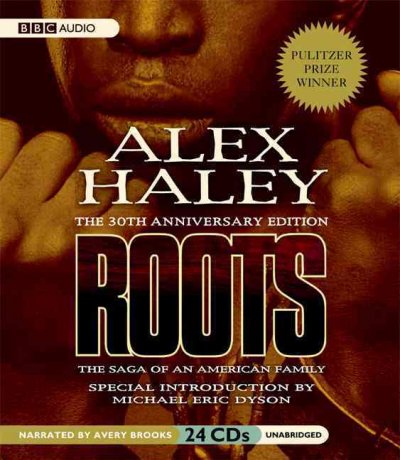
6) Long, difficult books can be less daunting in audio. Everyone has those “I’d like to read it, but I probably will never get around to it” books. I would never realistically have finished the 917-page behemoth of Roots, but it only took me a couple weeks to reach the end of disc 24.

7) You might actually retain more. There’s a theory that you retain more information when listening because your brain doesn’t have to work as hard at creating imagery. I used to think I would have a problem remembering what happened in audiobooks, but then I remembered all the times I’d looked up from reading a printed book and realized I didn’t remember any of the last six pages. It’s just bound to happen, I think (no pun intended).

8) You’ll realize you’ve been pronouncing a word wrong your entire life. Interminable. Prerogative. Indefatigable. Cache. Aluminum has five syllables?! Oh wait, nevermind, the narrator is British.

Now here’s how to get the audiobooks mentioned:

Do you currently listen to audio books? If not, do you think you’ll give them a try?

The Martian is Coming!

martiAll I can say is

WOW.

I have not read a book this gripping in ages. Oh, sure, I adore the Retribution Falls series by Chris Wooding, they are delightful and make my heart sing, but in The Martian, Andy Weir has managed to catch me in my weakest spot, a tale that feeds both my need for a good imagine-if story and lovingly nerdy details that set my non-fiction scientific brain on fire. I got to the end, and I wanted to read it all over again.

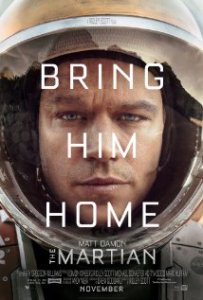
Very rarely do I seek a book out. They just happen to come to me in weird ways and tickle my interest enough that I open the cover (and covers are so VERY important. If it wasn’t for the fantastic artwork on the original Dragonlance books, I never would have entered a world that kept me trapped for more than ten years and ultimately sent to me to Lord of the Rings, which, really, is the Great-Granddaddy of the genre anyway). This time, I saw the trailer for the upcoming movie version of The Martian (release date: October 2, 2015), and was intrigued enough that when the book passed through my hands, I grabbed it.

Mark Watney is a crewman on the third manned mission to Mars. When a dust storm hits the crew on their way back to the lander, a piece of equipment snaps off and skewers his spacesuit, sending him reeling down a dune. His crew searches, but can’t locate him in the storm. His vital signs aren’t registering, and they all saw him toothpicked by that antenna. At the last possible second, they admit to themselves he’s dead and blast off to the mother ship while they can.

Only one problem.

He’s not dead.MV5BMTcwMjI2NzM2MF5BMl5BanBnXkFtZTgwNDkyNTI5NTE@._V1_SX214_AL_

The story revolves around Watney’s ability to survive the impossible, figuring things out as he goes, making everything out of the most basic substances, James T. Kirk channeling MacGyver. Because the supplies left behind were meant for six and he’s only one, he’s able to piece things along using his own ingenuity until NASA realizes he’s still alive. They try and mount a rescue mission, but NASA being NASA and twisted up in bureaucracy and safety margins, not everything is going to go by plan. The chances of Watney making it or not remain 50-50 right up until the final pages. This is a book that will make you sneak off every possible second to read just one more paragraph. From the first page, it will grab you and never let you go. By the end, you’re going to be looking around your house to see if you, too, have anything that can free oxygen or create water, and you will never look at potatoes the same way.

Knowing that in the film Matt Damon has the lead role of Watney makes you read the story in his voice. He is a brilliant piece of casting; the book seems written for him and he will be utterly convincing in the role. Check out the trailer here:  https://www.youtube.com/watch?v=Ue4PCI0NamI . Ridley Scott (Alien, Blade Runner, Thelma and Louise) is directing, and he is certainly adept at handling suspense. I’m waiting to see what they do with the soundtrack, since it’s a running joke through the book that the only music that was left behind is disco (can you imagine being stuck somewhere for months or years with nothing but a few tracks of disco to listen to? I love the Saturday Night Fever album, and I do love ABBA, but not for weeks on end!).

You don’t have to know science to enjoy the book. You don’t even have to know your Phobos from your Deimos. You just have to love a good pressure-cooker story. Don’t let this one skip your orbit.

Andy Weir, I love you.

Mars surface close to equator

Mars surface close to equator

Books about the First Day of School

The first day of school can be scary for all grades, but especially for those in Preschool, school1Kindergarten, and the other lower grades. New teachers, new schools, and new classmates can spark anxiety and excitement for every child. Whether they are worried about being away from home, making friends, or what to expect it can be a stressful time for children, and their parents.  Here are some great picturebooks to read with children (or parents) that are a little worried about going back to school that can help them get excited, confident, and ready for the big day.

school21.Chrysanthemum by Kevin Henkes

2.My Name Is Yoon by Helen Recorvitsschool3

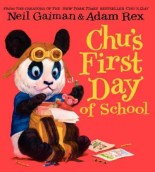
3.Chu’s First Day of School (Chu, #2)  by Neil Gaiman

4.First Day Jitters by Julie Danneberg

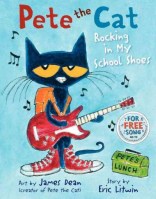
school45.Pete the Cat: Rocking in My School Shoes by Eric Litwin

6.Llama Llama Misses Mama by Anna Dewdney

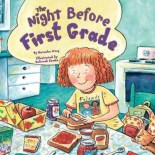
7.The Night Before First Grade by Natasha Wingschool5

8.Miss Nelson Is Missing! (Miss Nelson, #1)  by Harry Allard

school69.Wemberly Worried by Kevin Henkes

10.Back to School Tortoise by Lucy M. Georgeschool7

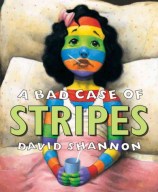
And because you might have read all of these, and because I just cannot stop myself, here are some additional titles you might want to check out: The Kissing Hand by Audrey Penn, A Bad Case of Stripes by David Shannon, David Goes To School by David Shannon, Splat the Cat: Back to School, Splat! by Rob Scotton, Stand Tall, Molly Lou Melon by Patty Lovell, The Name Jar  by Yangsook Choi, I Like Myself! by Karen Beaumont, First Grade Stinks! by Mary Ann Rodman, Louise the Big Cheese and the Back-to-School Smarty-Pants by Elise Primavera, Froggy Goes to School by Jonathan London, Amelia Bedelia’s First Day of School by Herman Parish, If You Take a Mouse to School by Laura Joffe Numeroff, and The Teacher from the Black Lagoon (Black Lagoon, #1) by Mike Thaler.