Exploring The Science of Science Fiction

Are you a science fiction fan curious to see how close scientists have come to understanding or recreating the theories or gadgets of your favorite book or movie? Do you think much of the gadgetry and action of science fiction stories are completely impossible and want to see what we really can do, and what we might be able to do in the future? Here are some books that will help you understand how realistic some time1ideas like time travel really are, and how theories and realities surrounding our universe and the possibilities have changed in recent years.

Time Travel and Warp Drives: a Scientific Guide to Shortcuts Through Time and Space by Allen Everett and Thomas Roman
Lays out what humans really know about time and space and how to bend it to our will, and explains just how close we are to some of the ideas of science fiction novels.time2
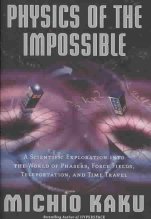
Physics of the Impossible: a Scientific Exploration into the World of Phasers, Force Fields, Teleportation, and Time Travel by Michio Kaku
Looks at the scientific principles behind the technology of the future, examining the theoretical basis, as well as limitations, of the laws of physics to discuss how seemingly impossible devices could become commonplace in the future.time3

Spooky Action at a Distance: the Phenomenon that Reimagines Space and Time and What it Means for Black Holes, the Big Bang, and Theories of Everything by George Musser
Presents a tour of modern physics that examines the new understanding of nonlocality–the ability of particles to affect each other across the vastness of space.
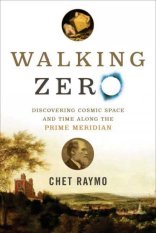
time4Walking Zero: Discovering Cosmic Space and time Along the Prime Meridian by Chet Raymo
A noted science writer and author of The Path offers an illuminating study of the interconnections among science, faith, psychology, and the arts in terms of the evolution of the human understanding of space and time as he walks along the Prime Meridian, the line of zero longitude and the standard for world maps and clocks, from Brighton to the North Sea.

time6What is Relativity?: an Intuitive Introduction to Einstein’s Ideas, and Why They Matter by Jeffrey Bennett
An astrophysicist offers an entertaining introduction to Einstein’s theories, explaining how well they have held up to rigorous testing over the years, and even describing the amazing phenomena readers would actually experience if they took a trip through a black hole.

Once you figure out hoe time travel works, or somehow or other gain a little extra time, you might want to explore further with: The Fabric of the Cosmos: Space, Time, and the Texture of Reality by Brian Greene, A Brief History of Time: From the Big Bang to Black Holes by Stephen W. Hawking, Endless Universe: Beyond the Big Bang by Paul J. Steinhardt and Neil Turok, Cosmos by Carl Sagan, The Science of Star Wars by Jeanne Cavelos, The Physics of Star Trek by Lawrence M. Krauss, or Physics of the Future: How Science Will Shape Human Destiny and our Daily Lives by the Year 2100 by Michio Kaku.

Have You Thought about Being Mortal?

Have you thought about dying? It’s such a scary topic, fraught with so much emotion. We like to think we’ll always have more time ahead of us. But what happens when something–an illness, an accident, a disease–sets a limit on our time? What happens when we are forced to confront the end of our lives?

Jacket.aspxBeing Mortal: Medicine and What Matters in the End by Atul Gawande explores this issue, an issue that we all must inevitably face.

Many folks first confront mortality when dealing with their aging parents, but illness can strike at any time of life. Then we are forced to make decisions about treatments. About living wills. About how we want to live the remainder of our lives. We want to live longer at all costs and we’d do anything to achieve that goal, right? Perhaps not. As Doctor Gawande discovered in his research on aging and dying, what most people want is not necessarily a longer life, but a quality life.

Gawande, a practicing surgeon, notes that doctors are often committed to extending life at all costs. This can mean painful and expensive procedures, even for those for whom there is no cure. Gawande questions this rationale, while admitting he himself has often advised patients to pursue treatments that he knew would not extend their lives by more than a few months or year. However, patients, he came to realize, wanted procedures that would guarantee them ten or twenty more years of life.

But medicine often cannot deliver such outcomes. The exceptions, the people who do survive for years in spite of the odds, are just that–exceptions. Gawande equates it with winning the lottery. Everyone believes they will be lucky but very few actually are. Gawande also noted that, in the case of terminal illness, the trade-offs of pursuing treatment–time, money, pain, recovery–were often not worth the small extension of life to most people.

What the mortally ill or infirm person really wants is a meaningful life, even if there is only a few months left of that life. The terminally ill desire to retain independence and control, as much as they possibly can. They desire to stay in their homes. They want their loved ones around them. They fear prolonged and painful deaths. They fear bankrupting their families.

Gawande illustrates the importance of these issues with depictions of  traditional nursing homes, which place safety and monitoring of vitals above the fulfilling lives people need and want. He counterpoints these with illustrations of models of care that take patients out of hospitals and nursing homes for a variety of assisted living facilities and hospice services.

I was especially intrigued by his description of hospice, a service I had (erroneously) believed was only for the last few weeks of life. Hospice gives the aged and terminally ill choices. Hospice workers ask what your goals are. They ask you to think about what you want. They ask you what you don’t want. They talk about your fears. And they address every issue.

And that is the gift of this wonderfully written book. It makes you ask those questions, of yourself and perhaps of those around you. For someday you may be in a position to have to make choices for a loved one, or in the position of having a loved one making choices for you.

The Oscars of Audiobooks – the Audie Awards

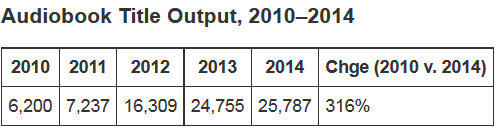
I am a big audiobook fan, and I’m not the only one! Audiobooks sales are booming. In fact, audiobooks are the fastest-growing segment in publishing . Much of this surge in popularity can be related to the increasing popularity of the digital download,  though most audiobooks are available in both cd and digital formats. The production quality of audiobooks has also increased dramatically in recent years, with accomplished performers bringing their talents to the audiobook realm. Not surprisingly, publishers are producing more and more audiobooks – look how the publication of audiobooks has grown:

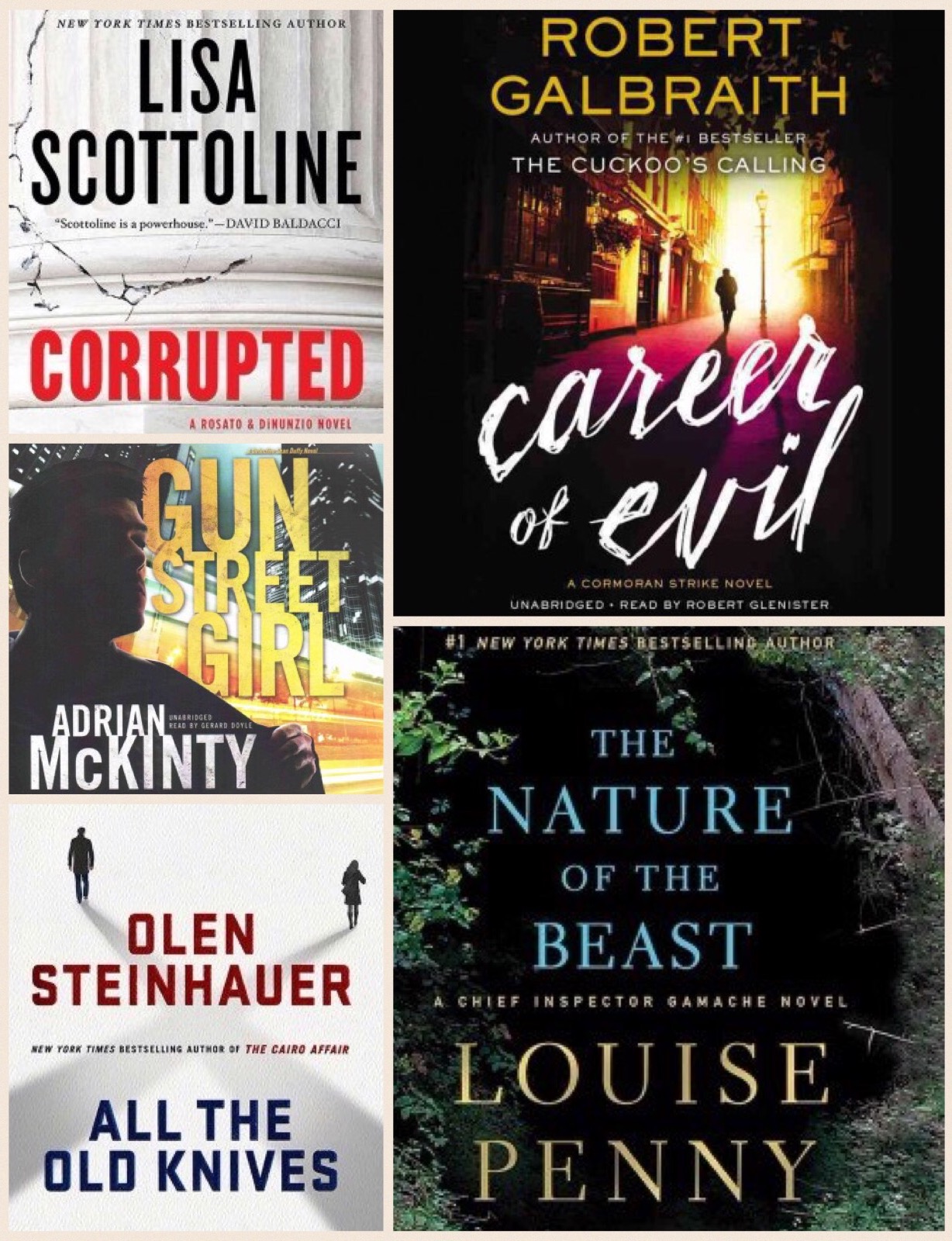
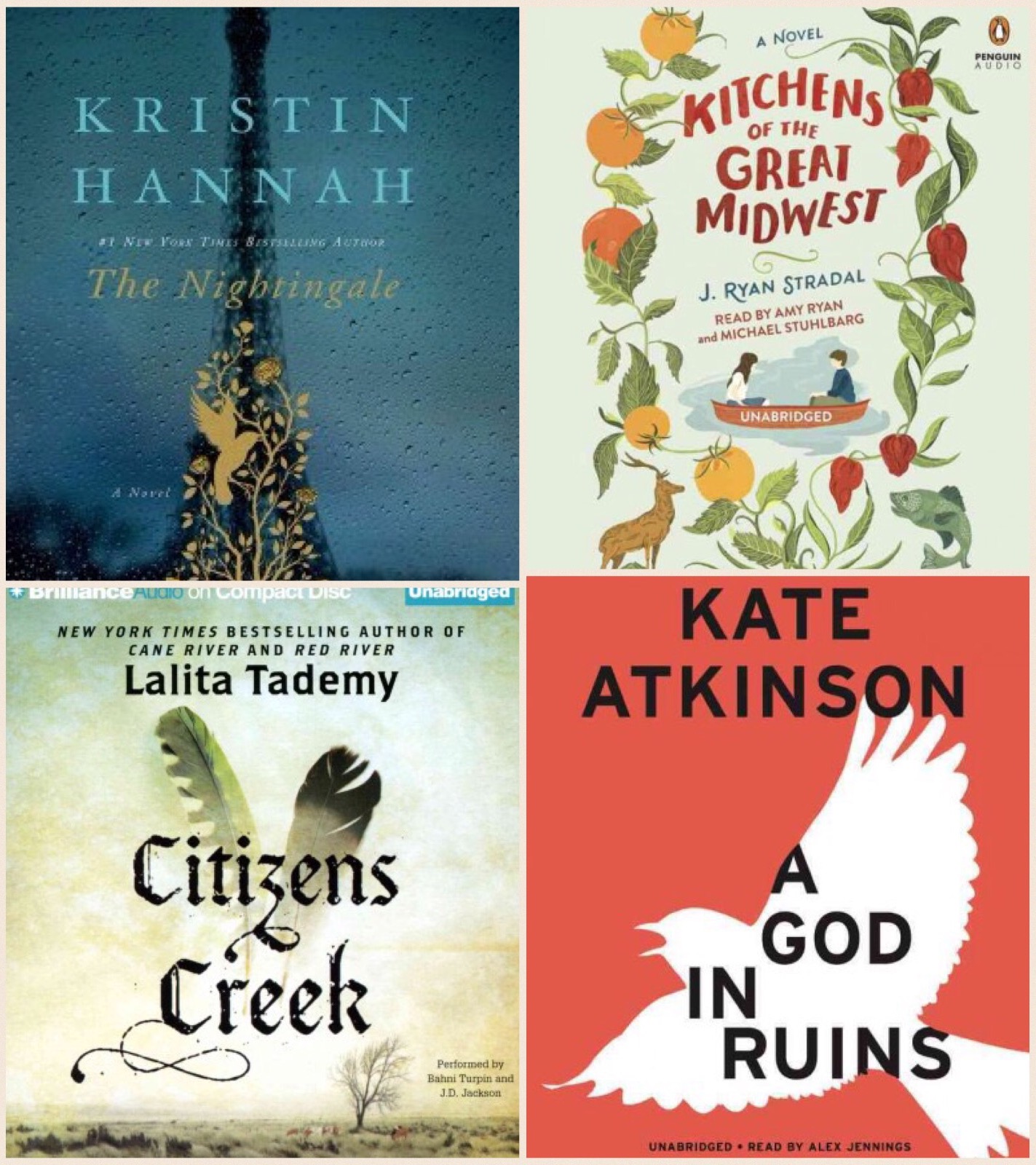
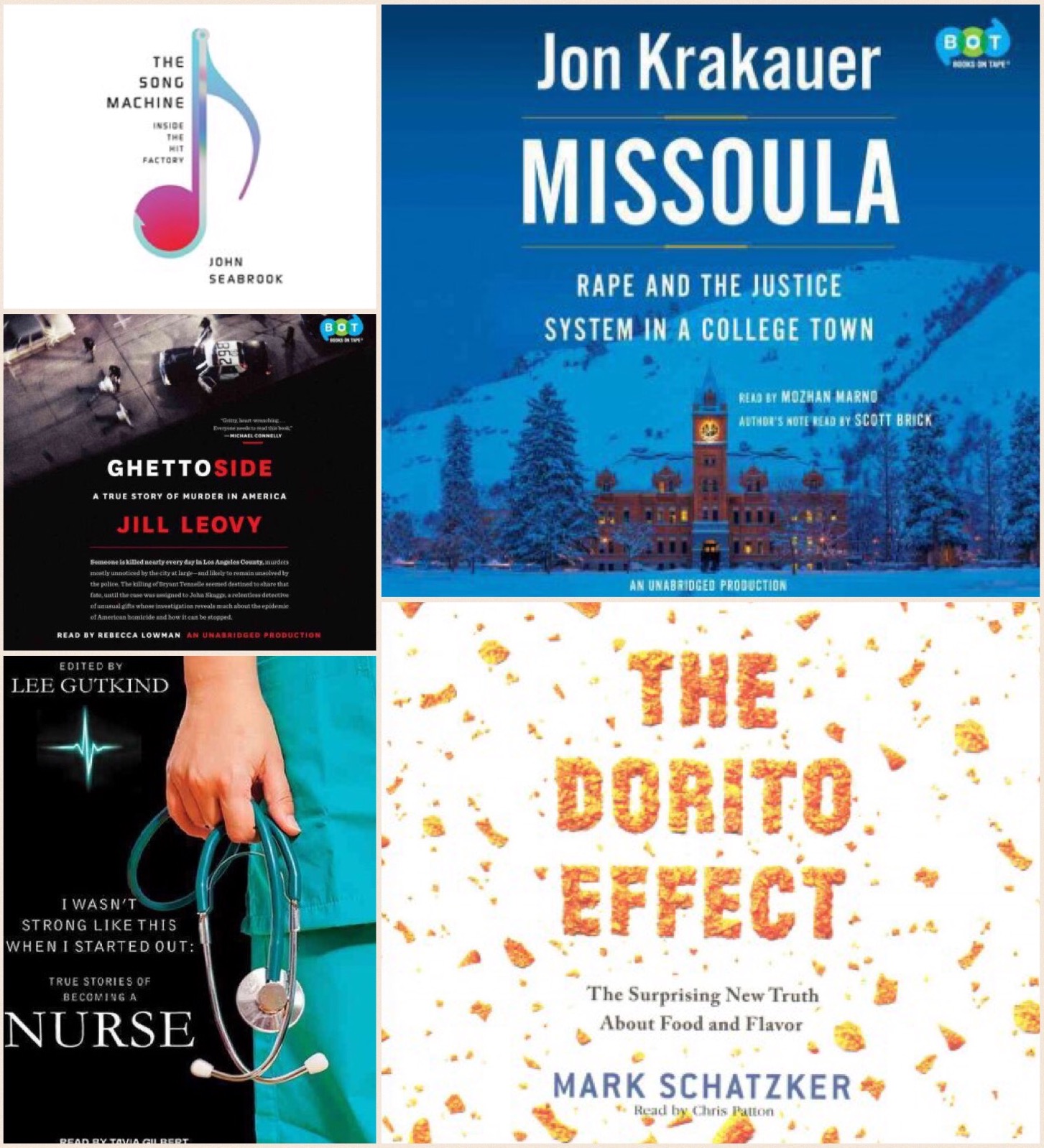
Capture1Recently, the Audio Publishers Association released their finalists for the 2016 Audie Awards. Once a smallish gathering of industry insiders, the Audies have taken on a lot more prestige these days. You might call them the Oscars of the audiobook world! There are a total of 135 audiobooks in 25 categories competing for awards this year, and the winners will be announced at the annual Audies Gala on May 11. We own many of the nominated titles, here are some in the most popular categories:

imageBest Female Narrator:

imageBest Male Narrator:

imageNarration by Author:

Mystery:

imageFiction:

imageNon-Fiction:

You can see the list of finalists in all categories, and even hear short sound clips, here.


Does It Really Have To End ‘Happily Ever After’?

beginnings

I’m a big reader of contemporary romances – the proverbial ‘happy ever after’ stuff.  For a change of pace, I’ve decided to read books that end not quite so happy.  Here’s a selection of titles.

rainwaterRainwater – Sandra Brown – In a time of drought and economic depression in 1934, Ella Barron runs her boardinghouse in Texas while caring for her son, Solly, and responds to the calm influence of one of her boarders, David Rainwater, while facing the tension and uncertainty around her.


pilots wifeThe Pilot’s Wife – Anita Shreve – When her husband, a pilot, dies in an airplane crash off the Irish coast, Kathryn Lyons finds herself in the media spotlight as rumors abound of her husband’s shocking secret past.


english patientThe English Patient – Michael Ondaatje – Portrays the convergence of four damaged lives in a bomb-riddled Italian villa in the last days of the war.


awakeningThe Awakening – Kate Chapin – In turn-of-the century New Orleans, Edna Pontellier, a woman who feels trapped in her stifling role as wife and mother, falls passionately in love with another man.


me beforeMe Before You – JoJo Moyes – Taking a job as an assistant to extreme sports enthusiast Will, who is wheelchair bound after a motorcycle accident, Louisa struggles with her employer’s acerbic moods and learns of his shocking plans before demonstrating to him that life is still worth living.


time travelTime Traveler’s Wife – Audrey Niffenegger – Passionately in love, Clare and Henry vow to hold onto each other and their marriage as they struggle with the effects of Chrono-Displacement Disorder, a condition that casts Henry involuntarily into the world of time travel.


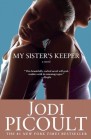
my sisterMy Sister’s Keeper – Jodi Picoult – Conceived to provide a bone marrow match for her leukemia-stricken sister, teenage Kate begins to question her moral obligations in light of countless medical procedures and decides to fight for the right to make decisions about her own body.


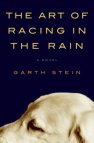
art of racingThe Art of Racing in the Rain – Garth Stein – Evaluating his life on the eve of his death, atypical canine Enzo considers the sacrifices his master, Denny Swift, has made in his pursuit of becoming a professional race car driver, and the dog’s own efforts to preserve the Swift family.


bridgesBridges of Madison County – Robert James Walker – On assignment shooting the covered bridges in Iowa, photographer Robert Kincaid falls in love with Iowa native Francesca Johnson during four days of love, magic, and beauty.


girlThe Girl With The Pearl Earring – Tracy Chevalier – A poor seventeenth-century servant girl knows her place in the household of the painter Johannes Vermeer, but when he begins to paint her, nasty whispers and rumors circulate throughout the town.

Time Travel Stories, That are NOT Science Fiction

time-travelEver wish you could slip away to another time or place? Want to see how things really were during your favorite era of history or perhaps take a peek at a future that might not yet be written in stone?

I have always been intrigued by the notion, but no matter how much I enjoy science fiction I have never been a fan of books that paired the two. You might think that any book that has time travel is automatically science fiction, but this is far from the truth. While the two often overlap, there are many other kinds of books that feature time travel. There is a genre of time travel romance, sometimes magic or other aspects of the story trigger the travel, and sometimes in fiction it just happens.

Here are some of the best books I have seen that feature time travel, but are not science fiction.timet1

The Impossible Lives of Greta Wells  by Andrew Sean Greer
To alleviate her suffocating depression after the death of her twin brother and the break-up with her long-time lover, Greta Wells embarks on a radical psychiatric treatment that has an unexpected side effect, which transports her to the lives she might have had if she had been born in a different era.

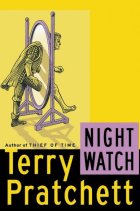
Night Watch: a Novel of Discworld by Terry Pratchett
timet4Flung back in time by a mysterious accident, Sam Vimes has to start all over again. He must get a new name and a job, and there’s only one job he’s good at: cop in the Watch. He must track down a brutal murderer. He must find his younger self and teach him everything he knows. He must whip the cowardly, despised Night Watch into a crack fighting force – fast. Because Sam Vimes knows what’s going to happen. He remembers it. He was there. It’s part of history. And you can’t change history…timet2

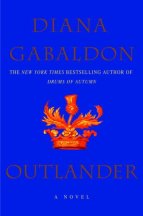
Outlander by Diana Gabaldon
Hurtled back through time more than two hundred years to Scotland in 1743, Claire Randall finds herself caught in the midst of an unfamiliar world torn apart by violence, pestilence, and revolution and haunted by her growing feelings for James Fraser, a young soldier.

11/22/63 by Stephen Kingtimet3
Receiving a horrific essay from a GED student with a traumatic past, high-school English teacher Jake Epping is enlisted by a friend to travel back in time to prevent the assassination of John F. Kennedy, a mission for which he must befriend troubled loner Lee Harvey Oswald.

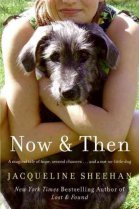
Now & Then by Jacqueline Sheehan
Her life spinning out of control to the point timet5that she wakes up one day among her Irish ancestors in 1844, Anna struggles to find her way home while navigating a time and culture completely foreign to her, a situation that is further complicated by her troubled teenage nephew.

More books that include time travel without being science fiction, but I did not have room for above, include: The Time Traveler’s Wife by Audrey Niffenegger, Station Eleven by Emily St. John Mandel, Orfeo by Richard Powers, The Shining Girls by Lauren Beukes, The House on the Strand by Daphne Du Maurier,  Replay by Ken Grimwood, A Connecticut Yankee in King Arthur’s Court by Mark Twain, Timebound by Rysa Walker, Morrigan’s Cross by Nora Roberts, and 1632 by Eric Flint.