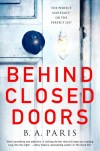
Podcasting is rapidly becoming the newest and most easily consumable form of storytelling. As of June 2018, iTunes features more than 500,000 active podcasts, including content in more than 100 languages and over 18.5 million episodes. Now if you’re new to podcasts, this number can be overwhelming, how are you supposed to sift through a sea of seemingly endless possibilities to find the hosts, and topic, that keep you listening? To be fair, a lot of listening is trial and error. Maybe you don’t like the hosts tone, or their voice, or maybe the topic just doesn’t grab your attention, but stay vigilant, there are enough podcasts in the world for everyone, there must be one for you! I’ve compiled a list of podcasts that are easy to get into for beginners, based on (of course) your favorite books, all of which can be found at the Cheshire Public Library!
Note : The podcast’s listed here may be explicit, or contain explicit language.
The Handmaid’s Tale by Margaret Atwood- The most chilling part of the world that Atwood has created is that it has a strong basis in history, a history that is doomed to repeat itself. If you love history, and the dark origins behind common folklore, you’ll love Lore. Aaron Mahnke, the host and author himself, draws you into the rich history that paints our modern day nightmares. Tune in to learn the
 humble origins of the werewolf, how fairies terrified and mystified pilgrims, and how Krampus, the Christmas demon, still receives tribute every year in a tiny town in Germany. It’ll make you wish all history classes were this interesting. Released every two weeks on Mondays, Lore is an award-winning podcast that will soon be produced into a television series on Amazon. With 6-million monthly listeners, it has been awarded as iTunes’ “Best of 2015” and “Best of 2016” podcast.
Want to check out more of Mahnke’s writing? Check out his novel list here.
Do you comb the stacks looking for self help books, that lay forgotten about because, really, who has time? Don’t feel alone in this pursuit, it’s hard to read someone else’s pro mises of a better life. After all, who really has all the answers? One book I found refreshingly honest is Jenny Lawson’s Furiously Happy: A Funny Book About Horrible Things . Lawson, an American journalist, author, and blogger, is known for her hysterically skewed outlook on life, and her candor about her struggles with depression and mental illness. If you’re looking for a podcast that doesn’t take themselves too seriously, and focuses on the bright side of life, look no further than Wonderful! , a podcast for joyful and enthusiastic peop
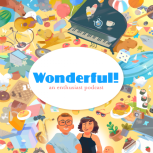 le that like hearing about the passions, big and small, of other people. Each week Rachel and Griffin McElroy will talk about things they love and invite listeners to write in with their treasured items of enthusiasm. Topics may include movies, television, sports, books, drinks, eats, animals, methods of transportation, cooking implements, types of clothing, places in the world, imaginary places, fictional characters, and fonts, to name a few. It’s a delightfully sweet and genuine series, and a quick break from a world full of negatives.
Now if you’re a true crime lover like me, I’m always searching for a new case to dissect, and fo r a new podcast or book that leads me through the facts of the case. That’s exactly why I was drawn to Adnan’s Story : The Search for Truth and Justice After Serial . A full-length account of the story investigated by the award-winning Serial podcast draws on some 170 documents and letters to trace the experiences of Adnan Syed, who in 2000 was sentenced to life for the murder of his ex-girlfriend and who the author and other supporters are certain is innocent. If
 you want to listen to the podcast that brought the case to light in the first place, check out Serial season one. I’d compare it to a classic radio drama, the pacing and tone is incredible and keeps you on the edge of your seat, and the journalistic research that goes into every episode is admirable. It’s a great place to start if you’re just getting into true crime podcasts, or need something to listen to after binging the first and second season of Making a Murderer on Netflix.
Lastly, if you’re looking for a podcast that brings the book club to your home (without having people over to your actual home), look no further than Overdue . Overdue is a podcast about the books you’ve been meaning to read. Join Andrew and Craig each week as they tackle a new title from their backlog. Classic literature, obscure plays, goofy murder mysteries: they’ll read it all, one overdue book at a time. While not actively encouraging you to return your books late (insert finger wagging from behind the return’s desk) this podcast encourages the over zealous reader in all of us to take the time to head back into the stacks for the book you might not have otherwise checked out.
If you’re having trouble accessing podcasts or don’t know how to start, check out this easy to use guide provided by Gimlet : How to start listening. It’ll take you step by step on how to both download, and enjoy the hundreds of podcasts iTunes has to offer.
 Mars, our nearest planetary neighbor, has always fascinated science fiction writers here on planet earth. Science fiction about Mars began with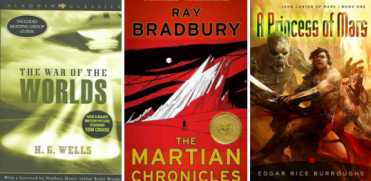
 Beginning in the 1970s, the first NASA and Russian probes and rovers obtained real scientific data about Mars. Once sci fi writers realized that there were no little green men on Mars, science fiction tackled more realistic Martian topics and focused on the challenges of human colonization on the red planet. A major sci fi theme was terraforming Mars to make it into a self-sustaining environment that was fit for life that developed on earth. Another major theme was what type of society and governmental structure might exist in a Mars colony.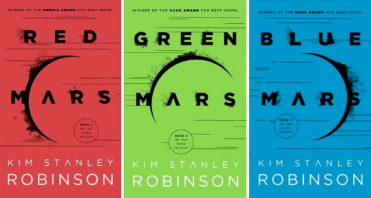
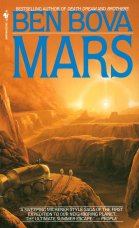 Ben Bova has written four related novels about Mars:
 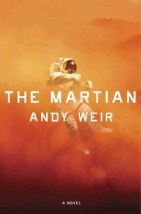 The Martian
 For kids too young for Snapchat,



 Go outside for a walk! This is one of the best times of year to hang out around the canal trail, when birds who migrated south are coming back and starting to make nests for the spring. You can see turtles, beavers, and snakes at Lock 12, and in the last couple weeks I saw diving kingfishers, big herons, and colorful wood ducks in the new section of trail north of West Main Street.




 The first Earth Day was celebrated on April 22, 1970, with the intention of bringing awareness to environmental issues. The first Earth Day events drew millions of participants across the U.S. and around the world. This was the scene in New York City. Since 1970, celebrations have grown, with Earth Day becoming a global event in 1990.
 The library is a vital place for citizens to become educated and informed about environmental issues, from fracking, to plastic bags and straws, to carbon emissions, so that that they may approach their elected representatives with their concerns. The environmental impact of plastic straws is a topic that has been in the news a lot recently:




 The Girl with All the Gifts