Screen-Free Week is coming – can you go a week without screens?

Today’s post is by Children’s Librarian Lauren:

“Have I told you all about the time that I got sucked into a hole through a handheld device?” So goes a lyric on the Arctic Monkeys’ technologically ambivalent album Tranquility Base Hotel and Casino. This line repeats in my head every time I find an hour of my life has been lost to compulsively scrolling through Instagram or following clickbait articles. So much of our lives is mediated through screens, and the side effects aren’t always as light as lost time and an earworm. Night-time screen use has been linked to insomnia, and studies are linking excessive social media use to anxiety and depression.

For kids too young for Snapchat, studies have tied screen use to developmental delays. The American Association of Pediatrics recommends no screen time for kids under 18 months and 1 hour max for kids under 5 years old. The more time toddlers spend silently watching screens, the less time they spend talking, playing, moving, and learning. Likewise, the more time parents and caregivers spend with screens, the less time we have to facilitate those crucial experiences for our kids.

To combat the negative effects of screen-based entertainment, some folks came up with Screen-Free Week, an annual week of unplugging and re-discovering the joys of real life fun. From Monday, April 29 to Sunday, May 5, families and individuals will be closeting the iPads and shutting off the backseat DVD players. Sound like something your family could try? Here’s some ideas on how to amuse yourselves while the screens are away:

Be bored! Boredom provides kids with an opportunity to get creative. Lin-Manuel Miranda – the creator of Hamilton and one of the most creative folks around – fondly recalls being left to his own non-screen devices. If you’re not up to writing an award-winning musical, though, provide your family with open-ended materials like art supplies, the contents of the junk drawer, and your backyard. Here are a few ideas to get you started:

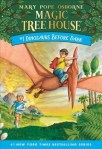
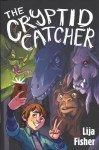
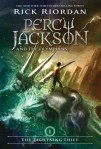
Clash your clans in a fantasy book! Look in the kids section for the blue sticker with a unicorn. Magic Tree House and Percy Jackson are classics that work as family read-alouds, or check out a new book like The Cryptid Catcher. We also love us some Neil Gaiman, especially Coraline, a delightfully creepy tale that begins with a super-bored girl who, to put it mildly, finds a way to amuse herself.

Go outside for a walk! This is one of the best times of year to hang out around the canal trail, when birds who migrated south are coming back and starting to make nests for the spring. You can see turtles, beavers, and snakes at Lock 12, and in the last couple weeks I saw diving kingfishers, big herons, and colorful wood ducks in the new section of trail north of West Main Street. Sleeping Giant State Park is still closed from tornado damage, but nearby Brooksvale Park has salamanders, frogs, and even farm animals, as well as easy hiking trails. The library has free maps of local trails, as well as wildlife guides for kids and adults to borrow.
Take advantage of the spring birds & blooms that are popping up all over this time of year, as close as your own back yard! Ask little kids to point out colors, compare sizes, and count petals on flowers. Explain pollination and photosynthesis to big kids – or, better yet, let them explain it to you. See how many different kinds of birds you can spot.

Take a break from Allrecipes and Epicurious, and follow a recipe from a book! Whether tacos or teiglach are more your speed, you can find a ton of family-friendly recipes in cookbooks designed especially for kids. Some cookbooks specialize in classics and others offer a history of food. Wherever your interests lie, head to the 641s for your cooking needs.

After you’ve cleaned up the kitchen and the kids are busy writing their own history-based raps, you might have a few minutes during Screen-Free Week for some adults-only reading:

Will you be participating in screen-free week from April 29 to May 5?

Earth Day and the Environment

Today’s post is by Bill, Head of Adult Services.

The first Earth Day was celebrated on April 22, 1970, with the intention of bringing awareness to environmental issues.  The first Earth Day events drew millions of participants across the U.S. and around the world.  This was the scene in New York City. Since 1970, celebrations have grown, with Earth Day becoming a global event in 1990.

2019 marks the 10th year that Cheshire Public Library has commemorated Earth Day by offering programs on the environment, outdoor activities, gardening, wildlife and more.  This year we offer six programs in April, among them, speakers who are highly esteemed in their fields – from butterflies to birds to “gardening as if the world depends on us.”

The library is a vital place for citizens to become educated and informed about environmental issues, from fracking, to plastic bags and straws, to carbon emissions, so that that they may approach their elected representatives with their concerns.  The environmental impact of plastic straws is a topic that has been in the news a lot recently: The Last Plastic Straw websiteShoreline Town to Consider Banning Plastic Bags, Straws, State of Connecticut Research Report ‘Banning Plastic Straws.
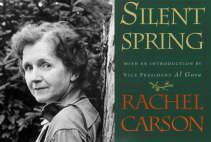
Rachel Carson’s book, Silent Spring, published in 1962 and available in multiple formats at Cheshire Library,  expressed her passionate concern with the future of the planet and all life on Earth, and inspired the modern environmental movement.  In addition, CPL also offers many other materials for those interested in learning more about taking care of our environment:


We’ll end this post with an audio link to Before the Deluge by Jackson Browne.  The song was released 45 years ago and remains relevant today.


Fooled by Fiction – 11 Books with Surprising Plot Twists

Ever read  book and gotten to a part where you just had to put it down for a minute and go “WHAT???”. If you’ve ever felt a little pranked by a plot twist you didn’t see coming (and even liked it!), here are 11 books that fool you into thinking one thing, then a “big reveal” changes everything …

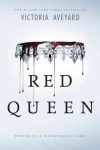
Red Queen by Victoria Aveyard. Mare Barrow’s world is divided by blood—those with common, Red blood serve the Silver-blooded elite, who are gifted with superhuman abilities. Mare is a Red, scraping by as a thief in a poor, rural village, until a twist of fate throws her in front of the Silver court and she discovers she has an ability of her own.


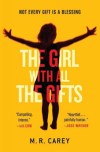
The Girl with All the Gifts by M. R. Carey. Melanie knows that she is a very special girl, but she doesn’t know why. Every morning, Melanie waits in her cell to be collected for class. When they come for her, a gun is pointed at her while two of people strap her into the wheelchair. She thinks they don’t like her. She jokes that she won’t bite, but they don’t laugh… wait till you find out what’s so special about this girl.

Fool Me Once by Harlan Coben. Former special ops pilot Maya, home from the war, sees an unthinkable image captured by her nanny cam while she is at work: her two-year-old daughter playing with Maya’s husband, Joe—who was brutally murdered two weeks earlier. The provocative question at the heart of the mystery: Can you believe everything you see with your own eyes, even when you desperately want to?

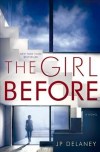
The Girl Before by JP Delaney. Seizing a unique opportunity to rent a one-of-a-kind house, a damaged young woman falls in love with the enigmatic architect who designed the residence, unaware that she is following in the footsteps of a doomed former tenant.

The Couple Next Door by Shari Lapena. Anne and Marco Conti seem to have it all—a loving relationship, a wonderful home, and their beautiful baby, Cora. But one night, when they are at a dinner party next door, a terrible crime is committed. Suspicion immediately lands on the parents. What follows is the nerve-racking unraveling of a family—a chilling tale of deception, duplicity, and deadly secrets.

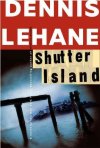
Shutter Island by Dennis Lehane. U.S. Marshal Teddy Daniels has come to Shutter Island, home of Ashecliffe Hospital for the Criminally Insane. Along with his partner, Chuck Aule, he sets out to find an escaped patient, a murderess named Rachel Solando, as a hurricane bears down upon them. But nothing at Ashecliffe Hospital is what it seems. And neither is Teddy Daniels.

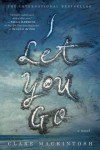
I Let You Go by Clare Mackintosh. Jenna Gray as she moves to a ramshackle cottage on the remote Welsh coast, trying to escape the memory of the car accident that plays again and again in her mind and desperate to heal from the loss of her child & a painful past. As police try to get to the bottom of the hit-and-run accident, they are frustrated by unexpected twists in the case.

Life of Pi by Yann Martel.  A zookeeper’s son sets sail for America, but the ship sinks and young Pi finds himself in a lifeboat with a handful of remaining zoo animals. Soon it’s just Pi and a Bengal tiger named Richard Parker, lost at sea for months together. When they finally reach land, the tiger escapes, leaving Pi to relay the story of their survival at sea to authorities, who refuse to believe his tale and press him for the “truth”.

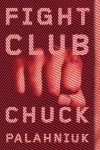
Fight Club by Chuck Palahniuk. The rise of a terrorist organization, led by a waiter named Tyler Durden who enjoys spitting in people’s soup.  He starts a fighting club, where men bash each other, which quickly gains in popularity, and becomes the springboard for a movement devoted to destruction for destruction’s sake. But who is Tyler Durden?

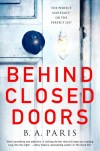
Behind Closed Doors by B.A. Paris. Perfect socialite couple Jack and Grace seem to have it all. But why are they never apart? Why doesn’t Grace ever answer the phone? How can she cook such elaborate meals but remain so slim? And why are there bars on one of the bedroom windows?

My Sister’s Keeper by Jodi Picoult. Anna was conceived as a bone marrow match for her sister Kate, who has been battling leukemia most of her young life. As a teenager Anna begins to question her moral obligations in light of countless medical procedures and ultimately decides to fight for the right to make decisions about her own body. The ending of this emotional novel is a stunner.


The Spectre of Gender Inequality in Children’s Books

Someone posted a video online, and it made me steam.

A mother and daughter protest the lack of female leads in children’s literature by removing books to underscore various statistics, until few are left.

And my head exploded.

Anyone can cherry-pick books to fit any given criteria. AND it devalues wonderful books for no reason but gender (anyone scarred by not reading Harriet Potter? Or Curious Georgette?). The facts felt skewed, I HAD to investigate this.

The video, and most relevant articles, stem from a single study by Janice McCabe in the sociology journal Journal of Gender and Society (2011) which studied 5600 US children’s titles from the 20th century and found that males are twice as likely as females in titles, and 1.5 times more common as central characters. Among animal characters, only 7.5% of titles had female lead characters. They also found that in periods of high feminism (60’s, 70’s) this gap lessened, as opposed to low periods of feminism (40’s, 50’s).  Of 69 Caldecott award winners since 2000, just four have female animals. 25% of sampled titles had NO female characters. In children’s media, less than 20% showed women with a job, vs. 80% of men. Even when characters were neutral – an unnamed bear, a building, a car – parents tended to call the character-object male. In many books that do include females, they are a token character – who really cares about Kanga in Winnie the Pooh? Who cares about Wendy, when it’s the Island of Lost Boys? (Disney is hardest on girls, even when they’re the lead).

We Like Kindergarten - a Little Golden BookSo what does that mean? Are books working against girls? Do we perpetuate female stereotypes and patriarchal archetypes starting with early board books? Do we as parents set our children up for failure by gender-typing from an infant’s earliest days?

Yes and no. The first thing to remember is that video WAS AN ADVERTISEMENT. It’s intentionally made to sell a book called Good Night Stories for Rebel Girls. It’s SUPPOSED to make you angry so you will buy their product, or from similar publishers of inclusive stories like Zubaan Virago, and A Mighty Girl, which highlights books for girls. But the actual facts are a lot more complicated:

Blueberries for Sal by Robert McClosky1) The original study was small. It didn’t look at Newbery winners, or Pura Belpre winners, or Coretta Scott King winners. They picked 5,000 books from a century of literature – when 22,000 children’s books were published in the US in 2009 alone! Every report on the subject admits greater research needs to be done.

2) Language. English has just two pronoun genders to refer to living things – Little Blue Truck by Alice SchertleHe and She. If you do not know the sex of the duck, the bear, the cat,  you automatically assign one (and somehow dogs are always male and cats are  female). Inanimate objects (despite what you named your car) are referred to as It. But It doesn’t work when the It is a character (ie, The Little Engine That Could, or Little Blue Truck). We don’t speak that way (though we try with an incorrect singular Their). Other languages have gender-neutral pronouns; English doesn’t, and He has been our default pronoun for centuries.

3) Reading abilities World wide, the reading ability scores of girls surpass those of boys. Doesn’t matter if it’s Africa, the US, China, or Finland, the star of world literacy. Adjust for gender, and Finnish girls lead the world in reading, not Finnish boys. It’s harder to get boys to read, and harder to keep them reading. Around the world, boys slowly stop reading for pleasure by 11-13 (in general). When you switch to older (12-18) readers, female protagonists shoot up to 65%. Even in intermediate readers (9-12), boys drop to 48% of lead characters. Now we’ve opened up a separate can of worms as to whether books are being geared toward boys to attempt to keep them reading, or assuming boys won’t read and letting girls win.

Absolutely One Thing (featuring Charlie and Lola) by Lauren Child4)  Publishers. In the end, it’s the publishers who release titles and illustrations. As Lauren Child (of Charlie and Lola) states: “…If you write a book that has a lead character that is a girl, publishers want you to slightly ‘girlify’ it, to make it ‘look more like a girl’s’ book.”

5) Quality vs. quantity. “… Are the central female characters empowered or do they reproduce stereotypes? Is there conflicting subtext – are the females punished or rewarded for their actions?” Joan of Arc may be a famous teen who did amazing things, but she was burned alive for it.  Not inspirational to all.

In a quick check of CPL’s shelves, I randomly pulled 112 picture booksThe First Step : How One Girl Put Segregation on Trial by Susan E. Goodman (no title peeking). Of 52 with people, 21 had male leads, 23 had female leads, and 8 had both. Of animal/objects, 22 were ‘male’, 9 were ‘female’, and 19 were neutral – somewhat more balanced. In the end, yes, books may be skewed toward male characters – for a variety of reasons, but that doesn’t make them bad books. You can find just as much to be admired in Hermione Granger or Luna Lovegood or Molly Weasley as Harry Potter. Books on strong girls are out there, in increasing numbers, and the more women are politically empowered, the more books there are. Don’t buy into one misleading advertisement, but look around. Ask your library if they have a certain book. Ask a publisher if they’re planning on anything in a specific category.   Still want books with lead girls? Check out these timeless classics for children,  teens, and more:

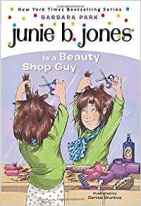
Pippi LongstockingJunie B. Jones is a Beauty Shop Guy by Barbara Park

Madeline

Junie B. Jones

Beverly Cleary’s Ramona series

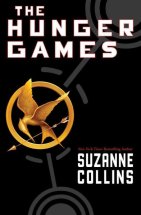
The Hunger Games by Suzanne CollinsThe Hunger Games 

Divergent

Maisy

Little House on the Prairie series

OliviaEloise by Kay Thompson

Eloise

Matilda

Coraline

The Golden Compass by Philip PullmanIvy and Bean

The Golden Compass

Matched

Mandy

Ella Enchnted by Gail Carson LevineElla Enchanted

Cinder

Beka Cooper series

Blueberries for Sal


March is Women’s History Month

Today’s post comes to us from Bill, Head of Adult Services.
100 years ago, in 1919, women DID NOT have the Constitutional right to vote.  That’s right – your grandmothers or great-grandmothers were second class citizens!  The 19th Amendment to the Constitution – which granted women the right to vote, would not be passed until the following year – 1920.  Yet today there are 102 women serving in the House of Representatives, 25 serving in the Senate, and 3 seated on the Supreme Court.
<
Read – listen – watch and learn the stories of the women of today – and yesterday – whose strong, influential, and groundbreaking actions impacted our country.  The lives of the famous and not so famous paint a picture of women’s experiences in America and how they helped build our nation.
>
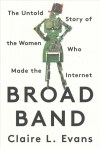
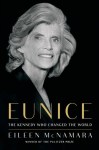
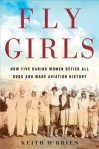
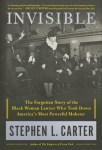
Explore more about the role of women in shaping our history with these books from our shelves:
And these titles available to Cheshire Library cardholders in multiple formats:
Learn more about women in history: https://www.biography.com/tag/womens-history
Learn more about Women’s History Month: https://womenshistorymonth.gov/about/