 On July 21, it will be FIFTY years since mankind first walked on the Moon.
Although the Russians – with superior rocket power – managed to get not only the first satellite in space, but the first man in orbit, first woman in orbit, and smash the first man-made object into the moon, it wasn’t until May of 1961 when President John F. Kennedy gave his famous speech, challenging America that “this nation should commit itself to achieving the goal, before this decade is out, of landing a man on the moon and returning him safely to the Earth.”
United for the Cause
Perhaps no other statement since Roosevelt’s “Date which will live in infamy…” speech has done more to stir an entire nation in a single united direction. Congress allotted funding. The infant technology industry ramped up. Mylar was invented. Velcro found a use. Manufacturing learned to miniaturize (in a time of bulky tubes and transistors, when each reel of magnetic computer tape could hold a whopping 184 Kilobytes of memory  [for reference, an MP3 recording of the Star Spangled Banner runs around 900 Kb – half your memory]). The entire country surged forward with that dream, no doubt spurred on as an homage to Kennedy following his assassination. TV picked up the dream with serious and non-serious programs like Star Trek, Lost in Space, Dr. Who, and more. Movies gave way to huge spectacles, such as 2001: A Space Odyssey, Planet of the Apes, and a few thousand campy pulp films. Food wasn’t left out: the need to eat in space gave us the use of TANG, dehydrated ice cream, and Pillsbury Space Food Sticks.
The Final Frontier
The road to the moon was littered with failures – we d idn’t even manage to smash a probe onto the moon until 1962. We made it through the Gemini program, only to learn that some things couldn’t be rushed or corners cut when the Apollo 1 crew – Gus Grissom, Ed White, and Roger Chaffee – burned to death in an oxygen fire in a test module, because the pressurized doors opened the wrong way. This led to a pause – there was no Apollo 2 or 3, and 4-5-6 were all unmanned. If ever there was a lot of pressure on a crew, Apollo 7 was the first 3-manned crew to blast off Earth, period. Missions 8-10 looped the moon, giving us the famous Earthrise photo.
Apollo 11 pulled it all together. With less computer capability than an Apple watch, the  lunar lander settled on the moon, Armstrong sent out the famous words, “The Eagle has landed,” followed shortly by Armstrong’s historic “One small step for man, one giant leap for mankind.” At the end of an incredibly violent, divisive, depressing decade, the entire world came together for a few brief moments to rejoice.
Fifty years later, we sit back on our Tempur-pedic cushions with our cell phones, tablets, LED lights, and flat-screen TVs, watching through scratch-proof lenses or LASIK-fixed eyes (all outgrowths of the space program), and marvel at a time when space exploration was our future.
Deniers
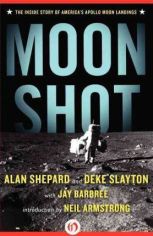
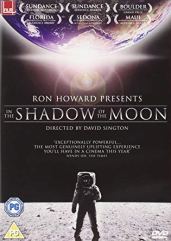
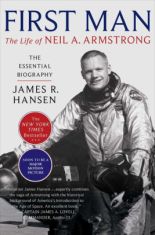
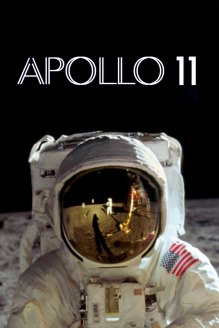
How do we know it wasn’t faked? Like everywhere Man goes, we left our garbage behind – landing modules, rovers, flags and plaques – more than 400,000 pounds worth, and though they can’t be seen by any telescope on Earth (you’re talking a 10-foot object from 239,000 miles away), they can by orbital satellites around the Moon. The path to space is far too complex for a blog post, so grab a good book, watch a good film (join us for a viewing of the documentary Apollo 11 at CPL on July 18), and think on just how different our lives would be if we never tried to reach for the Moon.



 Early literacy programs at public libraries have changed significantly over the years. Early literacy is everything a child knows about reading and writing before he or she can read or write, typically between the ages of 0-5. Traditionally, children’s library programs focused on the education of children. Today, these programs focus on the education of the parent or caregiver. If you attend
  You can sing in the car whenever you’re traveling and you never have to worry about other people hearing your singing voice.
 Caregivers have the most important role in developing a child’s reading skills, so it is important that you practice these techniques as often as possible. I encourage you to visit the library and check out some of the early literacy programs and resources that we have. To see our full events calendar, you can go to


 And don’t forget to sign up for our summer reading program for kids and adults :
  It’s not just a snappy title – I really do have enormous faith and trust in a dog. My husband is blind and he (and I) depend every day upon the amazing skills of his guide dog Becca to help him navigate his world. I can go off to work and not worry about him, because I know he and Becca will manage perfectly well. They’re not stuck at home and are never bored. They go on long walks, golf, visit friends… at this point they actually have a much richer social life than I do! I am filled with wonder every time I see the two of them working together – she warns him of curbs, cars, and dangers both underfoot and at head height, she finds doors, counters, empty seats, and me (!) whenever needed and with great determination and enthusiasm.
 Once we were shopping at the grocery store, and a family with children walked by. The parents conscientiously cautioned their kids about not distracting Becca while she was working, telling them that she was a service dog. The littlest child wasn’t quite sure what a service dog was, but he used his own best judgement, and looked out for us for the rest of our shopping trip. He alerted everyone: “Don’t bother that dog- she’s a serious dog!” every time we crossed paths. It was adorable, but he was absolutely correct- Becca is a very serious dog when she is working.
 members of the military with their operations. Police dogs, often called K-9s, are trained specifically to assist police and other law-enforcement personnel in the line of duty. Search and rescue dogs have high energy, great stamina and focus. These highly trained animals serve in many different fields, including tracking, specialized search, avalanche rescue, and cadaver location. Therapy dogs offer emotional support to sick or injured persons, often visiting hospitals, schools, hospices, nursing homes and more. Service dogs are working dogs that have been specially trained to assist persons with disabilities.
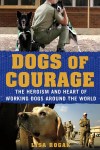
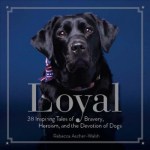


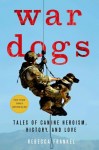

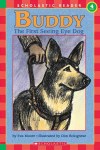


 Podcasting is rapidly becoming the newest and most easily consumable form of storytelling. As of June 2018, iTunes features more than 500,000 active podcasts, including content in more than 100 languages and over 18.5 million episodes. Now if you’re new to podcasts, this number can be overwhelming, how are you supposed to sift through a sea of seemingly endless possibilities to find the hosts, and topic, that keep you listening? To be fair, a lot of listening is trial and error. Maybe you don’t like the hosts tone, or their voice, or maybe the topic just doesn’t grab your attention, but stay vigilant, there are enough podcasts in the world for everyone, there must be one for you! I’ve compiled a list of podcasts that are easy to get into for beginners, based on (of course) your favorite books, all of which can be found at the Cheshire Public Library!





 Mars, our nearest planetary neighbor, has always fascinated science fiction writers here on planet earth. Science fiction about Mars began with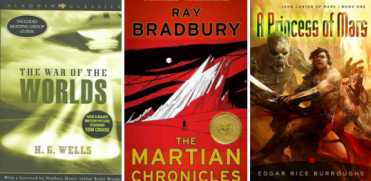
 Beginning in the 1970s, the first NASA and Russian probes and rovers obtained real scientific data about Mars. Once sci fi writers realized that there were no little green men on Mars, science fiction tackled more realistic Martian topics and focused on the challenges of human colonization on the red planet. A major sci fi theme was terraforming Mars to make it into a self-sustaining environment that was fit for life that developed on earth. Another major theme was what type of society and governmental structure might exist in a Mars colony.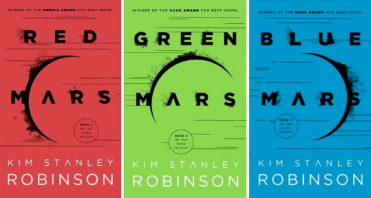
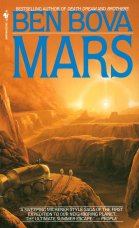 Ben Bova has written four related novels about Mars:
  The Martian
 The Cheshire Library Blog