What, I ask you, is better that curling up inside with good book when it’s cold and blustery outside? So grab a blanket and a hot beverage, throw another log on the fire, and grab a couple of library books to cozy up with during the long winter nights ahead.
Here are ten to tempt you:
Beartown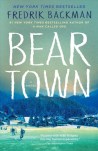 by Frederik Backman. People say Beartown is finished. But down by the lake stands an old ice rink, built generations ago by the working men who founded this town. And in that ice rink is the reason people in Beartown believe tomorrow will be better than today junior ice hockey team is about to compete in the national semifinals.
Winter Solstice by Rosamunde Pilcher. Five people, buffeted by life’s difficulties, come together at a rundown estate house in Northern Scotland during a revelatory Winter Solstice.
 by Josie Silver. Tells the story of Jack and Laurie, who meet at a bus stop and continue to circle each other’s lives seemingly fated to be together, except not actually managing it, for a ten years.
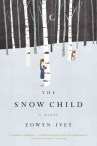 by Eowyn Ivey. A childless couple working a farm in the brutal landscape of 1920 Alaska discover a little girl living in the wilderness, with a red fox as a companion, and begin to love the strange, almost-supernatural child as their own.
 by Jo Nesbø. In Oslo, after the first snow of the season has fallen, a woman disappears, and a sinister snowman is left in her wake. Detective Harry Hole realizes that this is only one of multiple disappearances, he begins to think a serial killer may be at work.
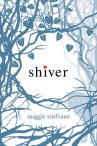 by Maggie Stiefvater. Sam has lived two lives: In winter, the frozen woods, the protection of the pack, and the silent company of a fearless girl. In summer, a few precious months of being human . . . until the cold makes him shift back again.
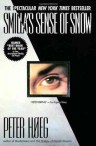 by Peter Høeg. Isaiah, the son of one of Smilla Jasperson’s neighbors, is found face-down in the snow outside her Copenhagen apartment building. Smilla quickly rejects the official verdict of accidental death when she observes the footprints the boy left in the snow, and starts investigating.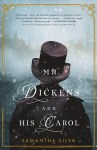
Mr. Dickens and His Carol by Samantha Silva. After poor reviews about his latest book, writer Charles Dickens is given a one-month ultimatum by his publisher to write a successful, nostalgic Christmas book, a challenge that is complicated by self-doubt and the hardships of an impoverished young woman and her son.
Little Women by Louisa May Alcott. The classic tale chronicles the joys and sorrows of the four March sisters as they grow into young ladies in nineteenth-century New England.
 The Golden Compass by Philip Pullman. In an alternative world in which every human being is accompanied by an animal familiar, the disappearance of several children prompts Lyra and her bear protector to undertake a journey to the frozen Arctic in pursuit of kidnappers.

 released on a population that had little to no immunity. Measles has been around for millennia, but viruses mutate. Mutations are accidents during reproduction – like the first case of left-handedness, or blue eyes. Viruses can reproduce rapidly inside a cell; if they multiply every 20 minutes, and if you expect one accident every 1,000 generations, that’s 1600 mutations every eight hours. Some mutations can render a virus or bacteria weaker. But sometimes, they become more dangerous.
 I don’t know why, but I’ve read almost every book by anyone who’s worked on Ebola.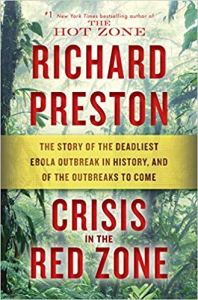
 However, there is now hope –


















 Every novel must be edited, rewritten, checked, rechecked, spellchecked, polished, and inconsistencies and logic errors ironed out. Plot holes must be sewn shut. Grammar – please, oh please – must be fixed. No manuscript goes to an agent or publisher on the rough draft. Most writers doesn’t even let their beta readers – those friends whose opinions they trust – read their rough draft. You might slap that story together in 30 days, but the editing and rewrites are more likely to take months. And even when you’ve edited it twelve times, made the corrections of six beta readers, run it through grammar and spell check, there will still be some error that everything has still missed.
  . Learn editing. If you have a question, check it on the internet. Check your facts – if you aren’t sure an African Swallow can carry a coconut, look it up. Cross-reference to make sure your source is correct. Author




 The Cheshire Library Blog