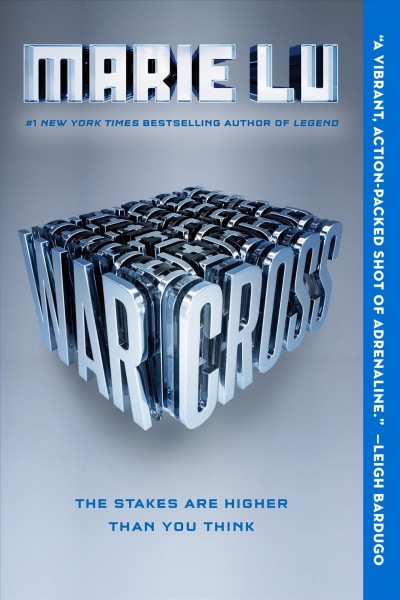
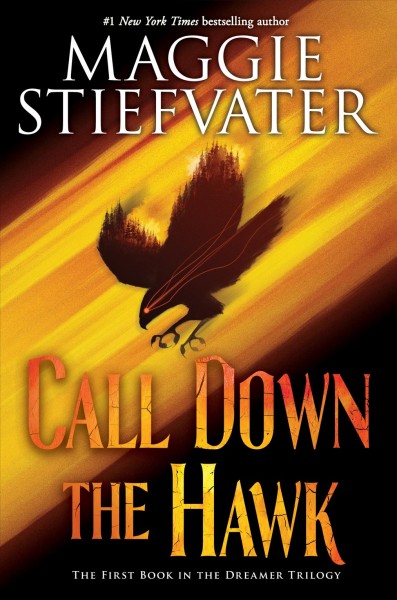
When Art Imitates Life

Anne Perry is an accomplished mystery writer with more than forty novels to her name, including the Thomas Pitt series, the Daniel Pitt series, the William Monk series, and more. Many of her novels take place around World War I. 

She’s also a convicted murderer.

A friend from college – who is also a librarian – told me this while I was reading Death with a Double Edge, the fourth of her Daniel Pitt series. And thereby hangs a tale.

Perry (whose birth name was Juliet Hulme) was born in England but spent much of her childhood in the Bahamas, South Africa, and New Zealand. As a teen in New Zealand, she became fast friends with a girl named Pauline Parker. Their friendship was so tight it bordered on obsessive, with the girls creating rich fantasy worlds they pretended to live in, and throwing tantrums if they couldn’t be together.

When Perry was 15, her mother was caught in an affair, and her parents decided to divorce. Perry was going to be sent to South Africa to stay with relatives for a while. This sent the friends into a panic. They asked Pauline’s mother if Pauline could go with Anne/Juliet, and her mother said no. Pauline then, in the short-sighted way children have, decided to kill her mother, freeing Pauline to travel with Anne/Juliet. When Anne hesitated, Pauline threatened to kill herself if Anne didn’t help. Just three days later, while walking with Pauline’s mother, the girls beat her to death with a brick – a deed that took twenty savage blows.

Perry and Hulme were caught quickly. They were too young for the death penalty, and both wound up serving five years in prison. They didn’t speak to each other again. Perry eventually settled in the United Kingdom, where she lived a quiet, penitent life and took up writing mysteries that often had a theme of redemption. It wasn’t until 1994, when no one less than Peter Jackson made a movie about the crime (Heavenly Creatures), that a New Zealand journalist outed her as Juliet Hulme – three days before the release of the film. No one had spoken to her to get any actual facts about the crime, and the film remains highly fictionalized.

Is Perry the only author who has done hard time? Of course not. Mystery writer Dashiell Hammett did six months in jail for contempt of court. Nelson Algren, who wrote Man With the Golden Arm, spent five months in jail for stealing a typewriter. William S. Burroughs, author of The Naked Lunch, first spent time for forging a prescription, but later killed his common-law wife after a drunken argument while in Mexico. He escaped prosecution by fleeing back to the United States. Chester Himes was sent to jail for eight years at the age of 19 for armed robbery, where he began to write such novels as A Rage in Harlem and Cotton Comes to Harlem. In all cases, incarceration, even for a little while, made a huge impact on the writer and their view of the world.

Anne Perry’s latest book, Three Debts Paid, a fifth volume of the Daniel Pitt series, was released in April.

Graphic Novel Adaptations: Old Stories with a New Twist

Graphic novel adaptations are not new, comic books based on classic literature could be found as early as the 1940’s and 50’s. Lately, however, there’s been a new crop of adaptations in graphic novel format that deserve some attention. While an adaptation of a book can never take the place of the original, it has value as a companion piece to the original, offering a fresh perspective on a well-established tale. This is particularly true of graphic novel adaptations, where illustrations and a change in pace can breathe new life into an older book. Even when a book isn’t all that old, a graphic novel interpretation allows us to see the story from a different angle.

We have a whole bunch of graphic novel adaptations on our shelves, for all ages. Here are some of our favorites.

FOR ADULTS:

The Handmaid’s Tale, original story by Margaret Atwood ; art & adaptation by Renée Nault.

Animal Farm, original story by George Orwell ; adapted and illustrated by Odyr.

The Great Gatsby, original story by F. Scott Fitzgerald ; illustrated by Aya Morton ; text adapted by Fred Fordham

Small Gods : a Discworld graphic novel, original story by Terry Pratchett ; adaptation by Ray Friesen

City of Glass, original story by Paul Auster ; adaptation by Paul Karasik and David Mazzucchelli

American Gods 1: Shadows, story and words by Neil Gaiman ; art by Scott Hampton 

A Game of Thrones, original story by George R.R. Martin ; adapted by Daniel Abraham ; art by Tommy Patterson

FOR TEENS (and adults, too!):

The Hobbit, original story by J.R.R. Tolkien ; adapted by Charles Dixon with Sean Deming : illustrated by David Wenzel

To Kill a Mockingbird, original story by Harper Lee ; adapted and illustrated by Fred Fordham

Jane (based on Jane Eyre by Charlotte Brontë), written by Aline Brosh McKenna ; illustrated by Ramón K. Pérez 

Poe : Stories and Poems, original content by Edgar Allan Poe ; adapted by Gareth Hinds

A Wrinkle in Time, original story by Madeleine L’Engle ; adapted and illustrated by Hope Larson

The Giver, original story by Lois Lowry ; adapted by P. Craig Russell ; illustrated by P. Craig Russell, Galen Showman, Scott Hampton

Speak, by Laurie Halse Anderson ; artwork by Emily Carroll

FOR MIDDLE GRADE READERS:

Meg, Jo, Beth, and Amy (based on Little Women by Louisa May Alcott) ; adapted by Rey Terciero ; pencils by Bre Indigo

Anne Frank’s Diary ; adapted by Ari Folman ; illustrations by David Polonsky

The Graveyard Book, original story by Neil Gaiman ; adapted by: P. Craig Russell ; illustrated by: Kevin Nowlan, P. Craig Russell, Tony Harris, Scott Hampton, Galen Showman, Jill Thompson, Stephen B. Scott

Anne of Green Gables, original story by L. M. Montgomery ; adapted by Mariah Marsden & Brenna Thummler

The Secret Garden on 81st Street (based on The Secret Garden by Frances Hodgson Burnett) ; adapted by Ivy Noelle Weir ; illustrated by Amber Padilla

The Witches, original story by Roald Dahl ; adapted and illustrated by Pénélope Bagieu

Oz : the manga, original story by L. Frank Baum ; adapted by David Hutchison

Re-Covery

They tell you not to judge a book by its cover, but a book cover can make or break a book’s success. While browsing a used bookstore decades ago, I fell utterly in love with the covers of a book series I’d never heard of before – DragonLance, by Margaret Weiss and Tracy Hickman. I had to buy them, even just to look at the covers. The cover paintings were done by Larry Elmore, one of the premiere fantasy artists of the time. I’d never gotten too much into sword and sorcery books, but I devoured these. The second trilogy was still being written, and it was agony waiting for the next book in the series. I love those books to this day; they influence my own writing and imagination, and all because I had to have that book cover.

And nothing, of course, is more infuriating than when they change that book cover you know and love, and not usually for the better. Have you read this book? The title looks familiar, but not the cover … and then you start to read and find out yes, you’ve read it before, they changed the cover on you. Why?

There are many reasons a book gets a new cover. It may have changed publishers. It may be the paperback edition of a hardcover, or a school edition, or an audiobook – and audiobook companies, who often have a middleman, don’t always get permission to use the same cover. It may be a new printing – if a book contract agrees to a run of 5,000 copies, and 6,000 are ordered, the book may get a new distribution run, resulting in a new cover. The book may have been sold to a new publisher – such as Bantam Books being sold to Random House. Random House will then reissue a strong seller with their own brand of cover. If a movie or TV series is made from the book, a new edition will be released with a cover that reflects the new media, as happened with Lord of the Rings and Ready Player One. Sometimes the publisher gets flack because the cover has absolutely nothing to do with the story, and they rework it.

Sometimes, it’s hard to keep up, and sometimes, the cover art makes you scratch your head. Take, for example, the book Alas, Babylon, a 1959 novel of nuclear apocalypse that, if it’s not still my absolute favorite novel, it’s in my top three. First below is the cover I read it with – sensible, with the red/orange color of disaster and warning and nuclear fire, and people walking out of it. Compare that with the many covers it’s had since 1959:

The current one, number two above, a fourth edition by Harper Collins, to me, is puzzling – small font, an empty boardwalk, and a hand? This is not a cover that invites me to read, tells me a single thing about the story. Perhaps, after so many editions, they run out of ideas. Another fact: it’s very rare an author gets to choose the cover of their book – or have any input at all. You may submit your perfect dream cover along with your manuscript, and the publisher will toss it and give the work to one of their contracted artists. This is how you wind up with a blonde, blue-eyed heroine on the cover when the main character has short black hair.

Book covers also reflect what seems to be popular – a few years ago it seemed every book had a girl rolling around on the ground. If one sells, then everyone wants to copy that success. The bottom half of a face? Those are popular. Romance novel covers were almost interchangeable – how many were based on the model Fabio?  This year, pink is supposed to be “in” for covers again, as well as layered graphics and bold lettering.

Don’t like a book cover? Let the publisher know! Editors read the books, not the artists, or the publisher. If they’ve missed the mark, tell them. Authors depend on good covers to grab readers; if the cover isn’t intriguing, it’s wasting money.

What book covers have hit the mark, reached out and grabbed you so you had to read it?

What types of covers make you walk away?

Has a book cover ever made you angry?

Let us know!

The Nobel Dylan

If you’re under thirty, you might ask, “Who’s Bob Dylan?”

If you’re over thirty, you might ask, “Bob Dylan’s still alive?”

Yes, Dylan’s still alive, though he’s 80 now, and a lot wealthier for having sold his entire recorded catalog to Sony music, a deal worth between $150 and $200 million

That’s a lot of social security.

Dylan, most widely known for folk and folk-rock music, has a career spanning more than 60 years. With more than 500 songs under his belt – many of them covers sung by other artists and movie soundtracks – he ranks in the top 30 most successful musicians of all time (The Beatles being number one, and Michael Jackson being number two). You may recognize not only Blowin’ in the Wind (a top hit for Peter, Paul, and Mary as well), but Quinn the Eskimo (made a hit by Manfred Mann), Too Much of Nothing (another Peter, Paul, and Mary hit), and Knockin’ on Heaven’s Door, which became a major hit for Eric Clapton – all written by Dylan.  In addition, he was a founding member of the Traveling Wilburys, a short-lived group (1988-91) composed of the royal powerhouse of Dylan, George Harrison, Tom Petty, Roy Orbison, and Jeff Lynne. 

Dylan with Rubin Carter, a free man

Dylan, following in the social justice footsteps of Woody Guthrie and Pete Seeger, wrote the ballad Hurricane in 1975, based on the arrest of boxer Rubin Carter for a 1966 murder he didn’t commit and who was sentenced to two consecutive life sentences. Dylan played several concerts to raise money for his defense. Carter was found to have been unfairly tried in 1985, and released. In 1999, a movie version of his story was released, with Denzel Washington playing Carter.

If that’s not enough of a resume, Dylan is the only American songwriter to be awarded a Nobel Prize for Literature in 2016 – yeah, that Nobel Prize – for “creating new poetic expressions within the great American song tradition.”  He’s only the second songwriter to ever be awarded the prize, the first going to the prolific Indian poet Rabindranath Tagore, who wrote more than 2000 songs – back in 1913.

Dylan on his own can be hard on the uninitiated. His voice is nasally and sometimes whiny, and the socially conscious ballad style of the 1930’s and 40’s isn’t in a resurgence as it was in the 60’s, but that doesn’t mean you shouldn’t listen. Dylan has a wide variety of songs and styles, and if you don’t like him singing it, look for someone else performing the song (Joan Baez does several, but she can also be nasally and whiny. Her song Diamonds and Rust is allegedly about Dylan.). With a resume like that, there’s a lot to like.

Try these biographies on Dylan, too!

The Double Life of Bob Dylan
Chronicles
Down the Highway
Bob Dylan in America

Teen Book Reviews: Anger is a Gift and The Hate U Give

Teens: did you know that you can earn community service credit for writing a book review and submitting it to us? Today, we’ll hear from a teen who did just that. Find out more about how to earn community service hours from home at cheshirelibrary.org/teens/.

Anger is a Gift by Mark Oshiro, reviewed by Ali A.

Anger Is a Gift is about the life of Moss Jeffries, a black teen living in Oakland. When Moss was 10, his father was shot down by police officers because the police told him to put his hands up but he had earbuds in and couldn’t hear them. Since then, Moss and his mother have been quiet and haven’t attended protests for other black people dying due to police brutality. However in Moss’s sophmore year his school turns into a prison. Police officers roam the hallways and make random locker inspections for no reason. Although Moss and his classmates don’t like it, they still tolerate it.

One day the police order one of Moss’s friends, Shawna Meyers to come for a locker inspection. The officer ravenously searches through her locker until he finds a large bag of white pills in the back. The officer violently assaulted her so bad that she couldn’t explain why she had the pills in her locker. Finally after she could speak she said the bag was for her prescription medicine. The officer who assaulted her didn’t get in trouble though. Soon after that incident, the school added in metal detectors. Moss’s friend Reg is in crutches and says it’s too dangerous for him to go through the machine. He said he’d rather have a pat-down but when Reg told the officer this the officer picked up Reg and threw him through the detectors. The damage on Reg’s leg was so bad that he was told by doctors he might never be able to walk normally again.

After all this, Moss and his classmates feel like this is enough. They decide to make a peaceful walk-out protest where all students walk out of the school at a specific time. However the school is notified about this mini-protest so they order officers in full riot gear to prevent the students from walking out of the school. The officers used tear gas, portable grenades, and batons. One of the officers, James Daley, pulled out a gun and shoots at Moss’s best friend Javier. James Daley then runs off and hides from society. Moss is depressed and decides to chain himself to a pole until James Daley is persecuted. What happens next is beyond Moss’s imagination. Anger Is a Gift shows the cruel reality and harshness that black people have to face in their daily lives. If you enjoy this book, you should also check out The Hate U Give by Angie Thomas (reviewed below).

4 Stars.

The Hate U Give by Angie Thomas, reviewed by Ali A.

The Hate U Give is perhaps the best book regarding racism for teenagers. The story revolves around the life of Starr Carter, a sixteen-year-old who witnesses the death of her childhood best friend. Starr attends a predominantly white school to escape the threats of her black neighborhood. Because of this, Starr is always switching between her two worlds, the white world and the black world. In the white world, everything is peaceful and Starr can be happy and safe. However in the black world, Starr is constantly facing violence, gangbangers, and drugs.

Starr never gets high but finally attends her first party in her black neighborhood. At the party, Starr spots Khalil, her childhood best friend. Starr hadn’t seen him in six months but Khalil and Starr start chatting. However the party is cut short when a shootout occurs outside the party site. Khalil drives Starr home to be safe but as Khalil is driving home a racist white cop pulls them over. Starr is silent and looks down as the officer demands to see Khalil’s license, registration, and insurance just because Khalil is black. Instead of Khalil showing the officer his papers right away, he asks the officer why he pulled them over. The officer didn’t respond as the officer became more frustrated he shot Khalil for not listening. Khalil’s death becomes news across the country and the officer who shot Khalil is put under trial. Starr wants to get justice for her friend, but doesn’t know if she should raise her voice because of the danger and threats she may receive.

Angie Thomas did a marvelous job crafting this book because The Hate U Give shows readers how many black people get mistreated throughout America and why it is important to speak up for racial justice.

5 Stars