So many screen adaptations, so little time! There are so many books coming to big and small screens this year, it’s easy to lose track or what’s coming out when. We’ve put together a list of some adaptations that we’re really looking forward to this year – some have release dates, some do not, but the list will give us time to read as many books as we can before their adaptations come out! Which books are you most looking forward to seeing on the screen this year?
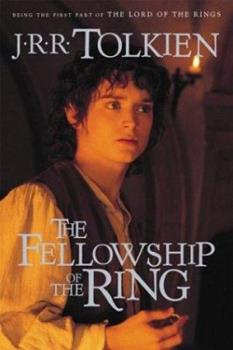
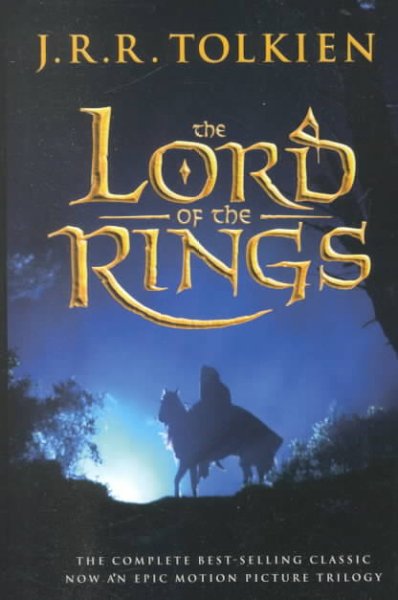
When it comes to epic book series impossible to film, first came Lord of the Rings, (which was done marvelously at last but needed more than 10 hours of screen time).
Then came Dune.
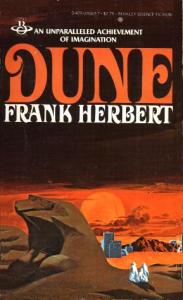
Dune, by Frank Herbert, is considered the best-selling Science-Fiction novel of all time (though it’s far more Game of Thronesthan space ships), with more than 12 million copies sold in 14 languages. It tied for the 1966 Hugo Award. And like Lord of the Rings, getting it to film is a Holy Grail of filmmakers.
Dune tells the far-distant-future story of Duke Leto Atreides, who is given the stewardship of the desert planet Arrakis, also known as Dune. Dune is the only place in the universe where the spice Melange exists – a spice that not only can alter your mind, in some species it lets them fold time and space, creating almost instant space travel. “He who controls the spice, controls the universe.” Thus, Dune is a hotbed of politics and backstabbing. When the Duke is murdered, his son Paul, deemed an abomination by a powerful religious group, is seen as a prophesied savior by the natives of Dune. So begins the battle for control of Dune. The book is an immersive, detailed, visionary epic of grand scope (there’s a dictionary in the back). When you read the book, you are on Dune. This is a book that sticks with you for years to come.
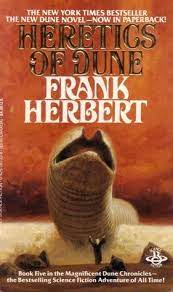
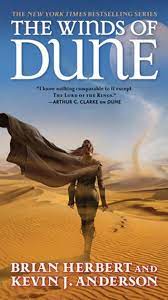
Herbert wrote five books to the series; his son Brian added another twelve after his death. Dune – even just the first installment – is a novel of such grand scope (like GOT and LOTR) that putting it to film has been almost laughable – think of Rankin Bass’s 90-minute adaption of The Hobbit.Game of Thrones took 8 years and more than 73 hours to tell – can you imagine it as a three-hour theater film and have it make sense? It was tried in the 70’s, but after 3 years of attempts, the budget just couldn’t be managed. In 1984, David Lynch did make it, condensing much of the book to ethereal voiceovers, changing major points to condense action, and adding some now-cheesy early computer effects (the blue contacts of the Fremen didn’t work, and every frame of the film had to be colored by hand). It’s a film you either love or hate, with musician Sting as Feyd Rautha famously flexing in a winged bikini.
In 2000, SyFy channel did two Dune mini-series, which were much better received, won several awards, yet seemed to fade into obscurity faster than Lynch’s version, with the chief complaint it stuck too close to the source material, and dragged. Now, thanks to Warner Bros and HBO, we have a $165 million dollar spectacle by Denis Villeneuve that covers – only half the book, with a sequel (hopefully the second half) due in 2023.
While the film has been viewed favorably, the scenery and cinematography spectacular, Villeneuve took many liberties with the material that once again changes the focus and depth of the story. To modernize it, he gender-swapped characters (which goes against the society Herbert wrote) and changed the roles of other women (no, the Bene Gesserit. He left out much of the religious aspect, the mysticism, even avoided the word jihad, used by the Fremen. It gives a sanitized, whitewashed view of the story, afraid of offending anyone. Herbert believed that modern societies will always decay back to a feudalistic society, and that the desert cultures, especially those of the Middle East, were more prone to messianic complexes and religious wars (remember, he’s writing in 1964 or so, when the Middle East was still rather bland politically. Think Star Wars and Tatooine, or The Great Humongous in Road Warrior, etc. There’s a lot to be said for that theory). To remove the root of the story – is it still the same story? Can anyone ever make a decent, book-abiding video version of Dune?
If you can’t wait for the new film to come out on DVD (or, rather, the first half of the book), check out the book series itself. Few things are better than the source material.
I can give up Sting in his bikini (though I thought he was a perfect Feyd), but there is no better Gurney Halleck than pre-Captain Picard Patrick Stewart. That’s my opinion, and I’m sticking to it!
Have you given anything a Bechdel test? Have you ever heard of the Bechdel Test? I’d never heard of it either (and I went to a women’s college!) until it popped up on an internet group I belong to, and I had to look it up.
The Bechdel test (or Bechdel-Wallace test) is a measure of representation of women in fiction. It first appeared in Allison Bechdel’s 1985 cartoon strip, Dykes to Watch Out For (I didn’t name it) commenting on films, brought on by a quote from Virginia Woolf, in that women in fiction might sometimes be mother and daughter, but rarely are two women friends in literature. Almost always, women were viewed by their relationship to men – wanting a man, chasing a man, depending on a man, chasing off a man, etc. (Hence Jane Austen, “It is a truth universally acknowledged, that a single man in possession of a good fortune, must be in want of a wife.”). Real women in real life talk to other women about more than just men (even if it’s only about their cat or dog).
Therefore, Bechdel gave three commandments for films to be considered women-friendly (and by default, TV and books):
It must have at least two women in it (preferably with names)
Who talk to each other (preferably for at least 60 seconds)
About something besides a man
And the off-hand comment in a sarcastic lesbian cartoon strip surged until it’s become an almost a standard metric for the industry.
Seems pretty simple, right?
Various groups have researched more than 8000 films, and concluded that 42-50% of films cannot pass the test, and half of those that do pass do so only because two women are discussing marriage or babies. Being a female-oriented show about women does not mean the film or program can pass the test. Even female-cast TV shows such as Sex in the City don’t pass, because almost all the discussion is about men. Big-budget female-lead action films such as Lucy or Atomic Blonde or Salt fail, because the secondary characters are almost always men – there are no other women. Star Trek, which broke many TV taboos, can’t pass the test – there are many women, and they talk quite a bit, but almost never to each other. Lost in Space had three women trapped in a tin can together, and they almost never spoke to each other for more than one or two lines, occasionally. Firefly, for its very brief run, hits the mark more often than not. Okay,I Love Lucywins for most realistic female friends ever, as does Gone With the Wind, thanks to Miss Melly, so time period is not a decisive factor. We haven’t necessarily gotten better with age, despite feminism.
Not passing the Bechdel test does NOT make a film bad, nor does it make it not worth watching. Not every movie is going to center around women – Dunkirk, for example, a splendid movie about a specific battle in World War II. Women were just not involved in that. Stand By Me – a magnificent story of four young boys on a quest. Girls aren’t in the story, and if you skip this movie because of that, then you’re missing one of the best American movies. Nor is every film required to pass the Bechdel test.Casino passes two of the three qualifications, but women are mistreated throughout the film. Inclusion is just that – inclusion, not a judgment of how women are treated by the story, not a judgment of female competence, not a judgment of feminism (Gravity, with a female astronaut who saves the day, can’t pass the test, though The Martian, with a male lead, does). A woman may love a movie that can’t pass the test, and a man can certainly love a film that does. Movies of every genre pass or fail; there is no specific type of film to look for.
All the Bechdel test does, really, is point out films in which women – a full 50% of the population – are a larger focus of the story, and even if they aren’t, they’re portrayed as real, well-rounded people who speak to each other about real subjects, even if it’s about burning a roast, not just love-starved buttercups who are nothing without a man. So, if you’re on the lookout for films that show women – important or background characters – in a more realistic light, here are 15 various films that do pass the Bechdel test:
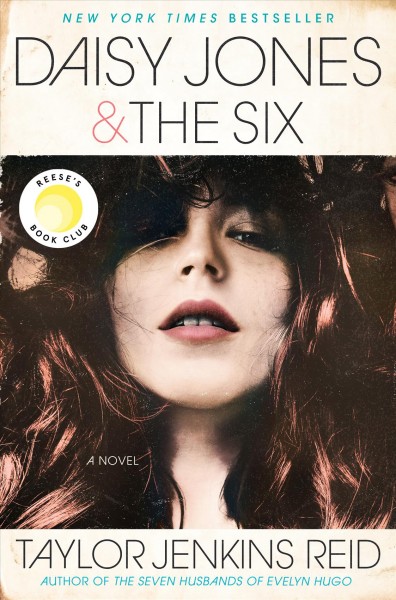
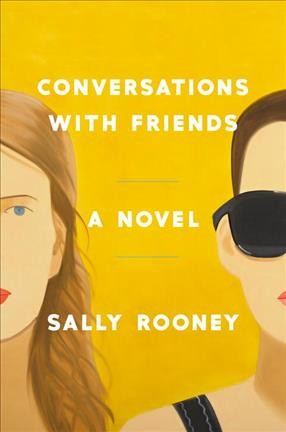
One in every five people in the US carry some sort of “mental Illness” diagnosis – 20% – making it almost twice as common as killer heart disease, yet people hear the term “mental illness” and pictures of unshaven, alcohol-soaked homeless men and babbling old women with uncombed hair and too many cats come to mind (Don’t judge me!).
In reality, that’s far from the common truth. The umbrella term of “mental illness” includes everyone from your depressed cousin, your churning anxiety over political situations, and Uncle Louie, who served in Iraq and spends most days with his friend Jack Daniels. It includes the teen with autism who works down at the laundromat (don’t jump on me; a strong majority of autism includes OCD and anxiety, with phobias topping the list at 30%), the hoarder you drive past on your way to work, that girl on the cheerleading team who wears a baggy size 0, and that guy at work who stays four hours later than anyone else and talks so fast you can’t follow him. It includes celebrities, like Robin Williams, Margot Kidder, Robert Downey Jr, Brittney Spears, Carrie Fisher, Brooke Shields, and so many more.
“Mental Illness” is more common than COVID.
While some introverts have fared well through the pandemic and quarantines, many people have not. Rates of depression in adults went from 8% pre-pandemic to 28% – almost one in three – after. For those who lived alone, the rates approach 40%. Isolation, job loss, poverty, loss of loved ones, anxiety, and long-haul COVID symptoms all play their part in feeling crushed by a microbe. Among children, who can’t always understand the details of what’s going on, rates of depression and anxiety straddled 40%.
Unfortunately, our image of “mental illness” is tainted by historic images of schizophrenia, the king of all mental illnesses, and often the most resistant to treatment. We watch movies such asOne Flew Over the Cuckoo’s Nestand I Never Promised You a Rose Garden, while not remembering that these movies depict mental illness treatment from as much as 70 years ago, when diagnoses were vague, medications were ineffective and dangerous, people believed in insulin comas and the disaster of lobotomies, and there were no PET or MRI scans to show exactly what the problem was. There was a time not very long ago when the number one treatment for syphilis was mercury. Times have changed, and chances are there’s actual help for that now.
How can something affecting 30% of the population be abnormal? Here’s a fact: it’s not, but our refusal to admit it keeps people feeling ashamed and afraid to seek treatment. If you feel down, if the social distancing and anxieties are getting to you, if your child is fearful and withdrawn and having trouble sleeping, reach out! Help is just a phone call away. No insurance? No worries. There are places to help you get medical coverage, and places that work on a sliding scale. There IS help, for everyone. Don’t be afraid to ask.
If you feel like life is overwhelming you, if you are worried about a loved one, if you are struggling with just getting through your day, CALL the CT ACTION line (Adult Crisis Telephone Intervention and Options Network). It’s available 24 hours a day, because the worst thoughts usually happen during the night. 1-800-467-3135, or just call 211, which is the general help line for state services.
Don’t want to feel like you’re the only one on the planet feeling down? Check out these popular books and films on people having difficulties. Chances are, yours aren’t that bad.
Today’s post comes to us from our Deputy Director Deb, who loves a good mystery!
Many devoted mystery readers began with Agatha Christie’s classic golden age mysteries featuring Miss Jane Marple and Hercule Poirot. I certainly did! These distinctly British offerings are a perfect gateway into the world of mysteries. And like so many other British mysteries, they have been made into marvelous television series, which you can watch using the library’s new streaming video service, Acorn TV. Or you can download the books in e-book or e-audio from the library’s website.
The Agatha Raisin series by M.C. Beaton features a middle-aged woman who sells her London PR firm and moves to the country (the Cotswolds, to be precise), where, in true amateur detective fashion, she encounters—and solves– murders galore! Try the first book in the series, Agatha Raisin and the Quiche of Death, available in both audio and ebook. Or read any of the others—like so many long-running mystery series, it isn’t necessary to read them in order. Then watch Agatha Raisin on Acorn, a top pick for fans of cozy British mysteries.
One of my favorite village cozy series, also by M.C. Beaton, features the unambitious and charming policeman Hamish Macbeth who patrols the village of Lochdubh in the Scottish Highlands. I have listened to all of them on audio. The reader, Graeme Malcolm, imbues the audiobooks with such charm and personality that I’m betting you, too, will be hooked! We have more than a dozen titles available on e-audio, including Death of an Honest Man and Death of a Gossip. Then check out Hamish Macbeth on Acorn.
The Phryne Fisher series by Kerry Greenwood, featuring a glamorous private detective in 1920s Melbourne, is actually Australian, but close enough to fit in with our British theme. The supremely independent Miss Fisher has class, sass and the means to pull it all off! Try Cocaine Blues, the first in the series, or The Spotted Dog. The clothes alone make the series worth watching Miss Fisher on Acorn!
Ann Cleeves’ series featuring Detective Chief Inspector Vera Stanhope is considerably darker than the other series in this post. DCI Stanhope is a solitary, obsessed, caustic, brilliant investigator near the end of her career working in northern England. Try listening to the first in the series, The Crow Trap, or read The Seagull. And be sure to watch Vera on Acorn TV.
Set in Ireland, the long-running Jack Taylor series by Ken Bruen has been thrilling readers (and now TV fans) for years. Taylor is a classic ex-cop turned seedy private eye prowling the underbelly of Galway. Try e-book or e-audio Galway Girl or e-audio Purgatory and check out Jack Taylor on Acorn.