Jenn Reads: Mr. Penumbra’s 24-Hour Bookstore

Our mystery book club recently read Mr. Penumbra’s 24-Hour Bookstore by Robin Sloan.

A recently unemployed millennial, Clay, wonders into a curious San Francisco bookstore and leaves finding himself employed. It’s a strange bookstore- long with shelves that seem to reach towards the sky and some odd books. His boss, Mr. Penumbra, has just three rules for Clay, the most important of which is to never look inside the books on what Clay calls the “wayback shelves.”

Mr. Penumbra’s 24-Hour Bookstore by Robin Sloan

Clay works the midnight shift and encounters a few characters, all of whom want books from the “wayback shelves.” It does not take Clay long to peek into those books and open the proverbial can of worms. Along with the help of friends, Clay seeks to solve the puzzle of eternal life.

This is a book for anyone who loves to read, loves bookstores or libraries, or ponders what the future will bring. Mr. Penumbra’s 24-Hour Bookstore is a book for today, with its clash of technology and traditional ways and methods. We get asked a lot here at the library what we believe the future of print books will be with the advent of e-books. It is difficult to say for sure (no one has a crystal ball), but I would personally like to hope that print books will always be around. After all, people still use brooms even though they have vacuum cleaners!

This book also raises the question: How do will we solve problems – by using computers or our own brains? How reliant will we become on computers? Clay finds throughout the book that technology can be useful, but it also cannot do the critical and complex thinking our minds can accomplish.

Mr. Penumbra’s 24-Hour Bookstore is an easy to read, engaging, and quirky book. I enjoyed the adventure and the resolution of the puzzle (solved without the help of a computer!). There were times however, when problems were too easily solved with a ready answer or helping hand. So-and-so just happened to have that skill or know a person who could help them. It became a little too predictable. I would not recommend this book to anyone who is not at least familiar with some of the changes in technology – this book is full of 2012 popular jargon and pop culture references, which could be confusing for some.

Rating: 4 bookmarks out of 5

See you in the stacks,
Jenn
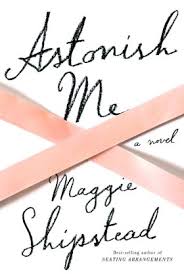
Linda Reads: Astonish Me by Maggie Shipstead

astonish meAfter reading a review, I decided to give Astonish Me a try.  I was not disappointed!  This book takes you into the fascinating world of ballet and into the complicated life of a second string dancer.  The chronological way of telling this story was, at first, awkward.  But as the book progressed, it made a complex story more interesting.  There are several ‘main’ characters, each with their own story to tell.  Ms. Shipstead deftly weaves their stories together.  While the world of dance is foremost,  you don’t have to be a lover of ballet to like this book.  This is a story of love, family, marriage, careers and the struggles of life that many can relate to.

Astonish Me is the irresistible story of Joan, a young American dancer who helps a Soviet ballet star, the great Arslan Rusakov, defect in 1975. A flash of fame and a passionate love affair follow, but Joan knows that, onstage and off, she is destined to remain in the background. She will never possess Arslan, and she will never be a prima ballerina. She will rise no higher than the corps, one dancer among many.
After her relationship with Arslan sours, Joan plots to make a new life for herself. She quits ballet, marries a good man, and settles in California with him and their son, Harry. But as the years pass, Joan comes to understand that ballet isn’t finished with her yet, for there is no mistaking that Harry is a prodigy. Through Harry, Joan is pulled back into a world she thought she’d left behind—back into dangerous secrets, and back, inevitably, to Arslan.

Maggie Shipstead

Maggie Shipstead

Maggie Shipstead is a novelist and short story writer. She is a graduate of the Iowa Writers’ Workshop and a former Wallace Stegner Fellow at Stanford. Maggie’s writing has appeared in The New York Times, The San Francisco Chronicle, Tin House, The Paris Review Daily, VQR, American Short Fiction, The Best American Short Stories, and elsewhere. Her story “La Moretta” was a 2012 National Magazine Award finalist. Her debut novel, “Seating Arrangements,” was a national bestseller and the winner of the Dylan Thomas Prize and the L.A. Times Art Seidenbaum Award for First Fiction.


Jenn Reads: The Spymistress

Female espionage in the Civil War is a new area of study, and one I am quite familiar with. My husband, Matthew, lectures frequently on four women who risked all for the sake of their country. It has been an immensely popular program, drawing crowds of more than 80 people on occasion.

The Spymistress by Jennifer Chiaverini was my pick for March for the girlfriend’s book club I run outside of the library. I had one sole purpose in selecting this book: to help me research and get ready for my own impression of a female spy in the Civil War. Matt and I have joined a reenacting group and we will be portraying a Pinkerton agent and a female detective. While this is a fictional account, I knew it would be helpful and readable for my friends.

The Spymistress tells the story of Elizabeth Van Lew, a Unionist living in Richmond during the time of the American Civil War. While not incredibly common, Unionists lived throughout the Confederacy, and Confederate sympathizers lived throughout the Union. Life was extremely difficult for these people, who had to toe a line so they

The Spymistress by Jennifer Chiaverini

wouldn’t be arrested, deemed traitors, or become social outcasts. Van Lew, 43 in 1861, lives with her mother, brother, sister-in-law, and nieces in their Richmond mansion. She’s outspoken and passionate and feels a deep need to help. But she’s not going to help the Confederacy. She’s going to help the Union.

Van Lew is able to get herself a pass for the prison holding Union soldiers and begins her work. Initially she comes bearing gifts of ginger cakes and food, medicine, and other creature comforts, but soon starts smuggling in and out information. Suspicions arise almost immediately with citizens of Richmond- why is Van Lew only helping Union prisoners? What about Confederate soldiers who have a need? Van Lew deftly uses the Bible and Christian theory, saying that Jesus taught his followers to love their enemy as themselves. And since this is a religious, church-going society, this explanation works. She also hosts a Confederate general and his family for several months in her home, puts on several lavish parties celebrating a particular regiment, and diverts suspicion.

But Van Lew’s best work comes at Libby Prison, where she is able to help Union soldiers escape. She sets up what is essentially a soldier’s underground railroad through a set of safe houses (using quilt blocks, hung outside on clotheslines). Van Lew also set up a chain of spies throughout the Confederate government and military, most notably Mary Bowser (whose real name may not have even been Mary Bowser), a freed slave who worked as a maid for Varina Davis, the first lady of the Confederacy, in the Confederate White House.

Van Lew and her chain of spies are unsung heroes of the Civil War and their stories deserve and need to be told. Van Lew truly did risk everything for her country and lived a very tragic life after the war. Imagine being a Unionist in Richmond after the war.

Chiaverini does an apt job of telling Van Lew’s story with accuracy and respect. Having already known most of Van Lew’s work and life, much in this book was not new for me. For those who are not familiar with Van Lew, I would imagine this being a welcome history and biographical lesson. Her narrative is easy to read and true to Van Lew’s character. This is not a “romantic” book, so those expecting a love story will not find one (Van Lew never married).

However, I was not wowed by this book. Perhaps because I knew too much already about Van Lew the book just fell flat. There was nothing wrong with the characterization, the narrative, or the story itself. Having listened to this book, maybe it was the reader.

Rating: 3 stars out of 5

See you in the stacks,

Jenn

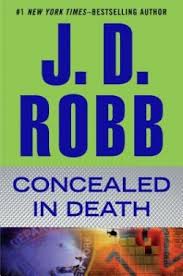
Linda Reads: Concealed In Death by J.D. Robb

conceal inI hesitated to read this book because I was very disappointed in Ms. Robb’s last ‘In Death’ title, Thankless in Death.  There have been rumors that her last few books (as J.D. Robb and Nora Roberts) were ghost written and there are arguments galore debating that topic.   But Concealed In Death was a great story.   It’s true the style of writing is a little different from earlier In Death books.  Many comments have been made about the main characters of Eve and Roarke being different.  But there have been over 50 stories written about Eve and Roarke and readers should expect that they are getting older, settling down, and wouldn’t have the same dynamic as before.

The book does lack the depth, excitement, and suspense of other In Death books.  It’s a quieter suspense, more thoughtful and introspective, with a lot more focus on the victims.  I actually found that a nice change.  There were a few twists in the story that gave the book a jolt when needed.  All in all, it was a very enjoyable read.

Summary of story:

In a decrepit, long-empty New York building, Roarke begins the demolition process by swinging a sledgehammer into a wall. When the dust clears, there are two skeletons wrapped in plastic behind it. He summons his wife, Eve Dallas immediately—and by the time she’s done with the crime scene, there are twelve murders to be solved.

The place once housed a makeshift shelter for troubled teenagers, back in the mid-2040s, and Eve tracks down the people who ran it. Between their recollections and the work of the force’s new forensic anthropologist, Eve begins to put names and faces to the remains. They are all young girls. A tattooed tough girl who dealt in illegal drugs. The runaway daughter of a pair of well-to-do doctors. They all had their stories. And they all lost their chance for a better life.

Then Eve discovers a connection between the victims and someone she knows. And she grows even more determined to reveal the secrets of the place that was called The Sanctuary—and the evil concealed in one human heart.

Jenn Reads: Shinju by Laura Joh Rowland

I’m a voracious reader, but my reading skills lately have been the pits. This cold winter weather getting anyone else down in the dumps?

I finally finished a book last night, from the stack of books that have yet to be finished. This particular one, Shinju, by Laura Joh Rowland, was supposed to be done for mystery book club two weeks ago. Ooops.

195979Shinju follows beginning investigating police office (of sorts, his official title is yoriki) Sano Ichiro in 17th century feudal Japan. Sano, a samurai/school teacher by trade, has been given this position by his supporter, a position he is initially unsuited for. He’s not bad at what he does- no, it’s that he’s a little too good at what he does, especially when things should be better left untouched, as his boss requests.

Sano is supposed to write a closing report on a shinju, or a double romantic suicide. Typically shinjus are when two people of different classes fall in love. Knowing their love will never survive and their families will not accept the relationship, the lovers commit suicide. This shinju looks like a suicide, but Sano is hesitant to close this case- and for good reason. Sano will risk everything: his job, his name, his parent’s reputation, and the lives of others, to solve this case.

The back cover of the book has a quote saying how “exotic” it is, and I suppose for some who are not familiar with the time period, it could be. My senior thesis for my history major in college was on a facet of Japanese history, so this particular era was familiar. For me, reading this book brought me back to my studies and I was thrilled to be immersed in 17th century Edo (now Tokyo). This is a world that is much different than ours, and much different than even 17th century Europe. Led by the Tokugawa regime, the government is a military dictatorship with strict rules. Religion, philosophy, and culture, for the new reader, may seem odd or strange. For several of our book clubbers, how Sano struggles throughout the book to justify his need for revenge and thirst to solve the mystery with his filial piety (extreme devotion to one’s elders, especially parents) and what is expected of him, was weird and unnecessary. But this is something a man of his time would have struggled with, and is realistic.

Many commented that the writing style was a bit elementary, but this is Rowland’s first published work, and will develop further in the series. Is this a masterpiece of mystery writing? No, but it was enjoyable for

what it was. More important to me than the mystery was the setting and time period, which I felt Rowland was spot on with.

Rating: 3 of out 5 stars. Enjoyable, but unnecessarily dense in some places where the plot line could have moved faster. Loved the time period and setting.

See you in the stacks,

Jenn