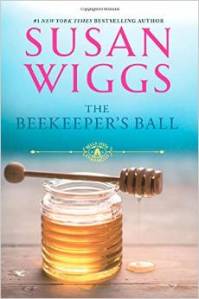
Linda Reads: The Beekeeper’s Ball by Susan Wiggs

beeThe Beekeeper’s Ball  by Susan Wiggs is book two of the Bella Vista Chronicles.  Book One, The Apple Orchard was previously reviewed here.  It is best to read book one first.

Thirty year old Isabel Johansen is a talented chef who had to suddenly leave culinary school under traumatic circumstances.  She returned to her beloved home in Archangel to transform the family estate of a beautiful hacienda, apple orchards, gardens, and beehives to a destination cooking school.  It’s a huge undertaking, especially since she is also planning her half-sister Tess’s wedding.  But a stranger shows up, and Isabel’s carefully ordered plans are put into jeopardy.

Cormac O’Neill is an award winning, world famous journalist.  Unbeknown by Isabel, he’s on his way to Bella Vista to meet Isabel’s grandfather, Magnus, to help write Magnus’ life story – a powerful, moving story of the Danish Resistance during World War II, the two women who shared his life, and the friend who helped him go to America and build his apple orchards.

Ms. Wiggs beautifully weaves the two plot lines – Magnus’s prior life, and the present day struggles of Isabel trying to build her cooking school, plan her sister’s wedding and overcome a painful episode that forced her to quit culinary school.  A sweet and understated romance blooms between Isabel and Cormac as they both learn to overcome their painful pasts.

Once again, Ms. Wiggs has written a visually appealing, moving story about love, lost, forgiveness and family.  Her incredible descriptions bring you right into the middle of World War II and smoothly transition to the lush, fragrant hills of present day California.  This book ends with the promise of an exciting story regarding Isabel and Tess’ father’s untimely death in the next installment of Bella Vista.


Linda Reads: Delancey: A Man, A Woman, A Restaurant, A Marriage by Molly Wizenberg

It’s rare for me to read a memoir,  but the title of this memoir intrigue me enough to give it a try.   I’m so glad I did!  The author is a blogger (Orangette) and the book tends to lend itself to a blogging format, but I found it to be a poignant and funny account of a marriage that takes an unexpected career path.

delanceyDelancey tells the story of Molly Wizenberg and Brandon Pettit –  a trained composer with a handful of offbeat interests: espresso machines, wooden boats, violin-building, and ice cream–making. So when Brandon decided to open a pizza restaurant, Molly was supportive—not because she wanted him to do it, but because the idea was so far-fetched that she didn’t think he would. Before she knew it, he’d signed a lease on a space. The restaurant, Delancey, was going to be a reality, and all of Molly’s assumptions about her marriage were about to change.

Together they built Delancey: gutting and renovating the space on a cobbled-together budget, developing a menu, hiring staff, and passing inspections. Delancey became a success, and Molly tried to convince herself that she was happy in their new life until—in the heat and pressure of the restaurant kitchen—she realized that she hadn’t been honest with herself or Brandon.

With evocative photos by Molly and twenty new recipes for the kind of simple, delicious food that chefs eat at home, Delancey is a moving and honest account of two young people learning to give in and let go in order to grow together.

About the author:molly

Molly Wizenberg is the voice behind Orangette, named the best food blog in the world by the London Times. Her first book, A Homemade Life: Stories and Recipes from My Kitchen Table, was a New York Times bestseller, and her work has appeared in Bon Appétit, The Washington Post, The Art of Eating, and The Guardian, and on Saveur.com and Gourmet.com. She also co-hosts the hit podcast Spilled Milk. She lives in Seattle with her husband Brandon Pettit, their daughter June, and two dogs named Jack and Alice. She and Brandon own and run the restaurants Delancey and Essex.
Source:  Amazon

Is it Time to Have THE TALK with your Kids?

It can be hard to talk about puberty, bodies, and sex with our children. Not only are we uncomfortable and hope we are picking the right words and tone, but no kids want to think about their parents in the framework of anything sexual. Heck, most of us adults do not want to think about our parents or kids in that framework either. However, discussions need to be had, and information shared. If you have seen my previous post, “Is Time to Talk About Bodies with Younger Children?, you might have already looked at some of the books I suggested for parents. Most of those books include discussion aids for children of all ages, and might make you feel more prepared for the discussion.

If your children are approaching puberty, or well on their way, they will have much different concerns and questions than a five year old wondering about the differences between boys and girls and how babies come about. So I have listed books here for the eight and older crowd, and then the tween and teen crowd that might have much more difficult questions to answer. I would suggest reading some of the books before handing them off to your curious child in order for you to gauge its appropriateness for your particular child, and to help you to handle any of the resulting conversations.

Eight and Up:
1. The Boy’s Body Guide: a Health and Hygiene Book by Frank C. Hawkins with Greta L.B. Laube ; illustrated by J.C. Hawkins

2. Ready, Set, Grow!: a What’s Happening to my Body? Book for Younger Girls by Lynda Madaras; illustrations by Linda Davick.

3. On your Mark, Get Set, Grow!: a “what’s happening to my body?” Book for Younger Boys by Lynda Madaras ; illustrations by Paul Gilligan

4. The Care & Keeping of You: the Body Book for Younger Girls by Valorie Schaefer; Cara Natterson, MD, medical consultant ; illustrated by Josee Masse

5. The Body Book for Boys by Jonathan Mar and Grace Norwich

6. Changing You!: a Guide to Body Changes and Sexuality by Gail Saltz; illustrated by Lynne Avril Cravath

7. Asking about Sex & Growing Up: a Question-and-Answer Book for Kids by Joanna Cole; illustrated by Bill Thomas.
Preteens and Teens:

1. Will Puberty Last My Whole Life?: Real Answers to Real Questions from Preteens about Body Changes, Sex, and Other Growing-up Stuff by Julie Giesy Metzger and Robert Lehman; illustrated by Lia Cerizo

2. Girl to Girl: Honest Talk about Growing up and your Changing Body by Sarah O’Leary Burningham

3. The Care & Keeping of You 2: the Body Book for Older Girls by Dr. Cara Natterson ; illustrated by Josee Masse

4. My Body, My Self for Boys by Lynda Madaras and Area Madaras.

5. The What’s Happening to my Body? Book for Girls by Lynda Madaras, with Area Madaras; drawings by Simon Sullivan

6. The What’s Happening to my Body? Book for Boys by Lynda Madaras; with Area Madaras; drawings by Simon Sullivan

7. On the Spot: Real Girls on Periods, Growing up, and Finding your Groove by Karle Dickerson

8. What’s Going on Down There?: Answers to Questions Boys Find Hard to Ask by Karen Gravelle, with Nick and Chava Castro; illustrations by Robert Leighton.

9. Girl in the Know: Your Inside-and-Out Guide to Growing Up by Anne Katz; illustrated by Monika Melnychuk

10. Sex, Puberty and All that Stuff: a Guide to Growing Up by Jacqui Bailey

11. Is This Normal?: Girls’ Questions Answered by the editors of The Care & Keeping of You illustrations by Norm Bendell

12. Girl Stuff: a Survival Guide to Growing Up by Margaret Blackstone and Elissa Haden Guest; with illustrations by Barbara Pollak

If you are still looking for more book, swing by the children’s room or the reference desk and the librarian on duty will be glad to help you out!

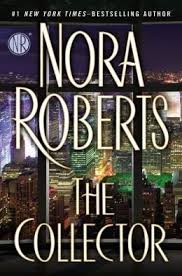
Linda Reads: The Collector by Nora Roberts

collectorAfter being disappointed in Ms. Roberts’  last book Whiskey Beach (reviewed here), I wasn’t sure what to expect from her newest, The Collector I’m happy to report I’m very pleased with this one.  It’s a bit different –  an intriguing mix of Ms. Roberts’ writing and J.D. Robb’s – making it an entertaining, edgy, romantic suspense thriller.

Lila Emerson is a quirky professional house-sitter and author of young adult werewolf books.  She enjoys living in other people’s homes and she takes great pleasure in scoping out her surroundings.  With the use of binoculars, she spies on the neighborhood and uses her vivid imagination to create stories about her neighbors.  Unfortunately, one evening she witnesses a murder.  The police conclude a boyfriend murdered his girlfriend and then took his own life.  However the boyfriend’s brother, Ashton, is sure they are wrong and enlists Lila’s help in finding out the truth.

Ashton is a famous artist and comes from a close, loving, somewhat dysfunctional family of considerable wealth – so different from Lila’s life.  Of course it’s predictable that they will fall in love, but that part of the story unfolds slowly, exquisitely, while the hunt for the truth leads to Faberge eggs, and murder.  There is a great supporting cast – Ashton’s best friend and Lila’s best friend turn out to have a history together and a lovely romance blossoms there.  The detectives working the case add some insight into the world of overworked cops with wit and humor.  We get a peak into the world of the rich and into the world of evil.  There are gruesome murders, ruthless assassins, touching love stories, great family interaction, art, antiques, cops, and humor all woven into an entertaining, engaging story.

It was fun to visit the life of a house-sitter, and an artist and learn about Faberge eggs.  Having no interest in those particular subjects, Ms. Roberts was able to keep me entertained, interested and engaged in the characters and story line.


Jenn Reads: Brave New World

Brave New World by Aldous Huxley was our April pick for the Cheshire Cats Classics Book Club.

Before there was The Hunger Games series, Maze Runner series, Legend series there was Brave New World. Huxley was one of the first authors to write a dystopian novel and all others that follow are using him as an example. He did it first and did it best. I marketed this book as the original dystopian novel, because of how popular that genre is right now. And if you want to know where these authors have likely gotten their inspiration, you need to read this book.

A few fast facts about Huxley: he taught French at Eton and George Orwell was one of his students. When Orwell published 1984, he sent a copy to his former teacher, who

Brave New World by Aldous Huxley

basically called the book garbage. Huxley died on the same day as C. S. Lewis and JFK, and both of their deaths were overshadowed by the death of the president. And he was a friend to Igor Stravinsky.

Brave New World is a book that is so similar to our own, it is scary how real this book is.

Published in 1932, Brave New World takes place almost 600 years in the future. This is a world where your future is determined at the moment of your conception. Every single child born in this world is born of the test tube and is “raised” to be one of five classes- Alpha, being the best and highest class, or Epsilon, the lowest class. You have no mother, father, and are engineered for specific tasks. You will never grow old, you will never rise above your class, and you will have no apparent free will. Life will be full of pleasurable things however- sex, drugs, mass consumption, and more.

So what makes a dystopian novel different from an utopian novel? Dystopian novels are characterized by a horrible society headed towards oblivion, while utopian novels have an ideal society. Brave New World is a utopian novel on the surface, and to those living in that society, but it’s really dystopian. There is a huge reliance on technology, instant gratification, and lots of propaganda.

Huxley was disturbed at the path the world was taking: the world had been plunged into a great economic depression, fascism and communism were taking hold across Europe, and the Industrial Revolution was continuing to change the landscape of the world. What would happen to us as a people if all of this continued? Huxley feared that we would become a people slaved to technology, conditioned for pleasure and nothing else, and drugged to reality. If you’re thinking this sounds a lot like today’s society, you would not be that far off. However, lurking on the fringes were Savage Worlds with people who had lived a much different life.

If you read Brave New World today, there are many scenes that will likely make you think twice. One for me was the scene at what I’ll call the children’s center, where children are being conditioned for certain things. This particular set of children is taught to be afraid of loud noises. What is eerie is the level of manipulation that is going on- these children have no free will. Just like our own, the world of Brave New World is a throw-away society. Something breaks, is old, is damaged, is no longer wanted- throw it away!

Huxley had supposed it would take hundreds of years for the things he wrote about to come true, but if you look hard at the world we live in today, it is a lot like the one he envisioned. Hospice, cloning/DNA/biological engineering, helicopters, and e-books were just a few of the things he prophecized for the future.

Brave New World is easy reading, but do not be fooled by the simplicity of the language or writing. Huxley has a lot to say about how we live our lives with each other, with technology, and for the future.

Rating: 3 bookmarks out of 5

See you in the stacks,

Jenn