Happy Birthday to Neil Gaiman! (November 10)

gaimanhimselfAs of November 10, 2015 Neil Gaiman is 55 years old. He is a supporter of libraries, the arts, and is everything that this librarian could want in an author. Neil is the author of books from a wide range of genre’s, and for every age group. His body of work is extensive, and includes many groundbreaking volumes. He is also the father of three children from his first marriage, now grown adults, and a new baby just born on September 16 with his wife Amanda Palmer who is a singer, song writer, performance artist, and author. To make him even cooler in my eyes, he is also good friends with singer/songwriter Tori Amos and godfather of her daughter. I am admittedly a bit of a fangirl.
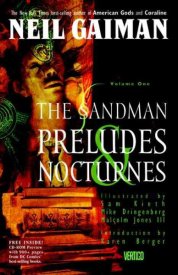
gaiman5Gaiman began his writing career in England as a journalist. His first book was a Duran Duran biography that took him three months to write, and his second was a biography of Douglas Adams, Don’t Panic: The Official Hitch Hiker’s Guide to the Galaxy Companion. Soon afterward he collaborated or creating in graphic novels such as Violent Cases, Black Orchid, and Sandman. Over the years he has added picturebooks, children’s fiction, adult fiction, television, film, and theater to his body of work. This includes writing for one of my favorite shows, Doctor Who. He also does the narration for most, if not all, of the audiobook versions of his work.

Neil and his works have won many nominations and awards over the year. A few of the awards include: Kurt Vonnegut Jr Award For Literature, Boston Public Library Literary Lights For Children, CBLDF Defender of Liberty, The “Galaxy” Award (China) for Most Popular Foreign Author, Horn Book Honors, Kirkus Reviews Best Children’s Books, ALA Booklist Editors’ Choice: Books for Youth, Hugo Award, IndieBound Award, and many, many more.
gaiman1Here is a sampling of his works, though far from comprehensive. They are in no particular order.
Picturebooks:
Chu’s Day
Chu’s First Day of School
Chu’s Day at the Beach
The Wolves in the Walls
Blueberry Girl
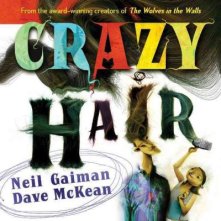
Crazy Hairgaiman2
Instructions: Everything you’ll Need to Know on your Journey

Children’s and Young Adult Books:
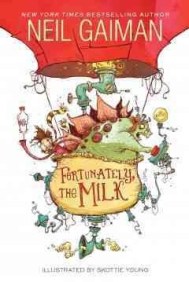
Fortunately, the Milk
M is for Magic
The Graveyard Book
Coraline
Hansel & Gretel: a Toon Graphic
Odd and the Frost Giants
Interworld
The Truth is a Cave in the Black Mountainsgaiman3
The Books of Magic
Marvel 1602

Adult Books:
The Ocean at the End of the Lane
The Make Good Art Speech
Trigger Warning: Short Fictions and Disturbancesgaiman4
Anansi Boys
American Gods
Stardust
Good Omens
Smoke and Mirrors: Short Fictions and Illusions
Neil Gaiman’s Lady Justice. Vol. 1

November is Aviation History Month

aviationConnecticut is rich in history when it comes to aviation.  Some of the biggest aviation manufacturers are located in Connecticut including: Sikorsky, United Technologies, sikorskyLockheed Martin, and Pratt & Whitney.  There are dozens of smaller companies that supply all sorts of parts and support to the aviation industry.  Connecticut is not only home to Bradley airportInternational Airport, but to many small local air fields as well.  There is Candlelight Farms Airport in New Milford, Groton-New London Airport, Markham Municipal Airport in Meriden, Ripley Field Airport in Litchfield  to name a few, along with many heliports throughout the state.  Most of the larger hospitals have heliports, and many companies also have their own heliports.

new englandConnecticut is fortunate to have a wonderful air musuem – The New England Air Museum in Windsor Locks.   And the Cheshire Library is fortunate to offer a pass for reduced admission to this museum, courtesy of the Friends of the Cheshire Public Library.  For more information on this pass, click here.

The library also offers an extensive collection of materials about aviation.  For a list of titles, click here.  Below is a tiny sampling:

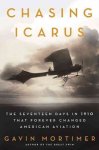
Chasing Icarus

Area 51 Black Jets

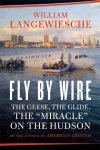
Fly By Wire: the geese, the glide, the miracle on the Hudson

Birdmen: the Wright Brothers, Glenn Curtiss and the right to control the skies

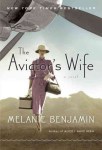
The Aviator’s Wife Melanie Benjamin (Fiction)

Fly By Night – Ward Larson (Fiction)

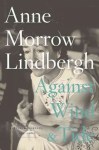
Against Wind and Tide – Anne Morrow Lindbergh (Biography)

The Aviator   (DVD)

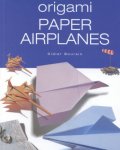
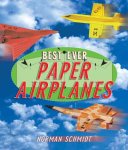
If you are interested in building paper airplanes, the library offers these titles.


Mindfulness, Meditation, and More

Looking into ourselves using meditation and mindfulness is the big new trend. However, I know many people that use other things to center themselves and meditate. I know people who use  yoga, running, cooking, painting, photography, gardening, knitting, or other endeavors. Anything can be meditation, if done in a way that makes you more aware of yourself and soothes you.

mindfultop1I crochet to meditate. There is something about the rhythm, the textures of the yarn, counting, and so on that help me center myself and slow my mind down after a busy day, or to get me ready to face a busy day. The simple act of using a hook to shape yarn to create something soothes me in a way that can only be matched with how lost I can get in a fantastic book or singing a song that I know so well I do not need to actually think about the notes or words anymore.

mindfultopI have also tried traditional meditation and guided mindfulness exercises. While some have served to soothe and calm my mind, I much prefer using a tactile focus rather than sound or breathing based techniques. I think it is important for everyone to find a way to meditate; whether it with with the expected breathing and mental focus of meditation and mindfulness exercises, the rhythm of running or working with yarn, or the process of sifting flour and kneading dough for the perfect bread. There have been recent studies about how coloring is a wonderful form of meditation.

mindful2Here are some of the best books that have come my way that might come in handy if you are looking to learn about meditation, or to turn one of your favorite activities into a form of mediation or mindfulness.

How to Train a Wild Elephant: and Other Adventures in Mindfulness by Jan Chozen Bays

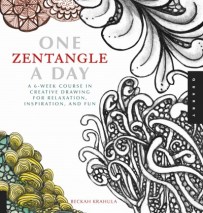
One Zentangle a Day: a 6-Week mindful3Course in Creative Drawing for Relaxation, Inspiration, and Fun by Beckah Krahula

Moving into Meditation: a 12-Week Mindfulness Program for Yoga Practitioners by Anne Cushman

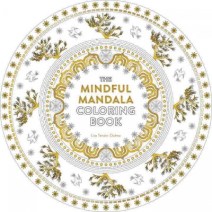
The Mindful Mandala Coloring Book: Inspiring Designs for Contemplation, Meditation and Healing by Lisa Tenzin-Dolmamindful1

Crochet Master Class: Lessons and Projects from Today’s Top Crocheters by Jean Leinhauser and Rita Weiss

In Search of the Perfect Loaf: a Home Baker’s Odyssey by Samuel Fromartz

Turning the Mind into an Ally by Sakyong Miphammindful

Wherever you Go, There You are: Mindfulness Meditation in Everyday Life by Jon Kabat-Zinn

Take a Deep Breath: the Haiku Way to Inner Peace by Sylvia Forges-Ryan, Edward Ryan

Meditation for Dummies by Stephen Bodian

If you would like a free class in mindfulness come to our Hypnosis Works! Hypnosis for Stress Reduction & Relaxation program on November 5th at 6:30pm.

Taking Care of Your Houseplants

houseplantI am probably not the right person to write a post about houseplants – I mentioned in a previous post that even though I love flowering  houseplants, I just don’t have much luckbegonia with them.   A few months ago, a co-worker presented me with a beautiful begonia plant for my new home.  I was thrilled, but apprehensive, and asked my co-worker not to get upset should the plant not survive.  Much to my amazement, the plant flourished and grew so many new, big, luscious leaves, it needed to be repotted into a bigger pot.

“Ok”, I said to myself, “I can do this.”

I bought a beautiful new pot and some potting soil, spread out some newspaper on my kitchen counter, tipped the plant over to gently remove it from its pot and…..nothing!  It wouldn’t budge.  I ended up taking a dinner knife and gently running it around the inside of the pot and was able to loosen the soil enough to pull the plant out.  (Later I found out using a knife in this manner is quite common).  I put the plant into its new pot, added soil and water, stepped back to look at it only to see what was once a proud, erect plant, was now drooping, its leaves touching the counter.

I consulted my co-worker, who told me the drooping was expected and the plant should perk up on its own.  And she was right!  The plant eventually began standing up tall and waterwas producing many new leaves.  Success!  Or so I thought.  Not having much experience, I did one of the worst things you can do to a houseplant – I over watered it.  Old stems started to rot and the new growth was very puny.

Once again, I consulted with my co-worker who patiently explained the best way to water my plant and suggested a wonderful book that the library had on houseplants.  After reading this book and several others I checked out, I realized I should have handled the repotting and watering differently.

Here is the moral of this story – if you’re not experienced in a particular area, it’s a really good idea to read up on the subject before you plow ahead!  The library is a great place to gather the information you need on almost any subject.  When I looked at our library’s  selection of books on houseplants, I was able to check out some wonderful books that helped me learn how to care for my plant.  I am keeping my fingers crossed that I will be able to revive my plant, but in case it doesn’t bounce back, I got some great ideas on what types of houseplants would work best for my home and experience.  By taking advantage of the library’s resources, I’ve gained some confidence in my endeavor to have houseplants in my new home.

Now that winter is approaching, would  you like to  have some houseplants to brighten up your indoor living space?  Here’s a sampling of books the library has to offer.

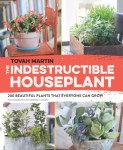
The Indestructible Houseplant

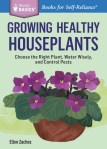
Growing Healthy Houseplants

Complete Houseplants

The Complete Household Plant Survival Manual

Indoor Plant Decor

The Unexpected Houseplant


Childhood Revisited

  ramona If you grew up in the 70’s and 80’s, you probably read at least one of the Ramona Quimby books by Beverly Cleary. Cleary documents inquisitive, quirky Ramona from the age of four upward, and how her innocent rationales confound and vex her parents, sister, and just about everyone she meets. Cutting her own hair, baking her doll inside a birthday cake, fighting with her sister, starting school – stories every child or parent can relate to with much laughter.

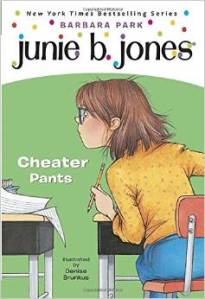
Fast forward a generation. Ramona gives way to Junie B. Jones, a kindergartener of the modern age whose misinterpretations and misguided notions get her into just as much trouble as Ramona, at home and in school. But while Ramona is filled with the sweet innocence of a bygone era, Junie is modern empowered sass. Whether getting into trouble on the schoolbus or with her family or with her nemesis, That May, Junie says aloudjunie what many children and adults often think.

Myself, I’ll take Ramona over Junie B, simply because Junie is a little too fresh for me, but I confess: I love the Junie B. Jones books, and sneak off to read them even though my youngest is now 17. And yes, I would have no problem rereading a Ramona book if I had an hour to kill – I have the whole set. If you love the genre but won’t read a kid’s book, there is hope: if you miss those kinds of stories, of seeing the world through a child’s eyes as they struggle to make sense of the world around them, often hilariously misinterpreting things, fear not! The adult form of those stories exists.

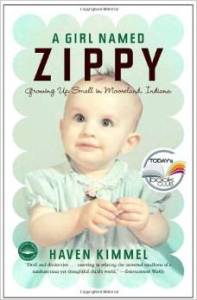
zippyEnter Haven Kimmel, who grew up in the tiny town of Mooreland, Indiana, in the 1970’s (population 300). Kimmel is a real life Ramona Quimby, and she chronicles her life in a book called A Girl Named Zippy. How she sees things, both odd and oh-so-totally familiar (“A Short List of Records My Father Threatened to Break Over my Head If I Played Them One More Time” “A Short List of Things My Father Won Gambling” “The Breakfast Bar at Which No Breakfast Was Ever Eaten.”), will have you laughing out loud where ever you happen to be reading at the time. Her cast of crazy characters, both friends and family, are common to almost every family, whether they admit them or not. Her father works in a factory, her mother lies on the couch watching TV ignoring any and all household chores, and there’s nothing in the house to eat but carrots. Although Kimmel never has clean clothes (people she visits tend to wash her clothes for her when she stops by), only one room has heat, and the house is falling down around them, Kimmel never feels neglected. She hates her Quaker roots and three-times-a-week church, her mother’s best friend has the mouth of a sailor (I can’t help but see Kathy Bates playing her in a movie), and her brother and sister flee home at the first opportunity.couch

In her second book, She Got Up Off the Couch, Kimmel describes her later years when her mother got some gumption, got off the couch, and decided to enroll at Ball State University – though it only made the home conditions worse, if possible. While being on campus with her mother, attending theater, even just listening to her mother’s phone conversations, Kimmel is suddenly thrust into realizing there’s a world beyond Mooreland, and she is never the same again. Things are not always fun and games, and Kimmel starts to become aware of the differences of how she lives versus how other people live (her father’s friend has gold toilets and velvet wallpaper; they have a hole in their wall that goes almost to the outside, and no running water), and begins to notice her parents are never together. Eventually she catches on to the fact her father’s having an affair, but even then Kimmel’s tone is wistful and both painfully accusatory and forgiving at the same time.

Whether you grew up in the 60’s, 70’s, or 90’s, the fact that you grew up at all gives you a common experience shared by everyone else, oftentimes more than you know. If you can’t relate directly to Kimmel, you probably knew someone in your neighborhood just like her. Whether you grew up in Indiana, Oregon, Arizona, or Massachusetts, you will find delight and painful familiarity in Kimmel’s youthful innocence (“She picked out a wig to wear on the special day, too, a style and color she considered “subtle’ and which I thought said ‘Pekingese.’”), while your children laugh knowingly at Junie and Ramona. It is the same story, different audiences.