A Legacy of Spies

The other year, in preparation for a novel I hoped would have more intrigue and action than I was used to writing, I decided to break with my comfort zone and read a few spy novels to deconstruct the genre and see how the action was set up and paced. I’d read a James Bond novel once and was less than impressed; the movies I loved so much were horribly dull novels, and the book-Bond looked much more like Truman Capote than any pretty-boy actor.

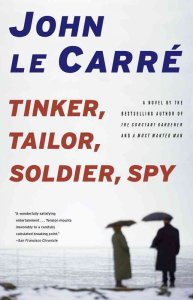
I didn’t want to waste time, so I Googled “best spy novels”, and one of the top two on almost every list was John LeCarré’s 1974 novel Tinker, Tailor, Soldier, Spy, so that was the one I read first.

The lists were right. The book was brilliant, and I couldn’t put it down. After that I rushed out to watch the 2012 BBC film version, an incredible cast including Toby Jones, Gary Oldman, Benedict Cumberbatch, John Hurt, Tom Hardy, and more – which was still excellent, though some people prefer the 1979 mini-series adaption with Alec Guinness (that’s Obi Wan Kenobi to some of you). The strangest part was that, while reading the book, I had already cast Toby Jones in one of the roles in my head  –  but as Peter Guillam, though, not Percy Alleline as he was in the film.

Why so good? Well, see – like Ian Fleming, John LeCarré (real name: David Cornwell; spies aren’t allowed to use their real names to publish novels) was an actual British spy in World War II, so he knows the ins and outs and tiny little details of how the game is played, layers upon layers of secrets and trades and double-dealings. He’s lived it first hand, and that makes all the believable difference. He began writing novels in 1961 (Call for the Dead), but it wasn’t until his third novel in 1963, The Spy Who Came In From the Cold, that he hit the best-seller list and wound up quitting MI6 (the British Secret Intelligence Service) to pursue writing full time.

While all of us sit here and think, why would you quit being an awesome spy to write books?

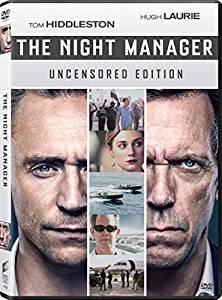
But LeCarré certainly is good at it, with more than 24 novels to his name, almost all of them best-sellers. Several have been made into successful film adaptions, including The Constant Gardener (2005), starring Ralph Fiennes and Rachel Weisz, The Spy Who Came in From the Cold (1965) starring Richard Burton, and the recent delicious adaption of The Night Manager (2016), starring Tom Hiddleston and Hugh Laurie, a book that reads more like a James Bond adaption than a Bond novel does.

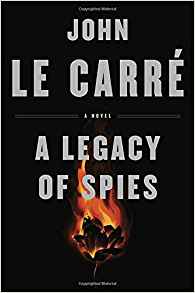
Unable to sit still in retirement, LeCarré, now 86, has pumped out yet another novel last year, A Legacy of Spies, a conclusion of sorts for George Smiley’s people, his ex-agent who keeps coming back. Pulling his best-loved characters from so many of his novels, LeCarré manages to weave them together with new characters in present-day, finding new depths and bringing new truths to light, even after 50 years. LeCarré shows that time has not diminished him nor his characters, and if you think you know how it will end, like all of his works, it’s pretty well guaranteed you don’t.

Give le Carré a try. If you like mystery, espionage, intrigue, and unraveling puzzles with characters who won’t let you go, then you’ll love his work. If you haven’t tried him, he’s a wonderful place to begin to explore the genre. For modern novels, he’s rather clean, without a lot of graphic violence or sex or language, perhaps making the stories even more remarkable. Start with Legacy of Spies and work backward, or start at the beginning and work forward. If you prefer to watch rather than read, there are more than ten films, five television adaptions, and four radio plays to keep you entertained. You’ll be so glad you did.

Tracking Black Panther

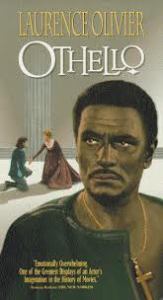
One of the more controversial topics in Hollywood is the concept of whitewashing – casting a white actor in a role meant to be Black, Asian, Native American, Latin, or other ethnic group. Some of the more egregious examples are Laurence Olivier (and Orson Welles) playing  Othello – in blackface, Ralph Fiennes playing Michael Jackson; Mickey Rooney (Breakfast at Tiffany’s), Katharine Hepburn (Dragon Seed), and John Wayne (The Conqueror) as Asians; Johnny Depp as Tonto (Lone Ranger); Tilda Swinton as an Asian man (Dr. Strange), or the one that ruined my childhood: finding out that Native American Iron Eyes Cody of the 1970’s Keep America Beautiful campaign was actually a man of Italian descent.

Big-Budget Black-Lead Films

In fact, serious big-budget black films are hard to come by. Indeed, most of the highest-grossing black-lead films are comedies (Eddie Murphy has 5 of the top 7, not including Beverly Hills Cop), despite some very top-quality dramas (The Color Purple, Fences, Moonlight, The Help, Soul Food). Yet Samuel L. Jackson – I’ll see anything he’s in – ranks number TWO on the list of actors with top box office revenues, pulling in a combined domestic gross of more than 7 BILLION dollars for his 126+ films (#1 is Stan Lee. He has a cameo in every movie he makes). Even Hollywood protested the lack of serious roles for black actors, and stirred a controversy over a glaring absence in Oscar nominations despite worthy black films, a problem starting to be rectified in 2017. Not great if you’re a black kid looking for role models. The Adventures of Pluto Nash just doesn’t cut it.

A New Superhero

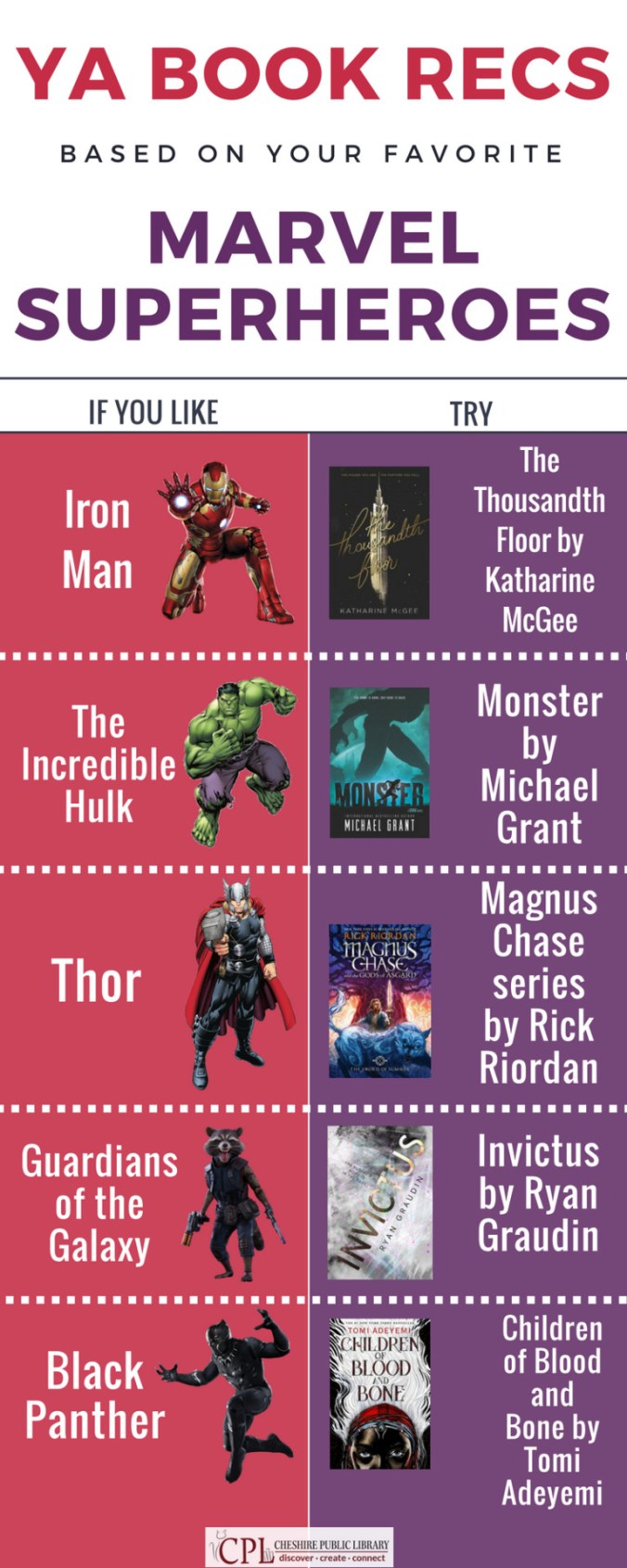
Now, Hollywood may be on the verge of a true black superhero blockbuster with the release of February’s Black Panther, Marvel’s 18th release into its megahit superhero franchise. Following his debut in 2016’s Captain America: Civil War, T’Challa – holding the title Black Panther – is the king of the fictional African country of Wakanda, who gains superpowers from a heart-shaped herb and connections to a mystical Panther God. When his father is assassinated in Civil War, T’Challa returns to Wakanda to discover his claim to the throne being challenged. T’Challa must team up with a CIA agent and the Wakanda Special Forces to prevent a world war.

The History of Black Panther

Black Panther was the first black comic book superhero, ever (1966), so early he predates the political party. Chadwick Boseman does a phenomenal job as T’Challa, and the movie promises to have the same serious craft and attention as the rest of the Marvel films. The previews are visually stunning, with rich ethnic textiles and cultural details that leap off the screen, drawn from no fewer than five different African cultures. Not only a superhero, but a culturally relevant one as well – which of course, immediately started another controversy whether or not the movie is celebrating African culture or trying to appropriate it. The movie was originally green-lighted in 2011, and the script approved in 2015. Hollywood doesn’t get better than this.

Of course there are now other black superheroes. Luke Cage’s TV series has had luke-warm reviews. As the XMen movies progressed, Storm played less and less of a role. Sam Wilson is a great sidekick, but no Captain America. Iron Man’s buddy Rhodey Rhodes/War Machine/Iron Patriot may be Don Cheadle, but he’s still just a sidekick called in when an extra guy is needed (at least, in the films). In Black Panther, black youth – and everyone else – may finally have found a superhero they can look up to, in full, serious, big-screen, big-budget glory, and he is Marvel-ous.

Wick-ed Action

I love a good action film. In going over lists of various film genres, I discovered I’ve seen the majority of the “best” action films, though I don’t always agree with what is considered an “action” film. I expect an action film to have – well, action: a lot of movement of characters or equipment, such as vehicles. It could be modern reality based – James Bond or Air Force One, or futuristic, such as Terminator, Alien, or Serenity, comic book heroes, or war-type films such as Commando or Rambo (my grandmother made me take her to every Stallone and Schwartzeneggar film that came out). There should be suspense, perhaps mystery, a vehicle chase, and almost always a good fight scene. Body counts are expected, but graphic violence isn’t required – Suicide Squad had a high bullet count, but little gore. History of Violence had a lower bullet count, but extremely graphic depictions. I don’t mind gore, but I won’t watch cruelty or sadism – I shut off Killing Season because it was focused on torture, not action.

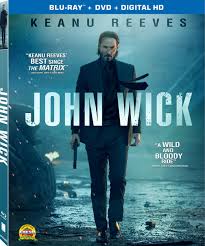
I adored John Wick, an action movie with Keanu Reeves as an assassin who tries to retire but is sucked back into the business against his will. It was just about everything I could want in a film – the script is good, the acting is good, the cast is excellent and the action is awesome. It’s just a good all-around film. I saw John Wick 2 on opening day (the DVD was released June 13) and – it was good, but not quite as great as the first. The action is impeccable – perhaps the best actual hand combat choreography I’ve ever seen (especially compared to the farce of Batman v. Superman). The script is good. But Wick’s lines, so eloquent before, are cut to choppy, often one-word sentences, which Reeves is not good at. It’s got a high bullet count, a high body count, and realistically graphic splatter from a man who was known for killing four people with a pencil.

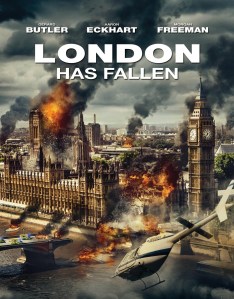
One thing I noticed about John Wick 2, though not as obvious as it was in London Has Fallen, a C+ film with multiple script flaws: the impact of videogames on choreography of action sequences. JW 2 has a wonderful flight/fight scene through the ancient underground tunnels of Rome, but you can see the influence of popular games such as Call of Duty or Grand Theft Auto. Run, stop, run, corner, shoot, shoot balcony. Man pops out of hall, bang. Run, stop, turn, shoot. It might fit the tone of the scene, but it’s very stiff and staged. London Has Fallen was much worse: the greatest action sequence of the film, the Big Rescue, and the movie looked as if you’d taken a clip from Call of Duty, overlayed it with actors, and CGI’d them together. Maybe it was my TV upgrading the blu-ray to 4K, but you could almost see pixelation in the edges of the graphics. You could have checked it off a list: guy pops up behind garbage can? Check. Drive-by shot through windshield? Check. Balcony? Check. It was so obvious that not only did it stand out, it was distracting, and you stopped watching the progression because you were so offset by the fakeness, a “Where-Have-I-Seen-This-Before?”

Is this the wave of the future? I hope not. Sure, you can look back at an early Bond film and see how cheesy the fight scenes are. You can almost hear them counting off in their heads: fist, block, step, kick, block, groin, throw, grab, twist… You can marvel at the slo-mo twists and turns of The Matrix sequences, but that’s not exactly reality, either. CGI is wonderful – it gave us Legolas sliding down oliphaunts , Avatar, and Inception. Almost all movies are made with a green-screen at this point, even comedies. But videogames are another empire – like trying to equate a romance film with porn: all the action, none of the reason. You can pop bullets all day, but why you’re doing it is a vague battle against “bad guys.” Relying on a videogame sequence kills the creativity needed. Think of the cliché of the good guy crouched down, pointing people what direction to go and then shooting at the target to cover them, or the stock western of a shootout on main street, with townsfolk peering through broken shutters. Action movies need to reinvent themselves by nature to keep themselves fresh and interesting.

Videogames are fun. Action films are fun. Sometimes movies based on a videogame are really fun (Warcraft, Tomb Raider, Mortal Kombat). But using videogame mentality in place of a more expensive or creative thought process – that’s cheating, and it doesn’t look nice.

Have you noticed the “videogame effect” in any other films?

Fast and (Not Always) Furious

I don’t “watch” TV. The last series I actually watched was the last season or two of NYPD Blue, back in the early ‘00’s. My life was just too complicated to worry about being home to catch a program, because nine times out of ten, it just wasn’t going to happen. And my life was so much better for it! Free time I never had before.

But, thanks to the availability of On-Demand programming, whether streaming Hulu or Amazon or Netflix or Hoopla, I do get to see some shows – on my time, when I’m able, and it’s no crime if today’s not one of those days. If it’s a television show, we’ll watch one episode during dinner – everyone around the table, talking and watching. That’s how I got through six seasons of Sons of Anarchy, two fabulous seasons of Penny Dreadful, a full 12-season recap of NYPD Blue, and now my husband has me watching Blue Bloods, a mild police drama starring Tom Selleck, though I still think of him as Magnum, P.I., and the original Sweeney Todd himself, Len Cariou, whom I adore in anything.
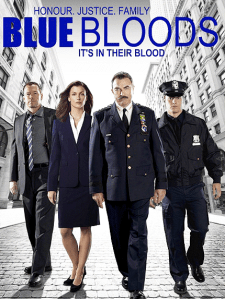
Blue Bloods is okay. It’s got good actors, it’s entertaining, but it’s not deep. Each episode is self-contained, bright and polished like an old Quinn-Martin production, and none of the gritty realism and continued drama of NYPD Blue. It’s very clean and family oriented, but the writing is not always the greatest, with occasional weak scripts and clichéd lines. Because each episode wraps up on its own, nothing can get too much meat to it.

The last episode I watched had to do with insurance fraud over a valuable car – the car allegedly from the Steve McQueen movie Bullitt, which they touted as one of the greatest car chase scenes ever.

So of course we had to watch it.

My dad’s favorite sport was cars – race cars – not the NASCAR stock stuff, but the elegant turns of the Monaco Gran Prix, the high-speed chase of Formula One, or the Holy Car Holiday in our house, The Indy 500. I thought Jackie Stewart was the greatest announcer in history. And I learned to drive stick on my parents’ automatics just by the engine sounds my dad would make when he pretended he was driving a race car – when I finally did learn stick, it was effortless because I could tell when to shift by the sound of the engine.  So I don’t mind a bit if I have to watch a car-chase movie. And I guess I’ve watched a lot of them.

Bullitt, as a movie, is typical of the late-60’s-early-70’s dark genre: a slow movie where actors must have been paid by the line, because nobody says anything unless they absolutely have to, all the actors are deadpan, and the sound quality is horrible because they really did just take a cheap microphone out onto the street, with little soundtrack, and there’s no great conclusion, they just sort of end with a “Life Stinks” blackout. What was strange was realizing not only there was Zero airport security, but no paramedics yet (1968; paramedics weren’t even an idea until 1971), rotary phones – not even push button, glass IV bottles, and no gloves during surgery. San Francisco lends itself to many great film chases (such as the comedy What’s Up Doc?), and this one does not disappoint, pitting a 1968 Ford Mustang 390 GT against a 1968 Dodge Charger 440 Magnum. That they manage to hold those corners is impressive.

Fandango listed their account of the ten best car-chase movies (a bad thing to think about as summer approaches and pavement is dry and the weather begs you to take a long drive) as:

  1. Bullitt
  2. Max Mad: The Road Warrior (still my favorite movie of all time)
  3. To Live and Die in LA
  4. Deathproof
  5. The Blues Brothers
  6. Ronin (I think this should be number 2 myself – it’s truly awesome)
  7. Smokey and the Bandit (How can you not love this one?)
  8. Gone in 60 Seconds (the 1974 original, though I like the remake better as a film)
  9. The French Connection (more famous than Bullitt, but the same era of filmmaking)
  10. Terminator 2: Judgment Day

For myself, I’d add Batman: The Dark Knight (anyone who can flip a tractor trailer end over end ranks high in my book), and the new Bourne movie, Jason Bourne, which opens with a wicked car chase through Las Vegas that got me from the first go.

Even if you don’t like car movies or car chases, I highly recommend the movie Ronin, as well as French Connection, Jason Bourne, and even Bullitt, movies where the storyline takes precedence and the chase is inconsequential and there’s no harsh screeching music track – like the Fast and Furious films, the thinking person’s car chase films; a little something for everyone.
 

Strong Girls, Stronger Women

stb-jaylah-3While previewing the DVD for Star Trek: Into Darkness (as if I didn’t see it in the theater and wasn’t buying it myself 5 days later), I realized that Jaylah, the lead female character, is everything I want my daughters and granddaughter to be: strong, brave, smart, resourceful, a planner, a leader, and even when emotionally wounded, she never, ever gives in. Surely one of the strongest female leads ever, without losing her femininity in the process, like Grace Jones as May Day in A View to a Kill, or Louise Fletcher as Nurse Ratched in One Flew Over the Cuckoo’s Nest. It may even be safe to say that Jaylah’s the strongest female lead ever in Star Trek itself – and no, not even Uhura, who, although she could kick butt, was often saddled with lines like, “Captain, I’m frightened.”

And that made me start thinking on who the strongest female leads might be. By strong I don’t mean nastiest or most vicious goal-driven women, no Joan Crawfords or Cersei Lannisters or Erica Kanes. I mean women or girls who started out ordinary, but when faced with impossible odds, had the grit and determination and education and smarts to work their way into survival.

First on almost any list is Warrant Officer Ellen Ripley, from Alien. While you can say it ec93835d9542a13ce50f467297565f63already took guts and grit to be a warrant officer aboard a deep-space ship, finding out your mission was a suicide run to bring back an alien life form and you’re its food can either send you screaming in helpless panic (as Lambert did), or make you hike your bra straps and shoot first. Ripley is a real woman – no makeup, no unrealistic sexy uniforms, and not afraid to be pushy when she needs to be. And almost 40 years later (can it possibly be that long?) Alien still holds up on every level of film making; truly, a masterpiece.

katniss_prim_hugKatniss Everdeen is also a favorite for strongest female: just sixteen at the start of The Hunger Games, Katniss is already a survivor, having raised a sister and cared for a dysfunctionally depressed mother following the death of their father, in a world where people are kept in line through fear and starvation. Sacrificing herself to the Hunger Games to save her sister is just the start; surviving the Hunger Games not once but twice, surviving on luck, wits, and the smarts acquired through a lifetime of survival makes Katniss a formidable – but sympathetic and realistically feminine – heroine.

Sarah Connor of Terminator fame would round out my top three: a simple waitress who thought she was minding her own business until she’s hunted down by a terminator from the future – because when push comes to shove, Sarah will become a serious survivalist to save her son – a son who will grow up to be the leader against the machines that take over the world. Sarah is thrown into an impossible situation but comes out on top through sheer determination and a survival instinct that won’t quit.

Why so many women from science-fiction? That’s a good question. Perhaps it’s because “strong” women in literature or film are often seen as detestable power-hungry ladder-climbers who will use murder or sex to achieve their goals, and it is only in the realm of “fantasy” that women are allowed to be every-day humans, both strong and vulnerable at the same time, without boob jobs and fake nails. Yet the real world is peppered with incredibly strong women – Anne Frank, Malala Yousafzai, Margaret Sanger, Harriet Tubman, and so many more. Not one of them is sexualized by the media, either.

turn_me_loose_it_s_ashleySo, to be fair, there are literary women who also struggled against formidable odds: Scarlett O’Hara’s entire world was ripped from her by the Civil War: her income, her inheritance, her mother, her husband (whether or not she wanted him alive) wind up Gone With the Wind. She takes charge in a time and place when genteel women did not do that, and through guile and determination pulls her life and the lives of her family back together. And as the anti-Scarlett, I would include Mammy, who carried on through war and starvation, caring for former slaves and slave-owners alike, facing the same dangers as Scarlett but with even less means or social approval. In The Color sofiaPurple, yes, Celie has to survive an ugly life, but to me Sofia is far more of a tough cookie, taking her lumps and even prison because she won’t take the abuse anymore. Sofia is limited by society, but she’s every bit as tough as Katniss.

And moving further away, I would also nominate Maria, from West Side Story. She’s sixteen and stands between two warring gangs for love. The Sharks don’t frighten her. The Jets don’t frighten her. The police don’t frighten her. She gets in the face of each and every west-side-story-1961-dvdrip-moviecenter-avi_snapshot_02-16-56_2016-07-21_15-39-34one, standing up for what she believes in. No one is telling Maria what to think or do.

I could add more – Elizabeth Swan, Marion Ravenwood, Molly Weasley, Natasha Romanov – but if you’re looking for role models for girls and teens, real women who aren’t villainous or overly sexualized or vacuuous but incredibly strong and resourceful, there are plenty to choose from.