Yacht Me On the Water

Yacht Rock? What the daylights is Yacht Rock?

Chances are you’ve heard it, and maybe even liked it. Yacht Rock is a music subgroup (yes, another) that focuses on the soft rock/jazz fusion/easy listening sound that was found on FM stations from around 1975 to 1984. It’s the kind of music you might expect to hear on a yacht as you cruise around the southern California coast, music that often evokes themes of sailing, or escape to somewhere else – songs like Rupert Holmes’s Escape (The Pina Colada Song) or Christopher Cross’s Sailing.

Yacht Rock, of course, can trace its roots back to The Beach Boys and surf rock, but more directly is the result of J.D. Ryznar’s comedy web series Yacht Rock, which ran in L.A. back in 2005. The show imagined the lives of the real yacht rock stars as a group of friends hanging out and writing music as they lounged around Marina del Rey, and it brought back all the music. Yacht rock emphasizes the Southern California sound, and almost all of the musicians were working from California (the exception being Hall and Oates, who stayed in Philadelphia).

Like anything subject to opinion, there’s always an argument to be made if something belongs in a category or not (and there’s “Classic” yacht rock and “Newer” yacht rock, which expands the genre). Myself, I don’t see Foreigner (too heavy) or Billy Joel (too pop) as part of that scene, but they are included under “newer.” Certainly, many artists have at least one song that could be included. Generally speaking, yacht rock is defined by:

  • Strong production and direction
  • Electronic piano
  • Breezy, light lyrics
  • Light emotions – she left you, but that’s okay
  • Emphasis on melody over beat
  • Catchy tunes
  • Too often full of syrupy sincerity
  • Upbeat rhythm (sometimes termed “The Doobie Bounce”)

Often the song is about a heartbroken man, and the words fool or foolish are thrown around (The Doobie’s What a Fool Believes, Steve Perry’s Foolish Hearts, Elvin Bishop’s Fooled Around and Fell in Love). Many of the songs are about sailing (Chris Cross’s Sailing, Crosby Stills and Nash’s Southern Cross) or the thrill of an escape (Little River Band’s Cool Change, Robbie Dupree’s Steal Away, Toto’s Africa).

You can say various resurgences in music are caused by films (Queen’s Bohemian Rhapsody hit the charts four times, twice from the films Wayne’s World and the biopic Bohemian Rhapsody) or television (Kate Bush), or sometimes social media drives a song (Rick Astley’s Never Gonna Give You Up), or Baby Boomer (and now Gen X) nostalgia, but the swelling of yacht rock popularity since 2015 (both IHeart Radio and Sirius XM have Yacht Rock stations, and Amazon Alexa will also tune in) is often attributed to a desire to escape from the negativity and stresses of the last several years. Yacht rock is calm and upbeat, evoking a sunny carefree day of lounging on a yacht gently swaying on the water, a fresh breeze ruffling your hair, not a care to be had. Your girl left you? Your job went sour? Your town on quarantine? Don’t let it get you down. Come on, we can steal away and find something better.

Yacht Rock is the highlighted music feature for July. Check out songs by these and other soft rock/jazz musicians:

When Art Imitates Life

Anne Perry is an accomplished mystery writer with more than forty novels to her name, including the Thomas Pitt series, the Daniel Pitt series, the William Monk series, and more. Many of her novels take place around World War I. 

She’s also a convicted murderer.

A friend from college – who is also a librarian – told me this while I was reading Death with a Double Edge, the fourth of her Daniel Pitt series. And thereby hangs a tale.

Perry (whose birth name was Juliet Hulme) was born in England but spent much of her childhood in the Bahamas, South Africa, and New Zealand. As a teen in New Zealand, she became fast friends with a girl named Pauline Parker. Their friendship was so tight it bordered on obsessive, with the girls creating rich fantasy worlds they pretended to live in, and throwing tantrums if they couldn’t be together.

When Perry was 15, her mother was caught in an affair, and her parents decided to divorce. Perry was going to be sent to South Africa to stay with relatives for a while. This sent the friends into a panic. They asked Pauline’s mother if Pauline could go with Anne/Juliet, and her mother said no. Pauline then, in the short-sighted way children have, decided to kill her mother, freeing Pauline to travel with Anne/Juliet. When Anne hesitated, Pauline threatened to kill herself if Anne didn’t help. Just three days later, while walking with Pauline’s mother, the girls beat her to death with a brick – a deed that took twenty savage blows.

Perry and Hulme were caught quickly. They were too young for the death penalty, and both wound up serving five years in prison. They didn’t speak to each other again. Perry eventually settled in the United Kingdom, where she lived a quiet, penitent life and took up writing mysteries that often had a theme of redemption. It wasn’t until 1994, when no one less than Peter Jackson made a movie about the crime (Heavenly Creatures), that a New Zealand journalist outed her as Juliet Hulme – three days before the release of the film. No one had spoken to her to get any actual facts about the crime, and the film remains highly fictionalized.

Is Perry the only author who has done hard time? Of course not. Mystery writer Dashiell Hammett did six months in jail for contempt of court. Nelson Algren, who wrote Man With the Golden Arm, spent five months in jail for stealing a typewriter. William S. Burroughs, author of The Naked Lunch, first spent time for forging a prescription, but later killed his common-law wife after a drunken argument while in Mexico. He escaped prosecution by fleeing back to the United States. Chester Himes was sent to jail for eight years at the age of 19 for armed robbery, where he began to write such novels as A Rage in Harlem and Cotton Comes to Harlem. In all cases, incarceration, even for a little while, made a huge impact on the writer and their view of the world.

Anne Perry’s latest book, Three Debts Paid, a fifth volume of the Daniel Pitt series, was released in April.

Made in China

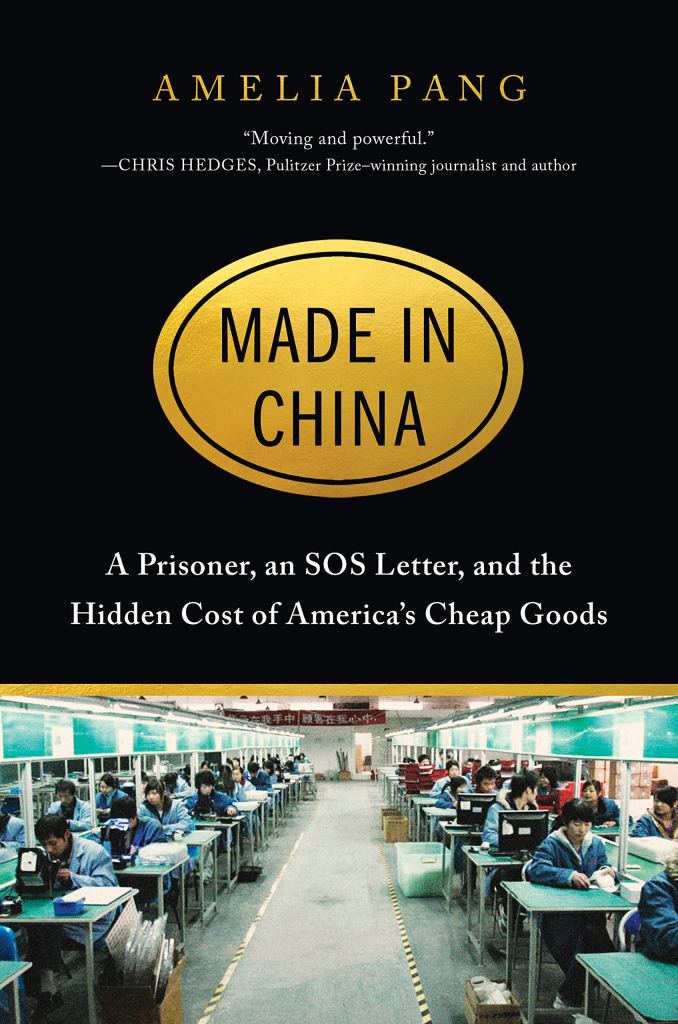
Every now and then you read a book so disturbing you change your life because of it. That’s how I felt about Amelia Pang’s book, Made in China. I have not been so disturbed by a book since Road of Lost Innocence, by Somaly Mam. 

In 2012 Julie Keith opened up Halloween decorations, only to find a note in broken English, asking her to “kindly resend this letter to the World Human Right Organization. Thousands people here who are under the persecution of the Chinese Communist Party Government will thank and remember you forever.”

Julie did – contacting Amnesty International, Human Rights Watch, The United Nations Human Rights Council, and Anti-Slavery International.

None of them called her back.

Through her own research, she slowly learned the extent that America’s cheap consumer goods are, too often, being manufactured illegally by political prisoners in China, who work in concentration camp conditions amid torture and starvation.

 It wasn’t until she spoke to Immigration and Customs and Border Protection that she got anyone to listen – ICE and CBP are the agencies responsible for preventing forced-labor products from entering US markets. ICE made a formal request to visit the “reeducation center” where the product was made. China refused. Keith learned that China has never allowed inspection of their manufacturing facilities, and one piece of evidence isn’t enough to push further.

But Keith couldn’t stop thinking about the person who wrote the note. She wound up doing an interview for The Oregonian, and suddenly found herself in the spotlight of Chinese dissident news, CNN, Fox, and more. Through the group Human Rights Watch, Keith found out it’s almost impossible to prove human rights violations – Kmart insisted the factory had been audited every 6 to 12 months, absolutely within the law, but audits cost money and mostly check for cleanliness and quality control. They never check for the source of labor. When you have a hundred thousand subcontractors, and each audit is $1,000, the costs and time add up to impossible.

Sun Yi and his letter

Sun Yi was the man who wrote that note in 2009, three years before Julie Keith found it. He was imprisoned and tortured for belonging to a meditation group that fell into disfavor with the Party. After two years of  starvation, torture, and working sometimes 24 hours a day in inhumane conditions, he was released. CNN interviewed him, blocking his face so he could not be identified. Sun Yi decided that, while he could get the information out, he wanted to write a letter to Julie, thanking her. He included his email address. Sun realized if he was to live, he had to leave China, and slipped out to Indonesia before the Chinese authorities could stop him, since Indonesia didn’t require a visa for Chinese citizens. There, he had free communication with the world.

In March of 2017, Julie Keith flew 36 hours to Indonesia, to meet Sun Yi in person, something she always wanted to do. The meeting was bittersweet, and Keith learned much about Yi’s poor treatment.

In October of 2017, Sun Yi died mysteriously of a lung infection and kidney failure. He was said to have been befriended by a Chinese woman not long before. She wasn’t seen in Jakarta afterward. No autopsy was performed.

This book tore at my heart. It’s short, easy to read, and always engaging. As we flip past internet bargains and snap up dollar deals, think twice before buying cheap merchandise. Ask if the item was made in the USA, and try (oh yes, it’s difficult) to buy items made only in countries who pay fair wages and rely on fair trade. Does that pop-up ad on social media look beautiful, at a reasonable price? Google the company. If there’s little to no information on it, it may be because it’s fly-by-night. You might get a nice product, but the company may fold in one town and open up under a different name three blocks away in the same Chinese city, using the same illegal workers. 

I got suckered in by that myself: researched the company, found no red flags, ordered what I thought was a hand-made item by a small Mom & Pop company, until a few weeks later when I got an email telling me my package had just cleared customs from China.

Huh? 

The package arrived with a label that had a New York State company address – slapped directly over the label that was on the envelope that arrived from China.

Think when you purchase something. Without demand for cheap products, there will be less demand for labor. Ask yourself: Do I really need this? Is the price too good to be true? Where was it made? Who made it? Who is profiting from my buying it? Was someone harmed by my decision to purchase this item?

Sometimes, the answer might be yes.

Re-Covery

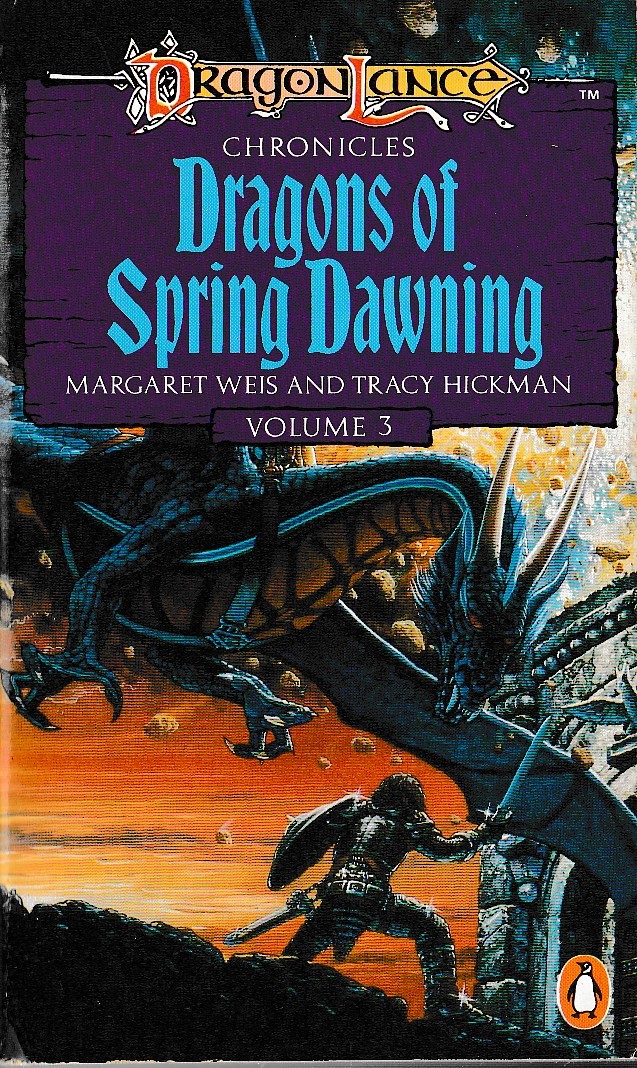
They tell you not to judge a book by its cover, but a book cover can make or break a book’s success. While browsing a used bookstore decades ago, I fell utterly in love with the covers of a book series I’d never heard of before – DragonLance, by Margaret Weiss and Tracy Hickman. I had to buy them, even just to look at the covers. The cover paintings were done by Larry Elmore, one of the premiere fantasy artists of the time. I’d never gotten too much into sword and sorcery books, but I devoured these. The second trilogy was still being written, and it was agony waiting for the next book in the series. I love those books to this day; they influence my own writing and imagination, and all because I had to have that book cover.

And nothing, of course, is more infuriating than when they change that book cover you know and love, and not usually for the better. Have you read this book? The title looks familiar, but not the cover … and then you start to read and find out yes, you’ve read it before, they changed the cover on you. Why?

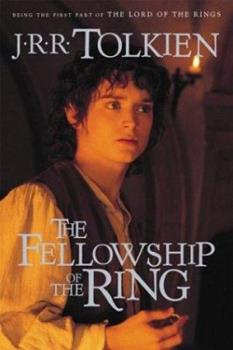
There are many reasons a book gets a new cover. It may have changed publishers. It may be the paperback edition of a hardcover, or a school edition, or an audiobook – and audiobook companies, who often have a middleman, don’t always get permission to use the same cover. It may be a new printing – if a book contract agrees to a run of 5,000 copies, and 6,000 are ordered, the book may get a new distribution run, resulting in a new cover. The book may have been sold to a new publisher – such as Bantam Books being sold to Random House. Random House will then reissue a strong seller with their own brand of cover. If a movie or TV series is made from the book, a new edition will be released with a cover that reflects the new media, as happened with Lord of the Rings and Ready Player One. Sometimes the publisher gets flack because the cover has absolutely nothing to do with the story, and they rework it.

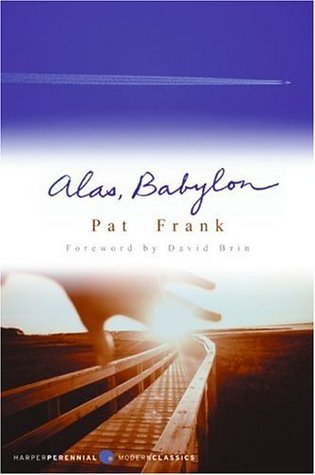
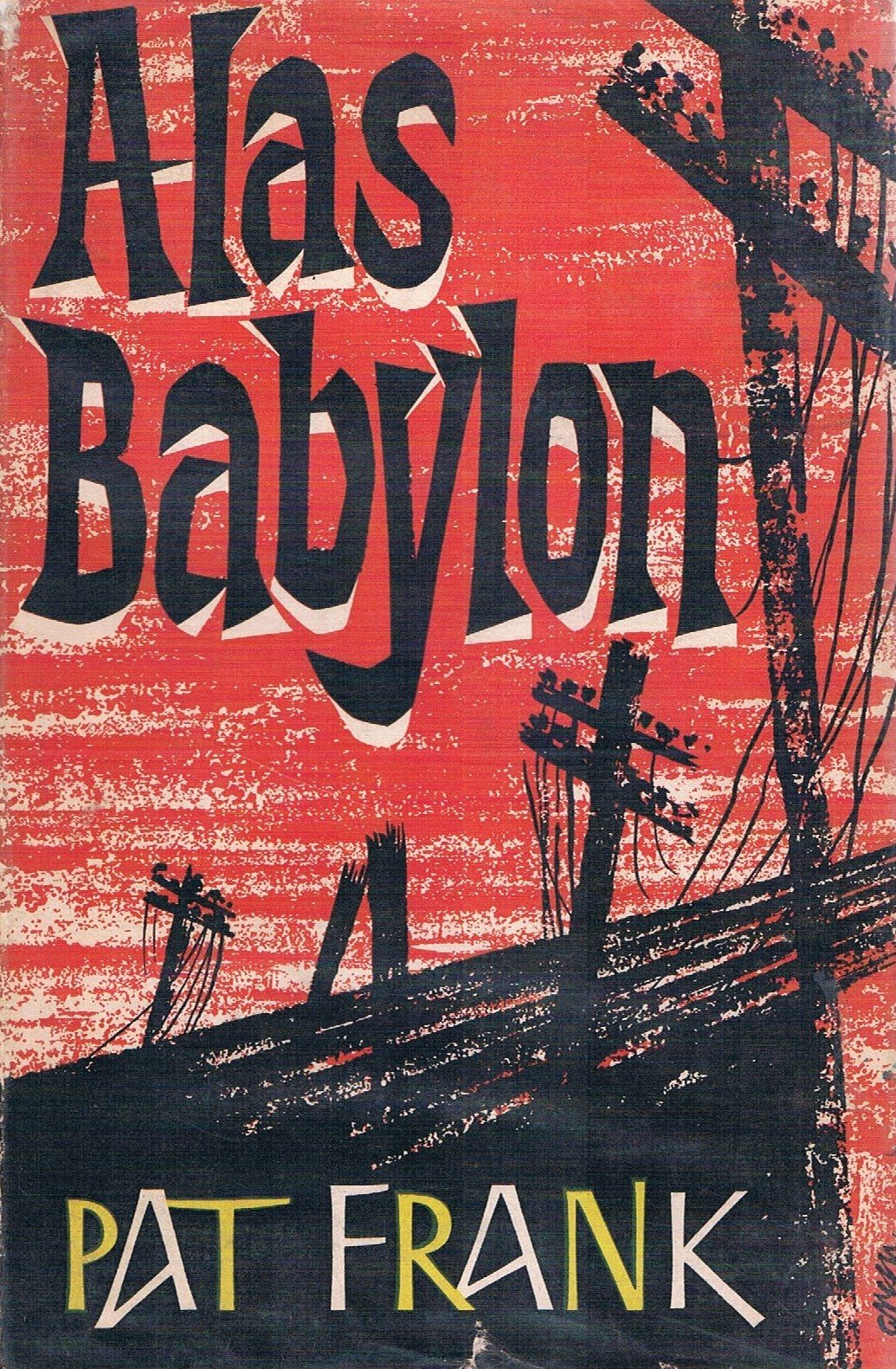
Sometimes, it’s hard to keep up, and sometimes, the cover art makes you scratch your head. Take, for example, the book Alas, Babylon, a 1959 novel of nuclear apocalypse that, if it’s not still my absolute favorite novel, it’s in my top three. First below is the cover I read it with – sensible, with the red/orange color of disaster and warning and nuclear fire, and people walking out of it. Compare that with the many covers it’s had since 1959:

The current one, number two above, a fourth edition by Harper Collins, to me, is puzzling – small font, an empty boardwalk, and a hand? This is not a cover that invites me to read, tells me a single thing about the story. Perhaps, after so many editions, they run out of ideas. Another fact: it’s very rare an author gets to choose the cover of their book – or have any input at all. You may submit your perfect dream cover along with your manuscript, and the publisher will toss it and give the work to one of their contracted artists. This is how you wind up with a blonde, blue-eyed heroine on the cover when the main character has short black hair.

Book covers also reflect what seems to be popular – a few years ago it seemed every book had a girl rolling around on the ground. If one sells, then everyone wants to copy that success. The bottom half of a face? Those are popular. Romance novel covers were almost interchangeable – how many were based on the model Fabio?  This year, pink is supposed to be “in” for covers again, as well as layered graphics and bold lettering.

Don’t like a book cover? Let the publisher know! Editors read the books, not the artists, or the publisher. If they’ve missed the mark, tell them. Authors depend on good covers to grab readers; if the cover isn’t intriguing, it’s wasting money.

What book covers have hit the mark, reached out and grabbed you so you had to read it?

What types of covers make you walk away?

Has a book cover ever made you angry?

Let us know!

The Scandalous World of Art

Edvard Munch, The Scream

 On May 1, CPL is hosting a program on The Art of the Scandal: Thefts, Vandals and Forgeries.

 Well, that’s nice, you say, but art doesn’t interest me.

Are you sure about that? Everyone loves a good mystery, and high art is probably the most mystery-filled subject there is. Anything with that much crime circling around it means there is a bank vault of money involved. 

There are many sides to fine art – the talent side (no one disputes a da Vinci, but you can start a fight over Pollock), the artsy side (the use of light and dark in paintings creates mood and movement that symbolizes man’s desire to control the universe: discuss), the history side (Phoenician art of the 18th century BCE shows a developing amalgamation of influence of the entire Mesopotamian region), and the rarity side (there are more Roman statues than there are da Vincis). We can discuss the purpose of art, of man’s desire to create, of the abstractness of art that leads back to man as the only animal who creates art for art’s sake, despite our knowledge that apes will draw and paint for pleasure, and that elephants, dolphins, and rabbits can be taught to paint as a behavior. It often boils down to one thing: 

Money.

The price of fine art (paintings and drawings, as opposed to jewelry work, sculpture, enamelwork, etc) has a few things going for it. First is rarity – many of the greatest paintings are hundreds of years old. They are one-of-a-kinds, and not a lot of them have survived. There are only 15 authenticated da Vincis known – as opposed to 400 Rembrandts. A second consideration is fragility – light, moisture, and age can cause ancient paintings to crack, flake, and fade (Van Gogh liked using red lake pigments, which fade rather quickly). The Mona Lisa is not painted on canvas, but an old board. A third thing is authenticity, and here is where the art world goes to pieces.

Salvator Mundi, by da Vinci

Because of the money involved in fine art (Da Vinci’s Salvator Mundi sold for $450 million dollars), as in too many movies, everyone is out to steal or fake originals. Forgery rings have been around for hundreds of years – one of the biggest was by Han Van Meegeren in the late 1930’s, a talented artist who sold more than $30 million in fake Vermeers to the Nazis. In 2004,  Xiao Yuan, the Chief Librarian at an academy of fine arts, stole more than 140 paintings in his care by carefully replacing them with his own copies – only to find some of HIS copies stolen and replaced with less-skilled replacements. Forgeries (actually, they’re called counterfeits, since legally only documents can be forged) are so rampant (about 50% of the market), Sotheby’s bought their own forensics lab to weed out fakes

Modern fakes are often easy enough to spot – today’s paints and canvases and even brushes aren’t the same as the 1500’s, and simple chemistry will find them. But what if the work copied is of modern origin – say, a Picasso, or a Warhol? Because of the modernity of materials, it is incredibly difficult to prove authenticity. 

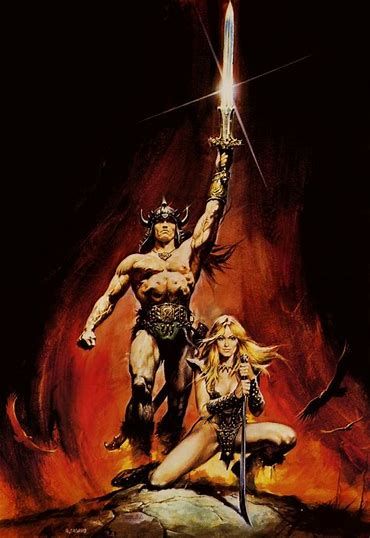
Conan the Barbarian, by Boris Vallejo

Questions still arise, though, as to what constitutes an authentic work of art. That 450 million dollar da Vinci has had so much restoration that there is more paint by restorers than by da Vinci, so is it still genuine? If a student of an artist (Rembrandt, Renoir, Reubens, etc) is so talented that a professional art historian/critic cannot tell the difference, how are you defining fine art and value? Where does the value lie – in the skill, the history, the age, or the subject matter? Why do we so value Edvard Munch’s The Scream (of which four originals exist, two of which were stolen), yet not value Boris Vallejo?

Art, by its very interpretational nature, is a scandal.

Art of the Scandal is an on-line program sure to peak your interest. You can sign up for the attendance link here.