A Cheesy Holiday

There are only 365 days in a year, but it seems as if there are a million “holidays” assigned to them, some of them bordering on ludicrous (National Ask Your Cat a Question day?). 

January 20 is National Cheese Lovers Day. January 2 was also National Swiss Cheese Day, which, all things considered, must make it a truly Holey Day.  (Yes, that was cheesy).

Swiss Cheese is actually a misnomer. Any cheese made in Switzerland is considered a Swiss Cheese. What Americans refer to as a “Swiss Cheese” is actually an Emmental cheese that contains “eyes” – trademark holes caused by gasses created during manufacture. The more holes, the more taste, with a curing time of 6-18 months to achieve its creamy flavor. An Emmental cheese without holes is sometimes called a “blind” cheese. Over the years, the holes in Swiss Cheese (as we know it) have gotten smaller, making manufacturers wonder if the holes aren’t caused by particulate matter getting in the cheese – tiny bits of hay or detritus that get in the milk, aiding in the production of gas. Modern sterile manufacturing eliminates those contaminants, not giving the gasses something to bond with. Emmental, Emmenthal, and Emmenthaler are all correct names for the cheese.

Many foreign foods are trademarked – Champagne is only Champagne if it comes from the Champagne region of France, otherwise it’s a sparkling wine. Roquefort Cheese can only come from Roquefort (or it’s a Blue Cheese). Bourbon can only come from Bourbon County, Tennessee, otherwise it’s just whiskey. Gruyere lost its trademark name in the US, with the courts deciding that Americans don’t know the location of the cheese, only the taste of that style, no matter the manufacturer. Thus, Swiss Cheese – er, Emmental – can be made anywhere, including Wisconsin. A good Swiss doesn’t have to come from Europe, which makes the price more palatable.

Have you ever thought of making your own cheese? Many of them are rather simple to make  (cottage cheese takes just three ingredients – milk, salt, and vinegar, which replaces the old-fashioned rennet from the cow’s stomach), and all of them will be fresh without chemical preservatives. It’s easier than you think! Unlike canning, mistakes aren’t likely to kill you. Try it as a winter project – you might just discover a new (and tasty!) hobby!

And just to prove that cheese makers aren’t as uptight as you might think, check out this study, where Swiss researchers exposed ageing cheeses to different forms of music (Hip Hop, Stairway to Heaven, and Mozart’s Magic Flute opera). They used mini transmitters to conduct the energy of the music directly into the cheese, so that no energy was lost. (No, I’m not making this up) The cheese was eventually blind-taste tested twice, with similar results each time. The hip-hop exposed cheese was decided to be markedly fruitier and with a stronger taste. The question arises, then, what happens to cheese if you use Swedish Death Metal, or perhaps Raffi?

Check out these instruction books for doing your own experiments with cheese. Your choice of music is up to you!

Grilled Cheese Please!

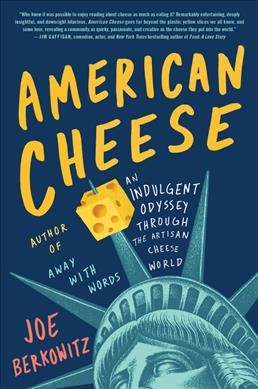
American Cheese

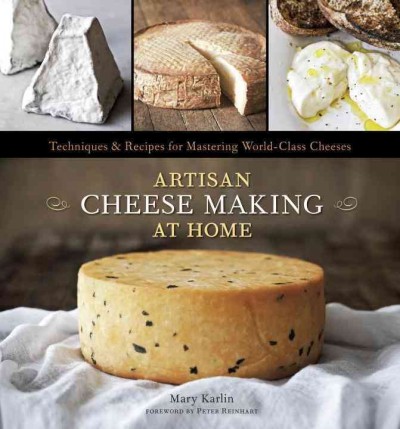
Artisan Cheese Making at Home

Home Cheese Making

The Whole Fromage

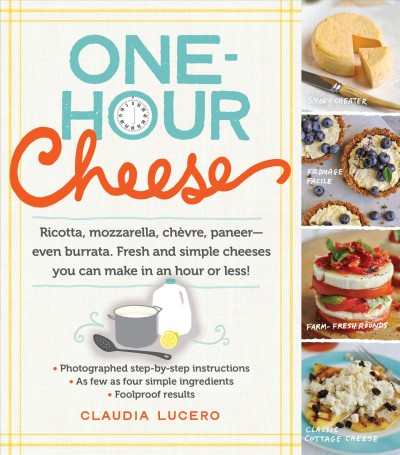
One Hour Cheese

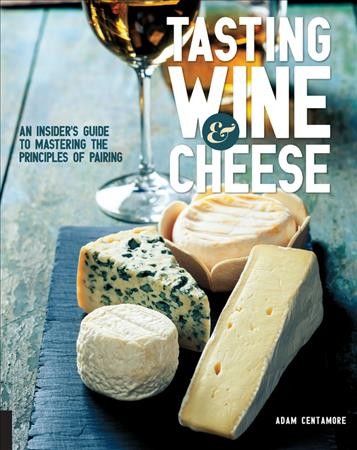
Tasting Wine And Cheese

The Telling Room

The Living Daylight

The Earth turns at roughly 1,000 miles per hour, making one revolution toward the east every 24 hours. Obviously, the sun can’t be on both sides of the planet at once, and if you’re trapped in Vladivostok you’re not going to have the same amount of daylight as Denver, or even Moscow. Because of that, the Earth is divided into roughly 38 local time zones to account for it (those Pacific Islands don’t always fit neatly in a zone). Time is counted from Greenwich Mean Time, running through London. Connecticut is in the Eastern Time Zone, which is Greenwich time minus 5 hours (Midnight in London is 7 pm in Hartford – think back to all the TV shows of newsrooms with multiple clocks showing times in other countries.)

And just when you think it’s safe to call your friend in Italy, we get hit with Daylight Savings Time. DST is something everyone dreads, turning the clocks ahead one hour to somehow “gain” more daylight hours (the sun and Earth don’t actually change, and can’t give more light than they do). Everyone gets lost, from trying to remember when you’re supposed to turn your clocks forward or backward, to losing an hour’s sleep, to a sudden massive shift in your hours of light. This year, we turn our clocks back to Eastern Standard Time on November 6.

So why do we even bother? Some states don’t do it. The majority of the world doesn’t do it (only 70 countries do). Why do we torture ourselves? It wasn’t always this way. And no, it’s never been about farmers, or kids going to school.

The idea of stretching usable daylight hours (because people would rather stay up later than get up an hour earlier for the same amount of light) actually began in Prince Edward Isle, Canada in 1908. It lasted a few months, and then they were done.

The second try came in 1916 in Germany, trying to conserve fuel during the war (back then it was the only war). Other countries soon followed. The US didn’t jump on the bandwagon until 1918 – and even then we only did it for 7 months before repealing the act (i.e., the war was over). We tried it again in 1942-45 (war again), and then it was fairly random between states until the 1966 Uniform Time Act. In 1973, we stayed on Daylight Savings Time for a full year (I don’t remember this) due to the great Oil Embargo, when fuel was expensive and hard to get (I do remember the gas rationing. No, really. We did that, here in the US.) but then we went back to Eastern Standard Time. 

If we hate changing clocks, why do we still do it? There’s overwhelming public support for stopping it. Changing time – and all its demands – does a job on our bodies. Consider that in the week following the leap to Daylight Savings Time:

Fatal traffic accidents increase 6%.

Heart attacks increase 24%

Strokes increase 8%

Depression increases 11%

People with cancer are 20% more likely to have a stroke

There are increases in drug use, digestive and immune disorders, injuries, and complications in pregnancy and delivery. 

There is a very real effect on people when you mess with time – let alone the poor airlines trying to track their speed and landing times when Denver is on savings time but Phoenix isn’t, but tomorrow it changes. 

In 2018, Congress introduced The Sunshine Protection Act . It was slated to take place in spring of 2023. We’d go on to Daylight Savings in the spring and just never come off again, no more switching. It passed the Senate, but is still stuck in the House, and still hasn’t passed yet.

To minimize the effects of time changes:

  • Keep your regular sleep habits
  • Get outside in the morning to reset your inner clock
  • Reduce caffeine, alcohol, and blue light (phone use!) two hours before bed
  • Exercise in the morning
  • Call your representative to see what’s holding up the bill!

While you wait for Congress and figure out how to change your car’s clock yet again, check out these books on maximizing your sleep!

Eat Move Sleep

How to Sleep

Let’s Talk About Sleep

The Secret World of Sleep

The Sleep Fix

Sleep Smarter

The Sleep Solution

Why We Sleep

Solar Punk/Lunar Punk

Blame Cyberpunk.

The novel Neuromancer is credited as kicking off the Cyberpunk genre. You may not have heard the term, but you probably know it  – a dark blend of high-tech in a crumbling dystopian world where the poor get poorer and the rich have all the technology – think Bladerunner, Ready Player One, Alita: Battle Angel, Real Steel, Elysium, Guardians of the Galaxy, even Hunger Games and Divergent (you could make a serious argument for Star Wars, as well). They’re gritty, dark, and sometimes disturbing, and paint a not-so-nice view of the future, with emphasis on classism, violence, famine, and a disturbing police state. 

Steampunk is also a well-established fantasy genre, carrying on as if the gasoline engine never materialized and the world was stuck in 1890 and using steam power and copper pipes for everything. They’re wildly imaginative and adventurous – check out Chris Wooding, Boneshaker by Cherie Priest, or Richard Preston Jr., or movies such as Chitty Chitty Bang Bang, League of Extraordinary Gentlemen, or The Golden Compass, among others.  

Since then, just like music has a thousand nitpicky subgenres (Simpsonwave, anyone?), fiction has also fractured into microgenres. Most are so nitpicky they’re pretty much covered under larger categories, but two more are becoming increasingly prominent: Solar Punk and Lunar Punk (Punk seems to be a word thrown in because someone is going against the establishment). Never heard of them? Neither have most people, but the genre is growing and defining itself.

Solar Punk is a backlash against all that dreary doomsday cyberpunk. Solar Punk is full of hope and ecology. Everything is green spaces, clean power, civil rights, encompassing communities, anti-establishment, and personal choice. Renewable energy, harmony with nature, and spirituality are key themes. Solar punk is a view of the future where everything finally does work out, a world where everyone benefits from the progress of mankind, because they’re all in it together. If steampunk is Victorian, Solar Punk is art nouveau. Think Star Trek, The Disposessed by Ursula LeGuin, Ectopia, by Ernest Callenbach, Dune by Frank Herbert, Disney’s Tomorrowland, and Black Panther (is anything more Utopian than Wakanda?).

If Solar Punk is all bright lights and butterflies, Lunar Punk is Solar Punk when the sun goes down. It’s moths and the twinkling of fireflies. It’s night-blooming lilies instead of sunflowers. It may be dark but it’s not dreary, like your backyard party at night, with fairy lights everywhere. Lunar Punk often deals more in mysticism, spirituality, magic, and the occult. Their flowers are mushrooms, their light is moonlight, their colors are the blues and purples and silvers of twilight. They have no solar, so they use bioluminescence. Individuals are more important than the communities they live in. The movie Avatar – the world of the Na’vi – exemplifies Lunarpunk. Still utopian, still upbeat ecological fantasy, but out of the bright sunlight. Andy Weir’s Artemis can fall into this category. Many Anime series can fall into these categories.

Solar Punk and Lunar Punk are often categorized together, both supporting the same type of ecologically based, optimistic utopian fantasies, a genre that is growing to match our current promises of renewable energy and inclusive societies. Many of the new teen novels have been exploring the genre. They are the generation who has grown up with recycling, solar chargers, zero-emission footprints and Bald Eagles back in the wild. For them, Solar Punk could very well be the future. Check out some of it today!

What the Stars Read

Do you ever wonder what the movie and TV stars read?

After too long a break, I traveled once again to a multi-media convention in the Baltimore area as both a panelist and guest, giving me unique opportunities to learn about books, movies, television, actors, and other forms of popular media.

Among the topics discussed were the interactions of cyberpunk (tech-heavy stories) and the modern world, stories that cross genres and copyright laws (Is there anyone Scooby Doo didn’t meet? Why is there a Terminator in Wayne’s World?), trends in speculative fiction (Lunarpunk, anyone?), and more. And those were only the ones I was able to attend.

The best part of such gatherings is meeting the guests of honor. Guests can change at any time due to filming schedules or illness (Robert Duncan McNeill was replaced at the last second by John Billingsley, a phenomenally entertaining actor in person, due to McNeill testing positive for Covid), but there are always a number of interesting people making appearances. This year, among many outstanding actors, the guests included Adam Baldwin (Firefly, Chuck, The Last Ship) and Summer Glau (Firefly, Sarah Connor Chronicles, Sequestered, Arrow), and I was able to speak with both of them.

Summer Glau has put acting on the back burner for the moment as she home-schools her children. She herself was home schooled due to an overriding love of ballet, and thus was able to pursue dance more in depth with the flexibility of home schooling, though she admits there are gaps in her learning. I asked her who her favorite authors were, and what she likes to read. Glau is a fan of Steinbeck, especially East of Eden, as well as the classic Russian novelists like Tolstoy, and of course Jane Austen. She prefers her children have a more classical education, and that includes classical literature. She’s been reading books on farming, with daydreams of someday having a small farm (she is originally from Texas).

Adam Baldwin was a delight (No, he is no relation to Alec Baldwin and brothers). At 23, he appeared in the classic Kubrick film Full Metal Jacket, which is one of my favorites, and we discussed different war films we had each seen. He told me to watch The War Machine with Brad Pitt, I told him to watch 9th Company, an excellent Russian film about their 1980 invasion of Afghanistan. We talked about the WWI epic 1917. Baldwin admits he never made it to college, going into acting by the age of 18. His favorite authors? He likes reading Michael Crichton‘s best sellers such as Congo and Sphere, as well as Tom Clancy, and classic Stephen King, such as The Shining. By his own tale, he informed Stanley Kubrick that his film adaption of the The Shining was not as good as the book, which didn’t put him into Kubrick’s favor (Stephen King has been rather vocal on how much he himself disliked the film, despite it being ranked among the greatest horror films of all time).

In public, actors are always answering questions about their work, things they’ve done or would like to do, or nitpicky trivial questions about a single line of dialogue from decades ago that they can’t remember. Finding out what they like to read is a question they haven’t heard a thousand times, and brings out different aspects of the person behind the tabloid reports. Actors are more than just the roles they play, and finding something in common with them reminds us that off camera, they are people just like us!

Bridging the Gap

Bridge Books.

No, not books about bridges. Bridge Books are those that carry a child over from picture books to early chapter books.

Picture books are often beautifully illustrated and tell a story a young child can relate to. The picture holds their interest while they process the story about the picture. The elaborate illustrations can fire their imaginations and make them howl with laughter. No one expects a preschooler to read them by themselves.

But by the age of four or five, the simplicity of a picture book story may bore a child. They want more, but sitting and listening to a long story with no pictures is also not the solution. Enter the Bridge Books, short, easy-to-follow stories that are more involved, but still full of captivating drawings and pictures that keep a child’s attention. Like a picture book, no one expects an emergent or new reader to read these books on their own, but they provide a deeper and longer story than a picture book, and it’s no stretch to finish a chapter or two before bed every night.

Bridge books come in a wide range of abilities for both the very beginning reader and the more advanced. Perhaps the very first one to start with is Baby Monkey, Private Eye, by Brian Selznick. My four year old couldn’t get enough of Baby Monkey, and still loves to carry the book around, even though she can now decode the words. Baby Monkey, though shelved in with the graphic novels, is the perfect first reader – simple repetitive words, very short sentences, and full illustrations which are loaded with easter eggs. From Baby Monkey we went right to Selznick’s more famous story, The Invention of Hugo Cabret, which is much longer but just as beautifully illustrated with pictures that capture the imagination – and ties into actual film history that you can find on YouTube for added bonus. The movie version of the book, Hugo, is just as wonderful.

Every child learns and processes information differently, and there is a bridge book for almost every type of learner. Some have color illustrations as clear as a cartoon, others well-rendered pencil drawings, to simple outline drawings or comic-book style artwork. Some are in full-color, others just black and white. Some have illustrations on every page, others every 2-3 pages. If your child is bored by one, let them choose the style of illustration they prefer. As always, nudge your child to go a little deeper into the story – can they predict what will happen on the next page? What would they do instead? If they were best friends with the character, what would they tell them? Draw a picture about the story. Make some toast for Mercy.

For early reading practice, give your child easy readers such as Elephant and Piggie by Mo Willems, Dr. Seuss, or Pete the Cat, but for lengthening that attention span and jumping to the next level of story depth, check out these series of early Bridge Books to read with your child. The picture content is large and frequent, and unlike some of the more advanced bridge series, will not leave you weeping from unbearably painful story lines and prose (You know I’m talking about you, Purrmaids). You might just find yourself sneaking a read on your own!