Unsung Heroes: The Soundtracks of Your World

Think of your favorite movie or television program. Now think about watching it with the sound turned off. It’s just not the same, is it?

amiv9s537f2i3cn7y4noEvery film, starting with the advent of the movie theater, has some sort of background music that adds to the drama of the moment. You know many of these tunes without even thinking, like Chopin’s Sonata No. 2 in B-flat Minor. Say what? You might know it better as the iconic Funeral March, parodied in umpteen cartoons and shows. Even if you’ve never seen the films, you can probably recognize the theme from Rocky, or Star Wars, Raiders of the Lost Ark, or Purple Rain. Remember the hits Ghost Busters, Saturday Night Fever, or 9 to 5? Those all began as movie songs. Think of na-na’ing with Batman or to Jaws, Hawaii Five-O, or Bad Boys, the theme from the white-T-shirt-promoting TV show Cops. Soundtrack songs stick in your head, sometimes without you wanting them there.

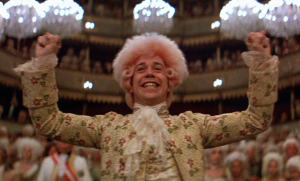
Sometimes a soundtrack can introduce you to music you wouldn’t normally listen to11avneu. My chances of cranking Mozart in my car are close to zero, but I’ll watch the film Amadeus over and over, reveling in “Salieri’s” moving descriptions of Mozart’s music, and I’ll feel every note of its beauty. I’m not too much into old-timey twangy folk, but the soundtrack to the 30’s-era epic Oh Brother, Where Art Thou? adds an earthy realism to the film. Stand By Me is chock full of pop hits from the early ’60’s. Ditto for Forrest Gump, whose soundtrack is pretty much a history of modern American music. Sometimes the music seems to have nothing to do with the movie but we love it anyway, such as Simon and Garfunkel’s top hits from The Graduate. The folky acapella track of Katniss singing “Hanging Tree” in Mockingjay hit number one on the charts in England. Philadelphia has a nice variety of music, from Oscar-winning pop hits to opera. The old British comedy series Young Ones used to spotlight different songs, and got me hooked on the group Madness.
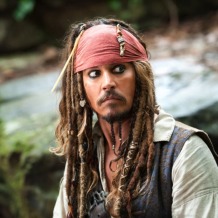
10-jack-sparrow-pirates-of-the-carribean.w529.h529There are times, however, that the orchestral music in the background of a film or TV series is so beautiful it can distract you from the film itself. The soundtrack to Thor did that to me; the movie was engaging, but the music drew your ear away. Pirates of the Caribbean is another – what is Jack Sparrow without his sneaky tiptoe music? Like Star Wars, the music themes give away what’s coming next. The soundtrack to The Lord of the Rings is majestic, speckled with sung tracks by Bjork, Annie Lennox, and the vastly underrated voice of Billy Boyd – Pippin himself. If you want to find a good one fast, John Williams is probably the undisputed King of Soundtrack music, but also look for Hans Zimmer, Danny Elfman, Howard Shore, and the late James Horner. Every one of them makes soundtrack music look effortless. You may not like “classical” music, but these orchestral arrangements – “modern classical” – can put a different voice to the genre.

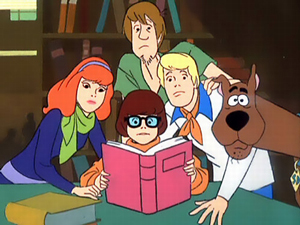
Soundtrack music can make or break a film or TV show. I’ve never seen 1981’s ChariotsScooby-gang-1969 of Fire, but that darned theme is still stuck in my head. Whether or not you liked the shows, the title themes from The Brady Bunch, Gilligan’s Island, The Addams Family, and The Mickey Mouse Club remain cultural icons, still widely recognized decades later. It was a song in the middle of the movie version of M*A*S*H* that later became the opening theme for the television series. Forty years later we still know the theme song to Scooby Doo, a show that originally ended in 1976, or The Flintstones (ended in 1966), but no one remembers the theme from Holmes and Yoyo, Dharma and Greg, Eureka, or even Monk. Half of Malcolm in the Middle’s charm was the catchy theme by There Might Be Giants.
Having a “soundtrack” album isn’t just for Hollywood musicals – those are a class by themselves – but for every film or TV series, and most of them, good or bad, have released one, though some may be hard to find (took me years to find the soundtrack to Ladyhawke, a poorly filmed but underrated movie). Check out the film, then check out the soundtrack. You may be delightfully surprised.

What movie or TV music rocks your world?

Mississippi Grind

indexThe movie Mississippi Grind is a little bit of a sleeper. An independent film released at the Sundance Film Festival in 2015, it was never released in theaters but went straight to on-demand and video distribution.

This does not mean it is unworthy.

Mississippi Grind tells the tale of Gerry (Ben Mendelsohn), a down-and-out guy who has lost everything to his gambling addiction, including his wife and six year old daughter. Gerry will lie, cheat, and steal from anyone, good or bad, trusted or not trusted, to gain money for his next bet – and the toll of his addiction has certainly left a mark of depression on him. Curtis (Ryan Reynolds) is also a traveling gambler, but unlike Gerry, he has nothing to lose, and claims he remains untouched by it because he just likes people; he has nothing emotionally invested in his gambling. When they meet up, you might as well pour gasoline on Gerry’s fire. Between Gerry’s contacts and Curtis’s contacts, they go off on a gambling spree to try and earn the megafortune both seek, hitting up smaller gambling deals on their way to a mythical place of gambling on the Mississippi river.

Of course things go well and things go bad for them. While you feel bad for Gerry, at A1EWEItW27L._SY355_the same time you’d like to hit him with a brick and say “Enough already!”, but Gerry is truly addicted to gambling. Curtis isn’t as good a player, but he’s (slightly) more in charge of himself. In many ways, the down-and-out style of their relationship reminded me of Voigt and Hoffman in “Midnight Cowboy.” I will not spoil the ending.
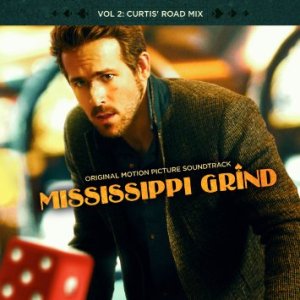
The movie is slow, a character study far more than an action film, but what truly stands out is its score. Ignoring the start of the film in the mid-West, the movie overflows with languinous tracks of hardcore blues songs evocative of Mississippi and the deep south. Fast or slow, modern or old folk, it is worth watching the movie for its A1zNzWVzk6L._SY355_soundtrack alone. You know some of the singers – Odetta, John Lee Hooker, and some of the songs – a reworking of Frankie and Johnny, for instance, but together they lend an unforgettable undercurrent to the movie that will stick with you long after the credits finish rolling.  It is so chock full of music, the soundtrack was released on two albums (Gerry’s Road Mix; Curtis’s Road Mix), so if there’s one certain song you’re looking for, you’ll have to check for which one you need. Amazon won’t help you; they sell the albums but don’t list the tracks, but you can find them by Googling it.

And it makes you wonder – why wasn’t this ever put to theater release?

Dark Justice

       4810718-7340774645-the-b_Arl6x9k I don’t read comic books; the drawings v. words are too visually distracting for me. The ones I hold tight in my file cabinet you’ve probably never heard of. But I love Batman. Adam West Batman. Super Friends Batman. Keaton, Clooney, Kilmer, Bale, I like them all. And yes, I had no problem with Affleck’s performance. Nine Batman films have raked in a combined profit of more than $2.2 Billion – no small change. I like Wonder Woman, and Spiderman, and don’t get me started on how much I love the Avengers.

Jacket.aspx
But I don’t like Superman. Never did. My favorite would be Super Friends Superman, and after that it’s Chris Reeve or nothing. Perhaps he’s too squeaky-clean – far more than Captain America, and too powerful. Krypton is one of the rarest gases, one part per million of our atmosphere. You would have to sift an awful lot of air to gain enough Krypton to affect him. Barring Lex Luthor, Superman is more or less invincible, and no one likes a prissy Lawful Good (this is the same problem fought in the X-Men series, Watchmen, and Captain America: Civil War). What good is a hero who has no faults and can’t be harmed?

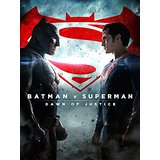
51omO8G3K-L._AC_US160_Batman v. Superman: Dawn of Justice – due on DVD July 16 – didn’t grab me from the start, but I went to see it because – well, Batman. If you haven’t seen the last reboot of the Superman franchise, Man of Steel, be prepared for confusion, for BvS takes up right where Man of Steel left off. Batman is mighty ticked at Superman for all the damage he wrought in lives and property, and takes it upon himself to curtail Superman in a surge of animosity that seems to come out of nowhere. Batman’s good for a simmering revenge, not a sudden “You need to be taken down, I don’t like you” petty vindictiveness. Batman, a mere mortal with cool toys, tries to take down a superbeing who cannot be stopped. Needless to say, it does not go well.

Batman v. Superman seems lost in its own purpose. It’s a fair Batman film, a wooden and flat Superman film (Spider-Man has more lines in Civil War than Superman did in BvS), and if Batman-V-Superman-Zack-Snyder-Trinitythere’s any shining hero here, it’s Wonder Woman. If anything, it’s merely a clunky prequel to 2017’s Wonder Woman movie. In fact, you probably could have cut the whole rivalry down to 30 minutes, then began the Wonder Woman movie, and had a much better film.

My biggest gripe with the film, writing and directing aside, is that Batman breaks character. Guns are not Batman’s forte. Batman does not carry them, Batman does not shoot them. Batman is about outsmarting the villain and bringing them TO justice, not carrying it out himself. Batman is the thinking man’s hero. Batman never even kills the Joker. But here’s  Batman, shooting and killing like Rambo. That was my breaking point. And it is quite established that Batman is well-versed in martial arts; Batman’s moves in BvS are poor at best; slow and unconvincing.

batman-vs-superman-dawn-of-justice-movieIf you hunt for it, there are enough good bits to make the film worthwhile; all the Wonder Woman scenes among them. It is certainly nowhere near the abysmal level of 1992’s Batman Returns, with Danny DeVito as a deformed demented Penguin – surely the lowpoint of his career. Forbes magazine nails the issues with the film quite nicely here: http://www.forbes.com/sites/insertcoin/2016/05/09/captain-america-civil-war-shows-exactly-why-batman-v-superman-failed/#6dda5e6446bb.

If you really love the superhero genre, then by all means watch it. There are far worse superhero films out there – Green Lantern and Eric Bana/ Incredible Hulk (2003) come fast to mind. But if you really want to see superheroes eating their own and winning at it, wait for Captain America: Civil War.

Taming the Epidemic

51DfIYszbDL._SX326_BO1,204,203,200_I have tried writing this several times, but I need 8,000 words instead of 800. I didn’t want to write about a politically charged topic at a time when politics are tearing the country apart. There is so much here you should read, need to read, that I cannot emphasize how important these books are, on such a difficult topic. And yes, if you’re living in this very town, they are relevant to YOU.

I read Chasing the Scream by Johann Hari in January – that’s how long it’s taken me to write this. I was skeptical – yeah, yeah, failed war on drugs. We know. But the information she presents is hard-core, well-documented, and agonizing. You can check it yourself. It blew my mind and changed my outlook not only on drug addiction, but my outlook on life. Hari shows – starting with Billie Holiday – that the war on drugs began early in the 1900’s as a method to exert control on “undesirables” – Mexicans, Blacks, Irish, Chinese. It blew up into a witch hunt, reinforced by Nixon to control war protestors. In the early 1900’s, drugs were legal. People could buy a small amount, get their controlled fix, and carry on. When the drugs were banned, junkies were forced to go underground, for huge amounts of money and unknown quality. People died. Crime exploded. Gangs took over. We knew this would happen, because we saw the exact pattern in Prohibition. The U.S. put a gag on every other country in the world – you want our aid, you make these drugs illegal. Now we control all the cartels.

And most of our addicts are addicts because…. they have psychological issues. Soldiers with PTSD. Rape and abuse victims. Homeless. Mentally ill. People with trauma. People without hope. And we have spent billions jailing them, punishing them, and sometimes killing them, because after all, they’re junkies, who cares.

But what happens when junkies (who make up only 10% of people who have used illegal drugs: 90% walk away fine) are not jailed, but treated as mentally ill, counseled, given a purpose? People tend to get clean and stay clean. What happens when illegal drugs are decriminalized – or even legalized, as in parts of British Columbia, or Portugal? Even heroin? Crime drops. Gangs fail. People become productive. And eventually, people get off the drugs themselves because it’s not who they are anymore. It’s a frightening concept, and against everything we have ever been brainwashed with.

Move on to Dreamland: The True Tale of America’s Opiate Epidemic, by Sam Quinones. 51pEBowSD9L._SX327_BO1,204,203,200_Quinones traces the perfect storm of the modern heroin epidemic: a false assumption, a powerful painkiller, a drug marketing lie, and a whole new method of peddling Mexican heroin. Oxycontin was touted as an addictionless drug because it was time-released, at a time when pain management was the rage in medicine. In reality, Oxycontin was very chemically similar to heroin, just as addictive, and pain “clinics” sprang up that did nothing but pump millions of addiction pills into the country. As people fought to get oxycontin, enter the Mexicans, who broke the rules by delivering drugs to your door. No guns. No violence. All under the radar. And their heroin was uncut Black Tar. Competition brought the price down to $6 a fix – cheaper than the $1/milligram Oxy. Washington State finally made the connection when their drug overdose fatalities were higher than their auto accident fatalities. Purdue Pharma paid more than $630 million dollars in fines for faking their addiction data. Pfizer paid more than $3 Billion for misrepresenting their drugs – less than 3 weeks take of their sales from them. Oxycontin was changed to help prevent abuse, but no one has yet put a dent in Mexican heroin sales.

51h74NFYq2L._SX331_BO1,204,203,200_A slightly older book to read is Methland, which shows the damage done to the Midwest with the rise of Meth, which is so easy to produce you can manufacture it while riding a bicycle around town. Why does everything seem to start in the Midwest? These are the areas hardest hit economically by the collapse of American industry. When people are hopeless, with no jobs, or if you are injured on the job, the doc will write you a pain prescription. You stretch it out to a disability claim, get on payments, and you no longer worry about money, or how to pay for prescriptions. You sell those pain pills for three times what you were charged. For students, it’s often sports. Children are pushed to excel, to work through the pain, given pain pills to take the field and win this one, and they get hooked. Most teens start with sports injuries.

If you think drug users are minorities in deepest urban ghettos, you’re wrong. They’re here. At least two students in this very town died this school year from overdoses. We don’t talk about them. They don’t make the paper. But the students know. It’s bad enough that there is now a clinic in this town. Let’s stop pretending. It’s the kid on the sports team. It’s the kid behind the register. Your hairdresser. The PTA mom.

These books are thought provoking in their information and ideas. Though I’m – thankfully – not directly affected by the drug epidemic, I feel I dodged a bullet when my daughter was only 13 (2006). A heavy jar fell on her foot and I took her to the ER. It wasn’t broken, but badly bruised. They offered her Oxycontin or Percocet for the pain. I said no, something less strong. They gave me scripts for both, and I could fill which I wanted (dead truth). A thirteen year old. I tore up both of them. She did fine with Motrin.index

If you can read one book this year, read Chasing the Scream. If you can read two, read Dreamland as well. Even if you don’t agree with them, let’s get a national dialogue going. And if you want something a little more technical but utterly fascinating about the chemical aspects of addiction, track down How Drugs Influence Behavior: a Neurobehavioral Approach by Jaime Diaz. I was – still am – amazed at the information, and it’s not so technical a layman can’t understand it. Never have I seen a medical book with opinions like this.

Dum-Diddly-DUMB

220px-TiK_ToK_-_Kesha_(official_single_cover)I came across an article from May of 2015 (there are many on the subject) that mourned the dumbing down of American music based on the reading grade-level of the lyrics. The average ability one needs to read modern lyrics is a whopping  second grade reading level. Hip hop scored worst, with short little repetitive words that needed only a first-grader’s ability to read. Country music was the Big Brain, with a reading level of third grade and a few months. I found that a bit shocking.

You can find one of those informative studies here http://seatsmart.com/blog/lyric-intelligence/
#
There are many criticisms of such a study. One is that they only covered music in the last ten years. Was music really all that smarter 20, 30, 50 years ago? Another is that repetition dumbs down the word level:

(Ke$ha, TiK ToK, Billboard #1 January 2010) (NUMBER 1 SONG IN AMERICA)
I’m talkin’ bout – everybody getting crunk, crunk
Boys tryna touch my junk, junk
Gonna smack him if he getting too drunk, drunk
Now, now – we goin’ ’til they kick us out, out
Or the police shut us down, down
Police shut us down, down
#
I’m not sure it’s the repetition that’s dumbing that down.
#
The other major complaint is how reading scores are measured: most have a mathematical formula that juggles word length, sentence length, or syllable length, and messes them around until an average is found. This is not always accurate, especially with poetry or lyrics, which may have 100 words before coming to the actual end of a sentence.

I had to find this out for myself. After all, we survived songs like “Doo Wah Diddy” and “Kookie, Kookie, Lend Me Your Comb.” I took a variety of older songs and plugged them through https://readability-score.com/, which uses fivChild in school distracted_0e different reading assessment tools to come to an average score. The Flesch-Kincaid Reading Ease was developed by the Navy, so that technical manuals wouldn’t get too difficult to understand. A score of 90 or better is good for a 6th-grade student, 60 or higher is good for high school students, and 30 or less is best left to college students (i.e., higher score is easier to read). Because the formula isn’t perfect it is possible, on the grade-level equivalent, to score well above a “grade” (as in, grade level 62).  That’s the number of years of schooling you may need to understand it. Ideally, if it’s for the average Joe or Jane on the street, you want a grade level of 8.  Don’t take it literally; just understand that the higher above 8 you go, the more complex it is to read.

Here was what I found when I ran nine popular songs through the analyzer:

Francis Scott Key, The Star Spangled Banner (1814) Everyone knows this one! Reading Ease: 87.6 (grade 7 or so). Average reading level – grade 7.3
Woody Guthrie, This Land is Your Land (1940) Come on! Okey folky here. Woody Guthrie was by far not an educated man. Reading ease: 33.8 (that’s in the college range). Average grade level: 37  (Blame no punctuation.)
Elvis Presley, Jailhouse Rock (1957) We’re talking Elvis. Hound dogs. Blue suede shoes. Reading ease: 77. 2 (high school). Average reading level: Grade 6.2
Frank Sinatra, A Very Good Year (1961) Thoughtful, but not Shakespeare, right? Average grade level: 11.6
The Supremes, Baby Love (1964)  Oooh, Baby Love, the reading ease is 54, with a grade level of 14, which, again, is almost guaranteed to be a result of no punctuation.
Bob Dylan, The Hurricane (1975) Ok, folk music by nature is going to score higher, because it tells a whole story. I only did the first four stanzas. Reading ease? 16.3. Grade level? 24.7  Big long sentences with grammar!
Queen, Bohemian Rhapsody (1975) Let’s face it. Scaramouche isn’t in a Ginn Reader, or even a Lippincott or Scott Foresman. Reading ease? 43. Grade level: 16.3. That’s a senior in college.  Thunderbolt and lightning.
The Police, De Do Do Do (1980) (Talk about repetition!) reading ease: 63. Grade level: 47.
REM, Drive (1992) Reading ease: 101.9 (that’s grade 5ish). Average reading level: 2.2  Ah! So music DID die off at the end of the 80’s!

knobAnd just for kicks (because it came up on my iTunes): Disney’s Bedknobs and Broomsticks, Substitutiary Locomotion (1971) (remember, this is a Disney kid’s movie): Reading Ease: 4.1 (that’s PhD level), and a grade level of 18.  A catchy kid’s tune.

#What it means:
Okay, even I was surprised. I expected lyrics to have come down, but I didn’t realize it was by that much. Don’t bother with “scores,” just read the lyrics. I did The Police as a joke, because that much repetition was certain to skew things down, but no: the rest of the lyrics have words like jamming transmissions, not baby words. I thought for sure Woody Guthrie would prove a point, but his lyrics, too, are full of long words and long sentences and imagery. Elvis? Really? Spider Murphy played the tenor saxophone,  Little Joe was blowin’ on the slide trombone. It’s not junk, junk. The Hurricane I knew would score high – it’s about as close to an entire novel as you can sing without going back into Child Ballads.
#elvis-presley-collectors-by-jeff-schrembs-2010-all-rights-reserved-21290390
While the measuring tool isn’t precise – measuring sentence length in a lyric that doesn’t use punctuation gives false positives as to complexity – the word lengths counter some of it (we know it obviously does not take a PhD to understand Police lyrics). All in all, I have to agree: many modern music lyrics are about as intelligent as dirty dishwater, and the content is worthless. All you need to succeed is some gibberish, a loud driving beat, a fast groove of the hips, and a really good publicity team to get you air time. The music industry is about money; artists are about the art and the message. Hence we’re here  discussing Sinatra and Elvis and Queen, who haven’t been around in decades, and no one remembers who had the number one hit four years ago.