Recently, I was discussing two of my favorite television series’ of the past year, “Mr. Robot“, and “Legion“, when it occurred to me what I found compelling about both of them – they are both told by unreliable narrators. The narrative characters in each show have major difficulties perceiving reality, which means the viewer sees the story through their skewed lens, often having to puzzle out what is real and what is not.
It’s a challenging concept, relatively uncommon in television, but more often used in literature. In the literary device of the Unreliable Narrator, the character who leads the reader through the story cannot be taken at face value. The reason could be because this character is lying, insane, or simply seeing events from a very limited viewpoint. In ever y case, though, it leads the reader to form conclusions beyond what is being disclosed in the narrative. A puzzle of sorts, where questioning what everything really means becomes part of the reading experience.
As I thought about it, I realized that many of the novels that have stayed with me long after reading them have had some kind of unreliable narrator. I remember finishing some of these books, and immediately starting them over again, looking for the “tells” that would have clued me in to the real truth of the tale if I had recognized them the first time. Here, with as few spoilers as possible, are some of my favorite unreliable narrators, (and a few whose heads I could not wait to get out of):
1. Silver Linings Playbook – When we meet the point-of-view character Pat, he’s being released from a mental facility into the care of his parents. That’s the first indication that situations in the story may not be exactly as they seem. As Pat’s repressed memories start to come forward, we’re able to piece together exactly why Pat was institutionalized in the first place.
2. Flowers for Algernon – Charlie Gordon is a learning disabled man who undergoes an experimental operation to increase his intelligence. The novel is told through entries in Charlie’s journal, and the reader is able to see the improvements in self-awareness and intelligence through those entries. Then, too, we witness his deterioration as the long-term effects of the operation make themselves known. Bring a hankie.
3. Life of Pi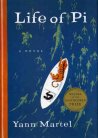 – A fantastical tale of a boy set adrift after a shipwreck, with a tiger sharing his life raft. It’s a beautiful and uplifting story, until it is revealed that it may be what the narrator’s chosen to believe rather than what actually occurred.
4. Room 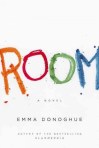 – Told from the very limited point of view of a five-year-old boy, Jack, who has spent his entire life in an 11-square-foot soundproofed room with Ma, his mother. When Ma devises a plan for Jack to escape, we experience the exhilaration and confusion the world for the first time along with him.
5. The Curious Incident of the Dog in the Nighttime – The engaging narrator of this book is an autistic teen, so we perceive the events in the story the way he would. When he comes across a neighbor’s dog stabbed with a fork, his obsession with Sherlock Holmes takes over to help him solve the mystery.
6. Fight Club  – Whether you’ve seen the movie or read the book, the twist that’s revealed about the identities of characters in this story packs a real punch (sorry, I couldn’t resist).
7. Shutter Island  – In this gripping psychological thriller, nothing is quite what it seems. It starts out as an investigation into the escape of a mental patient, and well, to say more would be too spoiler-y.
8. Lolita – A compelling and beautifully written book told by a pedophile who is as charming as he is perverse. His justifications and attempts to win the reader’s sympathy are as fascinating to read as they are icky.
9 & 10. The Girl on the Train
 & Gone Girl – I’ve lumped both of these together even though they both contain different types of unreliable narrators (a blackout drunk and just plain liar) because they came out close together, are both murder mysteries, and if you’ve read one, you’ve probably read the other. I couldn’t wait to close the covers on both of them, though, the characters were just too unlikable for me to want to spend much time with.



 The “I’d Rather Watch TV” Guy:



 An eclipse takes place when one heavenly body such as a moon or planet moves into the shadow of another heavenly body. There are two types of eclipses on Earth: an eclipse of the moon and an eclipse of the sun. A Lunar (moon) Eclipse occurs when Earth moves between the sun and the moon, blocking the sunlight that normally is reflected by the moon. (This sunlight is what causes the moon to shine.) Instead of light hitting the moon’s surface, Earth’s shadow falls on it. It lasts a few hours, and it is safe to look at a Lunar Eclipse.
 with a shade number of 12 to 14. Use the filtered shades during the hour-long partial phase before totality and then again afterward for an hour. Only if you are in a location where you will experience total coverage of the sun (here in CT we are not in the path of totality) are you able to watch the event for the duration of totality (only about 2 minutes!) with naked eyes or through binoculars.


 with your back to the Sun, positioning your pinhole device so that the sun projects an image onto a white or light surface in front of you.











 The Cheshire Library Blog