Serial Solving

I never know what I’ll read next. What ever sparks my interest, either by title, by book cover, or by subject. I have no special direction or particular interest, but if I found one book on a subject interesting, I’m far more likely to read another on the subject, or by the same author.  Hence I’ve read an inordinate amount of books on Ebola, fast fashion, tea, books on the making of various movies, and, well, serial killers.

We know the names. Son of Sam. Ted Bundy. Green River Killer. BTK Killer. Long Island Killer. 

I have no fascination with them, find most of them repellent and frightening beyond description, and did not shed a tear when Jeffery Dahmer died in prison, but I find the psychological processes and forensics involved in tracking them down utterly intriguing. The science end, not the murder end. And there is SO much to be fascinated about. 
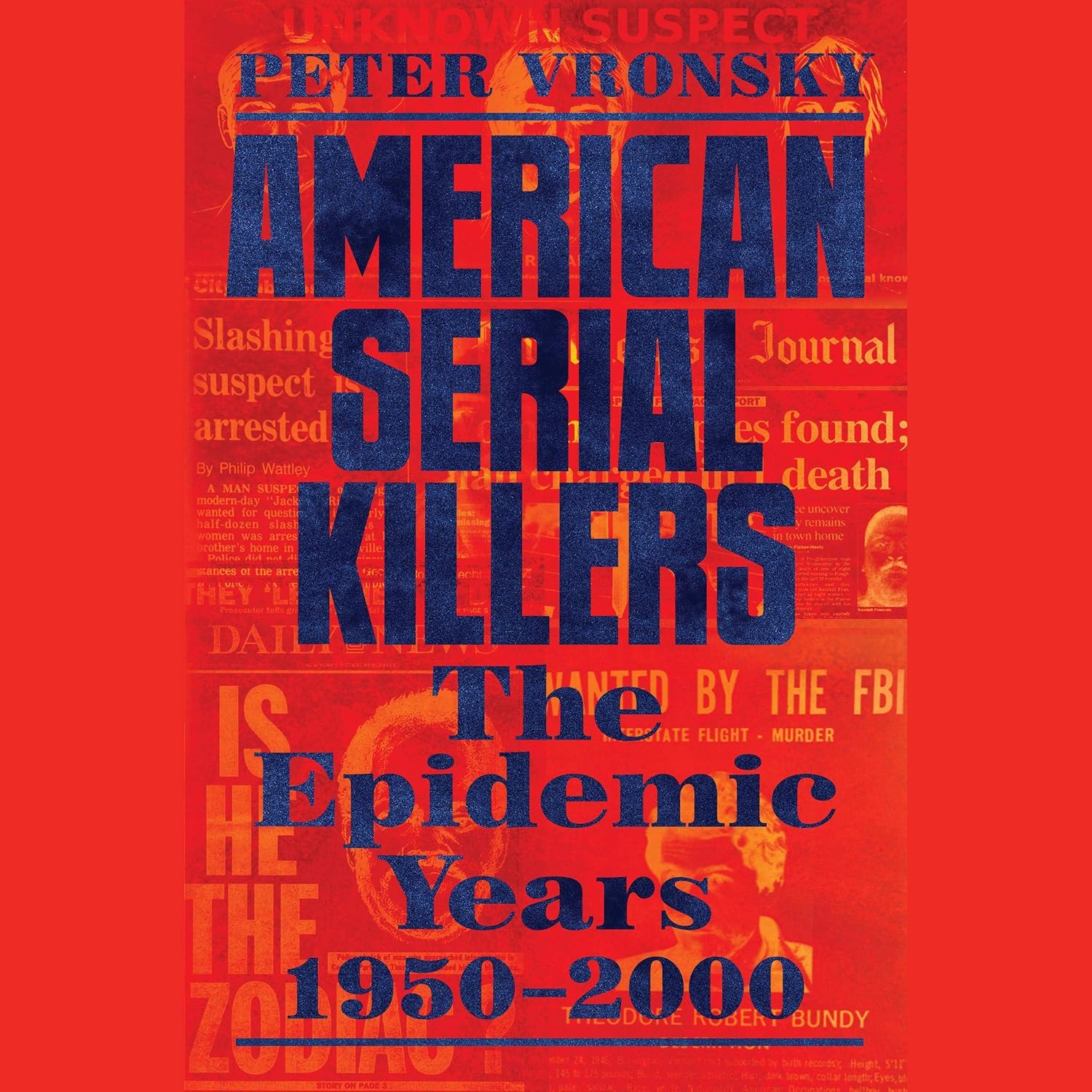
Most recently, I read the book American Serial Killers: The Epidemic Years, by Peter Vronsky, and I was blown away by the premise. America – which has more serial killers than any other country (well, that are reported and connected. Other countries have mass murders by corrupt governments, so maybe we’re better off) – had a major epidemic of serial killers (those that intermittently kill more than three people, as opposed to a spree all at once) from around 1970 to the mid 1990’s – more than 600 a year, and then it tapered off sharply. Why? Why did we have terrible trails of serial murders for 25 or 30 years, and then few?  Vronsky makes a very strong, documented  case for the fact that most of these killers were born in the late 40’s and early 50’s (25 or 30 by 1975) and their fathers fought in World War II. Vronsky documents that many of these fathers came back damaged from the war – PTSD, violent, depressed, alcoholic, received no help, and were unable to nurture their children. These boys – coming of age with violent sex images in men’s magazines, pulp fiction novels, and comics – grew up with attachment issues, poor self-image, and violent fantasies about sex, which they slowly began to work up the nerve to carry out. Why did things taper off? Most of those killers were either dead, in prison for other crimes, or had worn themselves out and were living a quiet life until something might trigger them again, unknown to their neighbors. Vietnam Vets received more services than soldiers in the 40’s, there was more public support, it wasn’t as big a deal to divorce a man, and those children did not have the same issues their grandfathers did. Those children of Vietnam vets would have been 25-30 in 1990-95 – years when serial killers were in decline.

Another utterly fascinating book – one that sent me down a long, long wormhole of research – is Barbara Rae-Venter’s I Know Who You Are: How an Amateur DNA Sleuth Unmasked the Golden State Killer and Changed Crime Fighting Forever. The Golden State Killer was alleged to have killed 13 people and committed more than 50 rapes across California between 1974-1986. Because police departments didn’t talk to each other or share information, no one was ever able to piece together all the information. Enter Rae-Venter. Rae-Venter spent her days helping people trace their genealogy and find their families using her home computer. Asked if she could do the same for a suspect, Rae-Venter needed 63 days and $200 to make a genetic profile of the killer from her dining room – something 30 years and $10 million of taxpayer money had never been able to do, leading directly to the apprehension of the killer. Since Rae-Venter, a huge number of backlogged, dead-end cases have been solved and cleared (like the Long Island Killer) due to the methods she used.

Spurred on by her methods, I fell down a rabbit-hole of genealogical research, aided by ancestry.com (free at the library), and in a week was able to trace my mother’s ancestry back 12 generations, connect some gaps, discover my grandmother had an older sister we never heard of (probably because she died at 5 months), and my grandmother’s younger sister was four when she died, not the two my grandmother remembered. Sometimes books are dangerous!

Through both of these books, several names kept popping up, and I realized I’d already read books by both men. John Douglas was the first real FBI criminal profiler, starting in the 1980’s, creating many of the procedures we use today. His book, Mindhunter, chronicles how he began, in a time where every department wanted the glory of solving the case, and thus no one ever shared information, and no one ever solved the cases. 

Unmasked: My Life Solving America’s Cold Cases by Paul Holes, is another. Holes learned the business under Douglas, pursuing cold-case investigations from the 1990’s into the 2000’s.  Some of the cold cases that perplexed them the most and they were never able to solve were later solved by Barbara Rae-Venter’s methods, like the Long Island Killer and the Golden State Killer.
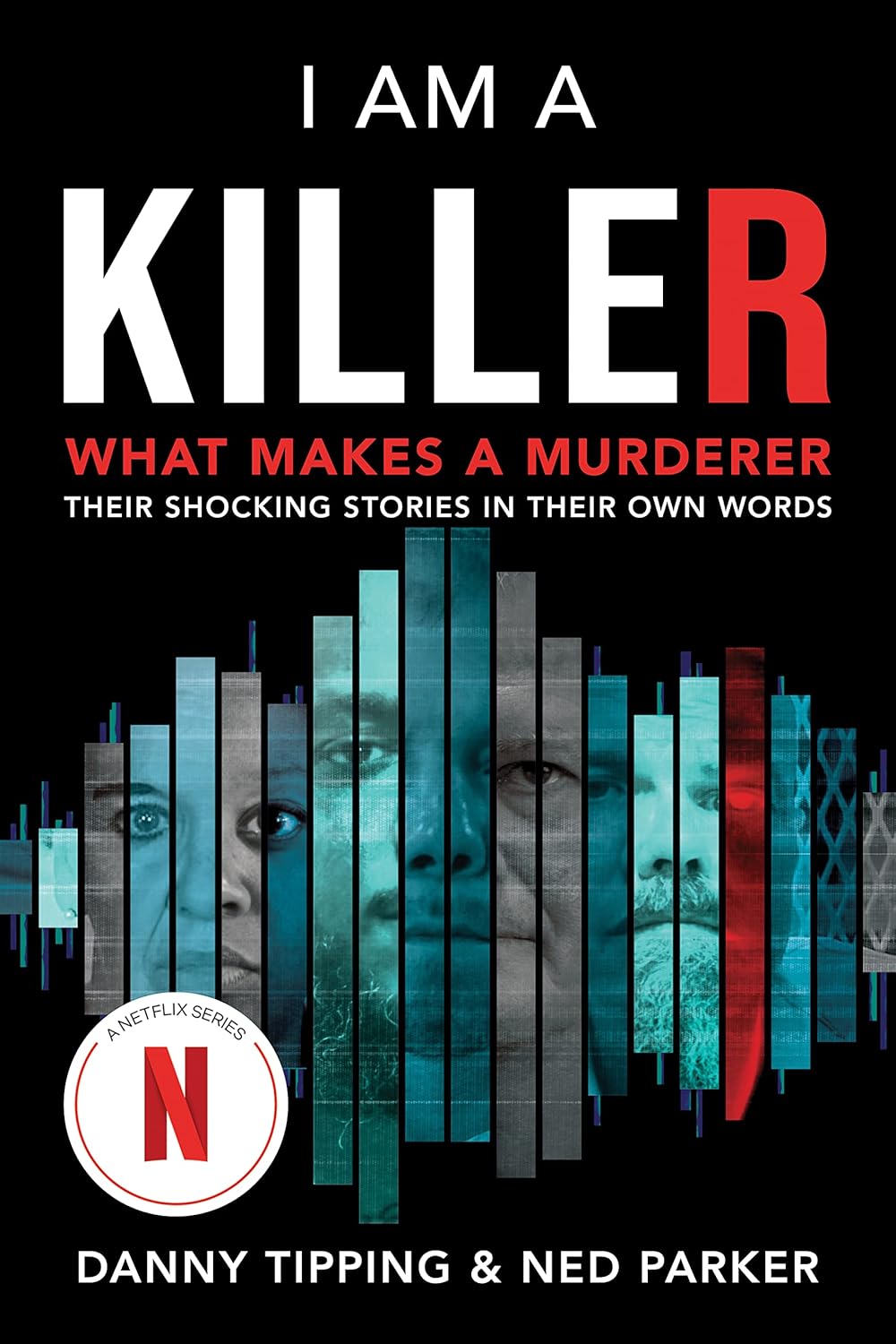
If you don’t care so much about crime but like psychology and sociology, and want to find out why people kill, try I Am a Killer, by Danny Tipping.  It’s a sad book that dwells on the murderers and not so much the crime. Time after time, the horrific backgrounds of these killers are revealed (one father, to hide the bruises and welts on his kid when Social Services was coming, tied him to a mattress, poured lighter fluid on him, and set his back on fire). Many did not deserve the sentences they received, responding to unimaginable abuse. There are no winners in this book. 

Though he technically didn’t kill anyone, if you want local flavor, read Incendiary: The Psychiatrist, The Mad Bomber, and the Invention of Criminal Profiling, by Michael Cannell. Many people claim to have invented criminal profiling, but this was an early case. In the 1940’s, a bomber went around exploding devices all over New York City, then teasing the police through letters. After twenty years, he was determined to be George Metesky – from Waterbury, Connecticut, and the criminal profiling was eerily correct.

If you like crime stories and investigations, these are excellent books. If you like psychology and deviant behavior, these are also excellent books. The difficult part is that they had to be written at all.
Susan’s Best Reads of 2019

I don’t read as much as I wish I could; I just don’t have time at the moment. It doesn’t help that I wind up with sometimes 600 page books in my hands, and those take longer.  I never know what I’ll read next, and I read a bunch of good ones last year. Here are some of my favorites:

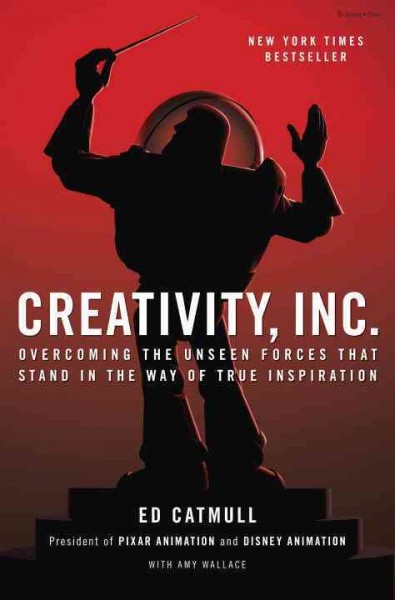
One of the two best books I read this year, I’ve already blogged about: Creativity, Inc, by Ed Catmull, was amazing. Not just a history of Pixar films, it’s also the best darned, most entertaining book on business and employee management you will read. Pixar is a 5-star company for a reason.

The second of my Best Reads this year is The Man from the Train: The Solving of a Century-Old Serial Killer Mystery by Bill James and Rachel McCarthy James.  From approximately 1898 to 1912, a serial killer traversed the US by train – coming through New Haven’s Union Station on the way – with an MO of bludgeoning his victims with the back of an axe. Because of communications at the time, few people were able to connect the murders. James painstakingly, with the utmost detail, traces the dozens of murders and examines them, deciding if they were likely by the same killer or not, and why. He traces the paths through the states and the seasons, chasing the trail to a man who was most likely the killer. By the time he’s done, you are convinced and amazed. I could not stop reading this book. I read it while waiting for the school bus. I read it while cooking. I would have read it in the shower if I could have. If you love a mystery, if you love history, if you love crime stories, this book is a must.

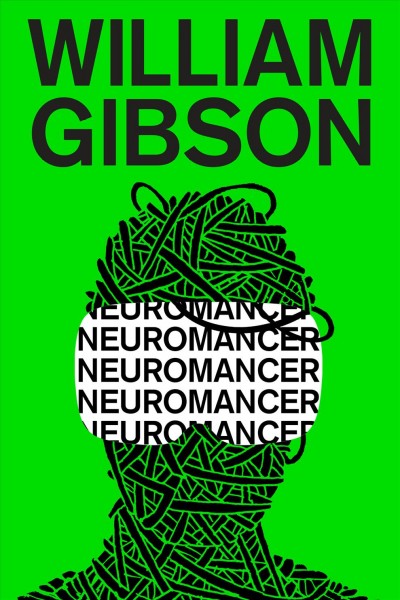
I’m only 30 years late in reading Neuromancer, the Hugo-winning cyberpunk novel by William Gibson. I can see why it is held as one of the greatest novels of our time. Gibson predicts and writes about today’s modern computers and internet and gaming – long before they existed. The scenarios he describes are both familiar and futuristic at the same time. While not only visionary, it’s written in  a flawless style and with realistic, interesting characters. If you loved Ready Player One or The Matrix (which has to have been influenced by this book), you will love Neuromancer.

If you’re aware of social and racial issues, I strongly recommend Survival Math, by Mitchell S. Jackson. A professor of writing, in achingly beautiful prose worthy of Martin Luther King Jr., with the voice of a preacher without being preachy, Johnson breaks down the issues faced in his own family, examining how he came to where he is, how racism played into it without even being visible, and how despite all the odds, it’s possible to thrive. He covers harsh topics without flinching. The book is brilliant, spellbinding, and a superb read from a voice that soars with truth.

Far more than I expected, I loved Total Recall, an older door-stop of a biography on Arnold Schwarzenegger. From his birth in a tiny town in Austria (which still has only 2500 people) to his divorce from Maria Shriver, Arnold is witty and candid and down to Earth. No matter what you think of his politics or his movies or his personal life, this book may be older, but it was highly entertaining. His best friend just died in September of this year.

Not my favorite, but worth mentioning because of its local importance, is Frog Hollow  by Susan Campbell. Campbell, a former reporter with the Hartford Courant, digs into the history of the notorious Frog Hollow section of Hartford, and through tireless research shows the former glory of the neighborhood as not only an important area in Colonial times, but once a major manufacturing center (in 1898, Pope automotive made half the cars in the US). I was hoping for a deep sociologic dissection of the issues, but instead Campbell gives us an upbeat view from street level about the good aspects of Hartford and the people who live there, not just the doom and gloom of ad-selling news clips.

Last but not least, I’ll throw in a kid’s series you probably missed; with 18 years between my last two kids, I certainly did, but my youngest is so hooked on the British easy reader series Urgency Emergency! by Dosh Archer, I wound up buying most of them. The series is so witty and enjoyable you don’t mind reading them over and over again. Doctor Glenda, Nurse Percy, and the Pengamedics, in predictable melodrama, assist the maladies of Humpty Dumpty, The Big Bad Wolf, the Itsy Bitsy Spider, and many more. They are a delight. The library has several of the stories; be sure to read them all!

This is Your Brain on Podcasts – a new kind of on-the-go storytelling

PodcastingPodcasting is rapidly becoming the newest and most easily consumable form of storytelling. As of June 2018, iTunes features more than 500,000 active podcasts, including content in more than 100 languages and over 18.5 million episodes. Now if you’re new to podcasts, this number can be overwhelming, how are you supposed to sift through a sea of seemingly endless possibilities to find the hosts, and topic, that keep you listening? To be fair, a lot of listening is trial and error. Maybe you don’t like the hosts tone, or their voice, or maybe the topic just doesn’t grab your attention, but stay vigilant, there are enough podcasts in the world for everyone, there must be one for you! I’ve compiled a list of podcasts that are easy to get into for beginners, based on (of course) your favorite books, all of which can be found at the Cheshire Public Library!
Note : The podcast’s listed here may be explicit, or contain explicit language. 

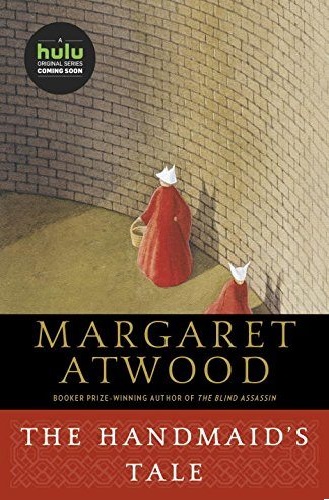
The Handmaid’s Tale by Margaret Atwood- The most chilling part of the world that          Atwood has created is that it has a strong basis in history, a history that is doomed to repeat itself. If you love history, and the dark origins behind common folklore, you’ll love Lore. Aaron Mahnke, the host and author himself, draws you into the rich history that paints our modern day nightmares. Tune in to learn the humble origins of the werewolf, how fairies terrified and mystified pilgrims, and how Krampus, the Christmas demon, still receives tribute every year in a tiny town in Germany. It’ll make you wish all history classes were this interesting. Released every two weeks on Mondays, Lore is an award-winning podcast that will soon be produced into a television series on Amazon. With 6-million monthly listeners, it has been awarded as iTunes’ “Best of 2015” and “Best of 2016” podcast.

Want to check out more of Mahnke’s writing? Check out his novel list here.

Do you comb the stacks looking for self help books, that lay forgotten about because, really, who has time? Don’t feel alone in this pursuit, it’s hard to read someone else’s proA1J-Xl6I7CLmises of a better life. After all, who really has all the answers? One book I found refreshingly honest is Jenny Lawson’s Furiously Happy: A Funny Book About Horrible Things . Lawson, an American journalist, author, and blogger, is known for her hysterically skewed outlook on life, and her candor about her struggles with depression and mental illness. If you’re looking for a podcast that doesn’t take themselves too seriously, and focuses on the bright side of life, look no further than Wonderful! , a podcast for joyful and enthusiastic peopwonderful cover art final_57le that like hearing about the passions, big and small, of other people. Each week Rachel and Griffin McElroy will talk about things they love and invite listeners to write in with their treasured items of enthusiasm. Topics may include movies, television, sports, books, drinks, eats, animals, methods of transportation, cooking implements, types of clothing, places in the world, imaginary places, fictional characters, and fonts, to name a few. It’s a delightfully sweet and genuine series, and a quick break from a world full of negatives.

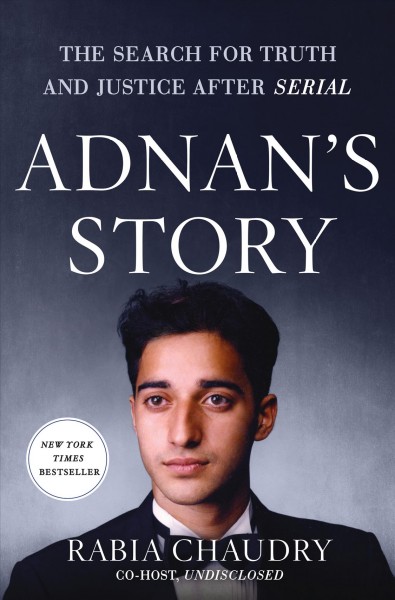
Now if you’re a true crime lover like me, I’m always searching for a new case to dissect, and foJacketr a new podcast or book that leads me through the facts of the case. That’s exactly why I was drawn to Adnan’s Story : The Search for Truth and Justice After Serial . A full-length account of the story investigated by the award-winning Serial podcast draws on some 170 documents and letters to trace the experiences of Adnan Syed, who in 2000 was sentenced to life for the murder of his ex-girlfriend and who the author and other supporters are certain is innocent. Ifserial-itunes-logo you want to listen to the podcast that brought the case to light in the first place, check out Serial season one. I’d compare it to a classic radio drama, the pacing and tone is incredible and keeps you on the edge of your seat, and the journalistic research that goes into every episode is admirable. It’s a great place to start if you’re just getting into true crime podcasts, or need something to listen to after binging the first and second season of Making a Murderer on Netflix.

Lastly, if you’re looking for a podcast that brings the book club to your home (without having people over to your actual home), look no further than Overdueoverdue-podcast-642x336. Overdue is a podcast about the books you’ve been meaning to read. Join Andrew and Craig each week as they tackle a new title from their backlog. Classic literature, obscure plays, goofy murder mysteries: they’ll read it all, one overdue book at a time. While not actively encouraging you to return your books late (insert finger wagging from behind the return’s desk) this podcast encourages the over zealous reader in all of us to take the time to head back into the stacks for the book you might not have otherwise checked out.

If you’re having trouble accessing podcasts or don’t know how to start, check out this easy to use guide provided by  Gimlet : How to start listening. It’ll take you step by step on how to both download, and enjoy the hundreds of podcasts iTunes has to offer.