 On July 21, it will be FIFTY years since mankind first walked on the Moon.
Although the Russians – with superior rocket power – managed to get not only the first satellite in space, but the first man in orbit, first woman in orbit, and smash the first man-made object into the moon, it wasn’t until May of 1961 when President John F. Kennedy gave his famous speech, challenging America that “this nation should commit itself to achieving the goal, before this decade is out, of landing a man on the moon and returning him safely to the Earth.”
United for the Cause
Perhaps no other statement since Roosevelt’s “Date which will live in infamy…” speech has done more to stir an entire nation in a single united direction. Congress allotted funding. The infant technology industry ramped up. Mylar was invented. Velcro found a use. Manufacturing learned to miniaturize (in a time of bulky tubes and transistors, when each reel of magnetic computer tape could hold a whopping 184 Kilobytes of memory  [for reference, an MP3 recording of the Star Spangled Banner runs around 900 Kb – half your memory]). The entire country surged forward with that dream, no doubt spurred on as an homage to Kennedy following his assassination. TV picked up the dream with serious and non-serious programs like Star Trek, Lost in Space, Dr. Who, and more. Movies gave way to huge spectacles, such as 2001: A Space Odyssey, Planet of the Apes, and a few thousand campy pulp films. Food wasn’t left out: the need to eat in space gave us the use of TANG, dehydrated ice cream, and Pillsbury Space Food Sticks.
The Final Frontier
The road to the moon was littered with failures – we d idn’t even manage to smash a probe onto the moon until 1962. We made it through the Gemini program, only to learn that some things couldn’t be rushed or corners cut when the Apollo 1 crew – Gus Grissom, Ed White, and Roger Chaffee – burned to death in an oxygen fire in a test module, because the pressurized doors opened the wrong way. This led to a pause – there was no Apollo 2 or 3, and 4-5-6 were all unmanned. If ever there was a lot of pressure on a crew, Apollo 7 was the first 3-manned crew to blast off Earth, period. Missions 8-10 looped the moon, giving us the famous Earthrise photo.
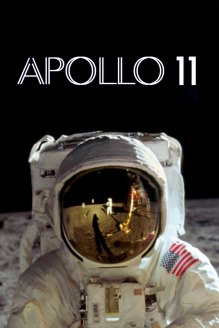
Apollo 11 pulled it all together. With less computer capability than an Apple watch, the  lunar lander settled on the moon, Armstrong sent out the famous words, “The Eagle has landed,” followed shortly by Armstrong’s historic “One small step for man, one giant leap for mankind.” At the end of an incredibly violent, divisive, depressing decade, the entire world came together for a few brief moments to rejoice.
Fifty years later, we sit back on our Tempur-pedic cushions with our cell phones, tablets, LED lights, and flat-screen TVs, watching through scratch-proof lenses or LASIK-fixed eyes (all outgrowths of the space program), and marvel at a time when space exploration was our future.
Deniers
How do we know it wasn’t faked? Like everywhere Man goes, we left our garbage behind – landing modules, rovers, flags and plaques – more than 400,000 pounds worth, and though they can’t be seen by any telescope on Earth (you’re talking a 10-foot object from 239,000 miles away), they can by orbital satellites around the Moon. The path to space is far too complex for a blog post, so grab a good book, watch a good film (join us for a viewing of the documentary Apollo 11 at CPL on July 18), and think on just how different our lives would be if we never tried to reach for the Moon.







 aren’t fish. They’re aquatic mammals: they breathe air, give birth to live young (ones that weigh a full ton), and feed them off milk just like any other mammal. They are known to be intelligent, and the scenario of Moby Dick, of such a mammal remembering who may have harmed it and seeking out revenge of its own, is entirely in the realm of possibility.
 The Cheshire Library Blog