Prices for many necessities continue to rise, while pay and compensation for most people do not seem to be rising at the same rate. Homesteading, or making the attempt to live more self sufficiently, is becoming a major trend as people make an effort to save more and do more for themselves. Most of these things are things our parents or grandparents did as a matter of course, but more and more people are learning how to revive these methods of taking care of the environment and their families.
Some of the activities that are seeing a major come back for one reason or another that can be considered a step towards homesteading or sustainable living include, knitting or crocheting, sewing, canning, gardening, raising chickens or other livestock, and so much more. I have done some of the traditional homesteading activities, but I will admit to cheating in some departments. While I might garden and crochet, I have not 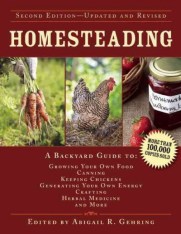 started canning like my family did when I was growing up. Frankly, I still have nightmares of peeling steamed tomatoes from my childhood as we made sauce and stewed tomatoes among other things. If you are interested in learning more about what exactly homesteading is, or you want to move towards living a more self sufficient lifestyle, here are some resources that can get you started and answer some questions.
Homesteading: a Backyard Guide to Growing Your Own Food, Canning, Keeping Chickens, Generating Your Own Energy, Crafting, Herbal Medicine, and More edited by Abigail R. Gehring
Urban Homesteading: Heirloom Skills for Sustainable Living by Rachel Kaplan with K. Ruby Blume
Made from Scratch: Discovering the Pleasures of a Handmade Life by Jenna Woginrich
The Nourishing Homestead: One Back-to-the Land Family’s Plan for Cultivating Soil, Skills, and Spirit by Ben Hewitt with Penny Hewitt
The Urban Homestead: Your Guide to Self-Sufficient Living in the Heart of the City by Kelly Coyne & Erik Knutzen


You might also be interested in Homeward Bound: Why Women are Embracing the New Domesticity by Emily Matchar, Zero Cost Living: Explore Extreme Frugality by James R. Delcamp, Back to Basics: a Complete Guide to Traditional Skills edited by Abigail R. Gehring, The Complete Idiot’s Guide to Self-Sufficient Living by Jerome D. Belanger, Barnyard in your Backyard: a Beginner’s Guide to Raising Chickens, Ducks, Geese, Rabbits, Goats, Sheep, and Cattle edited by Gail Damerow, The Backyard Homestead Book of Building Projects by Spike Carlsen, The Renewable Energy Handbook: a Guide to Rural Independence, Off-Grid and Sustainable Living by William H. Kemp, Mini Farming : Self Sufficiency on a 1/4 Acre by Brett L. Markham, and Sustainably Delicious: Making the World a Better Place, One Recipe at a Time by Michel Nischan with Mary Goodbody.


 The Cheshire Library Blog