Music Review: Scratch My Back/ And I’ll Scratch Yours by Peter Gabriel

Which came first, the chicken or the egg?

Are you more loyal to a particular song, or to the artist who sings it? Does one artist “own” a song, is it destroyed when someone else sings it? Or can a different interpretation make it better – maybe worse – or just ‘different.’

                That’s the question put forth by Peter Gabriel’s pair of albums, Scratch My Back (which was originally released in 2010) and And I’ll Scratch Yours, the just-released companion. In the first release, Gabriel sings the songs of other artists, putting an often-times melancholy spin on popular songs. In the second release, other artists sing songs Gabriel made popular.

                I must say, while I have several collections of a single song done by many artists (I have at least five different major artists singing the Mama’s & the Papa’s California Dreaming, and I love all of them), I’m of the artist-loyal group. Sometimes an artist can really rock a song (can you really say who sings Proud Mary better – Tina Turner or Creedence Clearwater?), other times they destroy it so painfully you want to cry (Willie Nelson, I love you, but please, for the love of Arlo, don’t – just don’t – sing City of New Orleans ever again). Yet, on the two albums combined, there was only one song I did not care for.

                Do not expect this to be an album you will get up and dance to, unless it’s a slow, hypnotic pas de deux. Gabriel’s songs are backed up by full orchestration, with chirping violins beautiful in tone, making the album slide back and forth between the sounds of symphonic Pink Floyd and soft Dire Straits a la Brothers in Arms. The songs are slow, aching, haunting, jazzy, and gorgeous, as if Gabriel had stopped by, started playing around with your piano, and tapped out some random torch songs from the top of his head, and you caught them on tape. No shocking monkeys here. While I still prefer Springsteen, Philadelphia would seem to have been written for this album, this style, and this singer.

                In the second half, And You Scratch Mine, the songs are a bit more upbeat, but still in that somewhat aching, torch-lounge style, while each artist still twists the songs to fit themselves. Arcade Fire’s Games Without Frontiers remains strong, if not particularly inventive. Randy Newman leaves his mark on Big Time, so much that it’s hard to believe he didn’t write it. Paul Simon cannot be anything but mellifluous on Biko. The only song I did not care for was Lou Reed singing Solsbury Hill. I’m all for twisting things up, but it’s a light, sweet bouncy melody; Reed seems to unroll the song, pound it flat, and leave it wounded in the gutter. I tried twice, but could not finish listening to the end of it. If you really like Reed’s style, you may love it, but to me it was a bad fit.

                This was planned and released as a concept album pair; it is a type of experiment, and in all experiments, some things will hit the mark and some won’t. Is it the song that propels a singer to fame, or does a singer pull a particular song into the history books? Would we love Stairway to Heaven as much if it were sung by Britney Spears? Would we even remember Love Me Tender if it were sung by anyone but Elvis? What would The Scream look like if it had been painted by Rembrandt? That’s the question to ponder as you explore this fascinating piece of musical concept art.

New Music Highlight: These Wilder Things by Ruth Moody

            [Cover]I cut my teeth listening to Joan Baez and Pete Seeger, and knew all the words to at least a half-dozen Woody Guthrie songs before I went to school, so when folk music comes across my desk and it’s not of old-school character,   I tend to shy away.  However, I found Ruth Moody’s new album, These Wilder Things, to be an interesting  mix of old and newer pop  styles, with quite a bit of character.

             Moody, an award-winning folk singer from Winnipeg, has a lovely voice that changes with each type of song.  She can sound remarkably like Loreena McKennitt, then switch to Edie Brickell, then switch up again to sound like Natalie Imbruglia.  Her rendition of Springsteen’s “Dancing in the Dark” is catchy, but at the same time strange in that it incorporates different rhythms, pauses, and instruments than the listener is used to – it turns out what I thought was a ukulele is actually a mandolin, and mandolin is not what I normally think of when I think of Springsteen.  

            While some of the tracks can have that old-school flair of guitar and banjo, the songs never lapse into the deep-country twanginess that scares many people away from folk music. Most of the music is quite mainstream, a blend of soft pop that would be totally at home on WRCH or any soft-music station.

            My favorite track is perhaps the first one, “Trouble and Woe,” because I like the light touch of banjo that to me signifies folk music. Not enough to make you break out reruns of Hee Haw, but a gentle touch to give depth to the guitar work.  “Trees for Skies” is pretty, and of course “Dancing in the Dark” will stick in your head, a new twist on an old favorite – and this time you can understand all the words!

Richie Havens, 1941-2013

6a00d8341c5f6d53ef01901b82b727970b-500wiRichard Pierce “Richie” Havens was an American singer-songwriter guitarist who passed away on April 22, at the age of 72.  His music appealed to a wide variety of listeners,  encompassing elements of folk, soul, and rhythm and blues.  His career was amazing and wide-reaching, and chances are, with 29 albums to his name, even if you don’t know his name, you’ve heard his work.

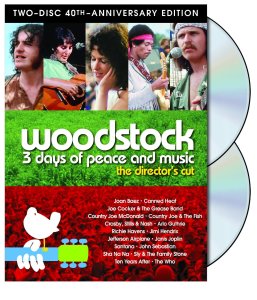
            Havens began his career in Brooklyn, organizing neighborhood street-corner singing by the age of 16, moving on to gospel, folk, and signing on with Bob Dylan’s manager in the mid-60’s. By 1969, he was the opening act for Woodstock, taking the stage for nearly three hours. He ran out of material woodand wound up improvising the folk-song inspired “Freedom,” which became one of his most famous hits. In the 70’s, he branched out into acting, both on stage and in films such as Greased Lightning. He made popular television appearances on both Ed Sullivan Show and Johnny Carson. While his albums climbed onto the Billboard charts, Havens began writing and performing highly successful commercials for Amtrack, Maxwell House Coffee, the cotton Industry (“The Fabric of Our Lives”), and others.

            Havens was a firm supporter of various ecological and charitable concerns.  He founded the Northwind Undersea Institute, an oceanographic children’s museum on City Island in the Bronx, which led to the creation of the Natural Guard,  to teach children how they can help the environment.  He was a performer at The Benefit Concert for The Longest Walk, an American Indian spiritual walk, the Tibetan Freedom Concert, the fundraising concert for Pete Seeger’s 90th birthday, and many others.  He was honored with the Peace Abbey Courage of Conscience Award, the American Eagle Award by the National Music Council, and was inducted into the Long Island Music Hall of Fame in 2006. He played the Cannes film festival, and President Clinton’s inauguration.

Havens died suddenly of a heart attack, following several years of kidney issues. His cremated remains are scheduled to be scattered across Yasgur’s farm this summer, where the original Woodstock took place.

            You can check out some of the superb Richie Havens legacy at Cheshire Public Library with the following CD’s:

Product Details             Product Details

This Disc Won’t Play! (part 1, Fingering the Culprit)

imagesYou’ve put in your favorite CD or DVD, and the stupid thing just won’t play!  It skips, it freezes, it pixelates into pretty colors, or the player spits it out and declares “Bad Disc!”  Your heart was set on that, and now you’re out of luck and your kids are getting cranky.

Don’t despair! The solution is often very simple. By far, the most common, annoying, easily fixable problem with disc materials is FINGERPRINTS.  Turn it over and look at the non-label side. It should look like a mirror.  Are there fingerprints?  Is coffee spilled on it? Or maple syrup (that’s happened)?  CLEAN THE DISC.

“But it’s a library disc!” you say.  “If I damage it, they’ll charge me!”  Don’t worry.  While discs are fragile, they’re more durable than you think.  Some of our discs have been used more than 150 times and still play fine. CDs and DVDs are made from polycarbonate, with a layer of foil (gold or aluminum) protected by a layer of lacquer.  That’s the same plastic as your eyeglasses!  General rule is, if it’s safe for your eyeglasses, it’s perfectly safe for a disc.  You can clean them with eyeglass cleaner, water, hand sanitizer, baby wipes, even liquid dish soap, but *make sure you clean them with a liquid*.  You can even rinse them under the tap if you must. To dry them, you can use a glass-cleaning cloth, a clean piece of flannel, or in a pinch, a clean cotton dishcloth or Tshirt.

DON’T: rub the mark with something dry, use a paper towel, newspaper, or rough cloth.  All these things will leave fine scratches on the polycarbonate.  If the laser can’t penetrate the polycarbonate layer, it can’t read your disc.  You can clean them with Windex or window cleaner, but repeated exposure to the ammonia in them can eventually dull and damage your disc. Don’t run them through the dishwasher.

cd-cleaningClean the disc, try it again.  Audio CDs (music or audiobooks) are very forgiving.  They can look scratched and still play fine. Sometimes it’s the player: what plays perfectly in your computer or your cd player won’t play right in your car. DVDs, with their video component, are much fussier, and Blu-rays the fussiest of all.  If it still won’t play right, bring it back, but stick a note on it or tell us, and we’ll give it a more thorough diagnostic.  Be especially careful with those awful double-sided DVDs – always hold them from the very edge, or you’ll be cleaning one side while dirtying the other.

With a little polish and a little luck, you’ll be singing along again in no time!

Make Tonight the Night

imagesEver notice how some people seem to have it all – talent, timing, and a killer smile?  John Barrowman has all that, and more.  Born in Scotland and raised in Illinois, Barrowman is an actor with a huge array of talents.  You may not know his name, but you may have come across his face.  He’s performed on Broadway (Anything Goes, Putting It Together), done extensive theater in London’s West End, done American TV (Titans, Central Park West, Desperate Housewives), frequently featured on BBC programs (including Any Dream Will Do and Tonight’s the Night),  appeared in feature films (The Producers, De-Lovely), and written three books. He is most well-known for the lead role of the time-hopping, immortal rascal Captain Jack Harkness on the BBC TV series Dr. Who and Torchwood. And on top of all that, Barrowman is a singer.

And an accomplished singer at that – he has more than ten albums to his credit, some of which have debuted as high as number twelve on the British album charts.  Whether he honed his voice on Broadway, or it was his voice that put him there is anyone’s guess, but he certainly has the capability to belt out a tune with the best of them.

Cheshire Library recently acquired his album, Tonight’s the Night: The Very Best of John Barrowman.[Cover] Barrowman is a showman, singing cover songs, but if you like easy listening – Barry Manilow, Neil Sedaka, Broadway singers, America’s Got Talent – give Barrowman a try! This album is nice in that it allows enough of a variety to really showcase some of his talent. My favorite tracks: You’re Just to Good to Be True and The Winner Takes It All.  Weakest: Few people should be singing The Police, outside of The Police, and his Americanized over-enunciation on She’s Always A Woman  bothers me.  Barrowman has a fantastic voice that tends to be held back by poor musical direction – slow, plodding music does him no good.  He needs those catchy all-out showtunes to really shine – and he’s one star that shines very brightly.