 I am a deep introvert. I’m perfectly fine talking only to the cat or TV. Hence, when my son was born, I figured if I didn’t start talking to him, he’d never learn to talk (my first mistake), and thus began thirty years of talking to myself and narrating what I’m doing.
Research published in the book Meaningful Differences, by Betty Hart and Todd R.  Risley, showed a direct link between the number of words a child heard at home by the age of three, and their academic performance in Grade 3 (the age of 8). Children in poor/welfare homes heard, on average, 600 words an hour. Children of working-class homes heard 1200, and children of professional parents heard 2100. That racked up to children of professional parents hearing 30 million more words by the age of three than a poor child. So?
Exposure becomes verbal fluency. Verbal fluency is required for reading proficiency, and reading proficiency is required for academic proficiency. The child who has minimal language is going to lag far behind on reading and academics.
How many words is your child really hearing?
 Based on these studies, along comes VersaMe’s Starling, a handy-dandy little device that tracks just how many words your baby hears during the day. It’s just a little clip-on star that records the number of words a baby hears, not the actual words (no one will hunt you down because of what you said when that [jerk] cut you off ). It’s convenient, easily rechargeable, and holds a charge for up to three days, so you don’t have to worry about plugging it in every night. It uses Bluetooth technology to report in real time to your smartphone, so you can track as you go. The clip is rather strong – the first day, it took my 14 month old 4 hours to wrestle it free, and by the next day, she wasn’t paying it any attention. It is fully waterproof, drool proof, and not particularly chewable, which was nice.
The first day we broke 10,000 words, the second day 11,000, and the third day for some reason, even though we went to a party with lots of people talking to her, it didn’t record, which was disappointing. Our best was 16,000.
Per day, 11,000 words seems like a lot, but when you figure the child is only awake 12-14 hours, and take out an average of three hours for naps, we didn’t even hit Middle-Class. Yet, I have a toddler who is off the charts in vocabulary and language skills. Even the authors of the original study admit that quantity is nothing in the face of quality. Ten minutes spent reading a book with your child will go farther than three hours of TV. And no, Starling can’t differentiate between people and TV.
Should you try Starling?
If you are a new parent with questions, if you’re the parent of a developmentally delayed child, if you’re just curious about yourself, then by all means give the Starling a try. It’s easy, it’s fun, and interesting to see the results. But remember, worrying about arbitrary marks isn’t good. Children, toddlers, babies all need critical down time to process all that information they’re learning. Imagine someone following you around talking to you every waking second. You’d lock yourself in the bathroom for just 5 minutes of quiet. Your baby is no different. Language is important, but so is quiet alone time.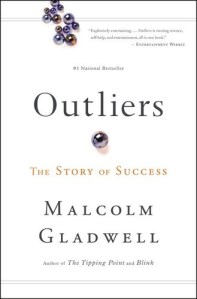
Starling is fun. It’s informative. Use it as an investigative tool, maybe increase some quality time or have an extra imaginary conversation on a play phone. If you want to try out a Starling, you can borrow one from the library.
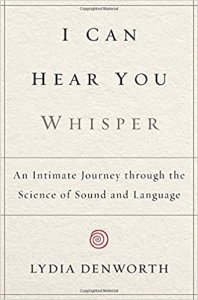 For a helpful look on the making of brilliance and achievement, check out Malcolm Gladwell’s Outliers. For a fascinating look on the importance of auditory language, check out I Can Hear You Whisper: An Intimate Journey Through the science of Sound and Language (it’s not as sciency as it sounds), by Lydia Denworth. It’s awesome!


 The Cheshire Library Blog