 Spring is here! As we put those tender seedlings into the ground, up sprouts the constant question: should I go Organic, or should I show up my neighbors by using Miracle Grow? Will I poison my children if I use it on my tomatoes? Is my neighbor’s cancer due to Round Up™, and did it blow over into my yard? If a lawncare company treated my grass, are my grass clippings poisoning my compost?
So many questions for such a busy season!
“Organic” is a shady term to start with. We think of hippies and happy sheep, and fields strewn with mulch and recycled orange peels, when in reality it just means the land cannot have been treated with synthetic pesticides, fertilizers (including Miracle Grow), or GMOs for three years. Sounds nice, right? Except that two of the three companies licensed by the USDA to certify organic farms are for-profit (Oregon Tilth is not). The farmer wanting to be certified pays the company to license them. That’s like paying a teacher to give you a grade. The problem is worse overseas: 100 countries export “organic” produce to the USA, and though they are supposed to abide by US law, the countries inspect and license their own. And let’s not forget that a good percentage of “organic fertilizer” in many countries is human in origin. (The E. coli that keeps poisoning lettuce is usually animal in origin).
 Won’t chemical fertilizers like Miracle Grow poison me? No. Plants don’t care where the nutrients come from, horse manure or a green and yellow box. Plants use them the same way. The issues with Miracle Grow are 1) the concentration of ammonium phosphate may be too high for some plants. MG makes different formulas for roses, tomatoes, azaleas, etc. Choose the one you need. 2) The greatest issue for chemical fertilizers is that heavy rains can wash a recent fertilizing away. If twelve homes get washout, and it flows into the brook behind them, too high a concentration in water systems can cause algal blooms that suck up oxygen and kill wildlife.
Okay, but what about Round Up™? If I kill the dandelions in my walk, won’t I die?
Uh, that’s a loaded question. Yes, more than 14 countries have banned Round Up  (chemical: glyphosate), and while the courts have said yes, Round Up causes cancer, the US maintains it does not. And there’s the difference: In Europe, you must prove a chemical is safe before it hits the market, and that’s hard to do. In the US, chemicals are presumed innocent and you must prove they’re harmful – which is really easy to sidestep even with math and science. In America, it is up to the manufacturer to show their product is harmful, not the government (Got that? The man making and marketing the product must show that what he’s selling is harmful.) When the people with highest exposure to Round Up were studied (ie, farm workers), they had a 41% higher risk of a type of cancer called Non-Hodgkins Lymphoma. People with heavy, frequent exposure over time. NO risk was found in people who go outside three times a year and spritz a weed. If you want to use it, do so sparingly, wear rubber gloves, and wash with soap immediately after, and whatever you do, don’t inhale it.
But if those chemicals wind up in my compost bin, won’t they pollute my compost? Mm, depends. According to John Reganold, Professor of Soil Science at Washington State University, “The heat and microbial action of most compost piles break down many produce pesticides.” So don’t feel bad throwing that non-organic banana peel in the pile. BUT: some pesticides (like clopyralid – Reclaim) can become concentrated. Things like termiticides bind to the soil and last a long time. And even treated and composted animal/human waste can still contain parasites. If in doubt, buy local, where you can ask what might have been sprayed on the food.
But rest easy: Miracle Grow has never been shown to cause cancers.
 So, is organic worth it? Depends on what you’re willing to pay. The most chemical-contaminated foods in the grocery store are strawberries, peaches (more than 57 pesticides on one sample), celery, lettuce and greens (and that’s not counting the E. coli risk), and most other fruit. If you want to reduce your pesticide ingestion, consider buying organic just for fruits (or grow your own), and wash, wash, wash what you do bring home.
Fresh fruits and vegetables are about the best thing there is for your body, and  growing your own, organic or not, is a fun (and tasty) experiment anyone can do anywhere. Try growing some popcorn, or a yellow or brown or purple heirloom tomato. Pole beans are great for kids, because they grow incredibly fast and are very prolific, as are grape tomatoes (so why are they so expensive?).
No matter which method you use, read further on gardening in these topical books:
 Starter Veget
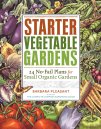 able Gardens : 24 no-fail plans for small organic gardens by Barbara Pleasant
Omnivore’s Dilemma by Michael Pollan
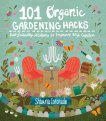 101 Organic Gardening Hacks : eco-friendly solutions to improve any garden by Shawna Coronado
Rodale’s All-New Encyclopedia of Organic Gardening, edited by Fern Marshall Bradley and Barbara W. Ellis
 Organic Gardening for Dummies
 / by Ann Whitman, Suzanne DeJohn,
The Organic Lawn Care Manual by Paul Tukey
Vegetable Gardening : from planting to picking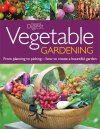 by Fern
  Marshall Bradley, Jane Courtier
High-Yield Vegetable Gardening : grow more of what you want in the space you have by Colin McCrate and Brad Halm
 Northeast Fruit & Vegetable Gardening : plant, grow, and eat the best edibles for Northeast gardens
 by Charles Nardozzi
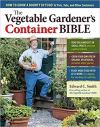
The Vegetable Gardener’s Container Bible by Edward C. Smith
 The unofficial nickname of Connecticut is “The Nutmeg State.” This stems from a story dating back to the mid-1800’s, whereby a southerner called foul that his order of nutmegs were made of wood – and they do look similar. One thought is that shrewd Yankee traders were cheating by carving wooden nutmegs to pad out a sale and thus increase profit at the expense of the consumer, but another assumption is that the ignorant southerner didn’t know nutmegs had to be grated, and tried to eat them like a walnut.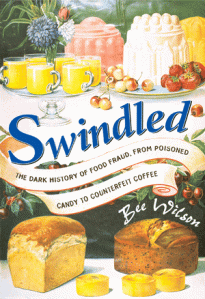
 The Cheshire Library Blog