May Music

More than sixty new CD albums have been added to CPL’s music collection in the last month alone! Here’s a few highlights of things you shouldn’t overlook:

#

81Xe6zj4unL._SX425_If you didn’t get your fill on the first two volumes of Songs of Anarchy, the fabulous soundtrack to the TV series Sons of Anarchy, volumes Three and Four are here, and are they ever beautiful! Do not miss Maggie Siff’s heartbreakingly gorgeous a capella rendition of “Lullaby for a Soldier,” or if you’re in a more upbeat mood, “Love is My Religion.” “Dock of the Bay” is a rendition worthy of Otis Redding himself. On Four, be dazzled by an off-beat and wild version of “Bohemian Rhapsody” that will stick in your head. “Aquarius” is catchy, and Katey Sagal’s updated “Greensleeves” remains touching. While the albums are utterly delightful71G6L0Sox0L._SX425_ on their own, each covering a wide variety of musical styles (Joshua James’s “Crash This Train” is sublime), at times it is gut-wrenching to hear them, if you know the context from the show in which each song is played. I cannot recommend the four albums enough.

#
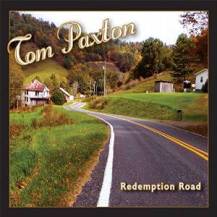
If you’re into something completely different, give Grammy Award winner Tom Paxton’s new album Redemption Road a try. Paxton is old-style folk; not quite country, not quite bluegrass, not quite modern, but it is music indexthe entire family can enjoy without having to worry about language or content. He is Raffi, for grown-ups, and if you can’t imagine that, then check out his song “Skeeters’ll Gitcha.” Like a true folk singer, his songs are observations about humanity and the absurdities of modern culture. “If the Poor Don’t Matter” is a haunting tune in the best tradition of folk music. “If the poor don’t matter, then neither do I.” If you like calm, soothing music that’s worth singing to without being overpowered by loud orchestration, if you like music that feels as if you’re sitting around a campfire and the guitar is playing just for you, you’ll enjoy this album.
#
A third album you don’t want to overlook is Rhiannon Giddens first solo foray, Tomorrow is My Turn.index You last heard Giddens as the lead singer for the Carolina Chocolate Drops, where she wowed listeners with her pure tones and perfect pitch. Here she takes center stage in what isn’t so much an album as a resumé. Each song is different, from folk to blues to country to more popular beats such as Dolly Parton’s “Don’t Let it Trouble Your Mind,” and the easy-listening vibes of “Tomorrow is My Turn.” It’s not an album to blow you away, but a solid repertoire that says “Here’s what I can do, come see where I go.” If you like female vocalists who never fail to hit their mark, you will love her. My only wish is that she’d pick a direction: I think she’d be a fantastic blues singer with her throaty, clear style, and I would love to hear an entire album of her belting out some of the traditional songs, or even some Broadway tunes. She’s a delight on the ear.

Songs of Anarchy, Volume 1 and 2

Jacket.aspxRarely do I leave a CD in my player for more than a month straight. It’s been two months now, and aside for taking two weeks off at the holidays, it’s still in there, and I listen to it every day. Songs of Anarchy is the soundtrack to the FX television show Sons of Anarchy.
#
You do not need to be a devotee or even know of the television show to adore the soundtrack to the series. Sons of Anarchy is an ultra-violent soap opera following a fictional biker gang in California. You know the characters are despicable, but they are written so well and to such depth that you cannot help but feel sympathy for them – while you call them names for being that stubborn. All that violence is offset by a soundtrack that is both entertaining and breathtakingly poignant. There is no set tone – the albums contain a mix of popular, rock, country, folk, alternative – whatever fits the moment. Many of these are covers of old greats by the series’ incredible house band, The Forest Rangers – a driving version of Gimmee Shelter (in which you can understand the lyrics), an achingly beautiful instrumental version of Fortunate Son, a gorgeous tweaking of House of the Rising Son with lyrics to fit the show. It was the deep blues rhythms of John the Revelator that first caught my attention watching the series (who else works an entire song into a drama series every week, like a prize in a Cracker Jack box?), and it made purchasing the album inevitable. The song wouldn’t leave my head, and I needed to hear it again.
#
Katey Sagal, lead actress in the show as Gemma Teller, is also a singer in her own right with albums to her name. Her version of Leonard Cohen’s Bird on a Wire puts the original to shame, and Strange Fruit will give you the shivers.
#
Volume 2 of Songs of Anarchy is a must if you listen to the first. There is just too much good vol 2.aspxmusic. Coal War, the season opener to year four, is a foot stomping ballad that crosses the line between country and pop much the way The Eagles did. The Lost Boy is a tragic ballad on its own, but if you know the series, it is played out in its entirety as one of the lead characters makes his sacrifice for his best friend, and it will bring you to tears. No Milk Today was originally a fluffy pop piece done by Herman’s Hermit’s in 1966; slowed down, it takes on a haunting new meaning when you consider it accompanies the kidnapping of a nine-month-old baby by the IRA.
#
Kurt Sutter, the creator/producer/writer of the show (he also stars in it as Otto, and he’s married to Katey Sagal), wanted music to be an integral part of the show, setting tones, carrying themes, underscoring the action. What he managed is beyond brilliance, touching the stories and the viewers/listeners alike and playing with their emotions. Because of the varied styles of music, you might not like every track on the albums (the version of Slip Kid is too metal for me), but these albums are certain to please almost everyone.


20121115-sons-of-anarchy-306x306-1352997102

Pete Seeger, An American Bard

Pete Seeger, the granddaddy of American folk music, passed away peacefully in his sleep January 27, at the age of 94. Pete left Pete-Seeger-001a legacy of not only a tremendous contribution to American music, but of political activism and ecology with an emphasis on peace.

If you’ve ever heard The Lettermen sing “Turn, Turn, Turn,” if you’ve ever heard “We Shall Overcome” sung at a protest, if you ever listened to Bruce Springsteen belt out his We Shall Overcome album, you’ve been touched by Pete’s music.  If you’ve ever driven along the Hudson River in New York and noticed the lack of garbage floating in it, you’re looking at Pete’s work.

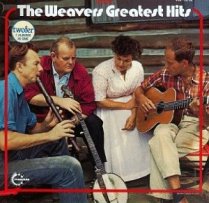
Pete began singing with the Almanac singers back in the 40’s, alongside the bedrock of American folk singers such as Woody Guthrie (who wrote the iconic and ironic song “This Land is Your Land”), Lee Hays, and Cisco Houston, among others. The Almanac singers morphed into The Weavers by 1950, with Lee Hays, Ronnie Gilbert, and Fred Hellerman, and enjoyed great popularity (including a number one hit in “Goodnight Irene”) until 1953, when they were blacklisted by McCarthyites as being 5123Z66NNXL._SX300_suspicious for singing about such things as worker’s rights and political oppression around the world.  This did not stop them from playing Carnegie Hall in 1955.  By the 1960’s folk music was only increasing in popularity, and Pete had a great influence on such upcoming folk singers such as Joan Baez, Bob Dylan, and Arlo Guthrie, Woody’s son, with whom he kept a life-long friendship. Seeger  – four of his six siblings are also folk singers – continued to influence music through the 80’s, 90’s, and 2000’s by working with mega-musicians such as John Mellencamp and Bruce Springsteen, who released a well-received folk album after mentoring from Pete.

If Seeger was anything, it was tireless. It was he who introduced Martin Luther King Jr. to the song “We Shall Overcome.”  In 1966 he became part of the Clearwater effort to clean up the toxic waste and raw sewage that was 51PP4Dc+wyL._SY300_destroying the Hudson River in New York, something he never stopped doing. He stood behind Occupy Wallstreet.  He played at President Obama’s inauguration, at the age of 89. He was still playing and giving concerts at 93. He was predeceased by Toshi, his wife of 70 years, just last summer.  He has been a part of, well, generations of American history, from WPA projects to serving in World War II to facing down the House Committee on UnAmerican Activities to the civil rights movement, ecology, founded music festivals, and more. He is truly an American Icon, one we can all be proud of.5175nuV6svL._SL500_AA280_

If you want to listen to classical truly American music, if you’re looking for great songs for singing or guitar, if you want your children to listen to some fun and rolicking children’s songs, check out some of Pete’s extensive legacy.  Bob Dylan and Bruce Springsteen walk in his shadow, but there is no one alive who can come close to filling Pete’s giant footprints.

Susan Reviews: The Last Ship

Sting (born Gordon Sumner) is one of those hold-overs from the last golden age of music.  His career took off as lead singer for the band The Police, whose pop singles such as “Don’t Stand So Close to Me” scored gold even when re-released. Since the break-up of The Police in 1986, Sting has had his share of solo chart-topping success with power albums such as Dream of the Blue Turtles, but I’m not sure his latest endeavor, The Last Ship, will do as well.

Don’t get me wrong – the album is lovely and showcases Sting’s wide range of talents in a heavy northern accent we didn’t hear during his Police years.  The songs – his first after a ten-year writing hiatus while he dealt with the deaths of his parents – are soft, almost melancholy, exploring the closing of the shipyards in the town he’d grown up in.  It’s a long, long way from “Roxanne” or “King of Pain.” Instead, we’re left with an album that vacillates between traditional-sounding folk tunes (the haunting title track, “The Last Ship,” which never seems to want to leave your head) and soft Sunday-brunch jazz (“August wind”).  If there’s a bad side to the album, it’s that it lacks the wider scope of variety we’ve come to expect from Sting as he has explored various types of music, from pop to rock to jazz to symphony.

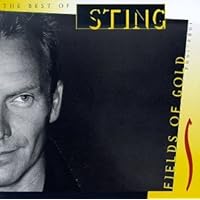
If you love soft music, or ballads, or folk music, you’ll enjoy this album, The tunes are haunting, the lyrics thoughtful, with a presence so strong you feel as if you’re walking the streets through an old British-Isles sea town.  If you’re looking for chart-climbing pop singles, go back to Fields of Gold.

New Music Highlight: These Wilder Things by Ruth Moody

            [Cover]I cut my teeth listening to Joan Baez and Pete Seeger, and knew all the words to at least a half-dozen Woody Guthrie songs before I went to school, so when folk music comes across my desk and it’s not of old-school character,   I tend to shy away.  However, I found Ruth Moody’s new album, These Wilder Things, to be an interesting  mix of old and newer pop  styles, with quite a bit of character.

             Moody, an award-winning folk singer from Winnipeg, has a lovely voice that changes with each type of song.  She can sound remarkably like Loreena McKennitt, then switch to Edie Brickell, then switch up again to sound like Natalie Imbruglia.  Her rendition of Springsteen’s “Dancing in the Dark” is catchy, but at the same time strange in that it incorporates different rhythms, pauses, and instruments than the listener is used to – it turns out what I thought was a ukulele is actually a mandolin, and mandolin is not what I normally think of when I think of Springsteen.  

            While some of the tracks can have that old-school flair of guitar and banjo, the songs never lapse into the deep-country twanginess that scares many people away from folk music. Most of the music is quite mainstream, a blend of soft pop that would be totally at home on WRCH or any soft-music station.

            My favorite track is perhaps the first one, “Trouble and Woe,” because I like the light touch of banjo that to me signifies folk music. Not enough to make you break out reruns of Hee Haw, but a gentle touch to give depth to the guitar work.  “Trees for Skies” is pretty, and of course “Dancing in the Dark” will stick in your head, a new twist on an old favorite – and this time you can understand all the words!