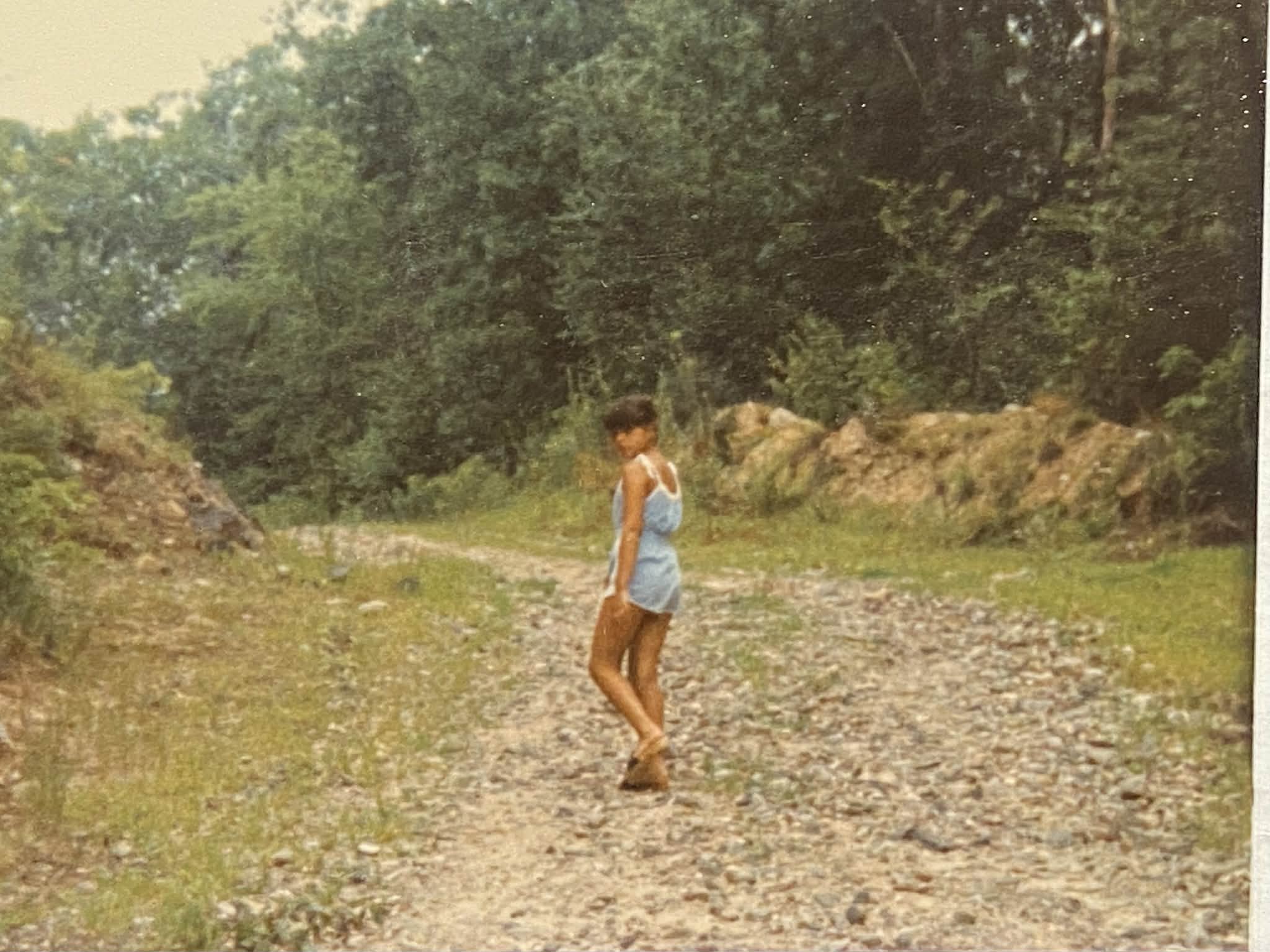
While Cheshire is currently known as the Bedding Plant capital of Connecticut, did you know we were once a powerhouse of apples?
Way back when, in another century, when I was quite young, I can remember there being two apple trees far in the back of our yard. They were ancient, barely alive, and looked like something out of the Wizard of Oz, black and gnarled like a corpse’s hand. If they put out ten apples a year, it was a record. In fact, the entire neighborhood – the triangle of streets just past Darcey School – had these apple trees. It’s not surprising, since the old farmhouse at the top was built in 1780, the same year Cheshire was incorporated. Farms grew apples not so much for pies, but for animal feed, cider, and vinegar, which was used in pickling and preserving foods, as well as a cleaning agent and for curing hides. Apples were important.
Some fifty-five years ago, when the lower half of Huckins Road was nothing more than a dirt path, impassable to anything short of a jacked-up four wheel drive truck or tank, and the first house was being built, my father would take us for walks there, down this exotic uninhabited Brigadoon, most importantly teaching us to avoid the poison ivy that grew thick on the sides. There were two paths through the forest, and both led to beautiful waterfalls. The near one, across from our property (and loaded with poison ivy), was small, no more than 2-3 feet high, and narrow enough that if you put your feet on the right stones, you could hop across. But further down the road, past Darcey, was a high one, with a pond above it (since badly silted in by the flood of 1982). And by the pond, above the waterfall, were two stone pillars. My father, who not only had two degrees in history but whose babysitter so many eons ago had been the Prospect Town Historian, who could possibly have been born in the 1600’s, told me back then that the pillars had belonged to a mill, to hold a mill wheel driven by the waterfall. The fact there could have been industry nearby made sense to me, since the land and trees between our house and Darcey suggested an old road, and we had come across old coal deposits and odd bits of rusty tools buried in the dirt, waiting for child archeologists to treasure them.
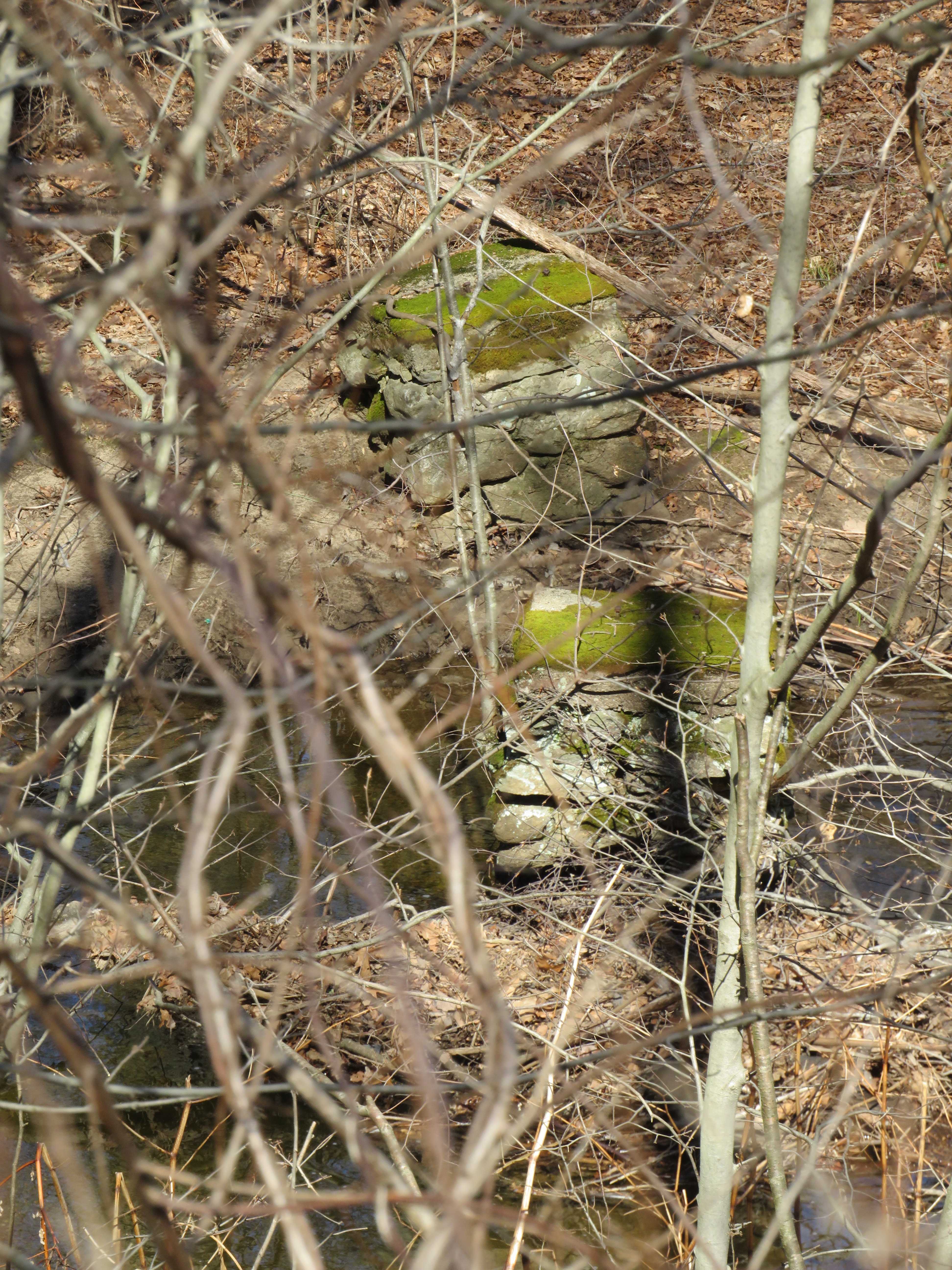
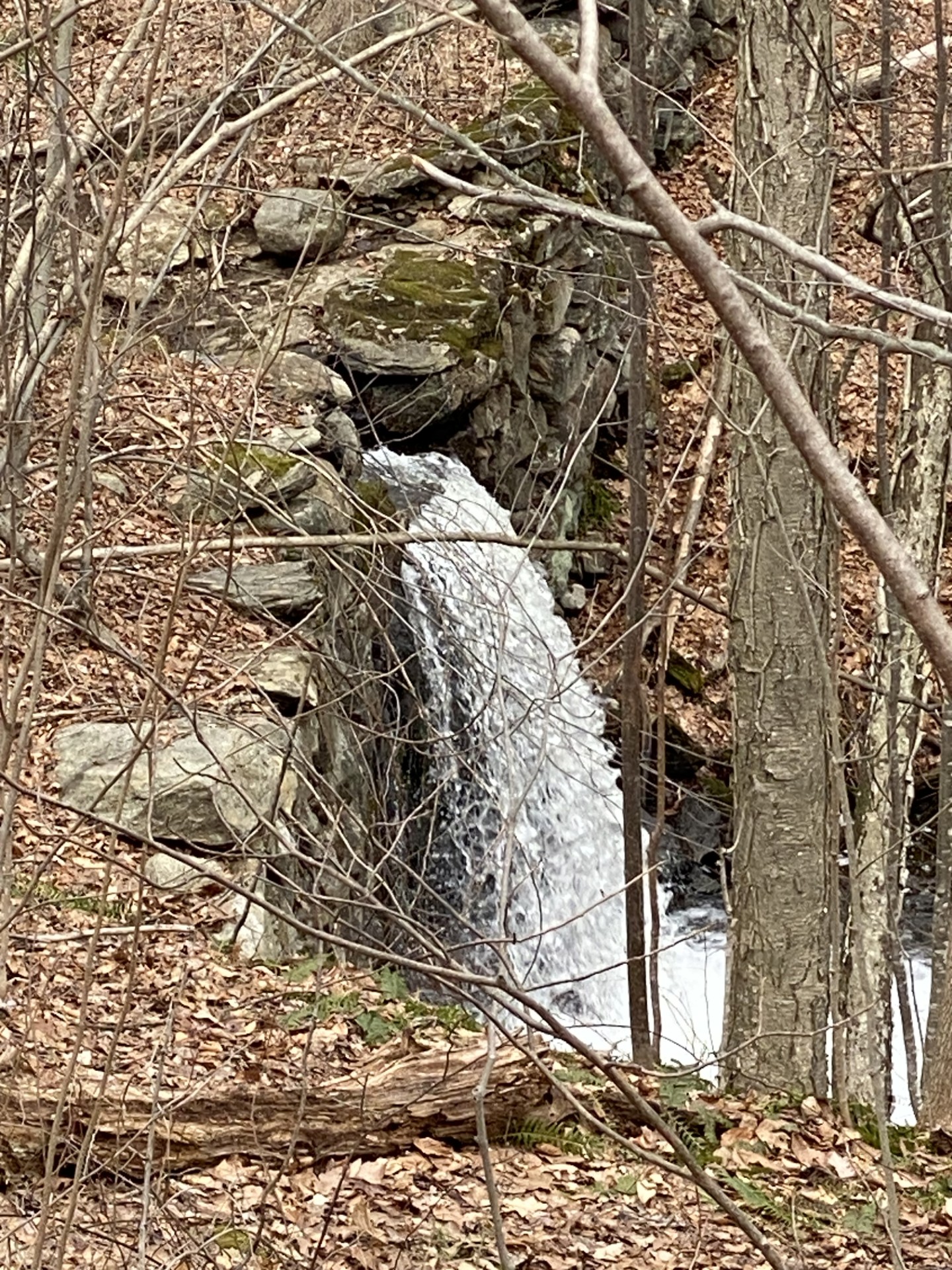
They were fond memories, but that was all. No information seemed to exist about it. Most old maps of Cheshire stopped at the Notch, since that was where trolley and train stops were (check out the old track humps on Pamela Lane, or the bridge by Mixville Park). The Historical Society had never heard of it.
But the pillars remained. They knew they existed, and they remembered the history better than I did. Although in my teen years we played in that stream, walked up it to the big waterfall, the thick brush, briars, and mud discouraged us from further exploration (as well as the man who owned the property, who liked to fire his gun if he saw anyone so much walk down the road. And I was his papergirl.).
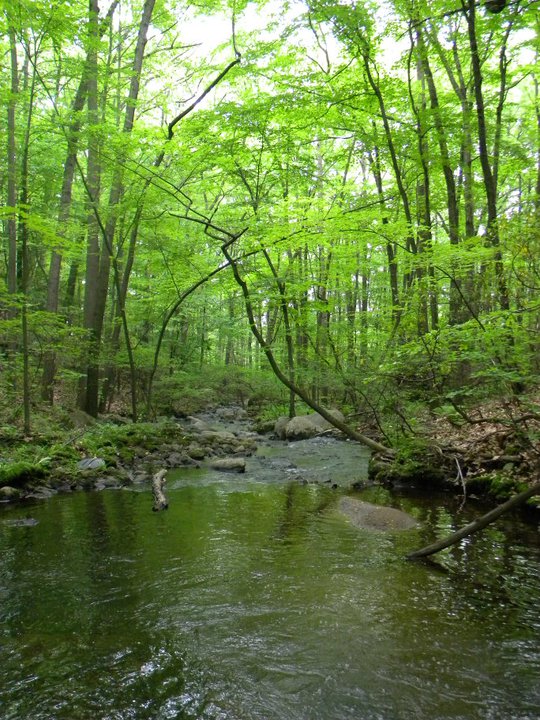
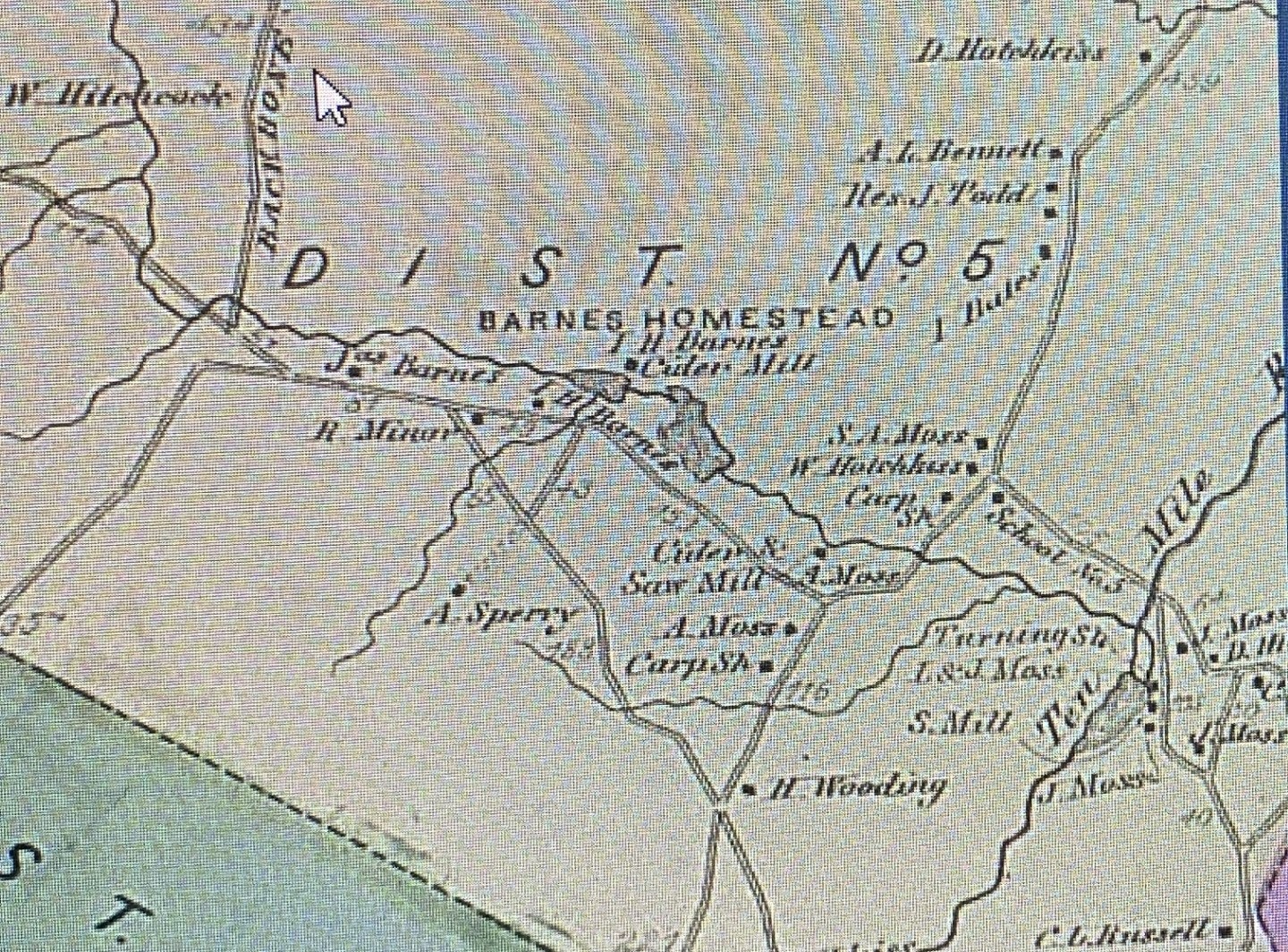
But I am a determined researcher, and after decades of waiting for an internet to be built and the right information to be loaded onto it, I hit paydirt. I came across an old map of Cheshire, from 1868, that not only showed a cider mill, but two cider mills on what is actually known as Cuff Brook (no one ever knew it had a name, it was just The Brook). The T. H. Barnes Homestead still stands, built in 1817 (we knew it as the Bear’s House, because the Bears lived in it at the time, but the Barnes family took it back, and I know this because one of the Barnes was my babysitter), and these pillars may very well have been part of their old property (they have a small pond by the house, but no waterfall to turn a wheel). I believe the house marked Jos. Barnes is the one on the corner of Huckins and Hickory Lane, which dates from 1742, and has an entire tree as a crossbeam (because I used to babysit the kids in that house. Maybe we need a book called The History of Cheshire Through Babysitting). I find it amusing that the same streets are already there, including the unpaved Moneta Lane across from Winslow, and that across the street from the newly built Barnum School at Marion and Jarvis is a label of “School No. 5.” (The Hotchkiss house across from it dates from 1805, and still stands). The more things change, the more they remain the same.
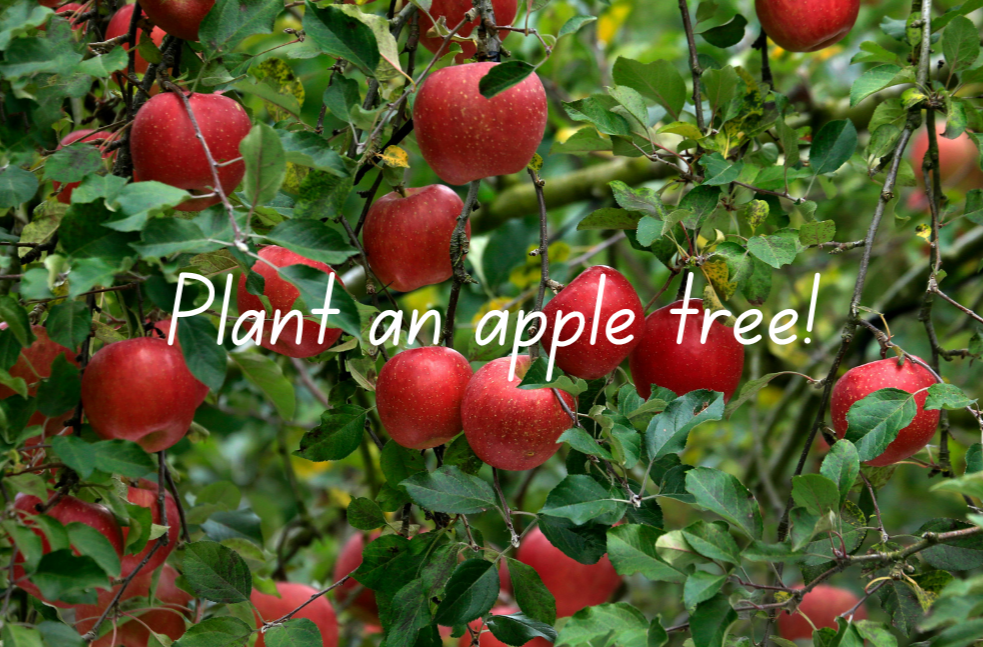
So plant some apple trees this year, and bring back a piece of Cheshire history (I had two at my old house on Marion, and one was certainly old enough to date back to at least 1920). It’s good for the bees, and heirloom apples are a treat (there are more than 7500 varieties!). Cheshire is ripe with orchards, the oldest being the now-closed Norton Brothers Farm (1757), followed by Bishop Farms (circa 1780, where, in that other century, before houses seized the land, I worked picking apples, peaches, and cherries). If you need help, check out these books on apples and Cheshire!
Encyclopedia of Gardening Techniques
Fire cider! : 101 zesty recipes for health-boosting remedies made with apple cider vinegar
 The Cheshire Library Blog