International Authors for Children and Young Adults

I am not sure how many people are aware of the number of fantastic international authors available in the children’s room. Many such authors are already popular, but the fact that the books were originally published in another language or overseas is simply not part of the cover art or publicity that the books receive. inkheart

For instance, Cornelia Funke, best known for her Inkheart series which is popular in book and movie format, is German. Although she lives in California now, the majority of her works were originally written in German and published in Germany well before being translated and published in the United Kingdom and the United States.

Some of the books in our collection that are translations might surprise you. Particularly some of the classic picture books. This is a small sampling of the picture books, children’s chapter books, and young adult books that have been translated from other languages. There are many more great ones, if I missed one of your favorites, please mention it in the translate3comments for everyone to enjoy.

Picturebooks:
The Rainbow Fish by Marcus Pfister; translated from German by J. Alison James.  The most beautiful fish in the entire ocean discovers the real value of personal beauty and friendship.

Press Here and Mix it up! by Hervé Tullet; translated from French by Christopher Franceschelli. Instructs the reader on how to interact with the illustrations to create imaginative images.
translate4
My Heart is Laughing by Rose Lagercrantz; translated from Swedish by Julia Marshall. Dani’s been trying her best to stay happy ever since her best friend Ella moved away.

Big Wolf & Little Wolf by Nadine Brun-Cosme; translated from French by Claudia Bedrick. Big Wolf has always lived alone, so when a little wolf suddenly arrives one day, he does not know what to think.

Nutcracker by E.T.A. Hoffmann; translated by Ralph Manheim. After hearing how her toy nutcracker got his ugly face, a little girl helps break the spell.

Puss in Boots by Charles Perrault; translated by Malcolm Arthur. A clever cat wins his master a fortune and the hand of a princess. translate2
Children’s Chapter Books:
Ring of Fire by Pierdomenico Baccalario ; translated by Leah D. Janeczko. Four seemingly unrelated children discover they are destined to become involved in an ancient mystery.

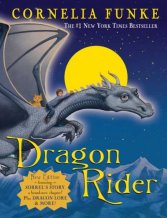
Igraine the Brave, Dragon Rider, and many more by Cornelia Funke; translated from the German by Anthea Bell. The daughter of two magicians, twelve-year-old Igraine wants nothing more than to be a knight.

Lost Treasure of the Emerald Eye and the original books from the Geronimo Stilton pseudonym were translated from translate5Italian by Lidia Tramontozzi. Geronimo’s sister, Thea, discovers an old, mysterious map showing a secret treasure hidden on a faraway island.
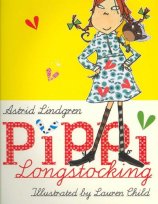
Pippi Longstocking by Astrid Lindgren; translated from Swedish by Tiina NunnallyRing of Fire by Pierdomenico Baccalario ; translated by Leah D. JaneczkoRing of Fire by Pierdomenico Baccalario ; translated by Leah D. Janeczko. Escapades of a lucky little girl who lives with a horse and a monkey–but without any parents.

Princess Pistachio by Marie-Louise Gay; translated from French by Jacob Homel. Pistachio knew all along that she was a princess, but her ‘real’ parents, the king and queen of Papua, have sent her a message at last.
translate1

Young Adult:
Ruby Red and more by Kerstin Gier; translated from the German by Anthea Bell. Sixteen-year-old Gwyneth discovers that she, rather than her well-prepared cousin, carries a time-travel gene.

The Dragons of Darkness and Tiger Moon by Antonia Michaelis; translated by Anthea Bell. Two boys from very different backgrounds are thrown together by magic, mayhem, as they battle deadly dragons.

Reckless by Cornelia Funke; translated by Oliver Latsch. Jacob and Will Reckless have looked out for each other ever since their father disappeared, but when Jacob discovers a magical mirror that transports him to a  world populated by witches, giants, and ogres, he keeps it to himself. 
translate6
Why We Took the Car by Wolfgang Herrndorf; translated by Tim Mohr. Mike Klingenberg is a troubled fourteen-year-old who thinks of himself as boring, until a Russian juvenile delinquent includes Mike in his criminal activities.

My Family for the War by Anne C. Voorhoeve; translated by Tammi Reichel. Ten-year-old Ziska Mangold is taken out of Nazi Germany on one of the Kindertransport trains, to live in London with a Jewish family.

The Prince of Mist by Carlos Ruiz Zafón; translated by Lucia Graves. Thirteen-year-old Max Carver and sister, fifteen-year-old Alicia, with new friend Roland, face off against an evil magician who is striving to complete a bargain made before he died.

The Prophecy of the Stones by Flavia Bujor; translated by Linda Coverdale. Three girls, known as the Stones of Prophecy, are drawn to a land called Fairytale, where they and seek a magical creature who explains their role in a battle between Good and Evil.

The Storyteller by Antonia Michaelis; translated by Miriam Debbage. Seventeen-year-old Anna begins to fall in love with her classmate, Abel, a drug dealer from the wrong side of town, when she hears him tell a story to his six-year-old sister.

Who or What Inspired Your Love of Books?

insp2I have been a reader for as long as I can remember. I have always loved the look, feel, and smell of books. Never mind the way books allow me to learn new things and escape into new worlds and take part in adventures. I was able to read while navigating hallways, no matter how busy they were, and am glad to say that my two elementary school age students are beginning to master that skill as well. I spent countless nights reading well past bed time via flash light, and still stay up way too late reading. How did this love of reading start? For me it was a number of things including seeing the examples of other readers and the easy access to a wide variety of books.
inspire1The library was a second home to me in elementary school. I still remember the stairwell to the children’s department, the cool round window that I would sit in and read while waiting on my mother and brother to pick their books.The library does not look that way now, since it was renovated while I was in junior high, but I am glad to say that I now work in the same building I frequented in my younger days. My favorite chapter books from my elementary school days were the Nancy Drew Mystery series (the original hard covers mind you), the Pern series and anything else by Anne McCaffrey, The Girl with Silver Eyes by Willo Davis Roberts, and the Young Wizard series by Diane Duane.

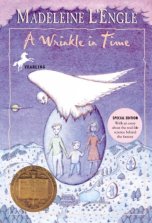
inspire2I was not, and am not, highly coordinated. While I attempted a few sports, singing and reading were the only two activities that I really felt at home doing. Getting lost in a book was much more attractive to me than trying to make it through a practice or game without getting hurt or embarrassing myself. As you might have guessed, I have always been an introvert and was shy as a kid. I found hiding in my books my best defense, and reading helped me do well in school. My favorites in junior high included: A Wrinkle in Time and the rest of the series by Madeleine L’EngleSomething Wicked This Way Comes by Ray Bradbury, To Kill a Mockingbird by Harper Lee, and the multiple series by David Eddings.

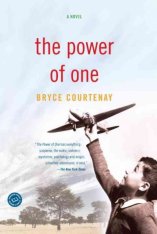
inspire3Growing up I saw my mother, grandmother, and various aunts and friends passing around bags of books. They would trade full paper grocery bags full of books that they have finished and pass them on to the next person. I thought this was great, and frankly delved into those romance novels, thrillers, and mysteries well before any of them intended me to. Having so many books in my grasp made me much more likely to read than watch television, a pattern I still hold to today. Some of the books I remember most from my high school days include; The Power of One by Bryce Courtenay, The God Project by John Saul, the Xanth series and more from Piers Anthony, and the Forgotten Realms series by R.A. Salvatore.

inspI think the combination of family that read, my personality, and the availability of books combined to make me a voracious reader. I have read a little bit of everything, and found something worth while in just about every genre and writing style. I still read children books, young adult books, and adult fiction and nonfiction as much as I can.  Too many books are passed on to the next person, added to the library collection, and/or published every single day. I know I will not get to them all, but it will not stop me from trying. Some of my most recent favorites include: Gail Carrier’s now three steampunk series, Jim Butcher’s Dresden Files series, and the multiple series by Tamora Pierce and Maria V. Snyder.

Who or what got you hooked on reading, or disinterested you from doing so? Do we have any favorites in common, or those that I listed that you hated? Do you have favorites that you remember fondly from your past?

Our Most Popular Non Fiction Series for Children

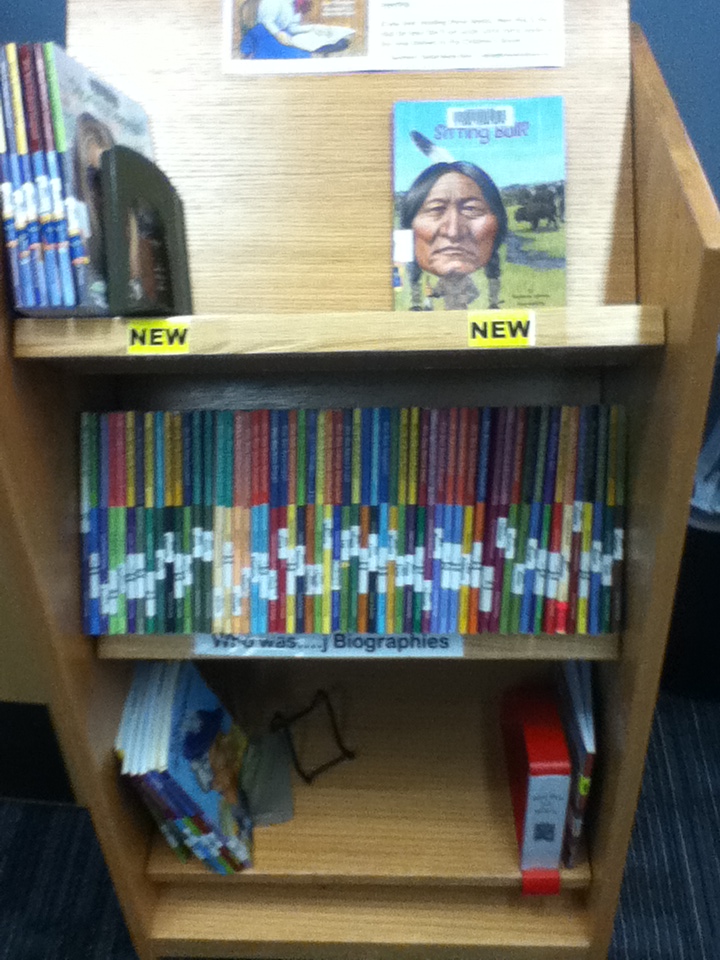
IMG_3100When biography and nonfiction book reports are assigned in school, there is one series that most middle grade readers go to first. Most will head straight for the Who Was biographies and the What Was and Where Is nonfiction series. These books cut straight to the important facts about the subject matter, while making the reading both fun and interesting. In fact, these books are so popular that it is hard to keep them on the shelf even when there are no school projects looming. To see just how few of these popular books actually are in the library right now, check out the small wooden stand outside the Teens Room.

whowas1This series is published by Penguin, and covers an extensive list of people, places, and events that are important historically or are currently relevant in pop culture. The books are easily recognizable by the caricature style drawing of biography subjects and bold cartoon work of all their covers.  There are also illustrations throughout the books and extra bits of information that make the reading more fun. For big fans of the series Penguin has a website where readers can keep track of which books they have read and test their knowledge.

whowas2There is a book club here at the library that meets once a month and focuses on the Who Was series. About a month before each meeting, a librarian will select a book from the series for everyone to read. At the meeting, readers chat about what they discovered in the book and do one or more fun activities inspired by that person’s life. For more info on when the group is meeting check out our events calendar.

what1Here is a small sampling of the wide variety of people, places, and events this series explores; Who is Jane Goodall? by Roberta Edwards, What is the World Series? by Gail Herman, What was the Battle of Gettysburg? by Jim O’Connor, Who was Dr. Seuss? by Janet Pascal, What was Hurricane Katrina? by Robin Koontz, Who was Betsy Ross? by James Buckley, Where is Mount Rushmore? by True Kelley, Who was Frederick Douglass? by April Jones, What is the Panama Canal? by Janet B. Pascal, Who is Stan Lee? by Geoff Edgers, What was the March on Washington? by Kathleen Krull, and Where is the Great Wall? by Patricia Brennan Demuth.

Happy Birthday to Neil Gaiman! (November 10)

gaimanhimselfAs of November 10, 2015 Neil Gaiman is 55 years old. He is a supporter of libraries, the arts, and is everything that this librarian could want in an author. Neil is the author of books from a wide range of genre’s, and for every age group. His body of work is extensive, and includes many groundbreaking volumes. He is also the father of three children from his first marriage, now grown adults, and a new baby just born on September 16 with his wife Amanda Palmer who is a singer, song writer, performance artist, and author. To make him even cooler in my eyes, he is also good friends with singer/songwriter Tori Amos and godfather of her daughter. I am admittedly a bit of a fangirl.

gaiman5Gaiman began his writing career in England as a journalist. His first book was a Duran Duran biography that took him three months to write, and his second was a biography of Douglas Adams, Don’t Panic: The Official Hitch Hiker’s Guide to the Galaxy Companion. Soon afterward he collaborated or creating in graphic novels such as Violent Cases, Black Orchid, and Sandman. Over the years he has added picturebooks, children’s fiction, adult fiction, television, film, and theater to his body of work. This includes writing for one of my favorite shows, Doctor Who. He also does the narration for most, if not all, of the audiobook versions of his work.

Neil and his works have won many nominations and awards over the year. A few of the awards include: Kurt Vonnegut Jr Award For Literature, Boston Public Library Literary Lights For Children, CBLDF Defender of Liberty, The “Galaxy” Award (China) for Most Popular Foreign Author, Horn Book Honors, Kirkus Reviews Best Children’s Books, ALA Booklist Editors’ Choice: Books for Youth, Hugo Award, IndieBound Award, and many, many more.

gaiman1Here is a sampling of his works, though far from comprehensive. They are in no particular order.
Picturebooks:
Chu’s Day
Chu’s First Day of School
Chu’s Day at the Beach
The Wolves in the Walls
Blueberry Girl
Crazy Hairgaiman2
Instructions: Everything you’ll Need to Know on your Journey

Children’s and Young Adult Books:
Fortunately, the Milk
M is for Magic
The Graveyard Book
Coraline
Hansel & Gretel: a Toon Graphic
Odd and the Frost Giants
Interworld
The Truth is a Cave in the Black Mountainsgaiman3
The Books of Magic
Marvel 1602

Adult Books:
The Ocean at the End of the Lane
The Make Good Art Speech
Trigger Warning: Short Fictions and Disturbancesgaiman4
Anansi Boys
American Gods
Stardust
Good Omens
Smoke and Mirrors: Short Fictions and Illusions
Neil Gaiman’s Lady Justice. Vol. 1

Behind the Scenes at CPL- Children’s Cataloging

CPL staffer Louise shared in a recent blog post some of the effort that our staff puts into choosing materials for our collection. some of the effort that our staff puts into choosing materials for our collection. It is an important and challenging task, using our limited funding in the most efficient and useful manner to serve our patrons.  However, once those materials are ordered our work has only just begun. It is after the books are ordered that the next round of tasks begin. My focus will be on the cataloging of children’s and young adult print materials, because that is how I (and one other staff member) spend any hours not at a public service desk.
You might think that the tasks for cataloging would only start once the physical books arrive, however we have some preparations to make first. We need to print out all orders and get the catalog records in the computer so that holds can be placed on the material. boxes of bookWhen the books do come in we need to check the packing slips and orders against the titles and details of the books in all the boxes. Sometimes Baker & Taylor or other suppliers do make mistakes or materials are damaged or flawed in some way. It is important to catch any of these problems long before labeling and cataloging actually begin.
After we have the books unpacked, checked, and in hand the real fun begins. In the children’s department there are several different categories of books, each of which need different labeling. There are board books, picturebooks, easy readers, easy non fiction, non fiction, graphic novels, juvenile fiction, and young adult materials. Each of these types have several sub categories and a variety of necessary labels, just to keep things interesting.
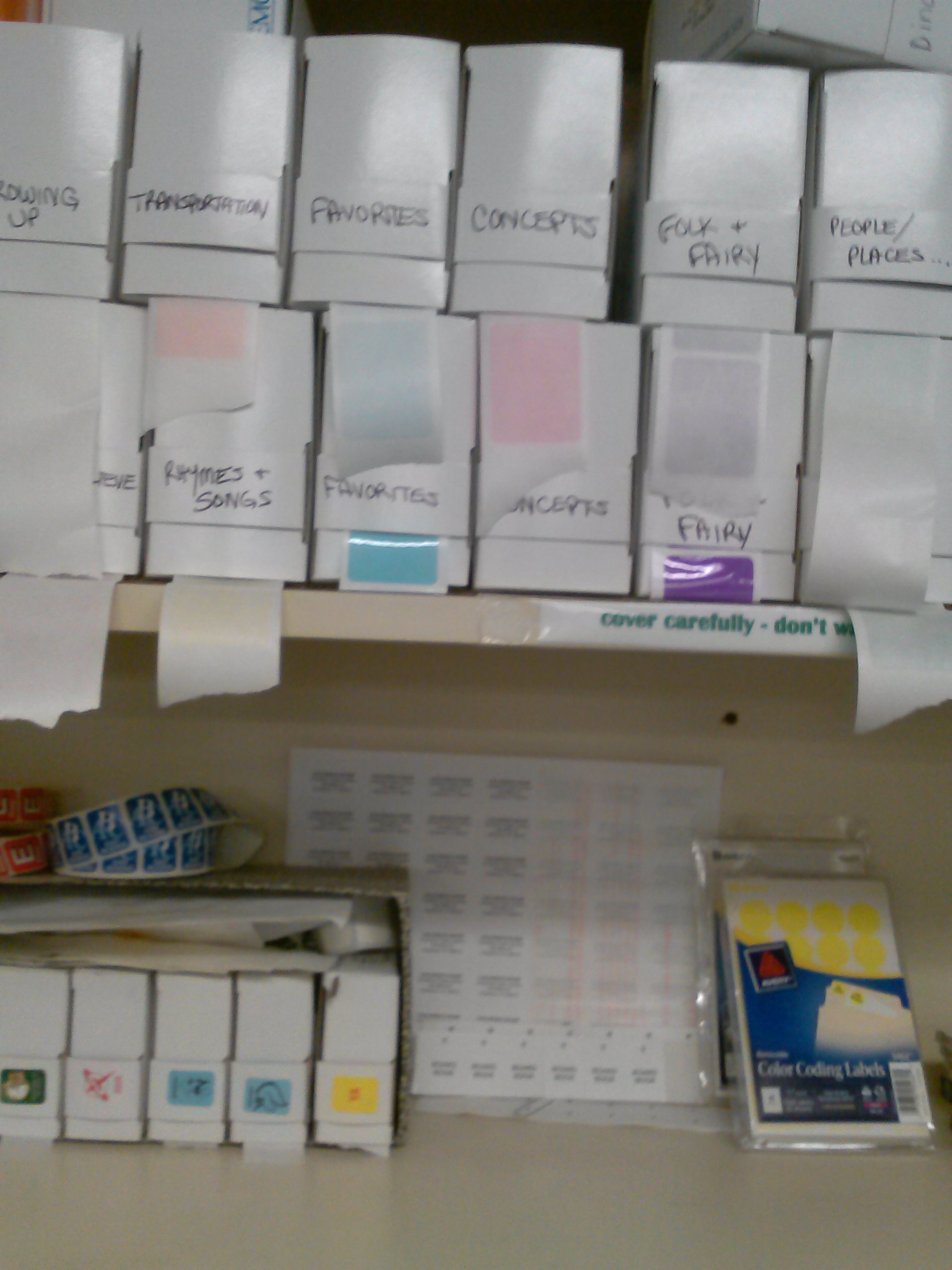
We sort all the books by type, and decide on the call number, genre, and more will be for each book. Every book will need a spine label with the call number, a barcode, and a RFID tag. They also need to be stamped with the Cheshire Children’s room address stamp and have the call number and barcode written on the interior of the book. Each type of book gets a different set of stickers. Some will need colored stickers over the call number to indicate subject matter, a sticker designating its reading level, awards won or nominated for, or its genre. Rather than giving you a long list of all the stickers, I will just give you a look at a few of the ones I use daily. CAM00070Yes, there are many more. This is about half of the regularly used stickers and labels.  After all the stickering fun is done there is still more to do. Paperbacks will need to be taped or covered to extend its life in circulation. Some hardcovers will need a cover on its dust jacket as well. Now we need to check the RFID tags in each book and either program them or make sure the correct barcode number is programed onto it.
Now it is time to enter the material into the computer. This can be the quickest part of the job, but also the most important. Small mistakes at this point could make materials nearly impossible to find on the shelf. We need to make sure the call number, barcode, location, and other vital information is all correct in the catalog. If a book is newly published, this is also when it gets a New sticker added to the previous collection of stickers. Then we check in the item and make it available for the first hold, or put it on the shelf for you to check out.
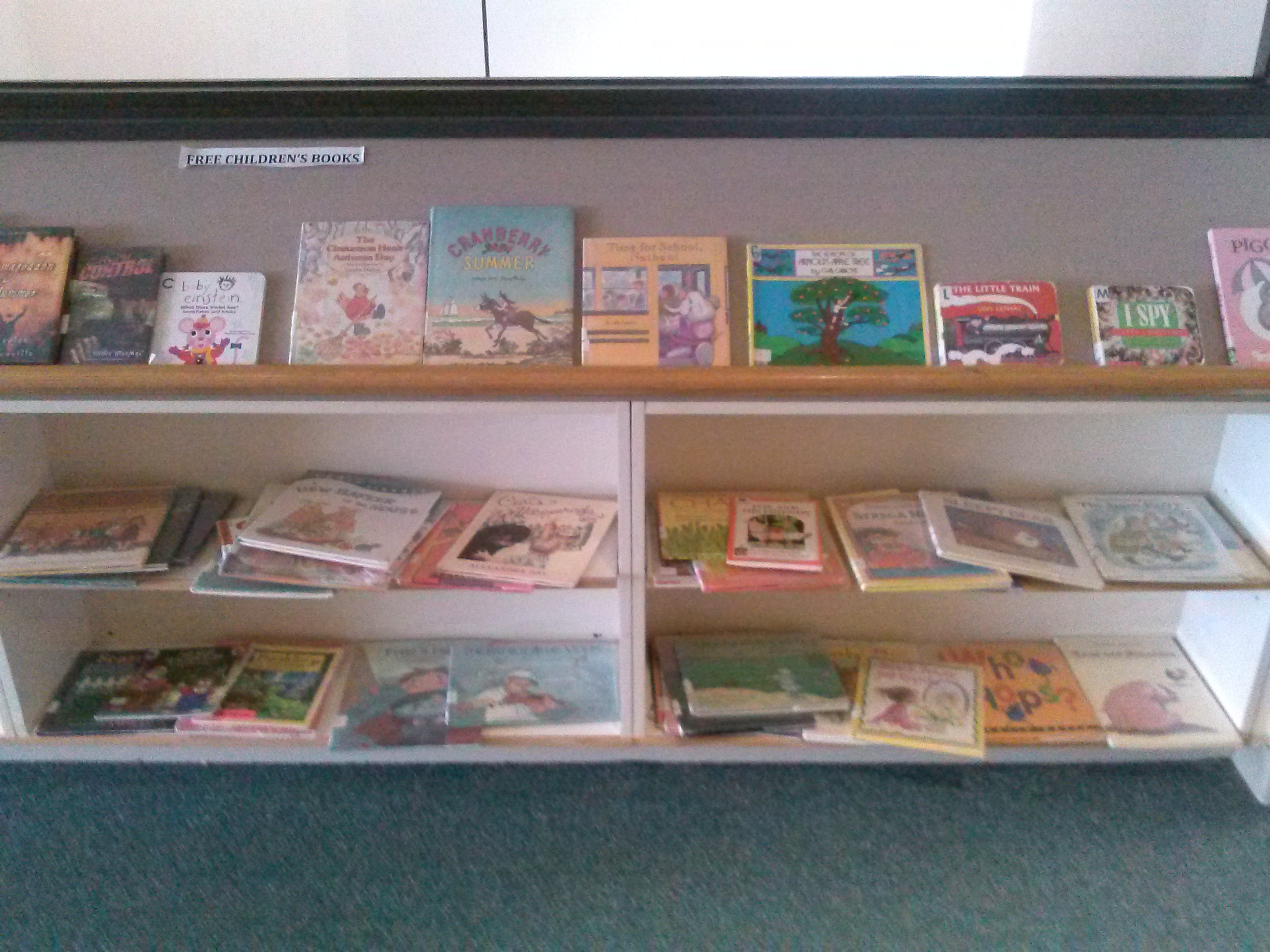
MCAM00068aterials in the children’s and young adult collection keep the new designation for six months. After that they are collected and pass through staff hands again so that the sticker can be removed and the information updated in the computer. You might see me doing this while working at the Children’s Desk. When material are damaged or are sadly in need of removal from the collection we then need to discard the book from our collection. This means more stamping and computer work. If you visit the third floor of the library, you can browse the discarded children’s and young adult materials that are still in good condition. You are welcome to take these home and keep. We hate having to let go of books, even though we have to in order to make room for more, and knowing that someone will use and enjoy them makes it a little easier.