
Barbara Newhall Follett was a writer who disappeared. Not fell out of favor or faded out of print, but disappeared. Considered a child genius who published a successful novel at the age of 12, The House Without Windows (it helped, of course, that her father was an editor at Alfred Knopf publishers), Follett was emotionally destroyed by her father’s divorce when she was 14, and never did much more. In 1939, Follett had a fight with her husband, walked out her door in Boston, and was never seen again…
Some authors are known for being extremely reclusive – J. D. Salinger, for one. Salinger had numerous personal and family issues, many, his daughter believed, stemming from PTSD from serving in World War II, and he hid from the intense fame he acquired from Catcher in the Rye. He seldom gave interviews or made appearances.
Thomas Pynchon is another, not having given an interview or even having a photo published in more than fifty years. He has no media accounts. In his late 80’s, it’s believed he’s living in Mexico, but no one except perhaps his publisher knows for certain.
Some authors aren’t lost, they’re just taking forever on that next novel – sometimes 10 years or more (staring right at you, George R. R. Martin). There are only a handful who have actually disappeared, becoming their own mystery.

Agatha Christie is perhaps the most famous. The Queen of Mystery herself disappeared in 1926, after a fight with her husband over his request for a divorce. Her car was discovered, empty. More than 15,000 people turned out to look for her, with Sir Arthur Conan Doyle going so far as to hire mediums. Eleven days later, she turned up in a hotel, 185 miles away, with no memory of what happened. Some publicists called it revenge against her husband that backfired when so many people got involved, while doctors said she had a nervous breakdown from the strain.
Solomon Northup is a name you may be familiar with. His memoir was made into an Oscar-Winning film, Twelve Years a Slave. Northup, who was born free in upstate New York but kidnapped and sold into slavery, wrote and published his memoir in 1853. Then, in 1857, he seems to disappear from historical records. Some thought he may have been kidnapped again, but his age at the time (around 50) made it unlikely. A Methodist minister in Vermont claimed to have worked with him in the early 1860’s, and last saw him in 1863. It’s assumed he died sometime between 1863 and 1864.
Elena Ferrante is a well-known author of more than 30 books, some of which have been made into movies or TV series, such as My Brilliant Friend. It’s also a pseudonym. Her true identity is a secret and almost nothing is known about her, except that she was born in Naples. In interviews, she claims it’s from shyness and fear of coming out of her shell. Speculation claims the author is actually Anita Raja, or her husband. Both people, and Ferrante’s publisher, deny it emphatically.

Antoine de St. Exupery is most famous for the timeless classic, The Little Prince, which was partly based on an airplane crash he and his navigator survived in the Libyan Desert. St. Exupery became a pilot in the 1920’s, joining the French Army, and later the French Air Force. Much of his writing has an aviation theme. When France was pulled into World War II, St. Exupery was assigned to reconnaissance missions, as an experienced pilot. On July 31, 1944, he left the airbase on Corsica in a Lockheed P-38, and was never heard from again. It wasn’t until 1998 – 54 years later, that a fisherman found a bracelet with his name on it. No one believed it, as it was some distance away from his intended flight plan. In 2000, a diver near the same area discovered wreckage of a Lockheed P-38. In 2003, the pieces were recovered and tested, proving indeed it was St. Exupery’s plane, downed in the war, though the details remain a mystery.
Ambrose Bierce was a short story writer and Civil War veteran, most famous for the story An Occurrence at Owl Creek Bridge. His stories influenced Stephen Crane and Ernest Hemingway, and he is considered one of America’s best satirists. At the age of 71, he went on a trip to visit his old Civil War battlegrounds, crossed over into Mexico, and wound up joining Pancho Villa’s army, documenting the battles. His last letter is dated December 26, 1913. His secretary believed he threw himself into the Grand Canyon in a suicide move, but witnesses saw him in Chihuahua in January of 1914. Mexican legend has it he was executed by a firing squad. Either way, it’s a great story!
Jack Black is one rough figure- no, not the actor! A drifter and burglar born around 1871, his 1926 autobiography You Can’t Win described his life of crime on the road. Disenchanted with both “genteel” life and that of the judicial system, he spent 30 years as a traveling criminal (15 of which he spent in prison). The book was influential for William S. Burroughs, a pioneer of the Beat Generation. Another odd fact: The author who helped him with his autobiography was none other than Rose Wilder Lane, the daughter of Laura Ingalls Wilder. You Can’t Win was adapted into a movie starring Michael Pitt and Jeremy Allen White, but has been in a liminal post-production stage for years. Black himself disappeared in 1932, and is believed to have committed suicide.
Returning to Barbara Newhall Follett’s story, there is something of a conclusion. After her disappearance, her husband didn’t report her missing for two weeks. The police eventually put out a bulletin – four months later. They used her married name, not her maiden name. A body was found, then determined not to be hers but a woman who had been missing years before. Thirteen years later, her mother insisted the police look harder, but nothing new was found. In 2019 – eighty years later – writer Daniel Mills proposed a theory that her body had been found in 1948, just not properly identified. The body had been found in New Hampshire – just a half mile from where she had a rental property and not terribly far from her home in Boston. The possessions found with the body were things Follett was known to have. The cause of death was barbiturate overdose, a substance Follett had taken before. The police in New Hampshire had no idea she’d been missing.
Authors, even the most famous ones, are still people, with the same dramas as everyone else. Does art imitate life, or does life create the art?
For books on “prodigies” who turn away from their potential, check out Outliers by Malcolm Gladwell, or Off the Charts: The Hidden Lives and Lessons of American Child Prodigies by Ann Hulbert.

 Many devoted mystery readers began with
  Hercule Poirot and Miss Marple are both well represented on Acorn TV and in our e-book and e-audiobook collections. Consider reading or listening to
  The
The  One of my favorite village cozy series, also by M.C. Beaton, features the unambitious and charming policeman
 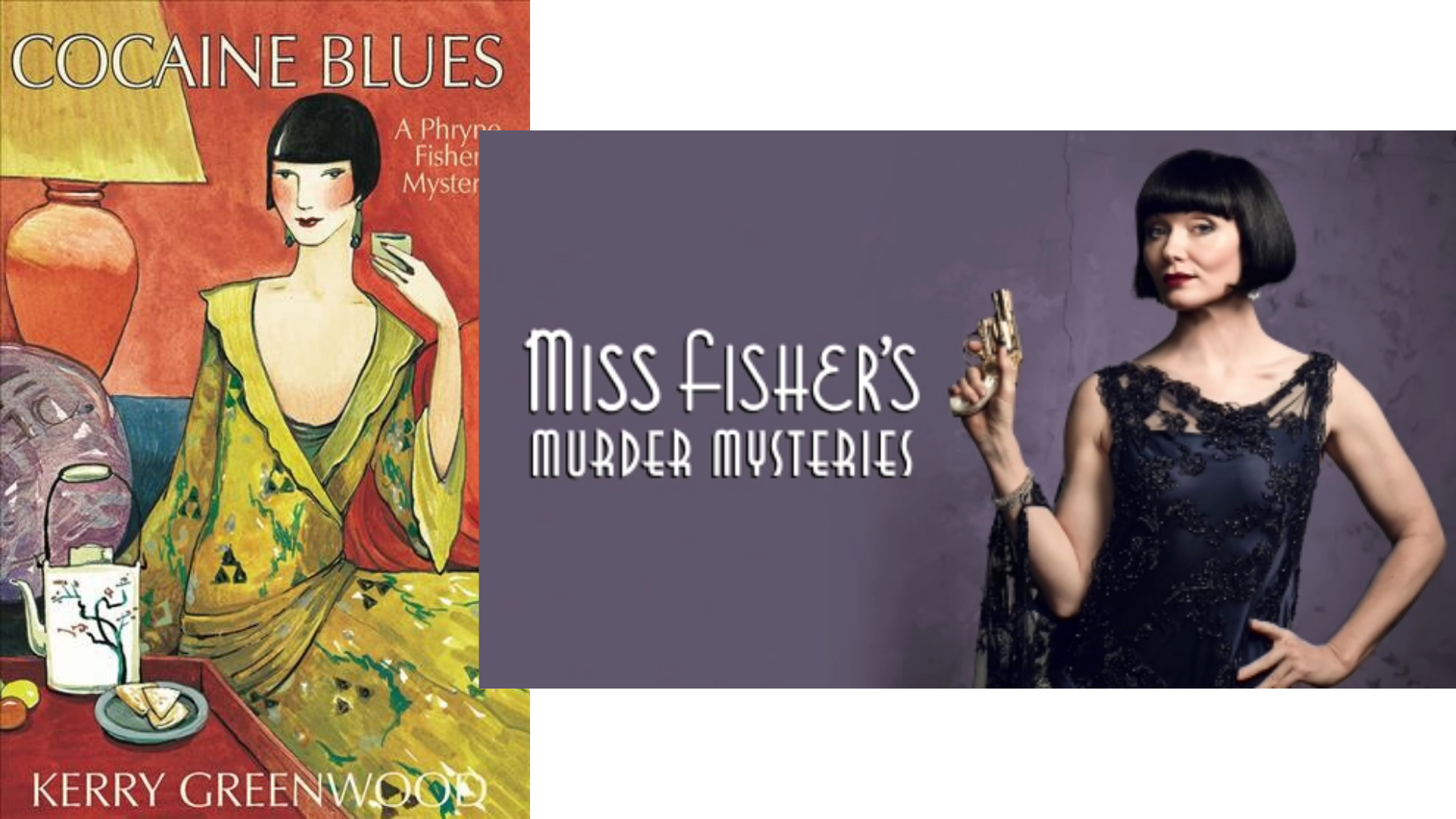 The
The  Ann Cleeves’ series featuring Detective Chief Inspector
  Set in Ireland, the long-running
  Not every book becomes a movie; not every movie started out as a book, but the two feed off each other like peanut butter and chocolate. Many of the top Oscar-winning films started out as books (

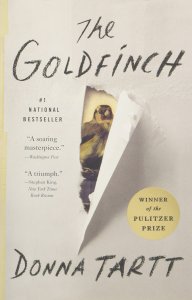


 Sometimes a literary character – and an author – just doesn’t quit, staying popular generation after generation. Sometimes we call that a classic – Scarlett O’Hara, Oliver Twist, Jane Eyre, Robin Hood and Maid Marian. Sometimes we call that Hercule Poirot.
 Marple), a retired Belgian police officer with peculiarly meticulous habits and a brilliant mind for solving crimes, well-known for his thick black curling mustache – the only fictional character to ever have an obituary on the front of the New York Times. Poirot first appears in
  Numerous film and television adaptions of both Orient Express and
  screen on November 10, 2017, with a – dare I say it? – killer cast. Kenneth Branagh, British superstar of myriad films including
  The Cheshire Library Blog