Serial Solving

I never know what I’ll read next. What ever sparks my interest, either by title, by book cover, or by subject. I have no special direction or particular interest, but if I found one book on a subject interesting, I’m far more likely to read another on the subject, or by the same author.  Hence I’ve read an inordinate amount of books on Ebola, fast fashion, tea, books on the making of various movies, and, well, serial killers.

We know the names. Son of Sam. Ted Bundy. Green River Killer. BTK Killer. Long Island Killer. 

I have no fascination with them, find most of them repellent and frightening beyond description, and did not shed a tear when Jeffery Dahmer died in prison, but I find the psychological processes and forensics involved in tracking them down utterly intriguing. The science end, not the murder end. And there is SO much to be fascinated about. 

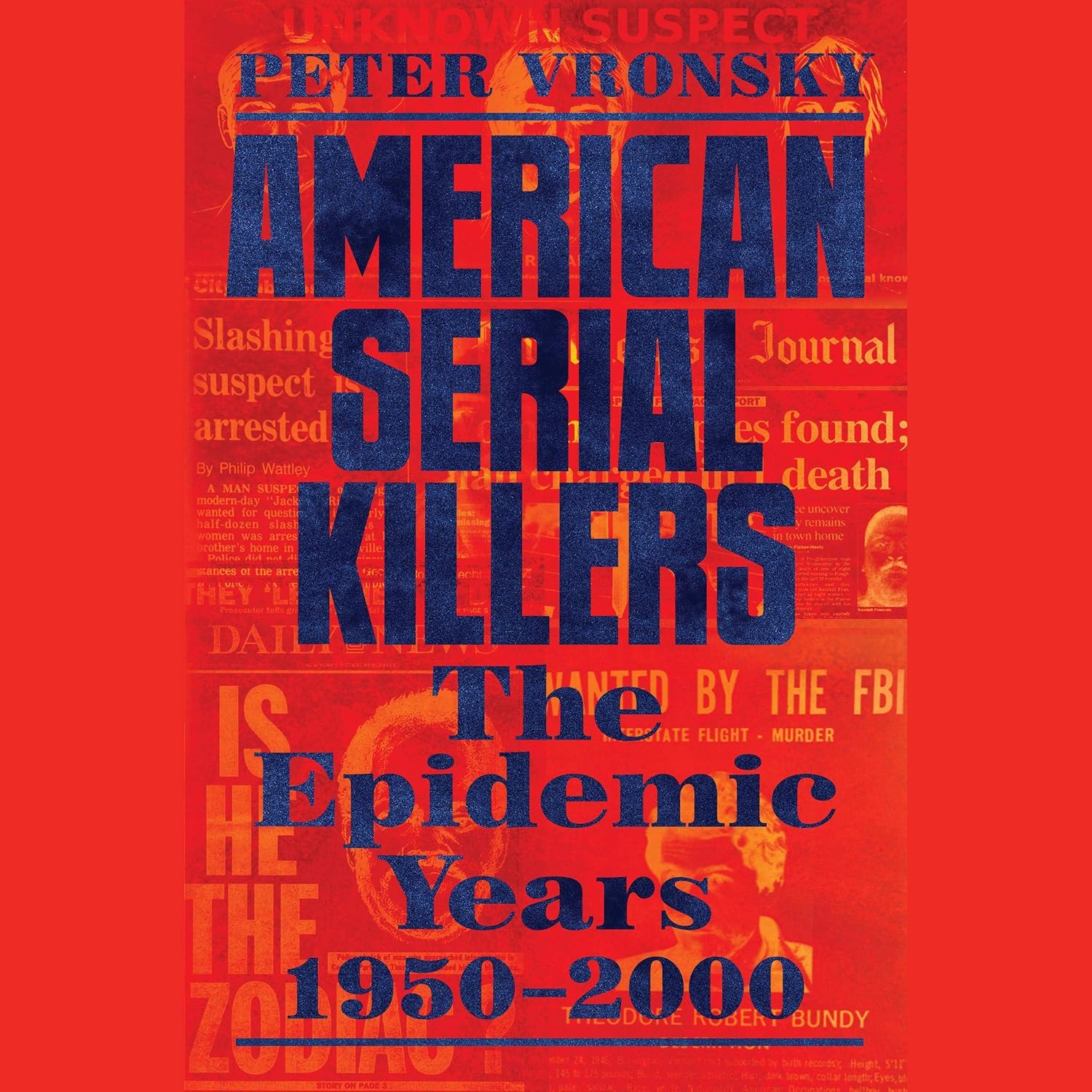
Most recently, I read the book American Serial Killers: The Epidemic Years, by Peter Vronsky, and I was blown away by the premise. America – which has more serial killers than any other country (well, that are reported and connected. Other countries have mass murders by corrupt governments, so maybe we’re better off) – had a major epidemic of serial killers (those that intermittently kill more than three people, as opposed to a spree all at once) from around 1970 to the mid 1990’s – more than 600 a year, and then it tapered off sharply. Why? Why did we have terrible trails of serial murders for 25 or 30 years, and then few?  Vronsky makes a very strong, documented  case for the fact that most of these killers were born in the late 40’s and early 50’s (25 or 30 by 1975) and their fathers fought in World War II. Vronsky documents that many of these fathers came back damaged from the war – PTSD, violent, depressed, alcoholic, received no help, and were unable to nurture their children. These boys – coming of age with violent sex images in men’s magazines, pulp fiction novels, and comics – grew up with attachment issues, poor self-image, and violent fantasies about sex, which they slowly began to work up the nerve to carry out. Why did things taper off? Most of those killers were either dead, in prison for other crimes, or had worn themselves out and were living a quiet life until something might trigger them again, unknown to their neighbors. Vietnam Vets received more services than soldiers in the 40’s, there was more public support, it wasn’t as big a deal to divorce a man, and those children did not have the same issues their grandfathers did. Those children of Vietnam vets would have been 25-30 in 1990-95 – years when serial killers were in decline.

Another utterly fascinating book – one that sent me down a long, long wormhole of research – is Barbara Rae-Venter’s I Know Who You Are: How an Amateur DNA Sleuth Unmasked the Golden State Killer and Changed Crime Fighting Forever. The Golden State Killer was alleged to have killed 13 people and committed more than 50 rapes across California between 1974-1986. Because police departments didn’t talk to each other or share information, no one was ever able to piece together all the information. Enter Rae-Venter. Rae-Venter spent her days helping people trace their genealogy and find their families using her home computer. Asked if she could do the same for a suspect, Rae-Venter needed 63 days and $200 to make a genetic profile of the killer from her dining room – something 30 years and $10 million of taxpayer money had never been able to do, leading directly to the apprehension of the killer. Since Rae-Venter, a huge number of backlogged, dead-end cases have been solved and cleared (like the Long Island Killer) due to the methods she used.

Spurred on by her methods, I fell down a rabbit-hole of genealogical research, aided by ancestry.com (free at the library), and in a week was able to trace my mother’s ancestry back 12 generations, connect some gaps, discover my grandmother had an older sister we never heard of (probably because she died at 5 months), and my grandmother’s younger sister was four when she died, not the two my grandmother remembered. Sometimes books are dangerous!
Through both of these books, several names kept popping up, and I realized I’d already read books by both men. John Douglas was the first real FBI criminal profiler, starting in the 1980’s, creating many of the procedures we use today. His book, Mindhunter, chronicles how he began, in a time where every department wanted the glory of solving the case, and thus no one ever shared information, and no one ever solved the cases. 

Unmasked: My Life Solving America’s Cold Cases by Paul Holes, is another. Holes learned the business under Douglas, pursuing cold-case investigations from the 1990’s into the 2000’s.  Some of the cold cases that perplexed them the most and they were never able to solve were later solved by Barbara Rae-Venter’s methods, like the Long Island Killer and the Golden State Killer.

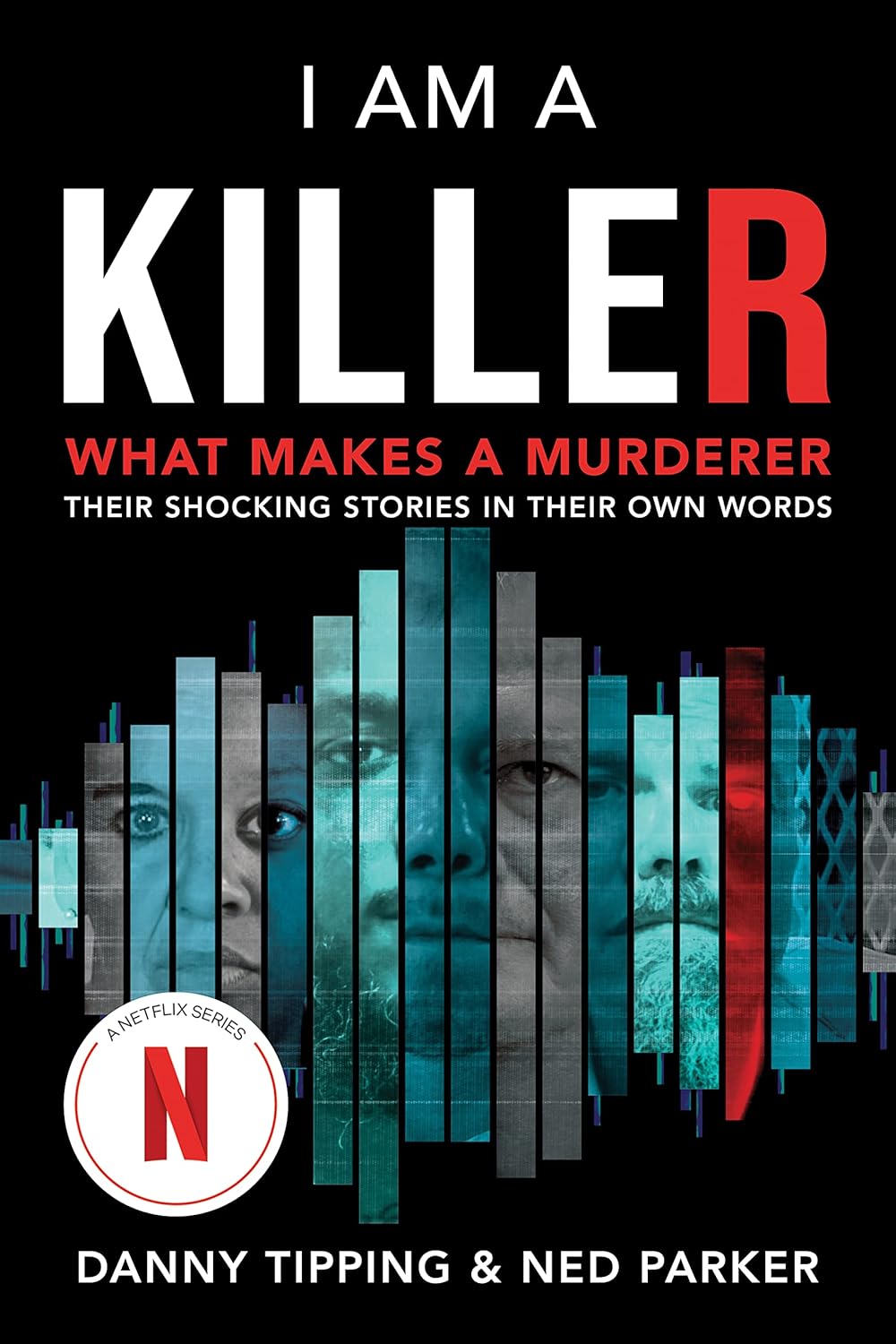
If you don’t care so much about crime but like psychology and sociology, and want to find out why people kill, try I Am a Killer, by Danny Tipping.  It’s a sad book that dwells on the murderers and not so much the crime. Time after time, the horrific backgrounds of these killers are revealed (one father, to hide the bruises and welts on his kid when Social Services was coming, tied him to a mattress, poured lighter fluid on him, and set his back on fire). Many did not deserve the sentences they received, responding to unimaginable abuse. There are no winners in this book. 

Though he technically didn’t kill anyone, if you want local flavor, read Incendiary: The Psychiatrist, The Mad Bomber, and the Invention of Criminal Profiling, by Michael Cannell. Many people claim to have invented criminal profiling, but this was an early case. In the 1940’s, a bomber went around exploding devices all over New York City, then teasing the police through letters. After twenty years, he was determined to be George Metesky – from Waterbury, Connecticut, and the criminal profiling was eerily correct.

If you like crime stories and investigations, these are excellent books. If you like psychology and deviant behavior, these are also excellent books. The difficult part is that they had to be written at all.

Optimism for Earth Day

I’d say I think about death more than your average sub-40-year-old. I could blame my high school English teacher for introducing me to existentialist thinker Albert Camus, or childhood Don Bluth films, but I probably just came out this way. Saying somebody “passed” feels strange in my mouth, inaccurate, as if the total and unequivocal departure from this plane of existence is akin to expelling a kidney stone. When I was pregnant, instead of choosing color palettes for a nursery like many expectant mothers, I went shopping for life insurance and wrote detailed directions for the disposal of my body (with relevant phone numbers).

“This is a great start to a post about optimism,” you might be thinking. But my acute awareness of mortality isn’t a pool I sit and wallow in. Instead, it spurs me to use my brief time to make a positive impact in this world. That’s how I feel about climate change. We’re inundated with data on warming temperatures, declining wildlife populations, more frequent severe weather events. We could collectively sit and wallow in a pool of doom. Or, we can arm ourselves with hope, draw up an imperfect plan of action, and try our best to leave whatever mark we can in the time we have.

If you’re stuck in the doom-pool and need some help, let one of these books be a hand extended to pull you out.

What If We Get It Right?: Visions of Climate Futures by Ayana Elizabeth Johnson (2024)


In the throes of the terrible summer of 2020, a tiny bright spot emerged: How to Save a Planet, a cheery podcast that discussed tangible solutions to the problem of climate change. The podcast and its parent company were swallowed up and digested by Spotify, but biologist and policy wonk Ayana Elizabeth Johnson continues to spread the gospel of actionable solutions, most recently in this book.

Saving Us: A Climate Scientist’s Case for Hope and Healing in a Divided World by Katharine Hayhoe (2021)


We all have a stake in the health of our planet. Instead of assailing you with facts about why you need to act on climate issues, Hayhoe gives you strategies to help you start conversations with almost anyone who isn’t on board (yet).

Cheaper, Faster, Better: How We’ll Win the Climate War by Tom Steyer (2024)


Streyer is excited about the future of clean energy, to the point where he left a lucrative job at an investment fund to start – well, another investment fund, but one dedicated to climate solutions. You’ll learn how investors, inventors, and entrepreneurs are harnessing the power of capitalism for the good of the planet.

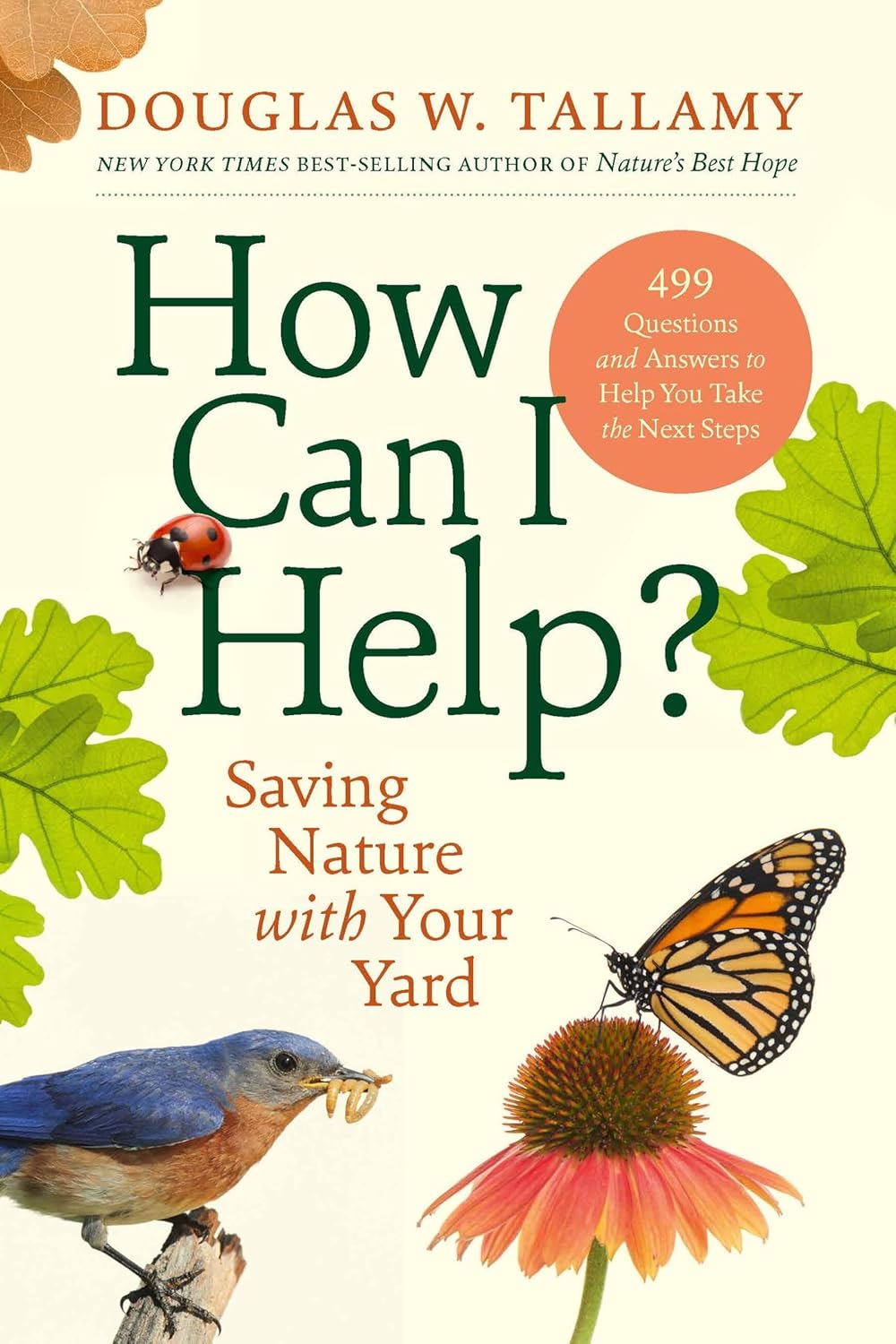
How Can I Help?: Saving Nature with Your Yard by Douglas Tallamy (2025)


Stand on the corner of gardening and conservation long enough, and you’ll run into Doug Tallamy. He’s published on the importance of native plants and the virtues of oak trees. His newest book gives property owners and gardeners a host of actions that they can take in their own yard to help the environment.

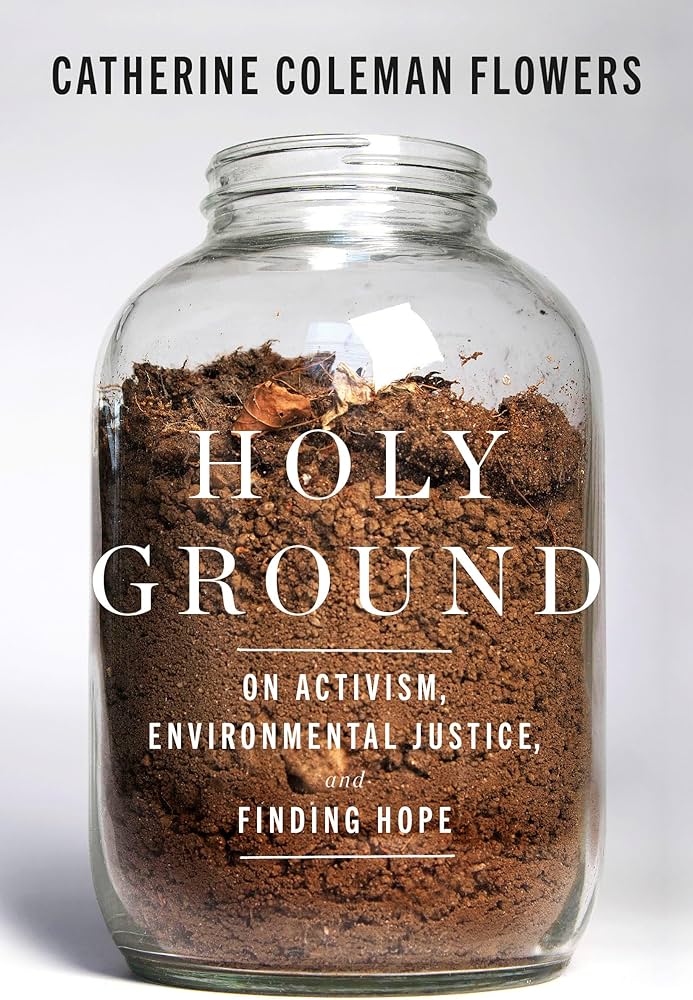
Holy Ground: On Activism, Environmental Justice, and Finding Hope by Catherine Coleman Flowers (2025)


Flowers advocates for the rural poor in areas where a lack of infrastructure, paired with climate change-related flooding, makes it difficult for families to access sanitary water. This book is a series of essays on her work and personal experiences with environmental and racial justice, and it’s an inspiration for others to join in the fight for a safer, healthier future for our neighbors.

Hope Dies Last: Visionary People Across the World, Fighting to Find Us a Future by Alan Weisman (2025)


Previous books in the list have looked at specific solutions and people, but Weisman’s upcoming book (which conveniently comes out right on Earth Day) takes a wider approach to see what the fight against climate change means for us as human beings. He talks with architects, scientists, artists, and religious leaders to ultimately paint a portrait of hope.

Islands of Abandonment: Nature Rebounding in the Post-Human Landscape by Cal Flyn (2021)


Years ago, in the middle of a long hike in the Sierra Nevada mountain range, I looked down at the rocks beneath my feet and realized I would be very happy if, many thousands or millions of years from now, the elements in my body were to become part of a rock underneath a foot as someone or something moved through a beautiful place. Everything alive is going to die. But nature and the processes of the physical world will go on. In Scotland, rare flowers grow on a heap of 19th century waste. Elk and wolves wander the irradiated exclusion zone around Chernobyl. With beautiful prose, this book travels to places ravaged by war, pollution, and human-made disaster to show how life continues in our absence. With or without us, Earth will eventually heal itself, and I find that deeply comforting.

Save Money at the Library

There are several ways to save money at the Cheshire Public Library. If you want to learn budgeting, investment, and retirement skills, come browse our large collection of personal finance books, magazines, and e-books. For more immediate savings, check out our museum passes. We offer discounts and free admission to some of the best museums in the state.

But today, I’d like to zoom in on our Research page, where you can get free access to websites that normally require a paid subscription. A recent CNET study found that the average US adult spends $91(!) on subscription services each month. We can’t help with Costco or Netflix, but you may find something here that will come in handy…

The New York Times

Normally $24.99 per month, free from the library

You can access the digital version of The New York Times both inside and outside the library. This means access to articles, reviews, podcasts, recipes, and games (so you can impress your friends with a Wordle streak). If you’re more of a “print” kind of person, we have both The NYT newspaper and magazine available on the lower level of the library.

Click here for to access to the New York Times:

*Note: Only the “News” portion of the website is available outside the library

Consumer Reports

Normally $10.00 per month, free from the library

Consumer Reports is a nonprofit organization that helps consumers gauge the value, quality, and authenticity of goods and services. It’s a trusted resource for unbiased reviews of cars, appliances, electronics, and lots more. Like The NYT, we also have the print version of the Consumer Reports magazine on the lower level of the library.

Click here to access Consumer Reports

Ancestry

Normally $24.99 per month, free from the library

Ancestry allows users to access a massive database of genealogical and historical resources. Search through Census records; military records; court, land, and probate records; vital and church records; directories; petitions for naturalization… The list goes on and on. This service is only available at the library itself so make sure to visit our public computers on the lower level.

Mango Languages

Normally $19.99 per month, free from the library

Chances are you’ve heard of Duolingo. I use it myself and like that it keeps me responsible for learning every day. On the whole, though, it feels somewhat lacking in actual education. Duolingo’s focus is on gamification can make it feel more like Candy Crush than French 101. Mango Languages is a great alternative that provides structured lesson plans that cover vocabulary, grammar, and culture. What’s more, Mango Languages boasts 70+ world languages and courses for English learners as well.

Click here to access Mango Languages

Also available through our Research page are:

  • Free digital editions of local newspapers (Cheshire Herald, Meriden Record-Journal, New Haven Register)
  • Morningstar Investment Research Center
  • LearningExpress Library: College and career readiness tools
  • NoveList: A subscription only readers advisory tool

Put Some Alto in Your Voice: New Books About Women Who Wouldn’t Be Quiet

Maybe I should have been a scientist.

I mean, setting aside that my library degree has the word “science” in it, I could have been very happy with the hard stuff like biology and physics. My recent reading of Adam Higginbotham’s Challenger has me considering a parallel life as an engineer designing parts for the aerospace industry. Hope Jahren’s Lab Girl brought me back to college anatomy and physiology, which I took for fun. What self-respecting English major memorizes squamous cells and zygomatic processes for fun? And why didn’t I pursue this thing that obviously called to me?

Answer: literature and the arts simply sat closer and sang louder. We had lots of books at home, but the mystery of a story’s meaning or a certain chord or color called to me more than the mystery of what existed in outer space or beneath the soil. By the time I was thinking about my future, I could more easily conceptualize myself creating worlds than uncovering the world that already existed. But, if I ever change my mind and decide to implode my professional life, it’s easy enough to channel Suzanne Simard and fill out an application for forestry school.

Many women in history never had the benefit of choice that I do, the ability to see a path beyond their sex. Their dreams – if they were even allowed to dream – were crushed because women weren’t supposed to be scientists, or run businesses, or be leaders and advocates. They were supposed to keep quiet. Well, for this Women’s History Month, I’m sharing some brand new books about women that put some alto in their voice and let themselves be heard.

The Cure for Women: Dr. Mary Putnam Jacobi and the Challenge to Victorian Medicine That Changed Women’s Lives Forever by Lydia Reeder (2024)


After Elizabeth Blackwell became the first woman to graduate from medical school, more women demanded a chance to study medicine. Their success spurred a chilling backlash from male physicians who distorted Darwin’s evolution theory and proclaimed that women should never be allowed to attend college or enter a profession because their menstrual cycles made them perpetually sick. Into the midst of this turmoil marched Mary Putnam Jacobi, daughter of a New York publisher and the first woman to be accepted into the world-renowned Sorbonne medical school in Paris. Aided by other prominent women physicians and suffragists, Jacobi conducted the first-ever data-backed, scientific research on women’s reproductive biology. The results of her studies shook the foundations of medical science and higher education.

She-Wolves: The Untold History of Women on Wall Street by Paulina Bren (2024)


Award-winning historian Paulina Bren tells the story of the first generations of women who fought their way into the bad-boy culture and lavish opulence of the finance world. If the wolves of Wall Street made a show of their ferocity, the she-wolves did so with tough-as-nails persistence. Starting at a time when “No Ladies” signs hung across the doors of Wall Street’s clubs and unapologetic sexism and racism were the norm at top firms, Bren chronicles the remarkable women who demanded a seat at the table. She-Wolves is an engaging and enraging look at the collision of women, finance, and New York from the go-go years to ground zero.

American Poison: A Deadly Invention and the Woman Who Battled for Environmental Justice by Daniel Stone (2025)


The untold story of Alice Hamilton, a trailblazing doctor and public health activist who took on the booming auto industry—and the deadly invention of leaded gasoline, which would poison millions of people across America. Hamilton had New England connections, too – she attended Miss Porter’s Finishing School in Farmington, became the first woman faculty member of Harvard, and she retired to live out her days in Hadlyme, CT.

The Dragon from Chicago: The Untold Story of an American Reporter in Nazi Germany by Pamela D. Toler (2024)


Toler draws on extensive archival research to unearth the largely forgotten story of Sigrid Schultz’s years spent courageously reporting the news from Berlin, from the revolts of 1919 through the Nazi rise to power and Allied air raids over Berlin in 1941. At a time when women reporters rarely wrote front-page stories and her male colleagues saw a powerful unmarried woman as a “freak,” Schultz pulled back the curtain on how the Nazis misreported the news to their own people, and how they attempted to control the foreign press through bribery and threats.

Fearless and Free: A Memoir by Josephine Baker (2025)


Published in English for the first time, this is the memoir of the fabulous, rule-breaking, one-of-a-kind Josephine Baker. After stealing the spotlight as a teenaged Broadway performer during the height of the Harlem Renaissance, Josephine then took Paris by storm, dazzling audiences across the Roaring Twenties. When World War II broke out, Josephine became a decorated spy for the French Résistance. Her celebrity worked as her cover, as she hid spies in her entourage and secret messages in her costumes as she traveled. She later joined the Civil Rights movement in the US, boycotting segregated concert venues, and speaking at the March on Washington alongside Martin Luther King Jr.

The Elements of Marie Curie: How the Glow of Radium Lit a Path for Women in Science by Dava Sobel (2024)


Dava Sobel approaches Marie Curie from a unique angle, narrating her remarkable life of discovery and fame alongside the women who became her legacy–from France’s Marguerite Perey and Norway’s Ellen Gleditsch to Mme. Curie’s elder daughter, Irène, winner of the 1935 Nobel Prize in Chemistry. For decades the only woman in the room at international scientific gatherings that probed new theories about the interior of the atom, Marie Curie traveled far and wide to share the secrets of radioactivity before her death at 66 from aplastic anemia.

Daughter of Daring: The Trick-riding, Train-leaping, Road-racing Life of Helen Gibson, Hollywood’s First Stuntwoman by Mallory O’Meara (2025)


Helen Gibson was a woman willing to do anything to give audiences a thrill. Advertised as “The Most Daring Actress in Pictures,” Helen emerged in the early days of the twentieth-century silent film scene as a rodeo rider, background actor, stunt double, and eventually one of the era’s biggest action stars. Her exploits on motorcycles, train cars, and horseback were as dangerous as they were glamorous, featured in hundreds of films and serials–yet her legacy was quickly overshadowed by the increasingly hypermasculine and male-dominated evolution of cinema in the decades that would follow her. Through the page-turning story of Helen’s pioneering legacy, Mallory O’Meara gives readers a glimpse of the Golden Age of Hollywood that could have been: an industry where women call the shots.

When Women Ran Fifth Avenue: Glamour and Power at the Dawn of American Fashion by Julie Satow (2024)


The twentieth century American department store: a palace of consumption where every wish could be met under one roof. It was a place where women, shopper and shopgirl alike, could stake out a newfound independence. In the 1930s, Hortense Odlum of Bonwit Teller came to her husband’s department store as a housewife tasked with attracting more shoppers like herself, and wound up running the company. Dorothy Shaver of Lord & Taylor championed American designers during World War II–before which US fashions were almost exclusively Parisian copies–becoming the first businesswoman to earn a $1 million salary. And in the 1960s Geraldine Stutz of Henri Bendel re-invented the look of the modern department store. This stylish account captures the department store in all its glitz, decadence, and fun, and showcases the women who made that beautifully curated world go round.

Sisters in Science: How Four Women Physicists Escaped Nazi Germany and Made Scientific History by Olivia Campbell (2024)


In the 1930s, Germany was a hotbed of scientific thought. But after the Nazis took power, physicists like Hedwig Kohn, Lise Meitner, Hertha Sponer, and Hildegard Stücklen had no choice but to flee due to their Jewish ancestry or anti-Nazi sentiments. Their harrowing journey out of Germany became a life-and-death situation that required herculean efforts of friends and other prominent scientists.

4 Teens’ Takes on “A Good Girl’s Guide to Murder”

The following is a collection of book reviews by four teens (identified here by their initials) who read Holly Jackson’s novel, A Good Girl’s Guide to Murder. All four teens rated the book 5/5 stars. What makes it so good? Should you read it, too? Read on!
Grammar and spelling in some reviews have been edited for clarity.

Summary (provided by the publisher):

Everyone in Fairview knows the story.

Pretty and popular high school senior Andie Bell was murdered by her boyfriend, Sal Singh, who then killed himself. It was all anyone could talk about. And five years later, Pip sees how the tragedy still haunts her town.

But she can’t shake the feeling that there was more to what happened that day. She knew Sal when she was a child, and he was always so kind to her. How could he possibly have been a killer?

Now a senior herself, Pip decides to reexamine the closed case for her final project, at first just to cast doubt on the original investigation. But soon she discovers a trail of dark secrets that might actually prove Sal innocent . . . and the line between past and present begins to blur. Someone in Fairview doesn’t want Pip digging around for answers, and now her own life might be in danger.

Use 5 words to describe this material.

OM: Truth, justice, friendship, reputation, mystery

GF: Mystery, suspenseful, confusing, thought-provoking, and compelling

KA: Mysterious, action-filled, suspenseful, perseverance, and thrilling

MH: Captivating, thrilling, entertaining, suspenseful, shocking

Why did you read/view this material?

OM: It is a New York Times bestseller and friends were recommending it.

GF: I read this book because my friend recommended it to me and it looked like a very interesting book.

KA: I read this book because of how it was getting amazing reviews and also because of how I wanted to read the whole series.

MH: I read A Good Girl’s Guide to Murder because it was popular and I am interested in the genre of murder mysteries. 

What was your favorite part and why? 

OM: The surprise twist at the end. This story kept you at the edge of your seat. 

GF: My favorite part of the book is when you find out who is behind the whole scene. The buildup in this book is amazing, and I was questioning who actually did it the whole time. The book surprises you with that answer! 

KA: My favorite part was when Pip found out who was the true murderer. It was the person I least expected. 

MH: My favorite part is the part that must never be spoiled ahead of time, this is the part where everything falls together and Pippa figures everything out. This is my favorite part because it’s so satisfying to see all the clues put together, the ending is so unexpected. It is an ending worthy of Agatha Christie.

What is one thing that you would change about this material? Why? 

OM: The beginning is a little confusing, as it switches from first person, to journal entries, to interview transcripts. I had to spend more time than I usually would figuring out what was important to focus on before could I really process the point of the story.

GF: One thing that I would change about this book is giving the outside characters that are still relevant to the book more of a story. In this book, everyone is viewed as a suspect for Pip to investigate, but in reality, every character is different and has their strengths and weaknesses.

KA: Something I would change about this book is how it has pictures. I prefer when books do not have pictures.  

If you could ask the author/creator one question about this material, what would it be and why? 

OM: I would ask the author how she got the idea because the book states that it is completely fiction. It is such a well thought out and creative story, I would love to know where she gets her inspiration.

GF: If I could meet Holly Jackson and ask her one question about A Good Girl’s Guide To Murder, I would ask her what gave her the idea to write this book. It has very big plot twists and the storyline is complex, so I would ask her how she came up with this.

KA: Something that I would ask Holly Jackson is what inspired her to write a book about this topic. Was it based on a true story/something that really happened?

MH: If I could ask Ms. Jackson one question about A Good Girl’s Guide To Murder, it would be this, how did you come up with your ending? The ending was truly very unexpected and surprising, I would like to know how Ms. Jackson came up with such a unique ending.

Who do you think would like this material and why?

OM: Anyone that enjoys mysteries or realistic fiction would enjoy this book.

GF: I think that teenagers would like this book. This is because it has great characters that most people can relate to, and it has big plot twists that older kids would enjoy.    

KA: I think people who like crime/murder related books would like this.

MH: I think anyone thirteen years old or older would enjoy this book, even adults, the plot develops very quickly, yet it is not at all predictable. It is a thrilling and exciting read for anyone, not just true crime geeks.