We recently uncovered some Cheshire Library memorabilia from at least 60 years ago. Though they’re regular objects you would find at any library—a bookmark, a checkout card holder, and a library card—they reveal a lot about the time they’re from and remind us of the dramatic changes that have taken place since.
First the bookmark: At the time the bookmark was printed, CPL’s hours were a bit different than they are now. They were open Monday through Friday, from 3:00 to 5:00 and 7:00 to 9:00 PM, presumably to allow for a dinner break. These days, we’re open from 9:00 AM to 8:30 PM Monday through Thursday, and 9:00 AM to 5:00 PM on Fridays. As a reminder, our summer Saturday hours for July and August are from 9:00 AM to 1:00 PM.
Maybe the most interesting part of the bookmark is the phone number for The Cheshire Insurance Agency: three digits!
The library checkout card holder is most notable for the quaint slogan of First Federal Savings and Loan Association: “You’ll find us most helpful.” The First Federal Savings and Loan Association isn’t around anymore. 218 Maple Ave changed hands several times in the late 20th century and became a branch of Naugatuck Savings Bank in 1999 (later renamed “Ion Bank” in 2013).
Lastly, the library card. Those who’ve been coming to the library for a while know our cards have gone through many iterations. I love when patrons come to the circulation desk with one of our old Cheshire Cat branded cards because it means they’ve been loyal patrons for some time. But I’ve never seen a card anywhere near as old as this one. In place of a barcode, there’s a stamped metal insert with only four digits.
Across the board, the United States has become a more expensive place to live in the last 57 years, but at least you don’t still have to pay 25¢ when you need to replace your card! (25¢ in 1968 is the equivalent of $2.32 today).
It can be easy to walk through today’s libraries and look at them as though they came into existence at that very moment. Historical artifacts like these remind us that we’re part of a long chain of library excellence—standing on the shoulders of giants, as they say.
Every so often an actor seems to become a shooting star, rising to the top from seemingly nowhere, and now he or she seems to be in everything. Leonardo DiCaprio started as a 14 year old in a Matchbox commercial and by 19 had an Academy Award nomination for What’s Eating Gilbert Grape. Harrison Ford made American Graffiti at 31, an unknown actor who was remodeling a kitchen for the casting director, then made himself part of history just three years later when Star Wars sent him to superstardom faster than the Kessel run. Brad Pitt had a small role as a cowboy hitchhiker in Thelma and Louise, then rose to stardom a year later in A River Runs Through It.
Some actors start out young – Shirley Temple was just three when she made Stand Up and Cheer, making 50 films before retiring at the age of 22. Judy Garland began performing with her sisters even younger – just two. Studio executives were feeding her amphetamines by 16 to keep her energy up, leading to an overdose death at just 47. Justin Henry is the youngest ever Academy Award nominee at just 8 years old, for Kramer Vs. Kramer. Tatum O’Neal remains the youngest winner of an Academy Award, landing her a Best Supporting Actress at just nine years old, forPaper Moon. Halley Joel Osment was just eleven in The Sixth Sense, but was already a veteran after playing the son of Forrest Gump at the age of six.
Now, another young actor is exploding on Hollywood, not yet thirty with dozens of awards to his name. Timothée Chalamet seems to be taking the world by storm. Although his mother danced on Broadway, Chalamet credits Heath Ledger’s performance as the Joker in 2008’s Dark Knight for starting his acting bug.
Born in just 1995 (ouch), Chalamet’s premiere was on Law and Order in 2009, moving to films with a role inInterstellar. From there, an almost non-stop string of movies came. Call Me By Your Name (2017) earned him an Academy Award Best Actor nomination, the third youngest nominee ever. His success culminated in the lead roles for the Dune films (another movie nominated for the Oscar), Wonka, and the recent A Complete Unknown, a biography of singer Bob Dylan (now 83), for which he was again nominated for an Oscar at 29 years old. Chalamet had Dylan’s approval for the role. He sang more than 40 of Dylan’s songs for the soundtrack (and did an excellent job), and yes, he himself played both the guitar and harmonica for it. On top of that, between acting, singing, and playing the actual instruments, Chalamet also co-produced the film. He lost the Oscar to Adrien Brody (The Brutalist), but became the youngest actor ever to win the Screen Actor’s Guild Best Actor award for the role.
Some actors start out unknown and bloom into fame in time; others seem to shoot straight to the top. Some who do fade out for a variety of reasons (James Dean made only 3 films; Mel Gibson’s behavior became a liability, Drew Barrymore was in substance rehab by thirteen, Ezra Miller became erratic), but others manage to navigate the pitfalls and go on to have long and amazing careers (Jeff Bridges, Clint Eastwood, Betty White, Kurt Russell, Mickey Rooney, for some). Time will tell if Chalamet can keep the fire burning.
I’m betting he does. Check out his work, and see if you agree!
Side note: Both A Complete Unknown and The Brutalist have only been released on Blu Ray disc, so check your player first.
As a parent of two young kids, my time away from work is a constant stream of requests and/or demands. The 4-year-old: refill my milk cup even though you’re currently buttering my toast and haven’t even made your coffee yet. The 20-month-old: read Trashy Town to me again. The 4-year-old: I just discovered My Little Pony and I love it, so now my name is Princess Twilight Sparkle and my brother is Spike. Spike: read! Twilight: you are no longer Momma, you’re now Princess Celestia. Can you talk like Princess Celestia? Spike: I will scream-cry if you don’t read to me in two seconds.
Sometimes you need a change of scenery in order to prevent your kids (or yourself) from scream-crying. For me, the library’s museum passes have been invaluable when it’s too wet to visit the playground at Bartlem Park or too cold for miniature horses at Brooksvale Park. Museum passes offer discounted or free admission for adults and kids to museums and educational attractions across Connecticut and beyond. You can reserve them up to 30 days in advance and print almost all of them from home anytime, requiring no special trip to the library. For added convenience, many museums will just scan the pass right from your phone. Here’s our young crew’s experience with the passes.
The Children’s Museum
Location: 180 Mohegan Drive, West Hartford
Pass perks: one free admission for every paid admission
Cost before perks: $15/person ages 2 and up, below 2 is free (price info)
We visited The Children’s Museum when Twilight was two years old and Spike was an unhatched egg. The museum accepted the digital pass that was sent to my phone via email, and soon we were in an indoor air-conditioned wonderland. The museum looks like a former school with one long hallway and branching classrooms that have been converted to different activity areas. I appreciated the easy navigation! The woods-themed dramatic play room was a hit, as was the craft room. The dinosaur room was another success.
There’s also a large collection of live animals spread across three rooms: snakes, chinchillas, box turtles, and more, all of whom came to the museum after being given up, injured, or confiscated. The museum has regular demonstrations where kids can meet some of the animals. Twilight wasn’t interested in petting the ball python, but there were so many other activities that kept her engaged that it wasn’t a loss.
KidsPlay Children’s Museum
Location: 61 Main St, Torrington
Pass perks: Half-price admission for up to 6 family members
Cost before perks: $14 for everyone age 1+, free under 12 months (price info)
KidsPlay has become our family’s favorite museum. There are so many rooms and activities here: play vehicles, a climbing wall, air play, a craft room, a music room with a piano, a grocery store, a pioneer cabin with dress-up clothing. We could not possibly visit every area in one trip! We were impressed not only with the breadth of activities, but how clean and well-maintained the space was. We loved this museum so much on our discounted visit that we got a year-long membership, so we’ve gotten to experience rotating play areas like kinetic sand and a hockey rink.
Street parking is a breeze in downtown Torrington, and there’s an off-street lot as well. The only drawback is its limited schedule. As with any museum, check the hours of operation before you visit!
Roaring Brook Nature Center
Location: 70 Gracey Road, Canton
Pass perks: one free admission for every paid admission
Cost before perks: $9 for adults, $7 for children 12 and under (price info)
Our Children’s Museum pass also grants discounted admission to Roaring Brook Nature Center (not to be confused with Roaring Brook Park, the not-for-the-faint-of-heart local trail). The nature center has an indoor section with taxidermy dioramas of our local habitats, live animals, play nooks, and a library, plus an outdoor area with rescued birds and turtles. Twilight enjoyed the scavenger hunt, singing lullabies to Tomasina the black vulture, and looking for turtles in the pond.
The highlight of the trip, though, was a hike along the trails next to the nature center. The trails are free to access and open from dawn to dusk, and a lot of it is hemlock forest (i.e., those really cool dark forests that make you feel like you’re a character in a fantasy book). The kids played Poohsticks from the bridge over the creek and explored a set of lean-tos while their bird nerd of a parent listened to warblers and nuthatches calling in the trees.
Connecticut Science Center
Location: 250 Columbus Blvd, Hartford
Coupon perks: 15% off up to six admissions
Cost before perks: $29 for adults, $23 for ages 3-12, plus $7 per person for butterfly encounter (price info), plus $7 per vehicle for 3 hours of parking in the adjacent garage (garage information)
Twilight loves the CT Science Center. When she was two years old, we could easily spend an hour just in the water play area. (They provide smocks, but it’s still a good idea to bring backup clothes and shoes.) There’s also live animals including a sloth, a butterfly encounter, and lots of interactive science activities that get more interesting as Twilight gets older. A glass elevator lets you look out across the whole museum, and it’s roomy enough for you to indulge in repeat rides without compromising foot traffic.
This is not a reservable pass, but a coupon that you can pick up anytime and use anytime. Even with a coupon, this is admittedly a pricier outing. But if you can swing it, it’s worth a visit.
Dinosaur State Park
Location: 400 West St, Rocky Hill
Pass perks: free admission to the exhibit center for two adults and four kids age 6-12; kids 5 and under are free
Cost before perks: $6 for ages 13+, $2 for ages 6-12, free parking and trail access
The kids recently visited 200-million-year-old dilophosaurus footprints at Dinosaur State Park, where you can visit indoor exhibits for free with the CT Parks Pass. (This is a physical pass that needs to be picked up and delivered back to the library.) The footprints are housed in a geodesic dome that also includes dino dioramas, crafts, and some live reptiles and amphibians. The adults loved it, but Twilight was a little disappointed that dinosaurs were extinct and weren’t there stomping around making the footprints.
Luckily, the nature trails outside the exhibit center are perfect for small legs, and they’re free to use without the pass. We saw a big (and completely harmless) water snake sunning itself near the marsh!
Overall, there are so many activities at each place that you really can’t go wrong with borrowing a pass. And even if your museum outing is more miss than hit, hey – at least it’s a few hours in which your kids aren’t pretending they’re Keith Moon and your living room is a Holiday Inn!
Why don’t all the passes give me free admission?
We would love to offer passes that grant free admission everywhere, but the museums set the terms for their passes and decide what they’re going to make available for libraries to purchase. Sometimes that’s free admission. Sometimes that’s just a discount. It all depends on the museum, but we always get the best discount we can!
Why doesn’t the library offer passes to Beardsley Zoo, Mystic Aquarium, or the Maritime Aquarium?
Good question! Unfortunately, the aquarium passes don’t really offer a good value for most patrons. (Think a percentage off a yearly membership, or a few dollars off if you purchase add-ons beyond general admission.) Instead of disappointing our patrons, we opt to get different passes with better discounts. As for the Beardsley Zoo, they changed their ordering process a couple years ago, and it doesn’t jive with the way we make purchases. However, we’re planning to add more animal-themed passes in 2026. Stay tuned!
What about the Peabody Museum? Why doesn’t the library offer a pass?
We don’t offer a Peabody Museum pass because it’s completely free! They gave it a major overhaul recently, and it’s a gorgeous space. Fossilized skeletons and plants are on the first floor, with minerals and animal dioramas on the third floor. Human history is exhibited on the second floor.
Everyone knows about the Titanic since they found the wreckage and made a movie about it, but shipwreck is usually the last thing on anyone’s mind when they book a cruise. In reality, only 24 cruise ships have ever sank, and many of those had been pressed into service as warships at the time. Cruise ships, despite their top-heavy appearance, are quite safe.
There are an estimated 3,000 shipwrecks off the coastof the Outer Banks, NC
There are an estimated three million shipwrecks under the waters, not counting small craft. Some of these date back as far as 2500 BCE, when the Mediterranean Sea was a hotbed of trade from Egypt and North Africa to the coasts of Italy, Greece, and Spain. The rate of commercial shipwrecks has been declining throughout this century, from 200 in 2000 to only 26 in 2023, and most of those are cargo ships, which are often in poor repair, overloaded, badly balanced, and cross some of the most difficult waters (releasing rubber ducks and sneakers). This does not include the fishing industry, which is nearly unregulated, especially in Asia and South America. It is estimated there are 100,000 deaths from fishing each year, due to poor industry standards and almost no oversight.
When we think about historical ships, we think back to Roman biremes, Viking longboats, and primitive rafts like Thor Heyerdahl’s Kon Tikilong before we come to the glory days of Spanish, British, French, and Portuguese galleons vying for naval power, leading to spectacular – and expensive – shipwrecks. The Bermuda Triangle, The Skeleton Coast, The Cape of Good Hope, and several rocky coastal areas around the continents were famous for wrecking ships, let alone the risk – then and now – for icebergs in the North Atlantic, and the real though rare possibility of rogue waves – lone giant waves of up to 100 feet, with no warning and no precursors, which have been implicated in a number of wrecks. There’s also the 1958 Lituya Bay, Alaska tsunami, which, due to the funneling nature of the bay, created a wave 1700 (yes, one thousand seven hundred) feet high, lifting a fishing boat, whose crew miraculously survived.
Like all natural disasters, ship disasters make for fascinating reading and occasionally a great movie. Here are some excellent works on the misfortunes of ocean-bound ships, some of which you may not have heard of, but really happened.
If you haven’t yet read The Wager, you need to. A true tale of murder, mutiny, greed, heroism, and unbelievable survival in the harshest of conditions. Against better judgment, the Wager tries to round the dangerous Cape Horn in 1741, smashing against rocks in a gale. In a barren wasteland, with nothing to eat, the crew splits, half commit mutiny, some commit murder, and half of them will make it back to tell the riveting tale. A must read.
Who knew that more 2000 ships have been wrecked on the corner of the Oregon/Washington coast? Fierce storms, fog, reefs, sandbars, and tidal rips from the incoming flood of the Columbia river are so bad that there are specific ships and captains who must steer commercial ships through the area. While the book is partially taken up by one man’s quest to kayak through this deadly area, the rest of the book is quite fascinating.
There are many theories as to why the ship Mary Celeste was found abandoned at sea in 1872, with no clue as to what happened. The lifeboat was missing, and the crew abandoned ship so rapidly that food was still on the table and a sleeping child’s form was still outlined on the captain’s bed. Hicks combs through details to provide a solid, scientific reason, the best theory anyone has come up with yet, and the horrible fate of the crew.
The foundering of the whaleship Essex in 1820 became the inspiration for Melville’s novel Moby Dick. The Essex was sunk by a sperm whale in the Pacific, killing most of the crew. A handfull survived in a whaleboat for five months, surviving on cannibalism and rainwater. Melville allegedly met the son of survivor Owen Chase while at sea, and later met surviving Captain Pollard, who was considered bad luck after two lost ships, and no one would hire him. The combined diaries of the survivors were later made into a film.
If Ghost Ship wasn’t enough, Hicks covers the perfect storm of disaster on the Morro Castle, a top of the line 1934 cruise ship traveling between Cuba and New York’s Pier 13. With horrific odds, the ship faced a tropical storm gaining on them, a nor’easter barreling toward them from the opposite direction, a murdered captain, an arsonist’s chemical fire underneath a ceiling filled with gunpowder, a crew that had never performed a fire or lifeboat drill, lifeboats whose launch mechanisms were painted closed, and a crew that fell apart at the first sign of trouble. How anyone survived (besides the crew, who abandoned ship without helping passengers) is a miracle. A book that reads like a novel, and is very hard to put down.
More fish are caught in Alaskan waters than almost everywhere else, yet many fishing boats remain virtually unregulated as to safety, and there are powerful political groups that push against it. In 2008, the Alaska Ranger meets with bad weather and too much ice, loses its rudder, and starts to sink. As in every disaster, few are trained, shortcuts were taken, lifeboats don’t work properly, wetsuits have holes, and they are more than 200 miles from the Coast Guard rescue planes. Thompson creates a tense tale of survival and aggravatingly poor working conditions as the Coast Guard rushes to save the crew. A lot of names, but hard to put down.
Futility, or, The Wreck of the Titan, by Morgan Robertson
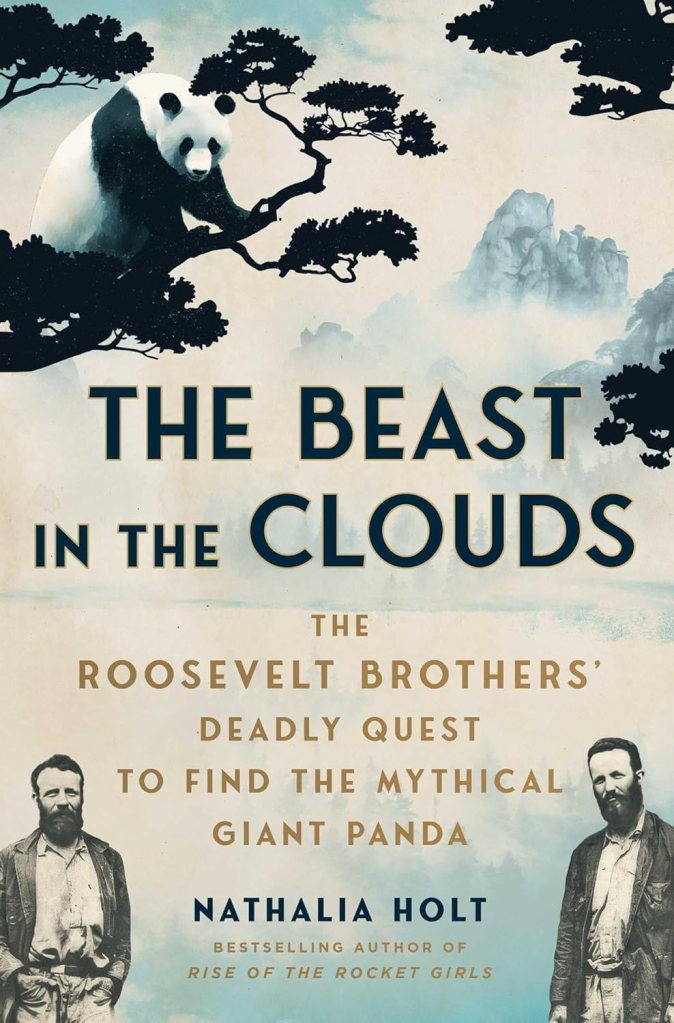
Okay, this one is short fiction, and because it’s so old it’s hard to get a copy of (you can read it for free on Project Gutenberg, here), but it’s mentioned in so many memes as “The Titanic Foretold!” that I wanted to include it here. Published in 1898, the book, yes, involves an “unsinkable” ship called the Titan, that, in its second collision in two days, hits an iceberg and capsizes. The unlikable protagonist rescues a little girl in order to get a seat on a lifeboat, then plots to use her to extort money from her family, and most of the book is about him whining about being stuck with the kid. There is almost nothing in this novella that compares with the Titanic, beyond a name (common enough. It would have been more compelling if the name was Carpathia or something) and an iceberg (also common in those waters). It’s short, you can read it, but it’s trite, simplistic, outdated, boring, and sometimes painful to read. But, truly, it in no way predicted the wreck of the Titanic.
If you’d prefer, check out these films of ocean disasters:
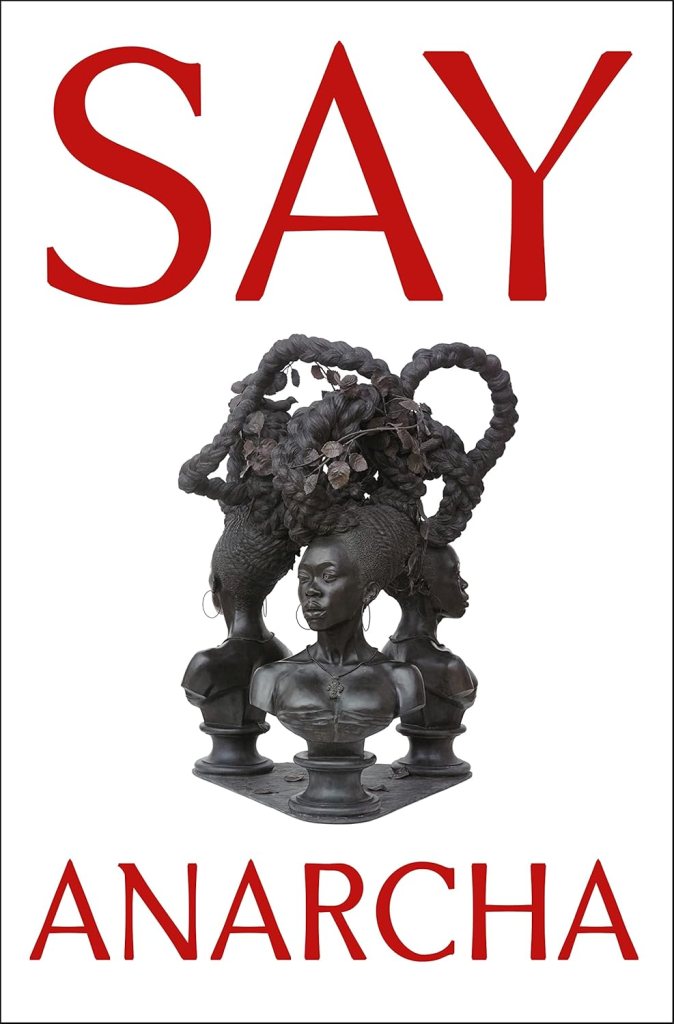
Has this ever happened to you? You’re in a library or book store, minding your own business, when a ray of light blinds you, stopping you in your tracks. You think, “Is this aliens? Is this the rapture? What is going on?” You catch your breath and realize it’s just the gleam of one of those shiny emblems that says, “Booker Prize.” You pick up the book and even more questions flood your mind: “Who’s this Booker fella and what right does he have to tell me what to read?!” I’ve been there, I get it. But there’s no need to dismay. Once you make sense of book awards, they can be helpful tools in the eternal search for your next book.
Booker Prize
The Booker Prize (formerly the Man Booker Prize) is awarded to a book written in English and published in the United Kingdom or Ireland. A panel of five, made up of “creative peers,” choose the winning book. The award skews towards British and Irish authors, but winners hail from around the world, like Sri Lankan author Shehan Karunatilaka or Jamaican author Marlon James. These books land on the literary side side of things, and some recent winners include George Saunders’ Lincoln in the Bardo, Margaret Atwood’s The Testaments, and Bernadine Evaristo’s Girl, Woman, Other.
The International Booker Prize is also worth noting. These books are translated into English and must be published in the UK or Ireland. The Vegetarianby Han Kang, Flightsby Olga Tokarczuk, and Time Shelterby Georgi Gospodinov won in 2016, 2018, and 2023 respectively.
Nebula and Hugo Awards
The Nebula and Hugo Awards are the two big names associated with science fiction and fantasy (SF/F) literature. The biggest difference between these awards is the voting body. To vote on the Nebula, you need to belong to the Science Fiction and Fantasy Writers Association. Essentially, you need to be a SF/F writer yourself. For the Hugo Award, all you need is a membership to the World Science Fiction Convention, which costs $50. Despite this difference, it’s not uncommon for a single title to win both awards. Some recent examples of this feat are Network Effectby Martha Wells, The Stone Skyby N. K. Jemisin, and This is How You Lose the Time Warby Amal El-Mohtar and Max Gladstone.
Edgar Award
The Edgar Award is named after (who else but) Edgar Allen Poe to honor the best of the mystery genre, and chosen by the Mystery Writers of America. In the past, some familiar names have won: Stephen King for Mr. Mercedesand Noah Hawley (writer of the Fargo television series) for Before the Fall. But overall, The Edgar Award stands out to me because the winning books tend to be less well known; it’s a good way to find underappreciated gems. Some recent winners include Notes on an Executionby Danya Kukafka, Djinn Patrol on the Purple Line by Deepa Anappara, and The Stranger Diariesby Elly Griffiths.
National Book Award and Pulitzer Prize
The National Book Award (courtesy of the National Book Foundation) and the Pulitzer Prize for Fiction (courtesy of Columbia University) are both meant for American authors. The Pulitzer Prize is awarded to novels that “deal with American life” and tend to be fairly popular, often getting the television or movie treatment in the years after its win. The National Book Award has more lofty goals, and is designed to “ensure that books have a prominent place in our culture.” These winners don’t generate as much buzz, but they’re just as profound and moving.
The Nobel Prize in Literature is voted for by the Swedish Academy and stands out in a couple ways: Authors from any country are eligible for the award, and awards are based on an author’s body of work as a whole. This means that the winning author can put the “Winner of the Nobel Prize in Literature” stamp on any book in their back catalogue and any future book they write. Sounds like a good deal to me! Past winners include Kazuo Ishiguro, Alice Munro, and Toni Morrison.
Women’s Prize for Fiction
The last award I’ll touch upon is the Women’s Prize for Fiction which is voted on by a panel of five notable women. This award, along with the Booker Prize and the now defunct Costa Book Awards, at one point made up the “trinity” of UK’s literary prizes. Recent winners include Piranesiby Susanna Clarke, Hamnetby Maggie O’Farrell, and An American Marriageby Tayari Jones.
It can also be interesting to look at the notable awards of non-English speaking countries. Winners usually have an English translation available, and their relative obscurity makes it feel like you’ve uncovered some esoteric text. Compassby Mathias Énard was a great find of mine that won the French Prix Goncourt Award in 2015.
At the end of the day, it’s important to remember that these awards are all made up. They were all chosen by people, and people have their own tastes, their own mercurial and indecipherable preferences. There is no trait–not intelligence, success, nor clout–that makes one person a better “book judge” than another. If you find an award that speaks to you, great! But otherwise, take them all with a grain of salt and keep in mind the only book award that truly matters: The (insert your name here) Award.
P.S. If you really want to dive into the dramatic side of the book award world, there is always heated discussion about each year’s Booker Prize shortlist. This year, the six shortlisted books will be announced on September 23rd, and the more bookish parts of the internet will be a-buzz, defending their favorites and attacking the books they deem unworthy. It’s a bit messy, but good fun.