Teen Book Reviews: Anna and the French Kiss & Twelve Steps to Normal

Teens: did you know that you can earn community service credit for writing a book review and submitting it to us? Today, we’ll hear from two teens who did just that. Find out more about how to earn community service hours from home at cheshirelibrary.org/teens/.

Anna and the French Kiss by Stephanie Perkins. Reviewed by Lily S.

Anna and the French Kiss by Stephanie Perkins is a Young Adult contemporary romance. It takes place in a prestigious boarding school in Paris, France called the School of America in Paris, A.K.A. SOAP. Anna, the main character, was forced into entering the school by her father, although she’d rather stay in Atlanta with her friends, and soon-to-be boyfriend, Toph. When she arrives, she feels a bit homesick, but soon meets a great friend group. In her friend group are St. Clair, Meredith, Josh, and Ramishi. St. Clair catches Anna’s attention, a result of his great personality, looks, and charming English accent, but Anna has to suppress her feelings for St.Clair because he has a girlfriend. On top of this, Anna struggles to actually speak French. St.Clair frequently asked to show Anna Paris, and Anna finally relented. They begin to get along and get closer and closer.


To start, Stephanie Perkins has a very great way of writing. Her writing was made for a very fun read, all while really toying with my emotions. This story was not just a simple frivolous romance novel, but it also dealt with serious issues that really make you feel for the characters and you find your subconsciously feeling so many emotions for them. Perkins’ writing made me feel so connected to each character. She also nailed it when it came to describing Paris. I’ve always wanted to go to Paris, and this book made me feel like I was there. It was honestly a form of escapism for me. I felt as though I was there with Anna and St. Clair, walking around Paris, seeing vintage movies, and eating delicious food. I fell in love with Paris and it is now my dream place to visit. I especially loved the characters in this book because they each had such powerful personalities and said words that really stuck with me. Because they were so real and had real problems, I felt like I could really relate to them which contributed to the connection I felt with each character. I especially felt this with St.Clair because he was so genuine and he had a fun personality, but also said heart-warming words that had me feeling so many emotions. I felt so bad for him while he experienced family- problems. I found myself worrying about him in a really deep way. I also really loved Anna. She was so relatable and honest. Anna was such a great person and friend, so much that she makes decisions while taking into consideration how her friends will benefit. She was overall such a good narrator. It was so cute how she loved movies and reviewed them.

The next aspect of this book that really stuck with me was Anna and St.Clair’s relationship. It was so pure and innocent and then quickly escalated to a very romantic relationship. I loved how St.Clair convinced Anna to leave her room and show her Paris. I absolutely loved how they helped each other feel better and overall made each other better people. It was so sweet how they were best friends and in love. There was a lot of slow burn in the book, which was nice, but it got slightly annoying that they kept hiding their feelings. But when they admitted the love, it was so nice because of all the tension that was previously there. I think Perkins wrote their story so well and really included the very real long hill of falling in love. The other characters, Ramishi, Josh, and Merideth were written equally as well. I didn’t really like Ramishi though. I loved Josh and how he was a very talented artist. I hated Meredith at first, and how she “claimed” St. Clair, but I ended up feeling bad for her.


Overall, the story was very beautiful. Reading about Anna and St.Clair’s friendship and how it escalates made for such a great read. Anna and The French Kiss is definitely one of the best contemporary romance books I read. It had such a beautiful setting, excellent storyline, and simply had everything and more of what the perfect romance book should have.

5 stars.

Twelve Steps to Normal by Farrah Penn. Reviewed by Sarah F.

The main character Kira, had her whole life ripped away because of her dad’s alcoholism. She had to move away from her boyfriend, friends, her home, and basically everything she knew. After almost a year of being away, her father is sober and she’s moving back home. Kira is determined to fix her lost friendships and forgive her father or in her case, go back to her “normal life”. However, that is all ruined when Kira returns home to find three recoveries that her father brought home from rehab. Now another thing on her list is to get rid of them.

Without spoiling I would like to say most characters are very likable except Whitney and Jay, what they did is unforgivable in my opinion and how come Whitney is avoiding Kira and not the other way around? Some things Kira did were extremely confusing to me at least since I didn’t grow up in a household of recovery from substance abuse but, knowing her father’s past I don’t understand why she did what she did (page 342 if you want to know what I’m talking about). Kira can also be a huge brat sometimes but she isn’t too bad. I understand her temper for things and I think she blames a lot of her own issues on her father. I did enjoy the small romance between Kira and Alex I feel it lightened the mood of Kira in the book, I think Alex also really helped her accept and change the way she sees things. Nobody is perfect and I think the author purposely made Kira this way not to show that she’s a brat but, to show that nobody is perfect and feeling that way (how Kira feels) is normal.

The story was pretty good however the ending felt extremely rushed. Everything happened too quickly, there were like 5 things happening at once. Overall this book is decent, I wouldn’t say it’s the best thing I’ve ever read but it’s pretty good. I would recommend this book to those with similar experiences or as a light read(I am a relatively quick reader though).

4 stars.

What’s Happening at Cheshire Library in May

May we interest you in a program or two this month? Tons of programs are on the May calendar for kids, teens, and adults, here’s a sampling:

The Art of the Scandal: Thefts, Vandals and Forgeries

Monday, May 2, 2022, 7:00 – 8:15pm

This ONLINE program explores some of the most brazen criminal acts in the art world and features works by artists including da Vinci, Michelangelo and Rembrandt. Learn more about works that were targeted and how they were recovered and restored for our enjoyment today. Presented by Jane Oneail of Culturally Curious. Registration is required.

Bitcoin and Other Market Trends

Tuesday, May 3, 2022, 6:30 – 8:00pm

Have you been scratching your head about Bitcoin? What is it? How does it work? Join us for an interesting evening and we will explore cryptocurrency and other trends in the marketplace. Bring your questions! Presented by Tim Baker, CFA, Founder & CEO of Metric Financial, LLC. Registration is required.

Food Explorers – cooking for kids

Wednesdays from 4:00-5:00pm

Kids will create their own delicious after school snack each week, while learning all about food and nutrition with a Registered Dietitian. Recipes may contain gluten, dairy, and/or eggs. For children in grades 2-6. Please register for each event in the series.

Open Art Studio

Fridays from 1-3pm, May 6, 13, 20, 27

Bring your works in progress and supplies to this weekly drop-in art program. This is an opportunity to create in a collaborative environment with other artists. No formal instruction will be provided, but informal critiquing for those who want it is encouraged. Table covers will be provided. There is a sink in the room for basic cleanup (please do not bring turpentine). Registration is required for each session.

Cat Tales Writers Group

Thursday, May 12, 2022, 6:30 – 8:00pm

Join us for a monthly open writing group that can help answer your questions on writing, editing, grammar, and publishing. Read a selection of your work to the group for general constructive feedback, or discuss a book you’ve read that might help someone else. Registration is required.

West Main Music Academy’s Spring Showcase

Saturday, May 14, 2022, 10:00am – 4:00pm

Join us to enjoy performances from the West Main Music Academy’s talented and hard-working students, on such instruments as guitar, piano, violin, viola, ukulele, drums, vocal performances, and more. These music students and their teachers have put a tremendous amount of dedication, practice, and passion into honing their skills. Please join us to enjoy their performances and celebrate their accomplishments!

Creating a Compelling College Application

Tuesday, May 17, 2022, 7:00 – 8:00pm

This virtual program will cover the college application process including current admissions trends, writing the personal statement essay and supplemental essays, teacher recommendations and how students can position themselves to increase their chances for admission. Registration is required for this online program, participants will receive a Zoom meeting link 1 hour prior to the event start time.

Loft Knitters

Wednesday, May 18, 2022, 6:30 – 8:00pm

Our monthly knitting group. Come socialize, learn, share your techniques with other knitters.  All levels of adult knitters’ welcome, please bring your own yarn and knitting needles. Registration is required.

Teen Advisory Board (Grades 6-12)

Thursday, May 19, 2022, 4:00 – 4:45pm

Teens – share your ideas and thoughts about upcoming programs, materials, and general improvements to help make the Cheshire Library an even better place for you and your friends. You will earn 1 hour of community service credit for attending. If you want to make a difference in the library and your community, then TAB is for you! Registration is required for this in-person program – click here to see the latest mask policies in town buildings.

Housing Choice for the Whole Life Cycle: Opportunities and Benefits

Thursday, May 19, 2022, 7:00 – 8:00pm

Come listen to experts Dwight Merriam (Fellow and Past President of the American Instituted of Certified Planners) and Sean Ghio (Policy Director of Partnership for Strong Communities) and join in this discussion of housing and one potential solution to our housing shortage and cost crisis – accessory dwelling units (ADUs.) Registration is required.

Saturday Storytime

Saturday, May 21, 2022, 9:30 – 10:00am

An interactive storytime for children to learn through talking, singing, reading, writing,and playing!

Registration is required: Cheshire Residents: Cheshire residents will be allowed to register starting on May 7. Non-Residents: Non-residents may register starting on May 14.

Medicinal Herb Gardening

Monday, May 23, 2022, 6:30 – 7:30pm

Imagine growing your own medicinal herbs for your own herbal remedies! “. . . but where do I begin? How do I even start growing a medicinal herb garden?” This ONLINE program is presented by the mother/daughter team “The Grounded Goodwife, who will teach you 11 of their favorites that are all easy to grow, do well in virtually every climate, and have a variety of medicinal benefits. Registration is required.

FEA Storytime

Tuesday, May 24, 2022, 3:45 – 4:45pm

Join the Future Educators of America from Dodd Middle School for a special read aloud and crafts in commemoration of Memorial Day. The Future Educators of America is an organization that offers opportunities for young teens in exploring careers in education. For children in grades K-2. Please register to make sure we have enough supplies for everyone.

MAY BOOK CLUBS:

Many Stories Book Club: The Leavers

Monday, May 16, 7:00 – 8:00pm

Murder by the Book Mystery Book Club: The Stranger Diaries

Thursday, May 19, 2:00 – 3:30pm

Art League Book Club: Exploring Auguste Rodin and Camille Claudel

Friday, May 20, 11:00am – 12:30pm

Natural Selections Book Club: Finding the Mother Tree

Saturday, May 21, 2:30 – 3:30pm

Books Over Coffee: America for Beginners

Wednesday, May 25, 12:00 – 1:30pm

The Scandalous World of Art

Edvard Munch, The Scream

 On May 1, CPL is hosting a program on The Art of the Scandal: Thefts, Vandals and Forgeries.

 Well, that’s nice, you say, but art doesn’t interest me.

Are you sure about that? Everyone loves a good mystery, and high art is probably the most mystery-filled subject there is. Anything with that much crime circling around it means there is a bank vault of money involved. 

There are many sides to fine art – the talent side (no one disputes a da Vinci, but you can start a fight over Pollock), the artsy side (the use of light and dark in paintings creates mood and movement that symbolizes man’s desire to control the universe: discuss), the history side (Phoenician art of the 18th century BCE shows a developing amalgamation of influence of the entire Mesopotamian region), and the rarity side (there are more Roman statues than there are da Vincis). We can discuss the purpose of art, of man’s desire to create, of the abstractness of art that leads back to man as the only animal who creates art for art’s sake, despite our knowledge that apes will draw and paint for pleasure, and that elephants, dolphins, and rabbits can be taught to paint as a behavior. It often boils down to one thing: 

Money.

The price of fine art (paintings and drawings, as opposed to jewelry work, sculpture, enamelwork, etc) has a few things going for it. First is rarity – many of the greatest paintings are hundreds of years old. They are one-of-a-kinds, and not a lot of them have survived. There are only 15 authenticated da Vincis known – as opposed to 400 Rembrandts. A second consideration is fragility – light, moisture, and age can cause ancient paintings to crack, flake, and fade (Van Gogh liked using red lake pigments, which fade rather quickly). The Mona Lisa is not painted on canvas, but an old board. A third thing is authenticity, and here is where the art world goes to pieces.

Salvator Mundi, by da Vinci

Because of the money involved in fine art (Da Vinci’s Salvator Mundi sold for $450 million dollars), as in too many movies, everyone is out to steal or fake originals. Forgery rings have been around for hundreds of years – one of the biggest was by Han Van Meegeren in the late 1930’s, a talented artist who sold more than $30 million in fake Vermeers to the Nazis. In 2004,  Xiao Yuan, the Chief Librarian at an academy of fine arts, stole more than 140 paintings in his care by carefully replacing them with his own copies – only to find some of HIS copies stolen and replaced with less-skilled replacements. Forgeries (actually, they’re called counterfeits, since legally only documents can be forged) are so rampant (about 50% of the market), Sotheby’s bought their own forensics lab to weed out fakes

Modern fakes are often easy enough to spot – today’s paints and canvases and even brushes aren’t the same as the 1500’s, and simple chemistry will find them. But what if the work copied is of modern origin – say, a Picasso, or a Warhol? Because of the modernity of materials, it is incredibly difficult to prove authenticity. 

Conan the Barbarian, by Boris Vallejo

Questions still arise, though, as to what constitutes an authentic work of art. That 450 million dollar da Vinci has had so much restoration that there is more paint by restorers than by da Vinci, so is it still genuine? If a student of an artist (Rembrandt, Renoir, Reubens, etc) is so talented that a professional art historian/critic cannot tell the difference, how are you defining fine art and value? Where does the value lie – in the skill, the history, the age, or the subject matter? Why do we so value Edvard Munch’s The Scream (of which four originals exist, two of which were stolen), yet not value Boris Vallejo?

Art, by its very interpretational nature, is a scandal.

Art of the Scandal is an on-line program sure to peak your interest. You can sign up for the attendance link here.

New to Graphic Novels and wondering where to start? Here are 10 to try!

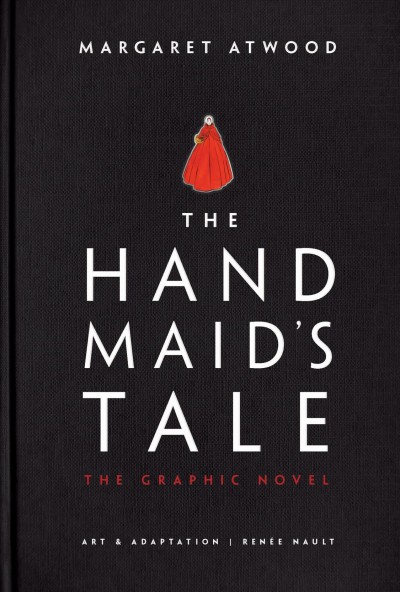
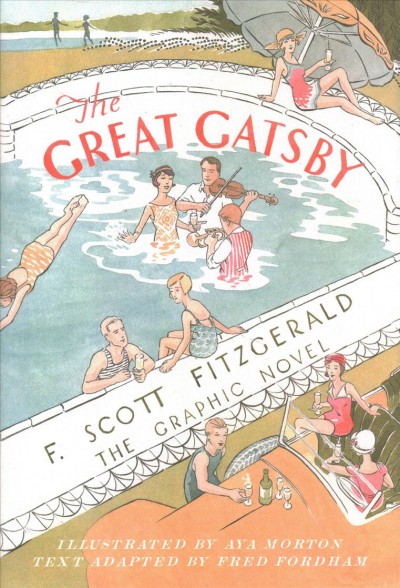
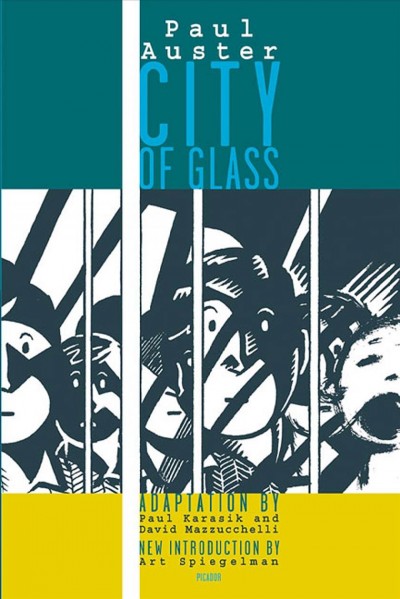
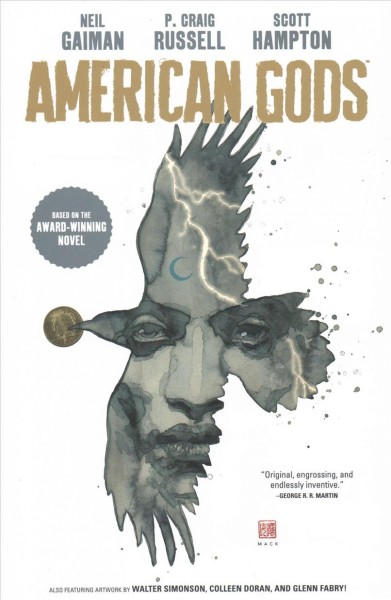
Comics and graphic novels (long-form comics) aren’t just about superheroes, and they aren’t just for teenagers. They are published in as many genres as traditional print books – you’ll find humor, horror, science fiction, history, classics, and memoirs, to name but a few. With so many movies and television shows using graphic novels as their source material, you may be curious about graphic novels, but unsure about where to start when it comes to reading them. It can be intimidating, so here’s a list of 10 terrific graphic novels for adults, a good way to get your feet wet!

The March series by John Lewis, Andrew Aydin, and Nate Powell. This 3-part series is the first-hand account of the late Congressman John Lewis’s lifelong struggle for civil and human rights. It spans his youth in rural Alabama, his life-changing meeting with Martin Luther King, Jr., and the 1963 March on Washington.

Y, the Last Man by Brian K. Vaughan and Pia Guerra. The saga of Yorick Brown—the only human survivor of a planet-wide plague that instantly kills every mammal possessing a Y chromosome. Accompanied by his pet monkey, a mysterious government agent, and a brilliant young geneticist, Yorick travels the world in search of his lost love and the answer to why he’s the last man on earth.

My Favorite Thing is Monsters by Emil Ferris. Told in the form of a ten-year-old’s diary entries in the 1960s, this gripping story has a B-horror-movie feel to it. Karen tries to solve the murder of her upstairs neighbor, a survivor of the holocaust, while the interconnected stories of those around her unfold.

Fun Home: A Family Tragicomic by Alison Bechdel. An unusual memoir done in the form of a graphic novel by a cult favorite comic artist offers a darkly funny family portrait that details her relationship with her father, a historic preservation expert dedicated to restoring the family’s Victorian home, funeral home director, high-school English teacher, and closeted homosexual.

The Sandman series by Neil Gaiman. A rich blend of modern myth and dark fantasy, The Sandman follows the people and places affected by Morpheus, the Dream King, as he mends the cosmic — and human — mistakes he’s made during his vast existence. The Sandman was one of the first few graphic novels ever to be on The New York Times Best Seller list (along with Maus, Watchmen and The Dark Knight Returns).

Kindred : a graphic novel adaptation  by Damian Duffy and John Jennings. This searing graphic-novel adaptation of Octavia E. Butler’s science fiction classic is a powerfully moving, unflinching look at the violent, disturbing effects of slavery on the people it chained together, both black and white – and made kindred in the deepest sense of the word. 

Alice’s Story : based on the novel The Magicians by Lev Grossman ; by Lilah Sturges and Pius Bak. An all new chapter set in the world of The Magicians trilogy of novels by Lev Grossman that retells the events of the first novel through fan-favorite character Alice Quinn.

The Fade Out by Ed Brubaker and Sean Phillips. An epic graphic novel of Hollywood in the early days of the Blacklist. The story goes from the murder of an up-and-coming starlet from studio backlots to the gutters of downtown Los Angeles. Contains behind-the-scenes art and stories, sketches and layouts, and several historical essays.

Here by Richard McGuire. This innovative graphic novel presents the story of a corner of a room and of the events that have occurred in that space over the course of hundreds of thousands of years. The book experiments with formal properties of comics, moving forward and backward in time, using multiple panels to convey the different moments in time.

Solutions and Other Problems by Allie Brosh. A collection of comedic, autobiographical and deceptively illustrated essays on topics ranging from childhood and very bad pets to grief, loneliness and powerlessness in modern life.

Book Review: Cuba: An American History by Ada Ferrer

Sandy, our Head of Technical Services, shares this review of a recent read.

I love history. I studied it in college and in graduate school. It is the only thing I read, along with the occasional dark Scandinavian mystery.  That said, I have avoided reading any histories of Cuba. As the child of Cuban immigrants, the subject has always been too personal for me and I relied instead on the history given to me by my parents and grandparents. It was biased and it was raw and until recently, it was all that I had. I reluctantly decided to pick up Ada Ferrer’s book Cuba: An American History at the beginning of the year to see if I could rectify those gaps in my knowledge.

Ferrer was born in Cuba in June of 1962 and left the island as a baby with her mother, 10 months later. The prologue felt familiar to me. She talks about families left behind, meeting new family in “exilío” (exile), the pervasive feelings of loss, and the stories told by family members.  Stories about Cuba before the revolution, speculation about family and friends who stayed, and stories about an end to the Castro regime. She starts the history of the island in the 15th century with Columbus’ “discovery” of the region. Her discussion of this early period is thorough, outlining why Cuba became such a crucial part of trade in the region. She dives deeply into Cuba’s relationship with Spain as one of its most valuable colonies as well as Cuba’s early relationship with the United States. I think one of the most interesting things in how Ferrer tackles the history of Cuba in her work is that she puts it in the context of its relationship to the United States. The two nations have always been tightly bound to one another from their very early days, be it through trade, war, investments, and amendments that gave the US the power to intervene in the island.

Her discussion of the tumultuous period after the Cuban War of Independence in 1898 illustrates both how the US was able to further consolidate power in the island as well as how the stage was ultimately set for the revolution of 1959 and Fidel Castro’s rise to power. She takes the reader through Cuba’s resistance to the US via the Bay of Pigs invasion and the Cuban Missile Crisis, the relationship between the island and the Soviet Union in the 70s, and the fall of the Soviet Union and Cuba’s subsequent special period in the 90s; a time marked by extreme austerity measures and the mass exodus of citizens to the United States.  She talks about the hope the Cuban population felt with the thawing of relations under Barack Obama’s presidency and the despair brought on by the renewed efforts by the US government to tighten travel restrictions and the sending of remittances in 2016. The book ends in 2020 with a discussion of the effects of Covid-19 and the growing protest movements in the summer of that year.

The book is beautifully written.  Perhaps because she has spent so much of her life researching and working on this project or maybe because she is the child of Cuban immigrants, Ferrer is able to capture the essence of the Cuban people, their humor, and their ability to adapt and persevere both on and off the island. I think one of the things I appreciate most about the book is the way in which she chose to tell the history. She sums it up best when she writes, “as we ponder the sweep of centuries, it is important to pause at those lives, not just to invoke them, but to endeavor to grasp history through their eyes… It is an impossible endeavor in many ways… but the attempt itself is essential.” This book felt personal to me because of my relationship to my family and the island more broadly but I think that Ferrer’s approach to history will allow any reader without any personal stake to feel for the place as well as the people, both those that left and those that stayed behind.