Looking Back…Moving Forward

by Beth Crowley, Library Director

If you have lived through a number of decades as I have you can respond to the perennial question “Where were you when (insert significant event) happened?” For me it has been the Space Shuttle Challenger explosion, 9/11, and the Sandy Hook school shooting. We note these tragedies over other moments not just because they were horrible but because their impact left clear boundary marks dividing time into “before” and “after” the event. Often the “after” time has resulted in a reduction of our sense of peace, security and belief that life is good and things will go as planned. Two years ago this month, on March 13, 2020, I experienced another of these defining moments when we shut the Library doors to the public due to the Covid-19 pandemic.

We found out on March 13 that we would be closing that same day.

Covid-19 didn’t strike in a single, sudden devastating event like the others I have mentioned but it clearly left a divider between pre- and post-pandemic life. Earlier in the week of March 13, 2020, I along with my fellow Town department heads attended a meeting with the Chesprocott Health Director, Maura Esposito and her staff. There we asked questions about precautions we should take to mitigate the spread of the virus among our employees and residents. I asked if the Library should put away the toys and craft materials in the Children’s Room. I was told there was no need and that the goal was to keep things as normal as possible for our patrons. By the end of the week, the Cheshire Public Schools sent all students home early and I got the call from the Town Manager to close the Library. Despite the sudden change in tone and urgency, we looked at the closing as a temporary measure perhaps lasting two weeks at most. None of us could have predicted the path we were about to take or where it would lead. Face masks, plexiglass barriers, social distancing, hand sanitizing stations, virtual programs, and mass vaccine clinics were still only shadows of things yet to be.

Leading an organization during the pandemic has been the biggest challenge of my 24 year career. Before Covid-19, I would try to calm stressed nerves by reminding staff that while library services are important to our customers nothing we did was in the “life or death” category. Now I was faced with making policy and procedural decisions that if wrong could result in serious illness or worse. For library employees, whose entire profession is based on access to accurate and trust-worthy information, the constantly changing messages and lack of clear guidance from national health and government leaders was frustrating. As library directors often do when struggling to solve a problem, I turned to my colleagues to compare notes. However, it soon became clear that based on varying rates of infection in different towns, conflicting guidance from health districts and that library buildings come in a wide variety of shapes and sizes it made sense to focus on what would work best for the Cheshire Public Library. I reached out again to Maura Esposito. She patiently walked me through every step I needed to consider and gave excellent and sound advice. Her guidance cut through the national noise allowing me to narrow my focus and plan for the immediate safety concerns with an eye to the future.

Providing library services during the pandemic was challenging but there were silver linings. Despite the disruption to my employee’s daily lives and work place, I soon discovered how resilient and innovative they could be. Faced with a closed library and working remotely, I was amazed at how my librarians quickly planned and delivered programs virtually. Until Covid-19, I thought Zoom was a TV program I watched as a kid! Our library clerks assisted with calling hundreds of Cheshire senior citizens to check on them and refer them for help if needed. To provide reading and entertainment materials for residents during the lockdown, we reallocated funds meant for buying physical items and added more digital content that users could freely access through our website. A number of patrons have told me this was the first time they tried our eBook collection and they were surprised by how much they enjoyed it. Since 2019, use of these resources has increased by 42%.

When we returned to a still closed building, staff coordinated and launched our first ever curbside “Grab and Go” service. At the program’s height we were filling an average of 60 bags with library materials every day! In order to help library users discover new materials while we were closed and browsing was impossible, we launched our Matchbook reader’s advisory program. We created an online form where patrons could tell us their reading interests and librarians would “match” them with books they may enjoy. The feedback from this program was so positive we have continued it and plan to keep it in place post-pandemic.

Now, almost two years to the day we shut down, we are finally able to relax most of our safety protocols and hopefully begin a permanent return to pre-pandemic times. But as with other life changing events, we can never truly go back to how life was before Covid-19 struck. For one the immense loss of life, at one point the equivalent of a 9/11 tragedy every day, has forever changed the lives of thousands of families. For students who graduated and began college during the pandemic, their experience of these milestone events was far from typical. How long will it be before we truly feel comfortable standing close to a stranger or giving a friend a hug?

Despite the difficulties and tragedies of the past two years, we must go forward. This month at the Library masks are now optional, we are resuming in-person programing including children’s storytimes, we’ve added back more public computers, increased capacities of our study rooms and reopened our Teen Space featuring new furniture purchased with American Rescue Plan grant funds.

No matter what life-changing events occur, the one thing I know about the role of the public library in a community is we can help our residents recover from hard times. Providing a peaceful place to read, work or relax can be a salve in scary times. Books, music and movies can be a welcome escape from the more difficult news we are bombarded with. Connecting with others to learn or discover through a program is an uplifting and renewing experience that can help buoy us after a hard day. It has been my honor to work with the amazing staff at the Cheshire Public Library during this challenging time as we tried to support and meet the needs of our residents. Since reopening our doors to the public in September of 2020 we are almost back to our pre-pandemic borrowing numbers and our library visits are continuing to increase. We hope with the return of more of our regular services and the addition of some exciting new ones (stayed tuned!) that we will be welcoming even more library users of all ages and we particularly look forward to seeing everyone’s smiles!

Teen Book Reviews: Anger is a Gift and The Hate U Give

Teens: did you know that you can earn community service credit for writing a book review and submitting it to us? Today, we’ll hear from a teen who did just that. Find out more about how to earn community service hours from home at cheshirelibrary.org/teens/.

Anger is a Gift by Mark Oshiro, reviewed by Ali A.

Anger Is a Gift is about the life of Moss Jeffries, a black teen living in Oakland. When Moss was 10, his father was shot down by police officers because the police told him to put his hands up but he had earbuds in and couldn’t hear them. Since then, Moss and his mother have been quiet and haven’t attended protests for other black people dying due to police brutality. However in Moss’s sophmore year his school turns into a prison. Police officers roam the hallways and make random locker inspections for no reason. Although Moss and his classmates don’t like it, they still tolerate it.

One day the police order one of Moss’s friends, Shawna Meyers to come for a locker inspection. The officer ravenously searches through her locker until he finds a large bag of white pills in the back. The officer violently assaulted her so bad that she couldn’t explain why she had the pills in her locker. Finally after she could speak she said the bag was for her prescription medicine. The officer who assaulted her didn’t get in trouble though. Soon after that incident, the school added in metal detectors. Moss’s friend Reg is in crutches and says it’s too dangerous for him to go through the machine. He said he’d rather have a pat-down but when Reg told the officer this the officer picked up Reg and threw him through the detectors. The damage on Reg’s leg was so bad that he was told by doctors he might never be able to walk normally again.

After all this, Moss and his classmates feel like this is enough. They decide to make a peaceful walk-out protest where all students walk out of the school at a specific time. However the school is notified about this mini-protest so they order officers in full riot gear to prevent the students from walking out of the school. The officers used tear gas, portable grenades, and batons. One of the officers, James Daley, pulled out a gun and shoots at Moss’s best friend Javier. James Daley then runs off and hides from society. Moss is depressed and decides to chain himself to a pole until James Daley is persecuted. What happens next is beyond Moss’s imagination. Anger Is a Gift shows the cruel reality and harshness that black people have to face in their daily lives. If you enjoy this book, you should also check out The Hate U Give by Angie Thomas (reviewed below).

4 Stars.

The Hate U Give by Angie Thomas, reviewed by Ali A.

The Hate U Give is perhaps the best book regarding racism for teenagers. The story revolves around the life of Starr Carter, a sixteen-year-old who witnesses the death of her childhood best friend. Starr attends a predominantly white school to escape the threats of her black neighborhood. Because of this, Starr is always switching between her two worlds, the white world and the black world. In the white world, everything is peaceful and Starr can be happy and safe. However in the black world, Starr is constantly facing violence, gangbangers, and drugs.

Starr never gets high but finally attends her first party in her black neighborhood. At the party, Starr spots Khalil, her childhood best friend. Starr hadn’t seen him in six months but Khalil and Starr start chatting. However the party is cut short when a shootout occurs outside the party site. Khalil drives Starr home to be safe but as Khalil is driving home a racist white cop pulls them over. Starr is silent and looks down as the officer demands to see Khalil’s license, registration, and insurance just because Khalil is black. Instead of Khalil showing the officer his papers right away, he asks the officer why he pulled them over. The officer didn’t respond as the officer became more frustrated he shot Khalil for not listening. Khalil’s death becomes news across the country and the officer who shot Khalil is put under trial. Starr wants to get justice for her friend, but doesn’t know if she should raise her voice because of the danger and threats she may receive.

Angie Thomas did a marvelous job crafting this book because The Hate U Give shows readers how many black people get mistreated throughout America and why it is important to speak up for racial justice.

5 Stars

New Trends in Science Fiction

Say Science Fiction, and most readers will make a face as images of bad 50’s movies, computers and technobabble, and Star Wars arguments come to mind. “I don’t read Science Fiction,” but chances are, you do. Science Fiction simply means a story that more or less follows the laws of science as we know them, as opposed to fantasy, which drags in magic and elves and things that don’t normally exist on Earth. The material is as broad as anything else in fiction.

Science Fiction has come a long way since 1977, and is almost unrecognizable to the campy 50’s tin-can imagery. Like rock music, science fiction has a hundred sub-categories, and chances are you’ve read – and liked – at least one. Here are some of the newest trends you may not know about.

Soft Science Fiction:  “Soft SF” isn’t new, but the definition is newer. Soft SF doesn’t deal with “hard” techno stuff, but concentrates on people, societies, psychology, and intrigue.  Cloud Atlas, The Handmaid’s Tale, Flowers for Algernon, Yiddish Policemen’s Union, The Time Traveler’s Wife, and Alas, Babylon all fall under “Soft” SF. Half of Stephen King can be categorized here. You could make an argument for Jason Bourne, too.

Gender-Focused: These stories explore cultures and people who may have a single gender, multiple genders, or are genderless entirely. Check out Ancillary Justice by Ann Leckie, Seveneves by Neal Stephenson, Mask of Shadows by Linsey Miller, or the Grandmama of them all, The Left Hand of Darkness by Ursula K. LeGuin.

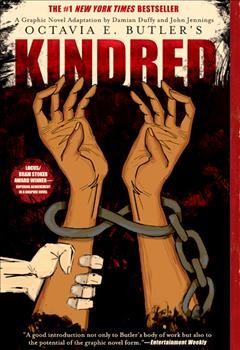
Afrofuturism: Representation of minorities is growing in SF, and with it new ways of seeing inclusion in the future. Check out top authors like N. K. Jemisin, Colson Whitehead, Nnedi Okorafor, P. Djeli Clark, and Octavia Butler.

International: There’s a huge influx of stories being translated from other countries. While America may be stuck on space opera and predictable heroes, other countries aren’t, and offer a refreshing break from the Same Old Thing. Try The Three-Body Problem by Liu Cixin, Master and the Margarita by Mikhail Bulgakov, The Witcher Series (yeah, the TV one) by Andrzej Sapkowski, The Lost Village by Camilla Sten, or Shadow of the Wind by Carlos Ruis Zafon.

Generation Ship fiction: No faster than light ships here, but pressure-cooker stories onboard ships making a long haul. Dangers take on a whole new meaning when you’re dependent on your ship for years on end. Check out Across the Universe by Beth Rivis, Rendezvous with Rama by Arthur C. Clarke, Aurora by Kim Stanley Robinson, or Ship of Fools by Richard Russo.

New Space Opera: Space opera traditionally involves weapons, danger, heroes, and rescued damsels (Star Wars being a perfect example, among many), but newer stories are throwing in more gritty realism. They’re a higher quality of writing, more scientifically plausible, and tend to address more social issues under the guise of “fiction.” Grown-up SF. Try the Leviathan Falls series by James Corey, Hail Mary by Andy Weir, the Thrawn series by Timothy Zahn, The Echo Wife by Sarah Gailey, or Winter’s Orbit, by Everina Maxwell.

Climate SF:  With the doomsday clock ticking down the moments to an expected 6th mass extinction, climate SF may be the most relevant wave of stories to hit shelves, and can fully include apocalyptic virus stories. Read them!  State of Fear by Michael Crichton, New York 2140 by Kim Stanley Robinson, The Overstory by Richard Powers, Oryx and Crake by Margaret Atwood, The Bone Clocks by David Mitchell, Flight Behavior by Barbara Kingsolver.

Science Fiction isn’t the same old trope you’re used to, but a growing, evolving body of literature with numerous authors, styles, and focus – and guaranteed there’s one right for you!

What’s Happening at Cheshire Library in March

We’re getting artsy and bookish this month with programs featuring art and artists, and SIX different book clubs!

Navigating College Admissions in 2022

Tuesday, March 1, 2022, 7:00 – 8:00pm

Learn how COVID-19 has changed the college admissions landscape and how it will affect Freshmen, Sophomores, and Juniors. This presentation is led by Ron Feuchs and Jackie Tepper, partners at Stand Out For College, LLC. Registration is required for this online program.

Cheshire Art League: Zbigniew Grzyb

Wednesday, March 2, 2022, 6:30 – 8:00pm

The Cheshire Art League is hosting artist Zbigniew Grzyb at their in-person March meeting. Zbigniew will demonstrate his approach to still life drawing, beginning with basics such as composition and structure and working to final stages including details and shading. Please register for this in-person program – click here to see the latest mask policies in town buildings.

Meditative Mondays

Mondays: March 7, 14, 21, 28, 2:00 – 3:00pm

Learn to master your thoughts, be in control of your mental & emotional well-being, and discover a world you never thought possible. Presenter Tia Mandrozos will explain the purpose of meditation and interact with the participants to provide the help needed in these online classes. Registration is required for this online program.

Frida Kahlo: Love, Pain, and Painting

Monday, March 7, 2022, 7:00 – 8:15pm

Frida Kahlo has become a household name in recent years, with movies, books and countless products dedicated to her art and likeness. This program will explore her life and her work, particularly as it relates to the trolley accident she survived as a teen and her passionate and often tumultuous marriage to fellow artist Diego Rivera. Registration is required for this online program.

Chess Club for Beginners (Grades 4-8)

Tuesdays: March 8, 15, 22, 29, 5:00 – 6:00pm

DIG USA Chess is partnering with the Cheshire Public Library to run this in-person beginner weekly chess program. The students will learn the basics and then gradually learn tactics and strategies. Registration is requiredfor this in-person program – click here to see the latest mask policies in town buildings.

Let’s Draw Cartoons! with Rick Stromoski (Grades 2-8)

Thursdays from 4:00 – 5:00pm

Award winning cartoonist and humorous illustrator, Rick Stromoski, will teach you how to create your own cartoon drawings during these online events! All you need is a stack of paper and something to draw with! Registration is required for these online programs.

Trivia Night

Thursday, March 10, 2022, 6:30 – 8:00pm

Come by yourself or bring your friends. Test your knowledge from general categories, including pop culture, current events, history, music, and of course literature! It’s all For Pride, Not Prize. Registration is required for this in-person program – click here to see the latest mask policies in town buildings.

The Queen of Beer: How Women Shaped Brewing’s History from Ancient Times to the Present

Monday, March 14, 2022, 7:00 – 8:15pm

From thousands of years ago until today, women have shaped the way beer is enjoyed and celebrated. Learn about ancient and medieval brewing practices and how women were (and still are) the queens of beer! Registration is required for this online program.

Cheshire Anime Club 

Wednesday, March 16, 2022, 3:00 – 4:30pm

Can’t get enough Anime and Manga? Be an “Otaku” and join the Cheshire Anime Club! We’ll meet monthly, read and talk about what’s hot in the world of Manga, and watch some of the latest Anime releases. For grades 7-12, no registration required. This month we plan to meet in person – click here to see the latest mask policies in town buildings.

Loft Knitters

Wednesday, February 16, 2022, 6:30 – 8:00pm

Come socialize, learn, share your techniques with other knitters.  Experience the relaxing and calming effect of knitting. All levels of adult knitters’ welcome. We hope to meet in-person, please bring your own yarn and knitting needles. Registration is required for this in-person program – click here to see the latest mask policies in town buildings.

Paint Party for Teens (Grades 5-12)

Wednesday, March 23, 2022, 3:30 – 5:00pm

Follow along with instructor, Pamela Halligan, of Pam’s Picassos as she walks you through creating your own masterpiece. Please bring your own smock or apron. The library will provide all other materials. Registration is required for this in-person program – click here to see the latest mask policies in town buildings.

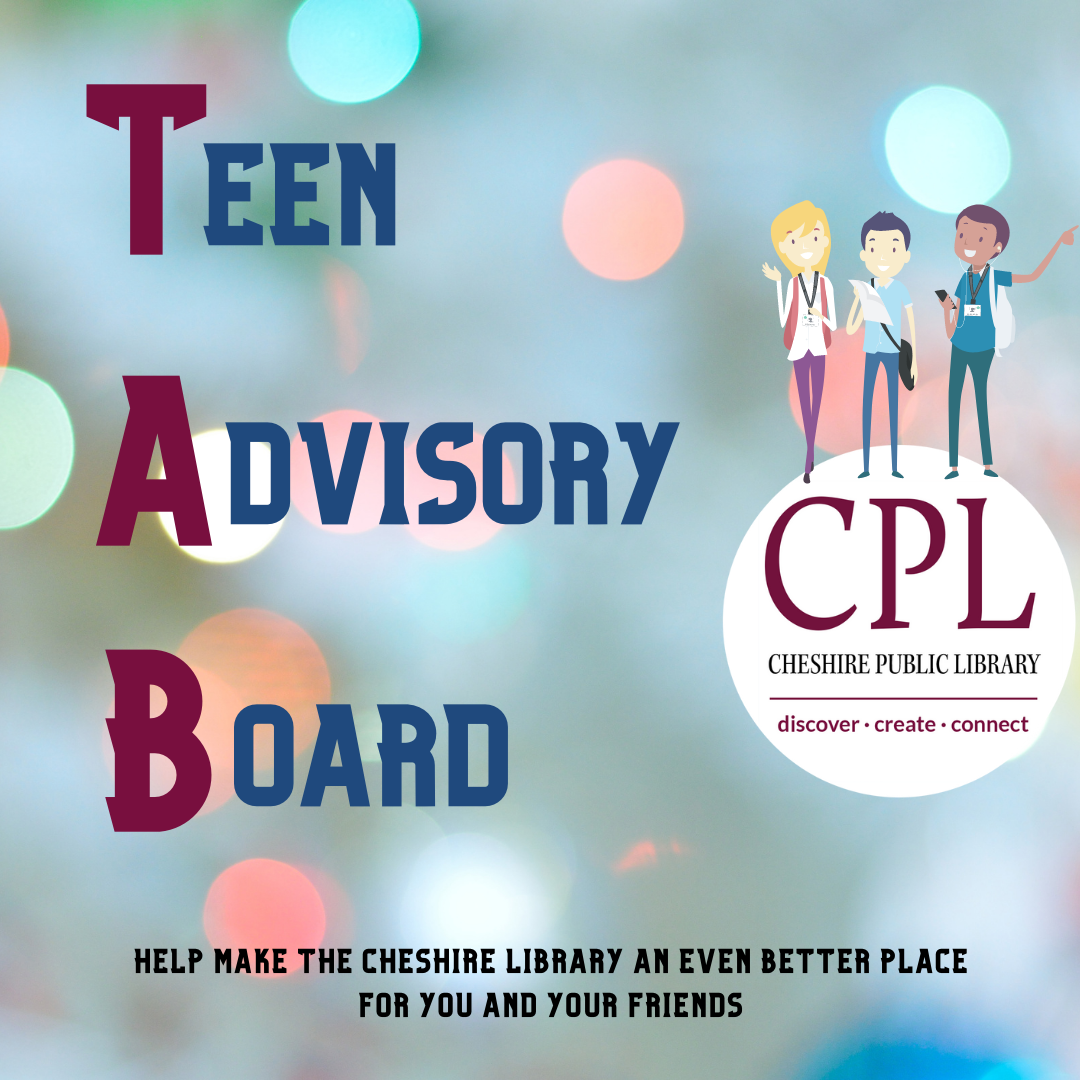
Teen Advisory Board (Grades 6-12)

Friday, March 25, 2022, 4:00 – 4:45pm

Teens – share your ideas and thoughts about upcoming programs, materials, and general improvements to help make the Cheshire Library an even better place for you and your friends. You will earn 1 hour of community service credit for attending. If you want to make a difference in the library and your community, then TAB is for you! Registration is required for this in-person program – click here to see the latest mask policies in town buildings.

BOOK CLUBS GALORE THIS MONTH AT CPL!

Murder by the Book Mystery Book Club: Night Over Water

Thursday, March 17, 2022, 2:00 – 3:30pm (online, registration required)

Art League Book Club: The Passion of Artemisia

Friday, March 18, 2022, 11:00am – 12:30pm (online, registration required)

Natural Selections Book Club: The Rise and Fall of the Dinosaurs

Saturday, March 19, 2022, 10:30 – 11:30am (in-person, registration required)

Many Stories Book Club: Americanah

Monday, March 21, 2022, 7:00 – 8:00pm (in-person, registration required)

Books Over Coffee Book Club: Interior Chinatown

Wednesday, March 30, 2022, 12:00 – 1:30pm (in-person, registration required)

Book Buzz Teen Book Club (Grades 6-12): Firekeeper’s Daughter

Wednesday, March 30, 2022, 3:30 – 4:30pm (in-person, registration required)

The Maus Trap

As long as there have been books, there has been controversy about books. There have been six major book-burnings in the US (yes, America) over Harry Potter, because some people believe a little too much in witches, though, personally, if I believed that strongly in witches, I might just not want to anger them.

But logic doesn’t exist in book burnings, or bannings.

In 1948, in Binghamton, New York , people went door to door gathering and burning comic books, to save youth from their moral depravity. It sparked a nationwide comic-book burning spree, including here in Connecticut.

This year’s book fiasco (and this happened on January 10), has been the McMinn County (Tennessee) School Board voting 10-0 to remove the graphic novel Maus from their curriculum, over the use of 8 curse words (the most objectioned being – forgive me if you will, God damn), and the depiction of a naked mouse in a bathtub, with a breast showing. A mouse-breast. 

Maus is not drawn as graphic realism; with its heavy line style, it could be cut and printed in woodblocks and look the same.

Maus, by Art Spiegelman, is the winner of a 1992 Pulitzer Prize, the only graphic novel ever to do so. In it (sometimes found in two volumes, sometimes as one combined), Spielman interviews his father, a Polish Jew, as to what it was like to survive the Concentration Camps – his father spent time in both Auschwitz and Dachau, and his mother in Auschwitz. Nazis are portrayed by cats, Jews by mice, Americans by dogs, French by frogs, British as fish, and Swedes as deer.  

Spiegelman has a lot of anger toward his father that comes out now and then in the story. His father was, understandably, damaged by the war and not necessarily an empathetic father. Spiegelman’s mother couldn’t rid herself of the experience, and committed suicide when he was 20 (the unfortunate mouse in the bathtub). It’s a true story, an honest story, and Spiegelman’s struggle to make sense of it and his place in the narrative is the struggle we all face trying to understand the Nazi rise to power and the unimaginable atrocities they carried out – atrocities so horrific, the experiences threw open the study of epigenetics on the belief that the DNA of survivors’ children had been altered by the experiences of the parents, though some studies are undecided.

Tennessee withdrew the book from the curriculum just three days before Holocaust remembrance day, citing moral issues that included violence and showing dead mouse children, language, and that naked mouse breast in one panel. 

Maus is now the top-selling book in America, thanks to Tennessee’s decision that thirteen year olds learning about the Holocaust in graphic form and seeing mild curse words in print might damage them. Good thing they never saw the photo novel my father, a historian, has of World War II, which is nothing but photographs of the war, including too many horrific images from the various camps, a book which has haunted me since childhood.

The internet, while not reliable for many things, had the best quote: If it was okay for 13 year old Anne Frank to live through it, why is it too disturbing for 13 year old Tennessee children to learn about it? 

There are many reasons some books may be objectionable, outside of really bad prose, and yes, it is not unreasonable that some books should have an age limit – after all, movies and video games do. I would not recommend reading “The Exorcist” to a ten year old, even a literate one. The thing to remember is that not everyone can agree on what or why something should be limited, or worse, banned. Always, always, read the banned book, find out what information someone is trying to suppress, why, and then talk about it. If you still find the material objectionable, that’s fine, but you don’t have the right to control its availability to others.

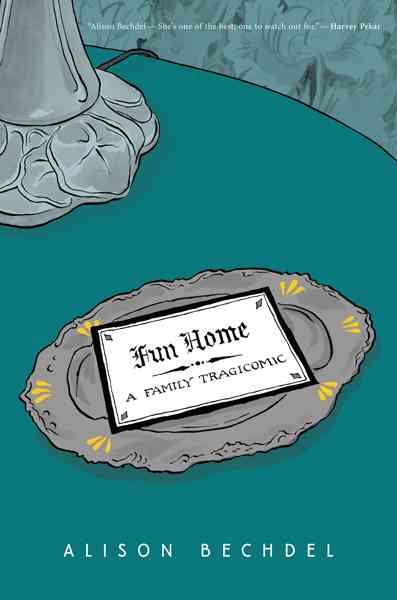
Decide for yourself. Maus is currently sold out on Amazon, but you can join the wait list for the library’s copy here. Meanwhile, check out these commonly banned books – most of which the rest of America considers classics (1984 by Orwell is the #1 banned book in America).