Jenn Reads: Fried Green Tomatoes At the Whistle Stop Cafe

You’re probably thinking to yourself, “Wow! This is an oldie!” And yes, I suppose

Fried Green Tomatoes At the Whistle Stop Cafe by Fannie Flagg

at this point, Fried Green Tomatoes At the Whistle Stop Cafe by Fannie Flagg could be considered a modern classic. This was a July pick for the girlfriend’s book club I run outside of the library.

Fried Green Tomatoes At the Whistle Stop Cafe tells the joint stories of Mrs. Threadgood and Evelyn in the 1980’s and Idgie and her friend Ruth starting in the 1920’s. There is a good deal of time jumping in this book, so pay close attention to who is telling what, when.

Evelyn is a middle-aged housewife who raised two grown children and waits on her working husband hand and foot. Every Sunday they take a visit to the nursing home to visit her husband’s mother. One Sunday she is sitting eating a candy bar (a common occurrence in this book) and an elderly lady sits down and starts talking to her. Mrs. Threadgood, a former resident of Whistle Stop, Alabama, tells Evelyn the story of her family and friends.

Idgie and Ruth open a diner called Fried Green Tomatoes, the only restaurant in the entire train town (population is less than 250) and are the care-takers of the homeless, the refugees, the workers, the despondent, and the African-American population. The “n” word does appear a lot in this book, just as a warning, but it is important to remember the time and place this storyline is set in. Ruth and Idgie are women ahead of their time, colorblind, independent, and accepting.

There are too many stories for me to list here, but you can expect murders, spousal abuse, racial issues, sexuality issues, the KKK, and much more. There were a couple of things that stood out to me however. First, it is never too late to change your life. Evelyn is deeply unhappy with her current state- she is unfulfilled in every aspect of her life. Through Mrs. Threadgood’s stories, companionship, and friendship, Evelyn learns she is not just a housewife, she’s a woman.

Second, the power of friendship. If you want to believe that Ruth and Idgie are just good friends (which they are not), you can see how important it is to have someone to have your back, stand up for you, support you, and be there when the going gets rough. Oftentimes family disappoints and abandons you, and friends become family.

If you read my posts, you know I listen to many books on audio. This book I actually read! I enjoyed it and thought it was an appropriate book not only for the time of year, but for our book club as well. Books that celebrate friendship and women are perfect picks for book clubs made up of girlfriends! I recommend reading this book and then watching the movie, which is pretty close to the book.

Rating: 3 out of 5 stars

See you in the stacks,

Jenn 🙂

Jenn Reads: “A” Is For Alibi

“A” Is For Alibi by Sue Grafton was the July pick for our mystery book club, chosen by one of our members.

Here is another “Jenn Reads” that is not a newer book! I’m a huge fan of book

“A” Is For Alibi by Sue Grafton

clubs picking books that are not necessarily new, something every other book club in the world is reading (Can I tell you how many times I’ve seen Gone Girl or The Guernsey Literary and Potato Peel Pie Societyhas been read by book clubs?), and perhaps a little off the beaten path.

Grafton’s W Is For Wasted comes out in September, so it was appropriate that our member chose this title. Grafton started this series more than 30 years ago and has been plugging away at the alphabet ever since. Wonder how relieved she’s going to feel when she finishes this series and can start another?!

“A” Is For Alibi starts with the main character, Kinsey Millhone stating that she murdered someone just days before. Well! How about that for a setup! Makes you curious to know whom she killed. Kinsey, a private investigator, has been hired by Nikki Fife to investigate the murder of her husband, which she has just spent eight years in prison for.

Laurence Fife was a divorce lawyer, excellent at his job, but a scoundrel, adulterer, and abusive man. So there are many who would have liked to do him in. The story twists when it comes out that his accountant, Libby Glass, was killed in the same manner he was. It was suspected the two were having an affair.

Kinsey sets off on an investigation that takes her to Las Vegas and Los Angeles. Most of the story takes place in Santa Theresa, California and Grafton does a fantastic job at describing the location. I could feel the California sunshine on my face as Kinsey went on her runs (which, by the way, I didn’t need to know every time she went for a run) and the sand at my feet as she visited her lover Charlie while he dog sat.

Kinsey displaces some very rookie moves for a season private investigator and former police officer, specially trusting people she shouldn’t trust. She wipes down her room in Las Vegas, thinking the police might tie her to a murder there, but forgets that she checked in and paid with a credit card.

What I do like about Kinsey is her doggedness, want to do right, and perseverance. Unlike Stephanie Plum, who is just terrible about being a bounty hunter and lucks into a lot of her leads, Kinsey actually sits down and does the work, and follows through.

I’ll probably continue with the series, as it is one of my mother’s favorites, and I’d like to see how Kinsey develops as a character. “A” Is For Alibi  is a good start to the series.

Rating: 3 out of 5 stars

See you in the stacks,

Jenn 🙂
Susan Reads: The Immortal Game: A History of Chess

[Cover] People have been doing it for more than 1300 years.  James Bond did it. So did Kirk and Spock.  Ben Franklin was addicted to it. Harry Potter did it the wizard way, but never once did Doyle ever directly say Sherlock Holmes did. I picked up The Immortal Game: A History of Chess, expecting it to be the dorkiest book ever written, a checkered feather in my Nerd cap.  I expected it to be boring and confusing, full of that chessy shorthand I can’t seem to follow despite its simplicity, and I never expected to actually finish it.

            I was so wrong.

            Author David Shenk presents a surprisingly fascinating history of the game, starting with its roots in India in the 600’s, played in similar fashion on a squared but monochrome board. The game spread to the Middle East just as Mohammad was gathering his followers, and the spread of Islam throughout the Mediterranean carried the game to Spain, where it spread upwards all the way to the Vikings. Chess underwent several incarnations as different kings and clerics tried to ban it, adding the familiar two-toned board to make it easier to follow.  In the late 1400’s, the king’s minister became the all-powerful queen, in response to the presence of several very strong queens in Europe at the time, such as Isabella of Spain and Mary, Queen of Scots. It was during this renaissance that our current game was born.

            Chess has been used throughout the ages as a teaching tool of the masses, from teaching peasants their place in society, to teaching the peasants that they are just as powerful as kings and helping to fuel revolutions (Ben Franklin allegedly told a player who check-mated him to go ahead and take his king; America had no need of kings and he would continue to play without it), to teaching battlefield strategies, to almost freeing the imprisoned Napoleon, but the man sent to tell him of the rescue plans stored in the game died en route.

            Shenk alternates his chapters of history with play-by-play explanations of one historic game, explaining why each move was important. This breaks up the history with examples of strategy, without delving too deep into QH4/BH3 shorthand, and makes for an enjoyable and educational read. Shenk argues that chess masters are made, not born (reiterating M. Gladwell), and that any person can become a Grand Master at any age, if enough practice is given. I am no chess master, playing on an entertainment level in a very random and haphazard fashion and doing rather well at it. However, after reading the book, with very little thought effort on my part, I was able to beat my computer chess program – four times in a row.

            A very painless and interesting book whether you actually play or just want to read about it. As Spock would say : Fascinating.

From the Children’s Room : Digging Into Nature

animal1     animal3

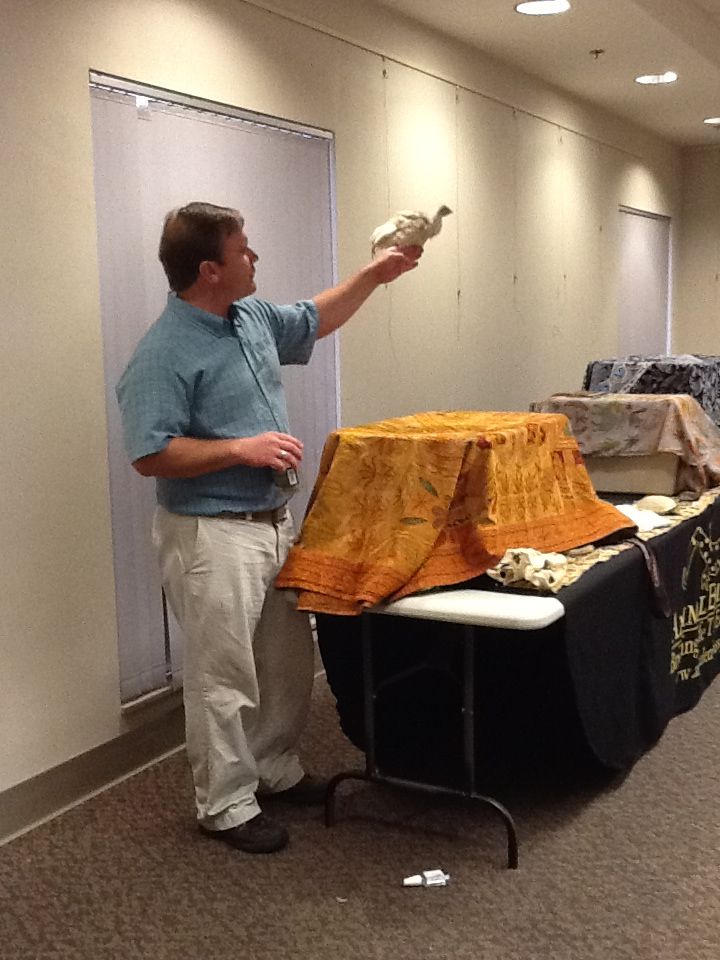
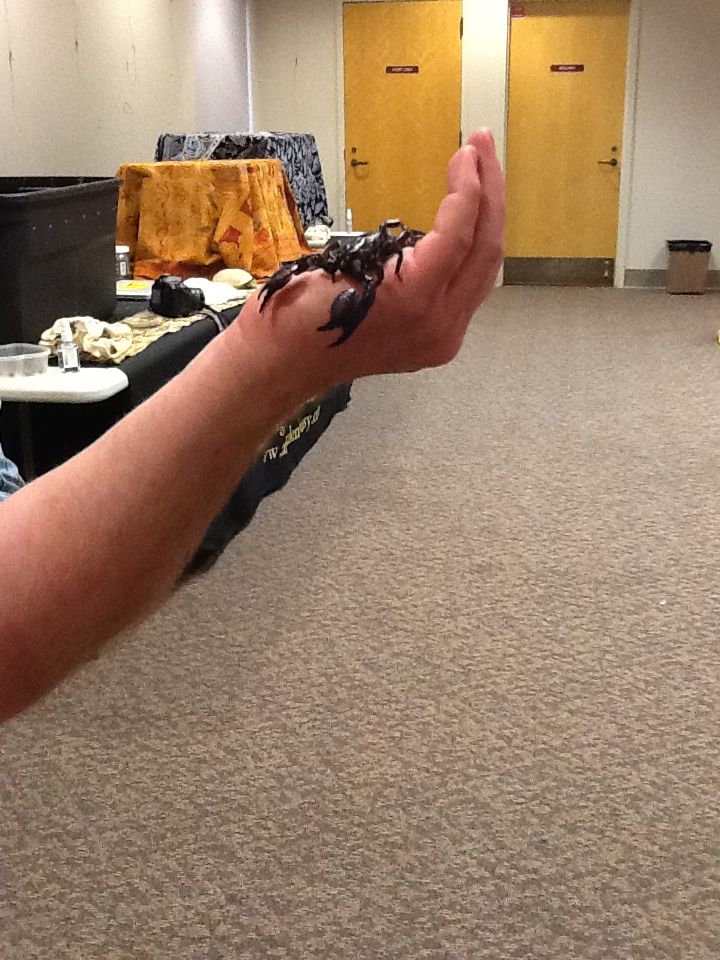
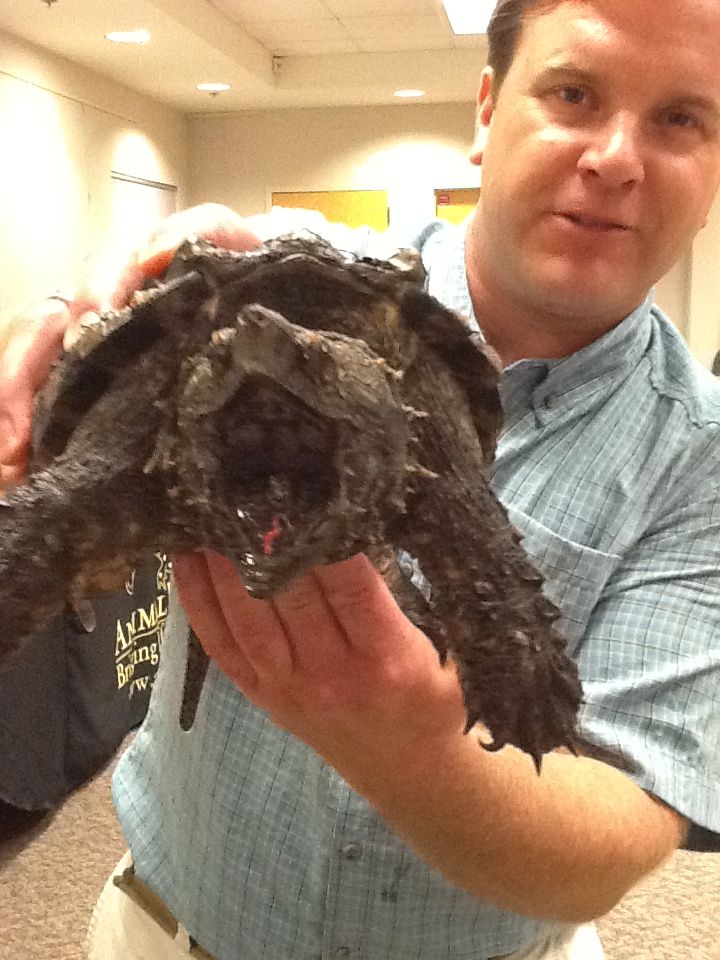
We had a terrific turnout for the Animal Embassy program “Digging into Nature” earlier this month! Kids (and their grownups) got up close and personal with all manner of creatures that dig (yes, that is a scorpion!), as part of our “Dig Into Reading” summer reading program. Thanks Animal Embassy!

animal5     animal4

animal2     animal6

Six Picks : Summer Thrillers

With the new crop of mystery and suspense novels coming out,  your summer reading could be extra thrilling this year! A few top picks:

Inferno by Dan Brown. In the heart of Italy, Harvard professor of symbology, Robert Langdon, is drawn into a harrowing world centered on one of history’s most enduring and mysterious literary masterpieces–Dante’s Inferno. Against this backdrop, Langdon battles a chilling adversary and grapples with an ingenious riddle that pulls him into a landscape of classic art, secret passageways, and futuristic science.

The Kill Room by Jeffrey Deaver. Renowned investigator and forensics expert, Lincoln Rhyme, is drafted to investigate the sniper-killing of a U.S. citizen in the Bahamas. While his partner, Amelia Sachs, traces the victim’s steps in Manhattan, Rhyme leaves the city to pursue the sniper himself.

Joyland by Stephen King. Set in a small-town North Carolina amusement park in 1973, Joyland tells the story of the summer in which college student Devin Jones comes to work as a carny and confronts the legacy of a vicious murder, the fate of a dying child, and the ways both will change his life forever.

Deeply Odd by Dean Koontz. Odd Thomas journeys through California and Nevada after a vision about the murders of three children, an effort throughout which he befriends a series of eccentric helpers who become allies in a battle against a sociopath and a network of killers.

The Redeemer by Jo Nesbo. Christmas shoppers stop to hear a Salvation Army concert on a crowded Oslo street. A gunshot cuts through the music and the bitter cold: one of the singers falls dead, shot in the head at point-blank range. Harry Hole–the Oslo Police Department’s best investigator and worst civil servant–has little to work with: no suspect, no weapon, and no motive.

Choke Point by Ridley Pearson. Hired to investigate allegations of a sweat-shop operation in Amsterdam that is enslaving young girls, John Knox and tech information expert Grace Chu embark on a rescue mission that is challenged by a crime organization that has seduced local neighborhoods with showy goodwill practices.