Disappearing Authors

Barbara Newhall Follett was a writer who disappeared. Not fell out of favor or faded out of print, but disappeared. Considered a child genius who published a successful novel at the age of 12, The House Without Windows (it helped, of course, that her father was an editor at Alfred Knopf publishers), Follett was emotionally destroyed by her father’s divorce when she was 14, and never did much more. In 1939, Follett had a fight with her husband, walked out her door in Boston, and was never seen again…

Some authors are known for being extremely reclusive – J. D. Salinger, for one. Salinger had numerous personal and family issues, many, his daughter believed, stemming from PTSD from serving in World War II, and he hid from the intense fame he acquired from Catcher in the Rye. He seldom gave interviews or made appearances.

Thomas Pynchon is another, not having given an interview or even having a photo published in more than fifty years. He has no media accounts. In his late 80’s, it’s believed he’s living in Mexico, but no one except perhaps his publisher knows for certain.

Some authors aren’t lost, they’re just taking forever on that next novel – sometimes 10 years or more (staring right at you, George R. R. Martin). There are only a handful who have actually disappeared, becoming their own mystery.

Agatha Christie is perhaps the most famous. The Queen of Mystery herself disappeared in 1926, after a fight with her husband over his request for a divorce. Her car was discovered, empty. More than 15,000 people turned out to look for her, with Sir Arthur Conan Doyle going so far as to hire mediums. Eleven days later, she turned up in a hotel, 185 miles away, with no memory of what happened. Some publicists called it revenge against her husband that backfired when so many people got involved, while doctors said she had a nervous breakdown from the strain.

Solomon Northup is a name you may be familiar with. His memoir was made into an Oscar-Winning film, Twelve Years a Slave. Northup, who was born free in upstate New York but kidnapped and sold into slavery, wrote and published his memoir in 1853. Then, in 1857, he seems to disappear from historical records. Some thought he may have been kidnapped again, but his age at the time (around 50) made it unlikely. A Methodist minister in Vermont claimed to have worked with him in the early 1860’s, and last saw him in 1863. It’s assumed he died sometime between 1863 and 1864.

Elena Ferrante is a well-known author of more than 30 books, some of which have been made into movies or TV series, such as My Brilliant Friend. It’s also a pseudonym. Her true identity is a secret and almost nothing is known about her, except that she was born in Naples. In interviews, she claims it’s from shyness and fear of coming out of her shell. Speculation claims the author is actually Anita Raja, or her husband. Both people, and Ferrante’s publisher, deny it emphatically.

Antoine de St. Exupery is most famous for the timeless classic, The Little Prince, which was partly based on an airplane crash he and his navigator survived in the Libyan Desert. St. Exupery became a pilot in the 1920’s, joining the French Army, and later the French Air Force. Much of his writing has an aviation theme. When France was pulled into World War II, St. Exupery was assigned to reconnaissance missions, as an experienced pilot. On July 31, 1944, he left the airbase on Corsica in a Lockheed P-38, and was never heard from again. It wasn’t until 1998 – 54 years later, that a fisherman found a bracelet with his name on it. No one believed it, as it was some distance away from his intended flight plan. In 2000, a diver near the same area discovered wreckage of a Lockheed P-38. In 2003, the pieces were recovered and tested, proving indeed it was St. Exupery’s plane, downed in the war, though the details remain a mystery.

Ambrose Bierce was a short story writer and Civil War veteran, most famous for the story An Occurrence at Owl Creek Bridge. His stories influenced Stephen Crane and Ernest Hemingway, and he is considered one of America’s best satirists. At the age of 71, he went on a trip to visit his old Civil War battlegrounds, crossed over into Mexico, and wound up joining Pancho Villa’s army, documenting the battles. His last letter is dated December 26, 1913. His secretary believed he threw himself into the Grand Canyon in a suicide move, but witnesses saw him in Chihuahua in January of 1914.  Mexican legend has it he was executed by a firing squad.  Either way, it’s a great story!

Jack Black is one rough figure- no, not the actor! A drifter and burglar born around 1871, his 1926 autobiography You Can’t Win described his life of crime on the road. Disenchanted with both “genteel” life and that of the judicial system, he spent 30 years as a traveling criminal (15 of which he spent in prison). The book was influential for William S. Burroughs, a pioneer of the Beat Generation. Another odd fact: The author who helped him with his autobiography was none other than Rose Wilder Lane, the daughter of Laura Ingalls Wilder. You Can’t Win was adapted into a movie starring Michael Pitt and Jeremy Allen White, but has been in a liminal post-production stage for years. Black himself disappeared in 1932, and is believed to have committed suicide.

Returning to Barbara Newhall Follett’s story, there is something of a conclusion. After her disappearance, her husband didn’t report her missing for two weeks. The police eventually put out a bulletin – four months later. They used her married name, not her maiden name. A body was found, then determined not to be hers but a woman who had been missing years before. Thirteen years later, her mother insisted the police look harder, but nothing new was found. In 2019 – eighty years later – writer Daniel Mills proposed a theory that her body had been found in 1948, just not properly identified. The body had been found in New Hampshire – just a half mile from where she had a rental property and not terribly far from her home in Boston. The possessions found with the body were things Follett was known to have. The cause of death was barbiturate overdose, a substance Follett had taken before. The police in New Hampshire had no idea she’d been missing.

Authors, even the most famous ones, are still people, with the same dramas as everyone else. Does art imitate life, or does life create the art?

For books on “prodigies” who turn away from their potential, check out Outliers by Malcolm Gladwell, or Off the Charts: The Hidden Lives and Lessons of American Child Prodigies by Ann Hulbert.

Serial Solving

I never know what I’ll read next. What ever sparks my interest, either by title, by book cover, or by subject. I have no special direction or particular interest, but if I found one book on a subject interesting, I’m far more likely to read another on the subject, or by the same author.  Hence I’ve read an inordinate amount of books on Ebola, fast fashion, tea, books on the making of various movies, and, well, serial killers.

We know the names. Son of Sam. Ted Bundy. Green River Killer. BTK Killer. Long Island Killer. 

I have no fascination with them, find most of them repellent and frightening beyond description, and did not shed a tear when Jeffery Dahmer died in prison, but I find the psychological processes and forensics involved in tracking them down utterly intriguing. The science end, not the murder end. And there is SO much to be fascinated about. 

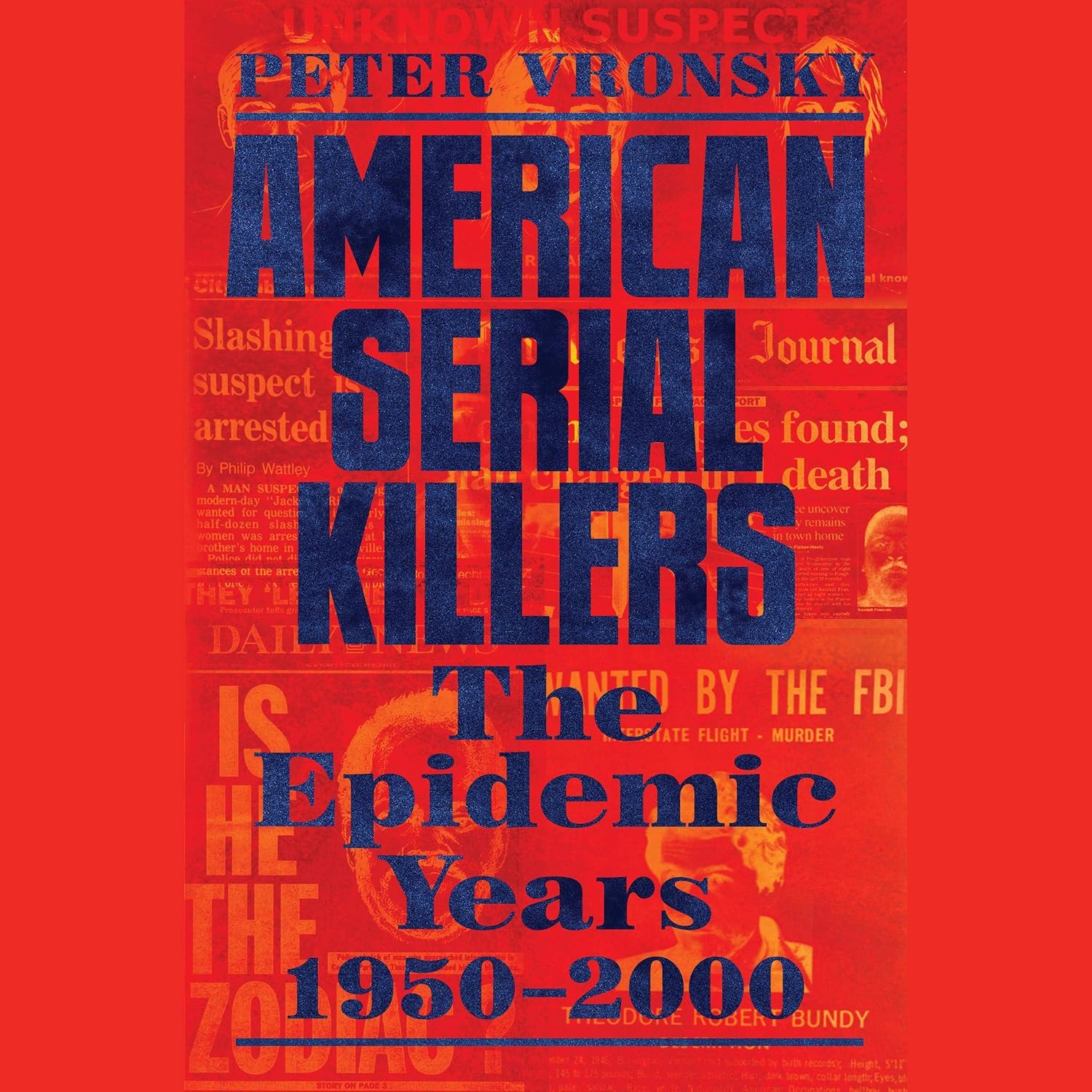
Most recently, I read the book American Serial Killers: The Epidemic Years, by Peter Vronsky, and I was blown away by the premise. America – which has more serial killers than any other country (well, that are reported and connected. Other countries have mass murders by corrupt governments, so maybe we’re better off) – had a major epidemic of serial killers (those that intermittently kill more than three people, as opposed to a spree all at once) from around 1970 to the mid 1990’s – more than 600 a year, and then it tapered off sharply. Why? Why did we have terrible trails of serial murders for 25 or 30 years, and then few?  Vronsky makes a very strong, documented  case for the fact that most of these killers were born in the late 40’s and early 50’s (25 or 30 by 1975) and their fathers fought in World War II. Vronsky documents that many of these fathers came back damaged from the war – PTSD, violent, depressed, alcoholic, received no help, and were unable to nurture their children. These boys – coming of age with violent sex images in men’s magazines, pulp fiction novels, and comics – grew up with attachment issues, poor self-image, and violent fantasies about sex, which they slowly began to work up the nerve to carry out. Why did things taper off? Most of those killers were either dead, in prison for other crimes, or had worn themselves out and were living a quiet life until something might trigger them again, unknown to their neighbors. Vietnam Vets received more services than soldiers in the 40’s, there was more public support, it wasn’t as big a deal to divorce a man, and those children did not have the same issues their grandfathers did. Those children of Vietnam vets would have been 25-30 in 1990-95 – years when serial killers were in decline.

Another utterly fascinating book – one that sent me down a long, long wormhole of research – is Barbara Rae-Venter’s I Know Who You Are: How an Amateur DNA Sleuth Unmasked the Golden State Killer and Changed Crime Fighting Forever. The Golden State Killer was alleged to have killed 13 people and committed more than 50 rapes across California between 1974-1986. Because police departments didn’t talk to each other or share information, no one was ever able to piece together all the information. Enter Rae-Venter. Rae-Venter spent her days helping people trace their genealogy and find their families using her home computer. Asked if she could do the same for a suspect, Rae-Venter needed 63 days and $200 to make a genetic profile of the killer from her dining room – something 30 years and $10 million of taxpayer money had never been able to do, leading directly to the apprehension of the killer. Since Rae-Venter, a huge number of backlogged, dead-end cases have been solved and cleared (like the Long Island Killer) due to the methods she used.

Spurred on by her methods, I fell down a rabbit-hole of genealogical research, aided by ancestry.com (free at the library), and in a week was able to trace my mother’s ancestry back 12 generations, connect some gaps, discover my grandmother had an older sister we never heard of (probably because she died at 5 months), and my grandmother’s younger sister was four when she died, not the two my grandmother remembered. Sometimes books are dangerous!

Through both of these books, several names kept popping up, and I realized I’d already read books by both men. John Douglas was the first real FBI criminal profiler, starting in the 1980’s, creating many of the procedures we use today. His book, Mindhunter, chronicles how he began, in a time where every department wanted the glory of solving the case, and thus no one ever shared information, and no one ever solved the cases. 

Unmasked: My Life Solving America’s Cold Cases by Paul Holes, is another. Holes learned the business under Douglas, pursuing cold-case investigations from the 1990’s into the 2000’s.  Some of the cold cases that perplexed them the most and they were never able to solve were later solved by Barbara Rae-Venter’s methods, like the Long Island Killer and the Golden State Killer.

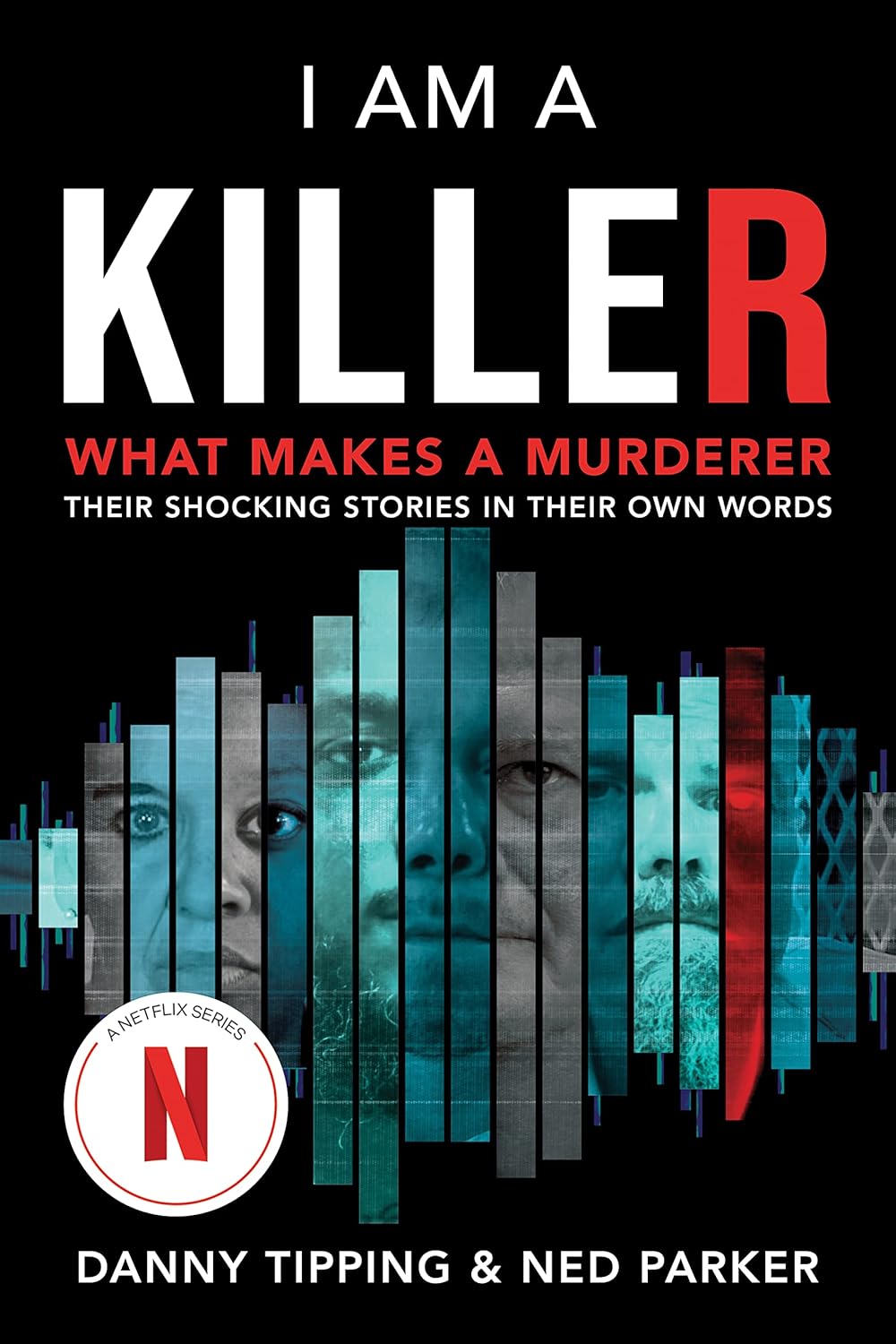
If you don’t care so much about crime but like psychology and sociology, and want to find out why people kill, try I Am a Killer, by Danny Tipping.  It’s a sad book that dwells on the murderers and not so much the crime. Time after time, the horrific backgrounds of these killers are revealed (one father, to hide the bruises and welts on his kid when Social Services was coming, tied him to a mattress, poured lighter fluid on him, and set his back on fire). Many did not deserve the sentences they received, responding to unimaginable abuse. There are no winners in this book. 

Though he technically didn’t kill anyone, if you want local flavor, read Incendiary: The Psychiatrist, The Mad Bomber, and the Invention of Criminal Profiling, by Michael Cannell. Many people claim to have invented criminal profiling, but this was an early case. In the 1940’s, a bomber went around exploding devices all over New York City, then teasing the police through letters. After twenty years, he was determined to be George Metesky – from Waterbury, Connecticut, and the criminal profiling was eerily correct.

If you like crime stories and investigations, these are excellent books. If you like psychology and deviant behavior, these are also excellent books. The difficult part is that they had to be written at all.

True Crime for the Faint of Heart

I used to love true crime. For my first research paper in high school, I wrote about the 1964 murder of Kitty Genovese and the phenomena of the bystander effect. In college, Investigation Discovery was my background noise while working. More recently, murder podcasts and true crime audiobooks accompanied my commute to work, and I unwound with Netflix miniseries that dissected cold cases.

But my tastes are changing. Death got a little too close to me over the last two years. A podcaster made me question the ethics of finding entertainment in another’s pain. And becoming a parent obliterated my tolerance for stories where terrible things happen to small and vulnerable beings. Don’t get me wrong – I’m still fascinated by the darkness. I just need to be more selective. Minimal death and violence. Minimal gore. Thefts, forgeries, con artists. White collar crimes. Maybe the occasional plane crash or disaster.

So I present you with an updated list of true crime stories in various formats for those who, like me, have to say “hard pass” to serial killers and kidnappers.

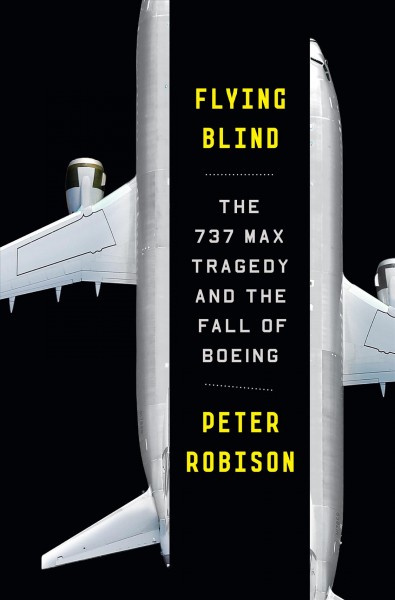
Flying Blind : The 737 MAX Tragedy and the Fall of Boeing by Peter Robison. A fast-paced look at the corporate dysfunction–the ruthless cost-cutting, toxic workplaces, and cutthroat management–that contributed to one of the worst tragedies in modern aviation.

Bad Blood : Secrets and Lies in a Silicon Valley Startup by John Carreyrou. Recounts the story behind Theranos, the medical equipment company that misled investors to believe they developed a revolutionary blood testing machine, detailing how its CEO, Elizabeth Holmes, perpetuated the lie to bolster the value of the company by billions.

Empire of Pain : The Secret History of the Sackler Dynasty by Patrick Radden Keefe. Presents a narrative account of how a prominent wealthy family sponsored the creation and marketing of one of the most commonly prescribed and addictive painkillers of the opioid crisis.

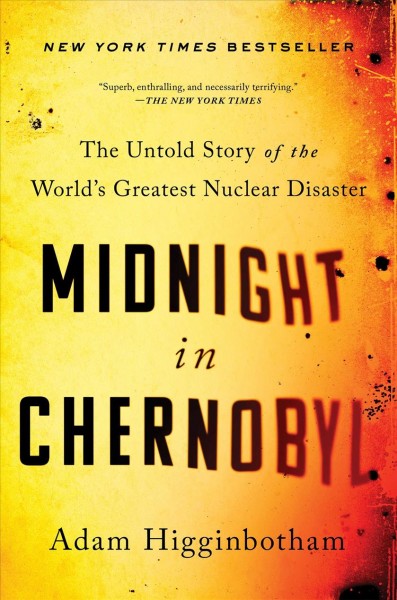
Midnight in Chernobyl : The Untold Story of the World’s Greatest Nuclear Disaster by Adam Higginbotham. Journalist Adam Higginbotham’s definitive, years-in-the-making account of the Chernobyl nuclear power plant disaster–and a powerful investigation into how propaganda, secrecy, and myth have obscured the true story of one of the twentieth century’s greatest disasters.

Confident Women : Swindlers, Grifters, and Shapeshifters of the Feminine Persuasion by Tori Telfer. The art of the con has a long and venerable tradition, and its female practitioners are some of the best– or worst. Telfer introduces us to a host of lady swindlers whose scams ranged from the outrageous to the deadly.

The Gardner Heist : The True Story of the World’s Largest Unsolved Art Theft by Ulrich Boser. Shortly after midnight on March 18, 1990, two men broke into the Isabella Stewart Gardner Museum in Boston and committed the largest art heist in history. But after thousands of leads, hundreds of interviews, and a $5-million reward, not a single painting has been recovered. Worth a total of $500 million, the missing masterpieces have become the Holy Grail of the art world and one of the nation’s most extraordinary unsolved mysteries.

When Art Imitates Life

Anne Perry is an accomplished mystery writer with more than forty novels to her name, including the Thomas Pitt series, the Daniel Pitt series, the William Monk series, and more. Many of her novels take place around World War I. 

She’s also a convicted murderer.

A friend from college – who is also a librarian – told me this while I was reading Death with a Double Edge, the fourth of her Daniel Pitt series. And thereby hangs a tale.

Perry (whose birth name was Juliet Hulme) was born in England but spent much of her childhood in the Bahamas, South Africa, and New Zealand. As a teen in New Zealand, she became fast friends with a girl named Pauline Parker. Their friendship was so tight it bordered on obsessive, with the girls creating rich fantasy worlds they pretended to live in, and throwing tantrums if they couldn’t be together.

When Perry was 15, her mother was caught in an affair, and her parents decided to divorce. Perry was going to be sent to South Africa to stay with relatives for a while. This sent the friends into a panic. They asked Pauline’s mother if Pauline could go with Anne/Juliet, and her mother said no. Pauline then, in the short-sighted way children have, decided to kill her mother, freeing Pauline to travel with Anne/Juliet. When Anne hesitated, Pauline threatened to kill herself if Anne didn’t help. Just three days later, while walking with Pauline’s mother, the girls beat her to death with a brick – a deed that took twenty savage blows.

Perry and Hulme were caught quickly. They were too young for the death penalty, and both wound up serving five years in prison. They didn’t speak to each other again. Perry eventually settled in the United Kingdom, where she lived a quiet, penitent life and took up writing mysteries that often had a theme of redemption. It wasn’t until 1994, when no one less than Peter Jackson made a movie about the crime (Heavenly Creatures), that a New Zealand journalist outed her as Juliet Hulme – three days before the release of the film. No one had spoken to her to get any actual facts about the crime, and the film remains highly fictionalized.

Is Perry the only author who has done hard time? Of course not. Mystery writer Dashiell Hammett did six months in jail for contempt of court. Nelson Algren, who wrote Man With the Golden Arm, spent five months in jail for stealing a typewriter. William S. Burroughs, author of The Naked Lunch, first spent time for forging a prescription, but later killed his common-law wife after a drunken argument while in Mexico. He escaped prosecution by fleeing back to the United States. Chester Himes was sent to jail for eight years at the age of 19 for armed robbery, where he began to write such novels as A Rage in Harlem and Cotton Comes to Harlem. In all cases, incarceration, even for a little while, made a huge impact on the writer and their view of the world.

Anne Perry’s latest book, Three Debts Paid, a fifth volume of the Daniel Pitt series, was released in April.

The Scandalous World of Art

Edvard Munch, The Scream

 On May 1, CPL is hosting a program on The Art of the Scandal: Thefts, Vandals and Forgeries.

 Well, that’s nice, you say, but art doesn’t interest me.

Are you sure about that? Everyone loves a good mystery, and high art is probably the most mystery-filled subject there is. Anything with that much crime circling around it means there is a bank vault of money involved. 

There are many sides to fine art – the talent side (no one disputes a da Vinci, but you can start a fight over Pollock), the artsy side (the use of light and dark in paintings creates mood and movement that symbolizes man’s desire to control the universe: discuss), the history side (Phoenician art of the 18th century BCE shows a developing amalgamation of influence of the entire Mesopotamian region), and the rarity side (there are more Roman statues than there are da Vincis). We can discuss the purpose of art, of man’s desire to create, of the abstractness of art that leads back to man as the only animal who creates art for art’s sake, despite our knowledge that apes will draw and paint for pleasure, and that elephants, dolphins, and rabbits can be taught to paint as a behavior. It often boils down to one thing: 

Money.

The price of fine art (paintings and drawings, as opposed to jewelry work, sculpture, enamelwork, etc) has a few things going for it. First is rarity – many of the greatest paintings are hundreds of years old. They are one-of-a-kinds, and not a lot of them have survived. There are only 15 authenticated da Vincis known – as opposed to 400 Rembrandts. A second consideration is fragility – light, moisture, and age can cause ancient paintings to crack, flake, and fade (Van Gogh liked using red lake pigments, which fade rather quickly). The Mona Lisa is not painted on canvas, but an old board. A third thing is authenticity, and here is where the art world goes to pieces.

Salvator Mundi, by da Vinci

Because of the money involved in fine art (Da Vinci’s Salvator Mundi sold for $450 million dollars), as in too many movies, everyone is out to steal or fake originals. Forgery rings have been around for hundreds of years – one of the biggest was by Han Van Meegeren in the late 1930’s, a talented artist who sold more than $30 million in fake Vermeers to the Nazis. In 2004,  Xiao Yuan, the Chief Librarian at an academy of fine arts, stole more than 140 paintings in his care by carefully replacing them with his own copies – only to find some of HIS copies stolen and replaced with less-skilled replacements. Forgeries (actually, they’re called counterfeits, since legally only documents can be forged) are so rampant (about 50% of the market), Sotheby’s bought their own forensics lab to weed out fakes

Modern fakes are often easy enough to spot – today’s paints and canvases and even brushes aren’t the same as the 1500’s, and simple chemistry will find them. But what if the work copied is of modern origin – say, a Picasso, or a Warhol? Because of the modernity of materials, it is incredibly difficult to prove authenticity. 

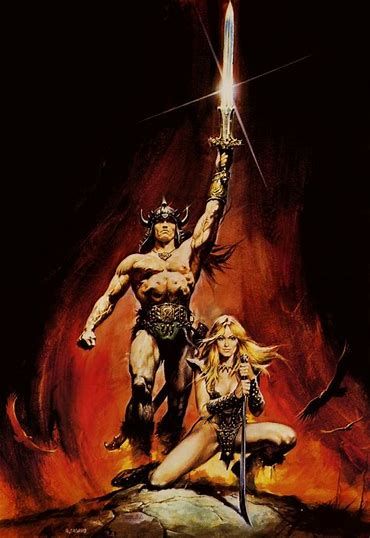
Conan the Barbarian, by Boris Vallejo

Questions still arise, though, as to what constitutes an authentic work of art. That 450 million dollar da Vinci has had so much restoration that there is more paint by restorers than by da Vinci, so is it still genuine? If a student of an artist (Rembrandt, Renoir, Reubens, etc) is so talented that a professional art historian/critic cannot tell the difference, how are you defining fine art and value? Where does the value lie – in the skill, the history, the age, or the subject matter? Why do we so value Edvard Munch’s The Scream (of which four originals exist, two of which were stolen), yet not value Boris Vallejo?

Art, by its very interpretational nature, is a scandal.

Art of the Scandal is an on-line program sure to peak your interest. You can sign up for the attendance link here.