Join Us For An Evening with a Dog Listener on May 19th

Having a pet is a lot of work. The four legged members of every family are important, and while we love them dearly, sometime they can cause as as much stress and frustration and love and joy. If you have a dog, or are planning on adopting on in the near future, you might want to register for an upcoming program. On May 19, 2016 we are hosting An Evening with a Dog Listener, Pat Wright, from 6 to 8 pm.

The program will help teach how to bring your dog to peace and solve the problem of unwanted behaviors. Some of the many topics discussed are pulling on the lead, jumping up, aggression, separation anxiety, and excessive barking. You will also learn how to get willing cooperation with your dog to perform any task at hand. Participants should bring their questions and concerns about the canines in their life, but please do not bring along the dogs in question. Registration is required, which can be done online, or by calling 203-272-2245, and choosing extension 4.dogs

Pat Wright has studied in England with the original Dog Listener, Jan Fennell, and has graduated from all class levels offered. Pat has also worked as the highest ranking Dog Listener in the United States of the Jan Fennell International Team of Dog Listeners as well as a mentor to other Dog Listeners around the world. Pat has studied wolf behavior with some biologists in Yellowstone Park, Wyoming on three different occasions. Pat mixes in some very entertaining experiences from her many years of Dog Listening through out New England.

This slideshow requires JavaScript.

If you are eager to get started, need help now, or just want to do a little research on your own beforehand, here are some suggested titles on understanding and/or training your pooch; Dog Sense: How the New Science of Dog Behavior Can Make You a Better Friend to Your Pet by John Bradshaw, Don’t Dump the Dog: Outrageous Stories and Simple Solutions to your Worst Dog Behavior Problems by Randy Grim with Melinda Roth, Why Does my Dog Act That Way?: a Complete Guide to Your Dog’s Personality by Stanley Coren, The Loved Dog: the Playful, Nonaggressive Way to Teach your Dog Good Behavior by Tamar Geller, with Andrea Cagan, Decoding your Dog: the Ultimate Experts Explain Common Dog Behaviors and Reveal How to Prevent or Change Unwanted Ones from the American College of Veterinary Behaviorists, Cesar’s Way: the Natural, Everyday Guide to Understanding and Correcting Common Dog Problems by Cesar Millan with Melissa Jo Peltier, Citizen Canine: Ten Essential Skills Every Well-Mannered Dog Should Know by Mary R. Burch, or  Before & After Getting your Puppy: the positive Approach to Raising a Happy, Healthy, and Well-Behaved Dog by Ian Dunbar.

Homesteading and Sustainability Practices on the Rise

Prices for many necessities continue to rise, while pay and compensation for most people do not seem to be rising at the same rate. Homesteading, or making the attempt to live more self sufficiently, is becoming a major trend as people make an effort to save more and do more for themselves. Most of these things are things our parents or grandparents did as a matter of course, but more and more people are learning how to revive these methods of taking care of the environment and their families.

Some of the activities that are seeing a major come back for one reason or another that can be considered a step towards homesteading or sustainable living include, knitting or crocheting, sewing, canning, gardening, raising chickens or other livestock, and so much more.  I have done some of the traditional homesteading activities, but I will admit to cheating in some departments. While I might garden and crochet, I have not homesteading1started canning like my family did when I was growing up. Frankly, I still have nightmares of peeling steamed tomatoes from my childhood as we made sauce and stewed tomatoes among other things.  If you are interested in learning more about what exactly homesteading is, or you want to move towards living a more self sufficient lifestyle, here are some resources that can get you started and answer some questions.

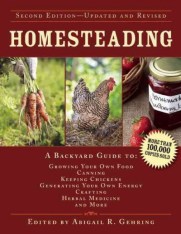
Homesteading: a Backyard Guide to Growing Your Own Food, Canning, Keeping Chickens, Generating Your Own Energy, Crafting, Herbal Medicine, and More edited by Abigail R. Gehring

Urban Homesteading: Heirloom Skills for Sustainable Living by Rachel Kaplan with K. Ruby Blume

Made from Scratch: Discovering the Pleasures of a Handmade Life by Jenna Woginrich

The Nourishing Homestead: One Back-to-the Land Family’s Plan for Cultivating Soil, Skills, and Spirit by Ben Hewitt with Penny Hewitt

The Urban Homestead: Your Guide to Self-Sufficient Living in the Heart of the City by Kelly Coyne & Erik Knutzen

You might also be interested in Homeward Bound: Why Women are Embracing the New Domesticity by Emily Matchar, Zero Cost Living: Explore Extreme Frugality by James R. Delcamp, Back to Basics: a Complete Guide to Traditional Skills edited by Abigail R. Gehring, The Complete Idiot’s Guide to Self-Sufficient Living by Jerome D. BelangerBarnyard in your Backyard: a Beginner’s Guide to Raising Chickens, Ducks, Geese, Rabbits, Goats, Sheep, and Cattle edited by Gail Damerow, The Backyard Homestead Book of Building Projects by Spike Carlsen, The Renewable Energy Handbook: a Guide to Rural Independence, Off-Grid and Sustainable Living by William H. Kemp, Mini Farming : Self Sufficiency on a 1/4 Acre by Brett L. Markham,  and Sustainably Delicious: Making the World a Better Place, One Recipe at a Time by Michel Nischan with Mary Goodbody.

Don’t Want To Ask? A Quick Guide to Tough Topics!

research question pictureThe Dewey Decimal System is a mystery to many outside the world of libraries and publishing. When you need information on something you might not want everyone to know about, sometimes it can be hard to ask for help. I saw that a Sacramento library had created a bookmarks with the Dewey Decimal numbers for some hard to ask about topics for teens, and I thought it was brilliant. It inspired me to do my part to help people find the books they need on topics they might not want everyone to know they were looking for.

Legal difficulties, mental or physical health problems, self help resourcesbullying, relationship issues, and so on are things that you might want to research but might not want to stop and ask a librarian about, or know how to find via the digital catalog. So, I have looked at some of the tough topics, and some happy ones that people might not want to go public with quite yet, to help you find the books that you need. I have linked each of the listings below to the relevant search in the catalog to make placing holds or checking availability even easier.

All of these nonfiction materials are on the lower level, and if you are looking for books on these topics for teens or children they will be shelved in the children’s room with the same call numbers. If you cannot find it, don’t be afraid to ask or to place a hold for the materials with staff, or by yourself via the catalog. We have seen it all. Seriously, we do not judge you by the books you check out and are more than happy to help you find the resources you need.

researchIf you really don’t want anyone to know what you are checking out, there are a few additional assurances I can offer you. If you use the self check out machines, we will have no idea what you have checked out. Also, we won’t tell anyone what you have checked out unless you give them your card. Anything that you check out and return with no fines leaves your record completely. There is no way for us to see, or tell anyone else, your borrowing history. Don’t be afraid to research and find the answers you need!

More importantly, if you need help more urgently than research can offer, please take a moment and reach out for it. Some important help can be found over the internet or via the phone.  There are help hotlines for just about everything, when you do not know who to talk to for help, dialing 211 can connect you to local services you might need. This includes utility assistance, food, housing, child care, after school programs, elder care, crisis intervention (including suicide and abuse) and much more. The related 211 website also offers an eLibrary with specific information on a variety of topics.

Abortion ~ 363.46

Alzheimer’s ~ 616.831

Cancer ~  616.994

Hair Loss ~ 616.546

HIV / AIDS ~ 616.9792

Infertility – 616.692 or 618.39

Miscarriage ~ 618.392

Pregnancy ~ 618.2

Puberty ~ 613.043 or 612.66

Sexual Health ~ 613 or 306.7


Bipolar Disorder ~ 616.895

Bullying ~ 303.69

Child Abuse ~ 362.76

Depression ~ 616.8527

Domestic Violence ~ 362.82

Loss of a Child ~ 155.9

Loss of a Parent ~ 306.874 or 155.9

Mental Illness ~ 616.89

Post Traumatic Stress Disorder ~ 616.8521

Sexual Abuse ~ 362.7

Substance Abuse ~ 362.29 or 616.86

Suicide ~ 362.28


Adoption ~ 362.734

Bankruptcy ~ 346.7307

Child Custody ~ 343.7301

Divorce ~ 306.89 or 346.7

Estate Planning and Living Will ~ 346.7305

Foreclosure ~ 346.73

Hospice Care ~ 362.1

Personal Finance ~ 332

Wedding Planning ~ 395.22


Exploring The Science of Science Fiction

Are you a science fiction fan curious to see how close scientists have come to understanding or recreating the theories or gadgets of your favorite book or movie? Do you think much of the gadgetry and action of science fiction stories are completely impossible and want to see what we really can do, and what we might be able to do in the future? Here are some books that will help you understand how realistic some time1ideas like time travel really are, and how theories and realities surrounding our universe and the possibilities have changed in recent years.

Time Travel and Warp Drives: a Scientific Guide to Shortcuts Through Time and Space by Allen Everett and Thomas Roman
Lays out what humans really know about time and space and how to bend it to our will, and explains just how close we are to some of the ideas of science fiction novels.time2

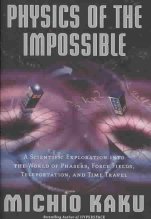
Physics of the Impossible: a Scientific Exploration into the World of Phasers, Force Fields, Teleportation, and Time Travel by Michio Kaku
Looks at the scientific principles behind the technology of the future, examining the theoretical basis, as well as limitations, of the laws of physics to discuss how seemingly impossible devices could become commonplace in the future.time3

Spooky Action at a Distance: the Phenomenon that Reimagines Space and Time and What it Means for Black Holes, the Big Bang, and Theories of Everything by George Musser
Presents a tour of modern physics that examines the new understanding of nonlocality–the ability of particles to affect each other across the vastness of space.

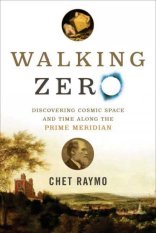
time4Walking Zero: Discovering Cosmic Space and time Along the Prime Meridian by Chet Raymo
A noted science writer and author of The Path offers an illuminating study of the interconnections among science, faith, psychology, and the arts in terms of the evolution of the human understanding of space and time as he walks along the Prime Meridian, the line of zero longitude and the standard for world maps and clocks, from Brighton to the North Sea.

time6What is Relativity?: an Intuitive Introduction to Einstein’s Ideas, and Why They Matter by Jeffrey Bennett
An astrophysicist offers an entertaining introduction to Einstein’s theories, explaining how well they have held up to rigorous testing over the years, and even describing the amazing phenomena readers would actually experience if they took a trip through a black hole.

Once you figure out hoe time travel works, or somehow or other gain a little extra time, you might want to explore further with: The Fabric of the Cosmos: Space, Time, and the Texture of Reality by Brian Greene, A Brief History of Time: From the Big Bang to Black Holes by Stephen W. Hawking, Endless Universe: Beyond the Big Bang by Paul J. Steinhardt and Neil Turok, Cosmos by Carl Sagan, The Science of Star Wars by Jeanne Cavelos, The Physics of Star Trek by Lawrence M. Krauss, or Physics of the Future: How Science Will Shape Human Destiny and our Daily Lives by the Year 2100 by Michio Kaku.

Dum-Diddly-DUMB

220px-TiK_ToK_-_Kesha_(official_single_cover)I came across an article from May of 2015 (there are many on the subject) that mourned the dumbing down of American music based on the reading grade-level of the lyrics. The average ability one needs to read modern lyrics is a whopping  second grade reading level. Hip hop scored worst, with short little repetitive words that needed only a first-grader’s ability to read. Country music was the Big Brain, with a reading level of third grade and a few months. I found that a bit shocking.

You can find one of those informative studies here http://seatsmart.com/blog/lyric-intelligence/
#
There are many criticisms of such a study. One is that they only covered music in the last ten years. Was music really all that smarter 20, 30, 50 years ago? Another is that repetition dumbs down the word level:

(Ke$ha, TiK ToK, Billboard #1 January 2010) (NUMBER 1 SONG IN AMERICA)
I’m talkin’ bout – everybody getting crunk, crunk
Boys tryna touch my junk, junk
Gonna smack him if he getting too drunk, drunk
Now, now – we goin’ ’til they kick us out, out
Or the police shut us down, down
Police shut us down, down
#
I’m not sure it’s the repetition that’s dumbing that down.
#
The other major complaint is how reading scores are measured: most have a mathematical formula that juggles word length, sentence length, or syllable length, and messes them around until an average is found. This is not always accurate, especially with poetry or lyrics, which may have 100 words before coming to the actual end of a sentence.

I had to find this out for myself. After all, we survived songs like “Doo Wah Diddy” and “Kookie, Kookie, Lend Me Your Comb.” I took a variety of older songs and plugged them through https://readability-score.com/, which uses fivChild in school distracted_0e different reading assessment tools to come to an average score. The Flesch-Kincaid Reading Ease was developed by the Navy, so that technical manuals wouldn’t get too difficult to understand. A score of 90 or better is good for a 6th-grade student, 60 or higher is good for high school students, and 30 or less is best left to college students (i.e., higher score is easier to read). Because the formula isn’t perfect it is possible, on the grade-level equivalent, to score well above a “grade” (as in, grade level 62).  That’s the number of years of schooling you may need to understand it. Ideally, if it’s for the average Joe or Jane on the street, you want a grade level of 8.  Don’t take it literally; just understand that the higher above 8 you go, the more complex it is to read.

Here was what I found when I ran nine popular songs through the analyzer:

Francis Scott Key, The Star Spangled Banner (1814) Everyone knows this one! Reading Ease: 87.6 (grade 7 or so). Average reading level – grade 7.3
Woody Guthrie, This Land is Your Land (1940) Come on! Okey folky here. Woody Guthrie was by far not an educated man. Reading ease: 33.8 (that’s in the college range). Average grade level: 37  (Blame no punctuation.)
Elvis Presley, Jailhouse Rock (1957) We’re talking Elvis. Hound dogs. Blue suede shoes. Reading ease: 77. 2 (high school). Average reading level: Grade 6.2
Frank Sinatra, A Very Good Year (1961) Thoughtful, but not Shakespeare, right? Average grade level: 11.6
The Supremes, Baby Love (1964)  Oooh, Baby Love, the reading ease is 54, with a grade level of 14, which, again, is almost guaranteed to be a result of no punctuation.
Bob Dylan, The Hurricane (1975) Ok, folk music by nature is going to score higher, because it tells a whole story. I only did the first four stanzas. Reading ease? 16.3. Grade level? 24.7  Big long sentences with grammar!
Queen, Bohemian Rhapsody (1975) Let’s face it. Scaramouche isn’t in a Ginn Reader, or even a Lippincott or Scott Foresman. Reading ease? 43. Grade level: 16.3. That’s a senior in college.  Thunderbolt and lightning.
The Police, De Do Do Do (1980) (Talk about repetition!) reading ease: 63. Grade level: 47.
REM, Drive (1992) Reading ease: 101.9 (that’s grade 5ish). Average reading level: 2.2  Ah! So music DID die off at the end of the 80’s!

knobAnd just for kicks (because it came up on my iTunes): Disney’s Bedknobs and Broomsticks, Substitutiary Locomotion (1971) (remember, this is a Disney kid’s movie): Reading Ease: 4.1 (that’s PhD level), and a grade level of 18.  A catchy kid’s tune.

#What it means:
Okay, even I was surprised. I expected lyrics to have come down, but I didn’t realize it was by that much. Don’t bother with “scores,” just read the lyrics. I did The Police as a joke, because that much repetition was certain to skew things down, but no: the rest of the lyrics have words like jamming transmissions, not baby words. I thought for sure Woody Guthrie would prove a point, but his lyrics, too, are full of long words and long sentences and imagery. Elvis? Really? Spider Murphy played the tenor saxophone,  Little Joe was blowin’ on the slide trombone. It’s not junk, junk. The Hurricane I knew would score high – it’s about as close to an entire novel as you can sing without going back into Child Ballads.
#elvis-presley-collectors-by-jeff-schrembs-2010-all-rights-reserved-21290390
While the measuring tool isn’t precise – measuring sentence length in a lyric that doesn’t use punctuation gives false positives as to complexity – the word lengths counter some of it (we know it obviously does not take a PhD to understand Police lyrics). All in all, I have to agree: many modern music lyrics are about as intelligent as dirty dishwater, and the content is worthless. All you need to succeed is some gibberish, a loud driving beat, a fast groove of the hips, and a really good publicity team to get you air time. The music industry is about money; artists are about the art and the message. Hence we’re here  discussing Sinatra and Elvis and Queen, who haven’t been around in decades, and no one remembers who had the number one hit four years ago.