Sorting White Trash

indexIt was a hard call, but I’d say White Trash by Nancy Isenberg was my Number 2 Must Read of 2016 (after Chasing the Scream), but oh, have I put off writing about it because it played so much into last year’s politics it seemed as if it were written for it – but it couldn’t, because it was written before last year’s one-of-a-kind election year.

“White Trash” is a term that began just before the Civil War and became entrenched afterward, a term for the poorest white people who were absolutely uneducated, dirty, poorer than slaves – and had no desire to change their ways. They considered themselves perfectly fine and above anyone else. Rich people were to be sneered at, since they considered themselves better. Educated people were sneered at, because they considered themselves better. Yet as a class they were so despised for their lack of morals and work ethic, even slaves considered themselves above Poor White Trash.

Isenberg feels the concept goes back further than that. Who did England send over to1400306193764-cached America to pad out their colonies? Who would not be missed from the overcrowded prisons and cities? Not the landed gentry, but those persons who for whatever reason did not fit into society and were unsuccessful at supporting themselves. The Virginia Colony had to go so far as to set a death sentence for people who did not work and did not attend church on Sundays. Starvation was so bad that people resorted to cannibalism. The people sent over refused to work, preferring to run off to unsettled land (which was “owned” by others) and fend for themselves. Getting people to do the hard labor of setting up a colony was quite difficult.

Further, Isenberg says that as the country expanded, the first to move west were… the folk who refused to work for others, could not function in a society, and would rather starve than work. Each time, the ones who pushed west first were the dregs, seeking escape from prisons, debt collectors, tax men, and others who “infringed” upon them. The wild west was wild because the people who colonized it couldn’t get along with anyone.

“White Trash” has many names, depending on geography – Crackers, Okies, Rednecks, Hillbillies, Trailer Trash, Mud Eaters – all people who shun government, distrust education, live in abject poverty, and have a very flexible moral code. I don’t mean “flexible” as a pejorative but as a term to describe a juxtaposition of ideals: your baby out of wedlock is a sin, but it’s okay for me. Never take charity, but taking free stuff from this agency over here isn’t charity, it’s just free stuff. They have quite the knack for making things acceptable for them but a sin for anyone else.

Isenberg digs into both politics and popularism, citing Andrew Jack110932-004-3f4811e2son (the first person running for President who lost despite getting the most popular votes the first time he ran) as an uneducated, crass boor who appealed to the lowest masses and yet was elected President, and how he loved to flaunt that boorishness, to the distress of the American Gentry. She cites the 1970’s as a time when White Trash became hip – from Smokey and the Bandit, to the Dukes of Hazzard, to Tammy Faye Bakker and the  whole Televangelist craze. Today’s exploitainment shows like Duck Dynasty, Honey Boo Boo, and 16 and Pregnant continue to flaunt poverty, lawlessness, and lack of education as something chic and desirable.

Of course race and politics play into it. Much of the divide still stems from the Civil War, with Southern States blaming Northern States for the outcomes, and the Northern States holding the South in utter contempt. Isenberg shows how that all translates into votes, and political forums, and how those in turn affect our elections – including the recent one.

indexIsenberg is not alone in her observations. Numerous authors have also written similar observations, making her research more plausible. One is Deer Hunting With Jesus, by Joe Bageant, in which he talks about going home to rural Virginia, and why such places are becoming  a permanent underclass.  Lee Smith touches on a little of it in her dreamy autobiography Dimestore, about growing up in rural Appalachia.  Hillbilly Elegy by J.D. Vance does a fantastic job presenting the issues from the first-hand experience of growing up in 1980’s Kentucky.

No matter what your political leanings, White Trash815bv15ciol will open your eyes to why current politics are playing out the way they are and how people are being exploited in the process, why you can’t seem to educate people out of poverty, and how that poverty persists generation after generation – and no, it’s not due to Welfare. How do we change it? How do we shape it? Or should we allow an uneducated underclass to dictate policies it knows nothing about – and chooses not to learn?  There’s no easy answer to be had, but this book is a must read and will open your eyes to a lot of things you never learned in school.

Get Informed, Take Action: The CT State Budget

3677257896_5bca862383.jpg

It’s no secret that our country has seen a surge in political awareness and activism after the last election, and we’ve been getting reference questions about how to get more involved on national, state, and local issues. Some of the biggest rumblings lately deal with Governor Dannel Malloy’s state budget for the 2018-2019 fiscal year, which is under review right now and contains millions of dollars’ worth of cuts for many municipalities, local and state agencies, and state-funded programs. If you’d like to get informed and take some action on the proposed budget, read on!

GET INFORMED

If you only have time to read one article on the new budget, though, the CT Mirror wrote an informative overview last month that hits some of the big parts of the budget.

TAKE ACTION

You can also send letters to the editors of local newspapers like the New Haven Register, Cheshire Herald, Hartford Courant, and Meriden’s Record-Journal.

September 7th is National Beer Lovers Day!

Many of us are in denial about the fact that Summer is coming to a close. Soon barbecues and outdoor parties will be a little cooler, and likely a little less frequent. This makes it a perfect time to celebrate a staple to many picnics (for the adults anyway) beer and other adult beverages. September 7th is National Beer Lovers Day, and a great day to explore all things beer related.

How about some history of beer, and Connecticut beer specifically:
Connecticut Beer: a History of Nutmeg State Brewing by Will Siss
The Craft Beer Revolution: How a Band of Microbrewers is Transforming the World’s Favorite Drink by Steve Hindy
A History of the World in 6 Glasses by Tom Standage
Microbrewed Adventures: a Lupulin-filled Journey to the Heart and Flavor of the World’s Great Craft Beers by Charlie Papazian
The War on Alcohol: Prohibition and the Rise of the American State by Lisa McGirr

Or maybe you want to cook with beer or try your hand at home brewing:
Beer-Can Chicken: and 74 Other Offbeat Recipes for the Grill by Steven Raichlen
The Craft Beer Cookbook: From IPAs and Bocks to Lagers and Porters, 100 Artisanal Recipes for Cooking with Beer by Jacquelyn Dodd
Mastering Homebrew: The Complete Guide to Brewing Delicious Beer by Randy Mosher
How to Brew: Ingredients, Methods, Recipes, and Equipment for Brewing Beer at Home by John J. Palmer

Save

What Do Your Kids Want To Be?

Ask any young child what they want to be and you could get a variety of answers. Some want to be doctors or nurses, others want to be firefighters or police officers. Some answer with more entertaining answers like ‘rich’ or ‘a giraffe’. (Yes, I have heard that answer.)

CAREERMost kids have big dreams. It is important that we encourage them to explore the wide variety of options available. A great way to foster those dreams, and how important school and responsibility are to achieve them, is to help them learn about the actual careers. My daughter is set on becoming a wild animal veterinarian, and my son is determined to either hunt monsters or write books and graphic novels. In both cases I get to focus that interest in reading certain books, and the importance of certain subjects and willingness to dive in to the subjects that interest them most. I also get to teach them about related careers, and what paths their interests might take them.

I always wanted to be an astronaut or archaeologist, but I learned early on that I was much better with words and thinking about the big things rather than doing the math, engineering, and physical labor necessary for either. It was not long before I decided that books and the written word was a much better focus for my energieCAREER2s and aptitudes.

Here are some great resources for researching different careers, and the education paths and experience that can help your kids test if they are really interested and if the interest will last. These resources can also be used to encourage studying particular subjects or give some career ideas for those that enjoy one subject over others.

Dinosaur Scientist: Careers Digging up the Past by Thom Holmes
Unusual and Awesome Jobs Using Technology: Roller Coaster Designer, Space Robotics Engineer, and Moreby Linda LeBoutillier
Talking with Adventurers: Conversations with Christina M. Allen, Robert Ballard, Michael L. Blakey, Ann Bowles, David Doubilet, Jane Goodall, Dereck & Beverly Joubert, Michael Novacek, Johan Reinhard, Rick C. West and Juris Zarins compiled and edited by Pam Cummings and Linda Cummings
Have you Seen this Face?: the Work of Forensic Artists by Danielle Denega
Unusual and Awesome Jobs Using Science: Food Taster, Human Lie Detector, and More by Jennifer Wendinger
Dusted and Busted!: the Science of Fingerprinting by D.B. Beres
Unusual and Awesome Jobs in Sports: Pro Team Mascot, Pit Crew Member, and Moreby Jeremy Johnson
Scuba Divers: Life Under Water by John Giacobello
Unusual and Awesome Jobs in Math: Stunt Coordinator, Cryptologist, and More by Lisa M. Bolt Simons

This slideshow requires JavaScript.

CAREER10For the youngest readers I would recommend the easy nonfiction series’ by Patricia Hubbell or Heather Adamson. Here are some of those titles; Police: Hurrying! Helping! Saving!, Teacher!: Sharing, Helping, Caring, Firefighters!: Speeding! Spraying! Saving!, Check it Out!: Reading, Finding, HelpingA Day in the Life of a Police Officer, A Day in the Life of a Firefighter, A Day in the Life of a Construction Worker.

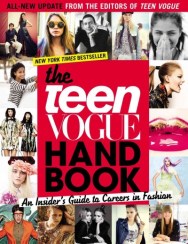
CAREER12There are even more resources for the older readers and young adults, including; Cool Careers Without College for Animal Lovers by Chris Hayhurst, Exploring Careers: a Young Person’s Guide to 1,000 Jobs from the editors at JIST, The Teen Vogue Handbook: an Insider’s Guide to Careers in Fashion, Careers for Environmental Types & Others Who Respect the Earth by Michael Fasulo and Jane Kinney, College Majors and Careers: a Resource Guide for Effective Life Planning by Paul Phifer, and Great Careers in 2 Years: the Associate Degree Option: High-Skill and High-Wage Jobs Available Through Two-Year Programs by Paul Phifer.

Taming the Epidemic

51DfIYszbDL._SX326_BO1,204,203,200_I have tried writing this several times, but I need 8,000 words instead of 800. I didn’t want to write about a politically charged topic at a time when politics are tearing the country apart. There is so much here you should read, need to read, that I cannot emphasize how important these books are, on such a difficult topic. And yes, if you’re living in this very town, they are relevant to YOU.

I read Chasing the Scream by Johann Hari in January – that’s how long it’s taken me to write this. I was skeptical – yeah, yeah, failed war on drugs. We know. But the information she presents is hard-core, well-documented, and agonizing. You can check it yourself. It blew my mind and changed my outlook not only on drug addiction, but my outlook on life. Hari shows – starting with Billie Holiday – that the war on drugs began early in the 1900’s as a method to exert control on “undesirables” – Mexicans, Blacks, Irish, Chinese. It blew up into a witch hunt, reinforced by Nixon to control war protestors. In the early 1900’s, drugs were legal. People could buy a small amount, get their controlled fix, and carry on. When the drugs were banned, junkies were forced to go underground, for huge amounts of money and unknown quality. People died. Crime exploded. Gangs took over. We knew this would happen, because we saw the exact pattern in Prohibition. The U.S. put a gag on every other country in the world – you want our aid, you make these drugs illegal. Now we control all the cartels.

And most of our addicts are addicts because…. they have psychological issues. Soldiers with PTSD. Rape and abuse victims. Homeless. Mentally ill. People with trauma. People without hope. And we have spent billions jailing them, punishing them, and sometimes killing them, because after all, they’re junkies, who cares.

But what happens when junkies (who make up only 10% of people who have used illegal drugs: 90% walk away fine) are not jailed, but treated as mentally ill, counseled, given a purpose? People tend to get clean and stay clean. What happens when illegal drugs are decriminalized – or even legalized, as in parts of British Columbia, or Portugal? Even heroin? Crime drops. Gangs fail. People become productive. And eventually, people get off the drugs themselves because it’s not who they are anymore. It’s a frightening concept, and against everything we have ever been brainwashed with.

Move on to Dreamland: The True Tale of America’s Opiate Epidemic, by Sam Quinones. 51pEBowSD9L._SX327_BO1,204,203,200_Quinones traces the perfect storm of the modern heroin epidemic: a false assumption, a powerful painkiller, a drug marketing lie, and a whole new method of peddling Mexican heroin. Oxycontin was touted as an addictionless drug because it was time-released, at a time when pain management was the rage in medicine. In reality, Oxycontin was very chemically similar to heroin, just as addictive, and pain “clinics” sprang up that did nothing but pump millions of addiction pills into the country. As people fought to get oxycontin, enter the Mexicans, who broke the rules by delivering drugs to your door. No guns. No violence. All under the radar. And their heroin was uncut Black Tar. Competition brought the price down to $6 a fix – cheaper than the $1/milligram Oxy. Washington State finally made the connection when their drug overdose fatalities were higher than their auto accident fatalities. Purdue Pharma paid more than $630 million dollars in fines for faking their addiction data. Pfizer paid more than $3 Billion for misrepresenting their drugs – less than 3 weeks take of their sales from them. Oxycontin was changed to help prevent abuse, but no one has yet put a dent in Mexican heroin sales.

51h74NFYq2L._SX331_BO1,204,203,200_A slightly older book to read is Methland, which shows the damage done to the Midwest with the rise of Meth, which is so easy to produce you can manufacture it while riding a bicycle around town. Why does everything seem to start in the Midwest? These are the areas hardest hit economically by the collapse of American industry. When people are hopeless, with no jobs, or if you are injured on the job, the doc will write you a pain prescription. You stretch it out to a disability claim, get on payments, and you no longer worry about money, or how to pay for prescriptions. You sell those pain pills for three times what you were charged. For students, it’s often sports. Children are pushed to excel, to work through the pain, given pain pills to take the field and win this one, and they get hooked. Most teens start with sports injuries.

If you think drug users are minorities in deepest urban ghettos, you’re wrong. They’re here. At least two students in this very town died this school year from overdoses. We don’t talk about them. They don’t make the paper. But the students know. It’s bad enough that there is now a clinic in this town. Let’s stop pretending. It’s the kid on the sports team. It’s the kid behind the register. Your hairdresser. The PTA mom.

These books are thought provoking in their information and ideas. Though I’m – thankfully – not directly affected by the drug epidemic, I feel I dodged a bullet when my daughter was only 13 (2006). A heavy jar fell on her foot and I took her to the ER. It wasn’t broken, but badly bruised. They offered her Oxycontin or Percocet for the pain. I said no, something less strong. They gave me scripts for both, and I could fill which I wanted (dead truth). A thirteen year old. I tore up both of them. She did fine with Motrin.index

If you can read one book this year, read Chasing the Scream. If you can read two, read Dreamland as well. Even if you don’t agree with them, let’s get a national dialogue going. And if you want something a little more technical but utterly fascinating about the chemical aspects of addiction, track down How Drugs Influence Behavior: a Neurobehavioral Approach by Jaime Diaz. I was – still am – amazed at the information, and it’s not so technical a layman can’t understand it. Never have I seen a medical book with opinions like this.