In 2019, Pew Research found that 55% of American adults said they get their news from social media either “often” or “sometimes” . And while some news on social media may come from reliable sources, plenty more “news” may be from articles reposted or retweeted by friends. So, as you’re scrolling through your newsfeed and seeing articles (or comments on articles) that provoke a reaction in you, how do you know what you’re seeing is legitimate?
We are living in an age of misinformation – just about anyone can become a “publisher” these days with little to no oversight or verification. And many of these publishers aren’t even people! Recently, researchers at Carnegie Melon University studied more than 200 million tweets about the novel coronavirus. Of the top 50 most influential retweeters, 82% of them were bots! What were they retweeting? Dozens of inaccurate stories about things like bogus conspiracy theories and phony cures.
How do we know what’s real and what isn’t nowadays? It takes some digging. And it’s worth doing a little fact-checking of your own before hitting the “share” button. We should also understand that there are different types of unreliable information out there. For instance there’s a difference between deliberately misleading information (propaganda and libel) and unintentional misinformation (mistakes). But we don’t want to spread either kind, so let’s look at how to separate the fact from fiction.

The C.R.A.P. Test, developed by Dominican University Librarian Molly Beestrum, is a helpful tool to use when trying to decide if something is a credible, valid source. When you come across questionable information, run it through these four categories:
Current
- How current is the information?
- How recently was it was posted? Has it been updated?
Reliable
- How reliable is the information?
- Does the author provide references or sources?
- What proof do you have that the information is reliable?
Authority
- Who is the creator or author of the information? What are his or her credentials?
- Who is the publisher or sponsor of the information? Is this a reputable information source?
Purpose/Point ofView
- What is the purpose of this information? Is it intended to inform, entertain, or persuade?
- Does the information sound like fact or opinion? Is it biased?
- Is the creator or author trying to sell you something?

Something else to think about is the emotional response an article or post evokes in you. Content creators are all about the emotional response, and “fake news” stories often use emotionally driven content to push their agenda and compel people to share it. The next time you are outraged or amazed by a story, look a little deeper. Fact checking sites like Snopes.com and FactCheck.org, can help you determine if what you’ve seen is legitimate or not.
Here’s a helpful checklist by ProQuest (a global information-content and technology company that provides applications and products for libraries), which contains a lot of useful tips for vetting online content:

Want to go deeper into the subject of information literacy and “fake news”? Here are a few books to get you started:
 Fake news, Propaganda, and Plain Old Lies : how to find trustworthy information in the digital age by Donald A. Barclay
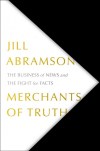 Merchants of Truth : the business of news and the fight for facts by Jill Abramson
 The Smear : how shady political operatives and fake news control what you see, what you think, and how you vote by Sharyl Attkisson
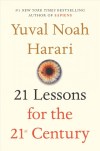 21 Lessons for the 21st Century by Yuval Noah Harari
 What’s Fake News? by Joyce Jeffries
Additional sources::
- https://community.today.com/parentingteam/post/how-to-help-students-spot-fake-news
- https://clark.libguides.com/ld.php?content_id=31034909
- https://www.mcafee.com/blogs/consumer/spot-fake-news-and-misinformation-in-your-social-media
- https://www.factcheck.org/2016/11/how-to-spot-fake-newsck.org/2016/11/how-to-spot-fake-news
- https://www.theverge.com/21276897/fake-news-facebook-twitter-misinformation-lies-fact-check-how-to-internet-guide
 The first Earth Day was celebrated on April 22, 1970, with the intention of bringing awareness to environmental issues. The first Earth Day events drew millions of participants across the U.S. and around the world. This was the scene in New York City. Since 1970, celebrations have grown, with Earth Day becoming a global event in 1990.
 The library is a vital place for citizens to become educated and informed about environmental issues, from fracking, to plastic bags and straws, to carbon emissions, so that that they may approach their elected representatives with their concerns. The environmental impact of plastic straws is a topic that has been in the news a lot recently:





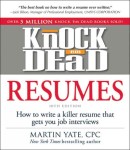
 Spring is the traditionally time we clean things out around the house. Why not apply the same idea to your resume? It may be past time you went in there and spruced things up a bit. Fortunately for you, the library is a valuable resource for more than just the latest thriller novels and that movie you couldn’t make it to the theater to see. We also pride ourselves on being a fantastic resource for the every day job hunter!
 stop by the library and reserve one of our new study rooms to write and research in private. All you need to do is call or visit one of our reference librarians and sign up for a slot! We also have online resources that can help you perfect your new resume, including



 So what does that mean? Are books working against girls? Do we perpetuate female stereotypes and patriarchal archetypes starting with early board books? Do we as parents set our children up for failure by gender-typing from an infant’s earliest days?





 The Cheshire Library Blog