 No matter what you read lately, whether it’s political, economic, or even comedy relief, the concept of a national divide keeps popping up. It seems there is nothing that we’re not crabby about – which song got the Grammy, whether poodles are better than dalmatians, whether corn counts as a vegetable or a starch. Umpteen books have been written on the divide of “liberal” vs. “conservative,” urban vs. rural, prosperity vs. lazy poor, criminal drug abuser vs. victim of Big Pharma, and into that mix Nicholas Kristof throws out an excellent one, called Tightrope: Americans Reaching for Hope.
Kristof grew up in rural Yamhill, Oregon, a White, conservative town of 1100 people.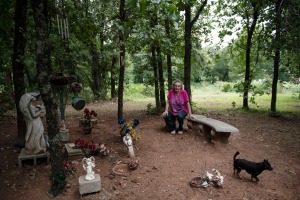 More than a quarter of the kids he went to school with died of drugs, alcohol, suicide, or reckless accidents caused by drugs or alcohol. Why did he make it out in one piece, while his friends died slowly of alcoholism, often homeless most of their lives? Why did families lose 3, 4, 5 kids to drugs and alcohol? Why did some do fine?
To keep it real, Kristof explores people in similar situations in places like South Dakota, Oklahoma, New York City, Baltimore, and more, bastions of poverty and drugs in the U.S. What he finds is the same issues, handled differently – humanely – makes a world of difference. In places like Oklahoma, the entire penal code is stacked against poor people. Indigent and need a free legal defender? You are then arrested for being indigent, and fined for your arrest. Now you’re in debt to the state. So you are sent to prison for being a debtor – even if it’s only ONE dollar! Now you have more fines added. People are released from prison – private, for-profit prisons, of course – with hundreds of thousands of dollars in fines from a mere $25 parking ticket. Can’t make the payments on your fines? Back to jail, and more fines. It’s a gerbil wheel of punishing the poor – even though intervention programs can save $10 of tax money for every dollar spent.
And of course, once you have a felony conviction, you can’t get a job. So people turn to selling meth and heroin. And get convicted, and can’t get hired, and get homeless and depressed and turn to drugs…. Over and over and over. Why are Mexicans taking the jobs from under-educated poor white people? Because the Mexicans can be counted on to show up for work, and aren’t drunk or stoned.  Kristof narrows the biggest issues down to two: One is education. Most of the people he knew didn’t graduate, had parents that barely made it to 8th grade, and grandparents who might not have made it to fifth. If you come from a home where there are no books, no magazines, and no expectations of further education, it’s harder to succeed. He explores one family where the mother had a 5th-grade education, and five children by four different fathers. When the first was expelled from kindergarten twice for behavioral issues, she – with a fifth-grade education – decided to home-school her kids (5 under the age of 6). How much of a chance do those kids have?
The second predictor of success was coming from a two-parent home. If you had two parents – and usually two incomes – you had a much greater chance of being successful. Single mothers with a trail of children left those kids in chaos. More than one child entering Yamhill kindergarten was described as “feral.”
Kristof also explores the programs – often started by those who had had enough – that give people just the right boost, whether it’s paying those $1 legal fees and freeing people from prison or getting them a job or housing or a drug treatment program. Such programs are a lifeline for the people involved, and often get them on the track to permanent success. Unfortunately, many of the government programs to do just that have been eliminated in recent years.
The book is easy to read, informative, and does not preach or even really point fingers. It’s careful to present only facts, though the family situations and the culture of violence surrounding them can be maddening. Despite the grim realities, the book ends up on a positive note. This is one to put on your To Be Read list, and check out these other titles in similar vein:







Hillbilly Elegy
The Left Behind
Evicted
White Trash
Dimestore
Dreamland
Chasing the Scream
Detroit
Broke, USA
Dignity: Seeking Respect in Back Row America
Survival Math
Nickel and Dimed

 Late last summer I visited the
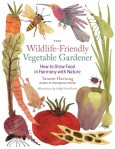
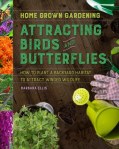
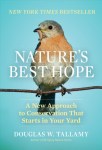
  I read books and looked at websites about creating pollinator gardens and sketched out a plan for an irregularly shaped garden about 50 feet long and between 12 and 20 feet wide. There was an existing spruce and 2 shrubs from an earlier planting scheme. And I wanted to incorporate a number of plants from another garden. A 50-foot garden may sound large
  but it wasn’t nearly big enough for the dozens of plants that I wanted to include. I made list after list. And then crossed out most of the plants on the lists until I had a workable plan. At this point, it was late April and time to get busy.
 that turned out to have been a town dumping ground for road sand and hunks of old macadam from long–ago repaving projects. We had to remove the sand and junk from the planting area for each shrub or perennial (there were dozens) and replace it with decent topsoil. This was hard work! Luckily for me (though not for him), my 28-year-old son was stuck at home and was willing to help. He did mo
 st of the heavy excavating and moving of soil, alI I had to do was plant, mulch, weed and water. Months later, my garden is taking shape. It has been full of bees in all shapes and sizes as well as butterflies. As I write this, a flock of goldfinches is busy pulling the seeds out of the fading liatris and coneflowers. And I am busy thinking about how to improve the bloom sequence and plant variety in the garden. As any gardener knows, a garden is never completed.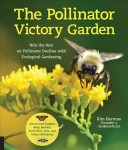






 1. First up is
  2.
2.  If you’d prefer a physical title, the Cheshire Public Library has a large collection of non-fiction titles, as well as newspapers for current events and other human interest pieces. My personal favorite is our biography section, as well as our true crime selection. A few new titles that I’ve been enjoying lately are “
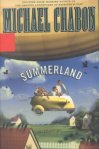
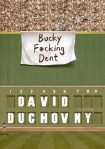
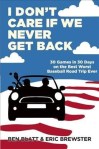
 It may have been delayed by a pandemic, but you can’t keep baseball down forever. The season officially kicked off at the end of July this year, with a few crucial changes. Most significantly, there will be no fans in the stands, and the season will be shortened to a mere 60 games. But in a time when any sense of normalcy is something to cling to, baseball is back!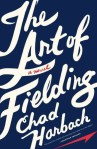








 The Cheshire Library Blog