Six Picks – Great Environmental Reads

Debating global climate change is as useful as debating whether a tomato is a fruit. The climate has changed before, without man’s help, and it is definitely showing signs of a bad mood swing again. The question we need to think on is how will we survive that change, and what can we do to calm the changes as quickly as possible. Here are six excellent books on a variety of ecological issues currently plaguing us.  You may not agree with all of them, but they are food for thought and quite worthy of debate.

Silent Spring  by Rachel Carson  The grandmama of them all, Rachel Carson’s landmark 1962 epic of how chemicals were destroying the planet. Her work led to a banning of DDT, which had nearly wiped out dozens of bird species such as the American Bald Eagle, by making eggs so brittle chicks could not survive. This is the book that started ecology, Earth Day, and so many other great causes. It was required reading in my high school; if you haven’t read it, it’s high time you did.
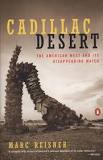
indexCadillac Desert: The American West and its Disappearing Water  by Marc Reisner   The American West has been settled for barely 150 years. It was desert then, and with massive amounts of finite water diverted from rivers and aquifers, we’ve pared back tiny portions to create oases like Phoenix, Reno, Los Angeles, and San Diego. Despite trillions of dollars to build dams, drill wells, and pump water thousands of miles in pipes, the west still remains one of the driest places on Earth.

Plastic: A Toxic Love Story  by Susan Freinkel       Plastic. It’s everywhere. Not only around us, but inside us as well. Freinkel shows us not only the impact plastic has on our daily lives  , but how all that pervasive plastic affects us in ways we don’t realize – such as the soft plastics that leach out of IV lines. Some plastics are more toxic than others: generally the softer the plastic, the more toxic it is.  And every time you heat your food in a plastic dish in the microwave, you put yourself at risk. No plastic ever degrades, it just crumbles, which creates hazards of its own. Plastics have their uses, yes, but at what cost to our health and environment?

Six Degrees: Our Future on a Hotter Planet by Mark Lynas    In 1816, the climate change from the eruption of Mount Tambora was estimated at seven degrees. For 18 months, global weather patterns were upended, resulting in relentless heat in the wrong areas, extreme drought in others, monumental flooding, and snow and freezing temperatures twelve months out of the year as far south as Georgia.  In Six Degrees, Lynas walks the reader through the changes the world can expect to experience with each degree of increase of average daily temperature. The picture is not pretty. If man has difficulty adapting to such major swings in such short times, how can we possibly expect plants and animals to adapt?

The Coming Plague: Newly Emerging Diseases in a World Out of Balance by Laurie Garrett.   Bad drinking water, misuse of antibiotics, deforestation, wars, refugees, poverty, and unsanitary living conditions all factor to create superbugs.  The diseases have always been with us, but it’s the close proximity to carrier animals that allows the diseases to pass to man. Garrett outlines the path these diseases take, and how it’s not too late to prevent another devastating global plague. This book will scare you in all the right ways.

The Lorax  by Dr. Seuss.    Ignore the dayglo movie. The Lorax, first published in 1971, is a wonderful way to introduce ecology and respect for nature to children. When the Trufula forests are in danger of extinction from overuse, it brings out the Lorax, who “speaks for the trees, for the trees have no tongues.”  The Lorax is a fable about caring for nature, sustainability, and never taking more than we need.
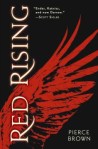
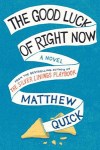
10 Books We’re Looking Forward to in February

Every month, librarians from around the country pick the top ten new books they’d most like to share with readers. The results are published on LibraryReads.org. One of the goals of LibraryReads is to highlight the important role public libraries play in building buzz for new books and new authors. Click through to read more about what new and upcoming books librarians consider buzzworthy this month. The top ten titles are:

  1. Red Rising by Pierce Brown.
  2. The Good Luck of Right Now by Matthew Quick.
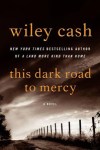
  3. This Dark Road to Mercy by Wiley Cash.
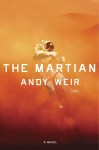
  4. The Martian by Andy Weir.
  5. After I’m Gone by Laura Lippman.
  6. Ripper by Isabel Allende.
  7. The Ghost of the Mary Celeste by Valerie Martin.
  8. The Wife, the Maid, and the Mistress by Ariel Lawhon.
  9. The Winter People by Jennifer McMahon.
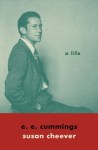
  10. E.E. Cummings by Susan Cheever.

What Kind of Reader is My Child? (Part 1)

The language dedicated to explaining reading development and skills can quickly become confusing. Part of the trouble is that there are a number of different systems available to measure reading skills, and they rarely translate to other systems very easily. I am going to do my best to explain some of the terms you are most likely to come across, and offer some resources to help you help your child master and enjoy reading.  Lets start with some of the basic terms that are almost universal about the developmental stages of reading. I will tackle the different systems for measuring the skills in a later post.tumblr_n04cig1apM1rmidh1o1_r1_500Aspiring readers, “Pseudo Readers”, or Pre-readers are just beginning to understand the basic ideas of book, print, and the joy of sharing of a book. They are gaining a command of the alphabet along with the ability to recognize and name letters. They are also developing many phonological awareness skills, such as recognizing phonemes, syllables, and rhyme.  They will often pretend reading and telling the story via the pictures on the pages. Reading picture books and board books to your child is a great way to help children in this stage develop their skills and learn to love books.

Early Emergent Readers are beginning to learn sound/symbol relationships,starting with consonants and short vowels,and are able to read consonant-vowel-consonant words, and a number of high-frequency words. Readers in this stage typically are in Preschool through Grade 1 and test to Guided Reading Levels (GRL) A-C, DRA Levels A-3. Picture books and some easy reader books are good choices to help continue your child’s reading development. Read to them and with them as often as you can.

Emergent Readers are developing a much better grasp of comprehension strategies and word-attack skills. They can recognize the difference between fiction and nonfiction, and recognize that reading has a variety of purposes. Readers in this stage have developed an understanding of the alphabet, phonological awareness, and early phonics. They have command of a significant number of high-frequency words. Readers in this stage typically are in Kindergarten through Grade 1 and test to GRLs D-G, DRA Levels 4-12.  It is time to really encourage your child to read to you and themselves, while continuing to read to them to help increase their vocabulary and comprehension.

For Early Fluent Readers or Transitional readers reading is more automatic, with more energy devoted to comprehension than word attack. Readers are approaching independence in comprehending text. These readers are experiencing a greater variety of text and are able to recognize different styles and genres. Independence often varies with the type of text being read. Readers in this stage typically are in Grade 1-2 and test to GRLs H-M, DRA Levels 14-28.  Your child can read to you and themselves more and more now. Encourage reading independence, but do not be afraid to keep reading to them.

Fluent Readers have successfully moved from “learning to read” to “reading to learn.” Their reading is more automatic and includes expression and proper pauses.  These readers read a wide range of text types and do so independently. For the most part, they are capable of improving their reading skills and selection of materials independently through increased practice. Readers in this stage typically are in Grade 3-4 and test to GRLs N-Z, DRA Levels 30 and higher. Keep encouraging them to read and let them explore a variety of books so that they can find the ones they enjoy in order to keep them interested in reading.


For more information about reading development and helping your child both enjoy and excel in reading check out some of these books: Silly Books to Read Aloud by Rob Reid, The New York Times Parent’s Guide to the Best Books for Children by Eden Ross Lipson, Read With Me: Best Books for Preschoolers by Stephanie Zvirin, How to Get Your Child to Love Reading by Esmé Raji Codell, Connecticut’s Blueprint for Reading Achievement: The Report of the Early Reading Success Panel by the State of Connecticut State Board of Education, Raising Confident Readers: How to Teach your Child to Read and Write by J. Richard Gentry, and Growing a Reader from Birth: Your Child’s Path from Language to Literacy by Diane McGuinness.

Great Poetry Books to Share with Children

Do you love poetry and want to inspire the same love in your child, are trying to teach young children to read and write poetry, or simply looking to spark your own enjoyment of the genre. Poetry can seem intimidating at first glance, but knowing where to start, and starting simple, are often a good idea. These books are full of poetry that is suited for all ages, the young and young at heart. So, regardless of the reason you might want to venture into the worlds of poetry, these books are a great place to start.

This slideshow requires JavaScript.

  1. Falling Up (or any collections) by Shel Silverstein
  2. The World of Christopher Robin; the Complete When We Were Very Young and Now We are Six by A.A. Milne
  3. A Child’s Garden of Verses by Robert Louis Stevenson
  4. Love That Dog by Sharon Creech
  5. Sad Underwear and Other Complications: More Poems for Children and Their Parents by Judith Viorst
  6. Mirror Mirror: A Book of Reversible Verse by Marilyn Singer
  7. A Pizza the Size of the Sun by Jack Prelutsky
  8. Joyful Noise: Poems for Two Voices by Paul Fleischman
  9. Forest Has a Song: Poems by Amy Ludwig VanDerwater
  10. A Dazzling Display of Dogs by Betsy Franco
  11. It’s Raining Pigs and Noodles by Jack Prelutsky
  12. Kids Pick The Funniest Poems by Bruce Lansky
  13. The Bill Martin Jr Big Book of Poetry by Bill Martin Jr.

There are, of course, many more fantastic books of poetry and novels in verse out there for us all to enjoy. If you have a favorite that I missed please share it with us in the comments so that others can discover it too!

History, Read All About It – For Book Clubs

history 2Here’s a selection of histories that should satisfy your reading club’s yearning for learning.

A People’s History of the United States: 1492 to Presentby Howard Zinn – Known for its lively, clear prose as well as its scholarly research, this is the only volume to tell America’s story from the point of view of — and in the words of — America’s women, factory workers, African-Americans, Native Americans, working poor, and immigrant laborers.

Lady Almina and the Real Downton Abbey: The Lost Legacy of Highlcere by Countess of Fiona Carnarvon –  This rich tale contrasts the splendor of Edwardian life in a great house against the backdrop of the First World War and offers an inspiring and revealing picture of the woman at the center of the history of Highclere Castle.

With the Old Breed: At Peleliu and Okinawaby E.B. Sledge – Based on notes Sledge secretly kept in a copy of the New Testament, this book captures with utter simplicity and searing honesty the experience of a soldier in the fierce Pacific Theater. Here is what saved, threatened, and changed his life. Here, too, is the story of how he learned to hate and kill—and came to love his fellow man.

Citizens of London: The Americans Who Stood with Britain in Its Darkest, Finest Hour by Lynne Olson – A behind-the-scenes story of how the United States forged its wartime alliance with Britain, told from the perspective of three key American players in London: Edward R. Murrow, the handsome, chain-smoking head of CBS News in Europe; Averell Harriman, the hard-driving millionaire who ran FDR’s Lend-Lease program in London; and John Gilbert Winant, the shy, idealistic U.S. ambassador to Britain.

Helmet for my Pillow by Robert Leckie –  From the live-for-today rowdiness of marines on leave to the terrors of jungle warfare against an enemy determined to fight to the last man, Leckie describes what war is really like when victory can only be measured inch by bloody inch.

The Lost City of Zby David Grann – In 1925, the legendary British explorer Percy Fawcett ventured into the Amazon jungle, in search of a fabled civilization. He never returned. Over the years countless perished trying to find evidence of his party and the place he called “The Lost City of Z.” Journalist David Grann interweaves the spellbinding stories of Fawcett’s quest for “Z” and his own journey into the deadly jungle, as he unravels the greatest exploration mystery of the twentieth century.

The Forgotten Man: A New History of the Great Depression by Amity Shlaes – Amity Shlaes, one of the nation’s most-respected economic commentators, offers a striking reinterpretation of the Great Depression. She traces the mounting agony of the New Dealers and the moving stories of individual citizens who through their brave perseverance helped establish the steadfast character we recognize as American today.

April 1865: The Month That Saved America by Jay Winik – A brilliant new look at the Civil War’s final days that will forever change the way we see the war’s end and the nation’s new beginning. Uniquely set within the larger sweep of history and filled with rich profiles of outsize figures, fresh iconoclastic scholarship, and a gripping narrative, this is a masterful account of the thirty most pivotal days in the life of the United States.

Here are some additional titles that might interest your club:  Team of Rivals by Doris Kearns Goodwin; The Swerve: How the World Became Modern by Stephen Greenblatt; Paris 1919: Six Months That Changed the World by Margaret MacMillan; The Eighty-Dollar Champion: Snowman, The Horse That Inspired a Nation by Elizabeth Letts; A Walk Across America by Peter Jenkins; Sin in the Second City: Madams, Ministers, Playboys, and the Battle for America’s Soul by Karen Abbott; Havana Nocturne: How the Mob Owned Cuba and Then Lost It to the Revolution by T.J. English