Summertime Stargazing for the Whole Family

Warm summer nights are the perfect time for stargazing alone, or as a family. Learning about space, the night sky, and how to find objects in the sky is free, can be lots of fun, and is a great way to spend some summer night with the whole family.  So, if you have a youngster that is fascinated by the stars, or if you would have some interest and would like to encourage that interest in other family members or friends, here are some great children’s books about the stars and getting started stargazing.
1. Stargazers by Gail Gibbons
2.Night Sky Atlas by Robin Scagell
3. Awesome Astronomy by Raman Prinja
4.A Black Hole is Not a Hole by Carolyn Cinami DeCristofano; Illustrated by Michael Carroll
5. Universe by Robin Kerrod
6.The Kids Book of the Night Sky by Ann Love & Jane Drake; illustrated by Heather Collins
7. Once Upon a Starry Night: a Book of Constellation by Jacqueline Mitton, Christina Balit
8. The Young Astronomer by Harry Ford

9.Where are the Stars During the Day?: a Book about Stars by Melvin and Gilda Berger; illustrated by Blanche Sims
10.Beyond the Solar System: Exploring Galaxies, Black Holes, Alien Planets, and More by Mary Kay Carson


Want more great books about the night sky and space include: Is there Life on other Planets?: and Other Questions about Space by Gregory L. Vogt, 11 Planets: a New View of the Solar System by David A. Aguilar,Exploring the Solar System: a History with 22 Activities by Mary Kay Carson, Dot to Dot in the Sky: Stories in the Stars by Joan Marie Galat, and 101 Things Every Kid Should Know about Science by Samantha Beres.


Still not enough information, or looking to study more study about space, the night sky, and stargazing? In the adult nonfiction department you might want to check out: Stargazing with Binoculars by Robin Scagell, Firefly Guide to Stars and Planets by Sir Patrick Moore, Astronomy Hacks by  Robert Bruce Thompson and Barbara Fritchman Thompson, An Intimate Look at the Night Sky by Chet Raymo,A Field Guide to the Stars and Planets by Jay M. Pasachoff, Discover Planetwatch : a Year-Round Viewing Guide to the Night Sky with a Make-your-own Planetfinder by Clint Hatchett, or The Audubon Society Field Guide to the Night Sky by Mark R. Chartrand.

Happy Birthday Paperback Books!

birthday

On July 30, 1935, a new technology was born that provided knowledge, stories, entertainment (with text and pictures, no less) that was convenient and cheap.  It was light enough to carry anywhere and you could tag specific areas to penguinre-read at a later date.  An early e-reader?  Nope – the paperback book!  Penquin Publishers, in England, was the first to successfully publish respectable, quality writing without a hard cover.  (There were earlier paperback books called penny dreadfuls, yellow-backs, and dime novels that generally featured lurid stories and were printed on cheap pulp paper.)

pocketPartnering with Simon & Schuster, Robert de Graff introduced the first paperbacks in America on June 19, 1939 called Pocket Books.  The first American paperback book to be printed in the United States was The Good Earth by Pearl Buck.  The cost to purchase these new books – 25 cents versus $2.75 for a hardcover.  In order to make a profit on paperbacks, de Graff had to print 100,000 copies at a time.  He couldn’t rely on bookstores to sell that many copies so he began using magazine distributors to place Pocket Books in newsstands, subway stations, drugstores and any other outlet to reach suburban and rural populations.  He designed bold, colorful, eye-catching book covers to catch people’s eyes.  By September 1944, 100 million books were sold in more than 70,000 outlets across the United States.   By the end of the 1940’s, the paperback industry began publishing original stories.  Previously, the industry only reprinted hardcover titles.  There are now more than 20 major publishers producing high quality, original and reprinted paperbacks.


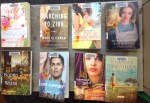
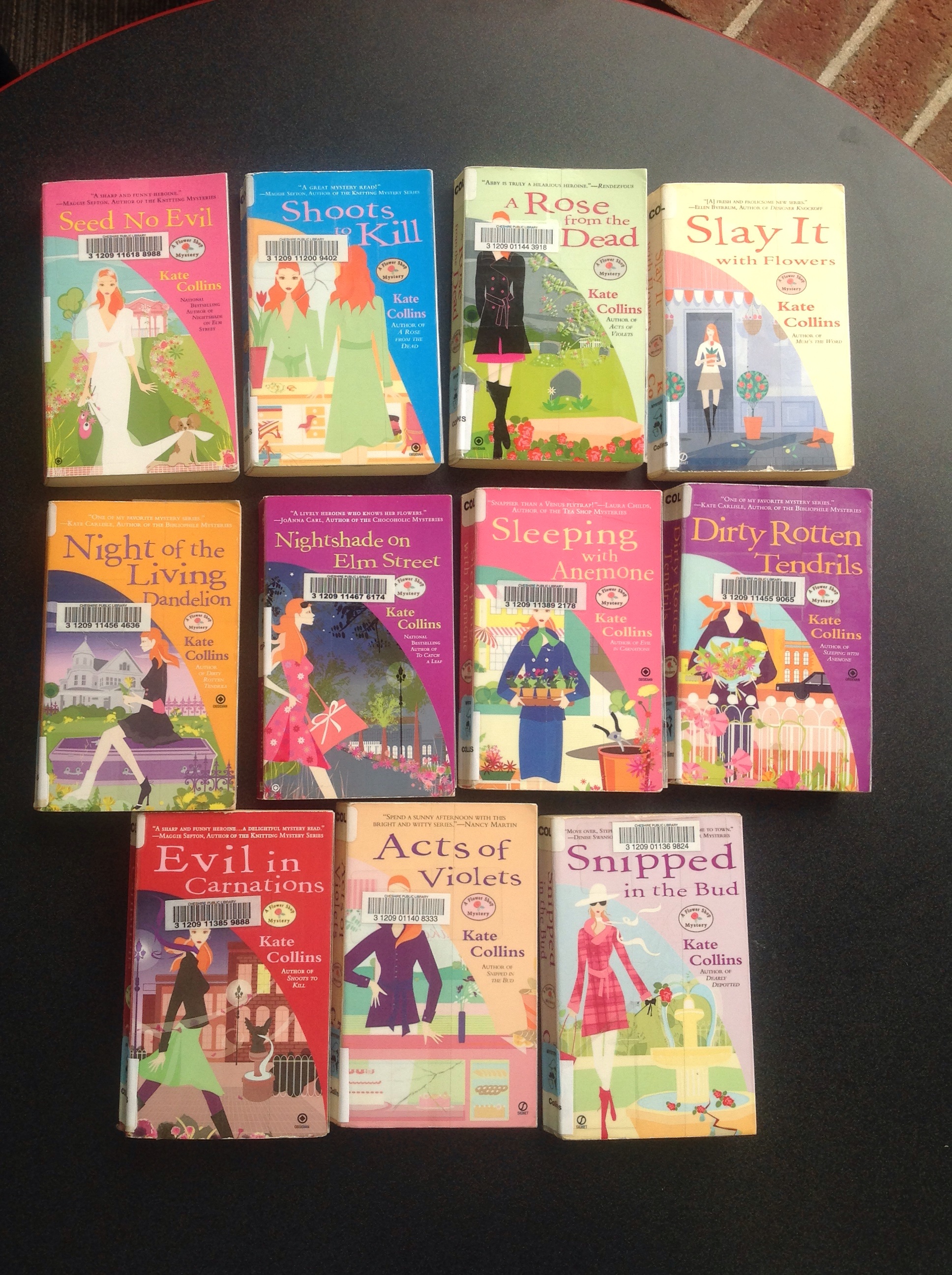
Today, there are many sizes of paperback books and all different prices, but the two major sizes are mass-market and trade.  Authors originally wrote stories for publications in magazines, but soon shifted their attention to mass-market paperbacks.  They could write longer, more in-depth, entertaining novels that boasted beautiful, bold, color covers and were prominently displayed in all types of venues.  They were affordable and easy to carry and proved to be a huge hit.  Mass-market paperback readers have a large selection of genres of original stories to choose from, in addition to best-selling hardcovers republished in paperback form.  In the beginning, Westerns were the biggest selling genre, followed by Crime and Science Fiction.   The most popular genre for mass-market today is Romance.  Within this genre you will find many sub-genres including contemporary romance, historical romance, small town romance, and paranormal romance.  The Cheshire Library has a separate section dedicated to mass-market Romance Books located towards the front of the library, near the large windows.    Another very popular genre for mass-market paperbacks are Cozy Mysteries.  The Cheshire Library has a large selection of these interfiled among the hardcovers in the Mystery section of the library.  You can also find regular Fiction, Science Fiction and Fantasy paperbacks in the library’s collection.
COZY MYSTERIES

COZY MYSTERIES

Some literary authors, critics and bookstore owners turned their noses up at mass market paperbacks.  When Doubleday’s Jason Epstein was a college student, he lamented the fact that he and his fellow students couldn’t afford hardcover editions and envisioned a line of upscale paperbacks of hardcover bestsellers and classics.  By 1953, Trade paperbacks were introduced.  These were larger, more durable, with attractive covers illustrated by fine artists with an appeal to a more intellectual market.  They sold for 65 cents to $1.25.    The library’s selection of Trade paperbacks are filed among the hardcover books.  They also come in a variety of genres, with the most popular genres being erotic romance – with Fifty Shades of Grey topping the charts – and Christian-themed books.


There were many who thought paperbacks would kill the publishing industry, but instead, the books proved to be quite the sensation.  As recently as 2010, paperbacks outsold hardcover books.  Although the ebook has taken some of the market away from paperbacks, they still continue to be a much beloved tool for readers everywhere.  The look, feel, texture, smell, size, and portability makes the paperback book very inviting.


Smart Summer Reads for Older Teens and Adults

Are you looking for a great read this summer that is not pure fluff, but not so heavy that you wonder why you are reading it for fun? Here are some books with great insights about life, different cultures, history, and society. They also happen to be fantastic reads, although not necessarily fun reads. These books would be good choices for a curious high school student, the college bound, and for adults that are just looking to expand their knowledge and reading while not afraid to cross the threshold of the teen room doors.

1. Persepolis by Marjane Satrapi. The great-granddaughter of Iran’s last emperor and the daughter of ardent Marxists describes growing up in Tehran in a country plagued by political upheaval and vast contradictions between public and private life.

2. The Absolutely True Diary of a Part-Time Indian by Sherman Alexie. Budding cartoonist Junior leaves his troubled school on the Spokane Indian Reservation to attend an all-white farm town school where the only other Indian is the school mascot.

3.  The Devil in the White City: Murder, Magic, and Madness at the Fair that Changed America by Erik Larson. An account of the Chicago World’s Fair of 1893 relates the stories of two men who shaped the history of the event–architect Daniel H. Burnham, who coordinated its construction, and serial killer Herman Mudgett.

4. American Born Chinese by Gene Luen Yang. In an action-packed modern fable about the problems young Chinese Americans face when trying to participate in American popular culture, the lives of three apparently unrelated characters–Jin Wang, Monkey King, and Chin-Kee–come together with an unexpected twist.

5. The Worst Hard Time: The Untold Story of Those Who Survived the Great American Dust Bowl by Timothy Egan. Presents an oral history of the dust storms that devastated the Great Plains during the Depression, following several families and their communities in their struggle to persevere despite the devastation.

Looking for even more books that are smart and fascinating read? Here are a few more reading suggestions. If I missed one you would like to recommend please leave a comment and let us know so other readers can add it to their list as well!  Sammy & Juliana in Hollywood by Benjamin Alire Sáenz, The Kite Runner by Khaled Hosseini, Maus and  Maus II  by Art Spiegelman, The Diary of a Young Girl by Anne Frank, The Color Purple by Alice Walker, The Magical Life of Long Tack Sam by Ann Marie Fleming, Walden by Henry David Thoreau, I, Rigoberta Menchu: An Indian Woman in Guatemala by Rigoberta Menchú, Is Everyone Hanging Out Without Me? by Mindy Kaling, Persepolis 2: the Story of a Return by Marjane Satrapi, First They Killed My Father: A Daughter of Cambodia Remembers by Loung Ung, Hyperbole and a Half: Unfortunate Situations, Flawed
Coping Mechanisms, Mayhem, and Other Things That Happened
by Allie Brosh, or The Spirit Catches You and You Fall Down: A Hmong Child, Her American Doctors, and the Collision of Two Cultures  by Anne Fadiman.

Is it Time to Have THE TALK with your Kids?

It can be hard to talk about puberty, bodies, and sex with our children. Not only are we uncomfortable and hope we are picking the right words and tone, but no kids want to think about their parents in the framework of anything sexual. Heck, most of us adults do not want to think about our parents or kids in that framework either. However, discussions need to be had, and information shared. If you have seen my previous post, “Is Time to Talk About Bodies with Younger Children?, you might have already looked at some of the books I suggested for parents. Most of those books include discussion aids for children of all ages, and might make you feel more prepared for the discussion.

If your children are approaching puberty, or well on their way, they will have much different concerns and questions than a five year old wondering about the differences between boys and girls and how babies come about. So I have listed books here for the eight and older crowd, and then the tween and teen crowd that might have much more difficult questions to answer. I would suggest reading some of the books before handing them off to your curious child in order for you to gauge its appropriateness for your particular child, and to help you to handle any of the resulting conversations.

Eight and Up:
1. The Boy’s Body Guide: a Health and Hygiene Book by Frank C. Hawkins with Greta L.B. Laube ; illustrated by J.C. Hawkins

2. Ready, Set, Grow!: a What’s Happening to my Body? Book for Younger Girls by Lynda Madaras; illustrations by Linda Davick.

3. On your Mark, Get Set, Grow!: a “what’s happening to my body?” Book for Younger Boys by Lynda Madaras ; illustrations by Paul Gilligan

4. The Care & Keeping of You: the Body Book for Younger Girls by Valorie Schaefer; Cara Natterson, MD, medical consultant ; illustrated by Josee Masse

5. The Body Book for Boys by Jonathan Mar and Grace Norwich

6. Changing You!: a Guide to Body Changes and Sexuality by Gail Saltz; illustrated by Lynne Avril Cravath

7. Asking about Sex & Growing Up: a Question-and-Answer Book for Kids by Joanna Cole; illustrated by Bill Thomas.
Preteens and Teens:

1. Will Puberty Last My Whole Life?: Real Answers to Real Questions from Preteens about Body Changes, Sex, and Other Growing-up Stuff by Julie Giesy Metzger and Robert Lehman; illustrated by Lia Cerizo

2. Girl to Girl: Honest Talk about Growing up and your Changing Body by Sarah O’Leary Burningham

3. The Care & Keeping of You 2: the Body Book for Older Girls by Dr. Cara Natterson ; illustrated by Josee Masse

4. My Body, My Self for Boys by Lynda Madaras and Area Madaras.

5. The What’s Happening to my Body? Book for Girls by Lynda Madaras, with Area Madaras; drawings by Simon Sullivan

6. The What’s Happening to my Body? Book for Boys by Lynda Madaras; with Area Madaras; drawings by Simon Sullivan

7. On the Spot: Real Girls on Periods, Growing up, and Finding your Groove by Karle Dickerson

8. What’s Going on Down There?: Answers to Questions Boys Find Hard to Ask by Karen Gravelle, with Nick and Chava Castro; illustrations by Robert Leighton.

9. Girl in the Know: Your Inside-and-Out Guide to Growing Up by Anne Katz; illustrated by Monika Melnychuk

10. Sex, Puberty and All that Stuff: a Guide to Growing Up by Jacqui Bailey

11. Is This Normal?: Girls’ Questions Answered by the editors of The Care & Keeping of You illustrations by Norm Bendell

12. Girl Stuff: a Survival Guide to Growing Up by Margaret Blackstone and Elissa Haden Guest; with illustrations by Barbara Pollak

If you are still looking for more book, swing by the children’s room or the reference desk and the librarian on duty will be glad to help you out!

Walter Dean Myers Passes Away

WalterDeanMyers-318x500Walter Dean Myers, beloved and deeply respected children’s book author, died on July 1, 2014, following a brief illness. He was 76 years old. The School Library Journal released his obituary on July 2nd.

Just about anyone that has read children’s or young adult literature in the last forty-five years will have read or at least heard of Walter Dean Myers and seen some of the over 100 books that he has written. This impressive body of work includes two Newbery Honor Books, three National Book Award Finalists, and six Coretta Scott King Award/Honor-winning books. He was also the winner of the first-ever Michael L. Printz Award, the first recipient of the Coretta Scott King-Virginia Hamilton Award for Lifetime Achievement, and a recipient of the Margaret A. Edwards Award for lifetime achievement in writing for young adults. In 2010, Walter was the United States nominee for the Hans Christian Andersen Award, and in 2012 he was appointed the National Ambassador for Young People’s Literature, serving a two-year tenure in the position. Also in 2012, Walter was recognized as an inaugural NYC Literary Honoree, an honor given by former New York City Mayor Michael Bloomberg, for his substantial lifetime accomplishments and contribution to children’s literature.

If you have not read anything from Myers, I would suggest using this loss as a motivation to get reading. His work is deep and sometimes heart wrenching, telling the stories of young people that need a voice and need to be heard. Here is a small sampling of his books which you might want to start with.

1. Darius & Twig
2. Invasion
3. All the Right Stuff
4. The Dream Bearer
5. Monster
6. The Glory Field
7. Hoops
8. 145th Street: Short Stories
9. Harlem: a Poem
10. Bad Boy: A Memoir