Book Club Picks – Spirituality

bookThis time of year it’s the calm before the storm.  Soon, it will be one holiday after another!  Have your book club settle in with a little spirituality with the following suggested titles.

alchemistThe Alchemist by Paulo Coelho – A fable about undauntingly following one’s dreams, listening to one’s heart, and reading life’s omens features dialogue between a boy and an unnamed being.gifts
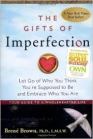
The Gifts of Imperfection – let go of who you think you’re supposed to be and embrace who you are  by Brene Brown – An expert of the psychology of shame presents advice on how to overcome paralyzing fears and self-consciousness, and at the same time increase feelings of self-worth, gratitude, and acceptance.
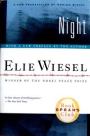
nightNight by Elie Wiesel – The narrative of a boy who lived through Auschwitz and Buchenwald provides a short and terrible indictment of modern humanity.power

The Power of Habit  – why we do what we do in life and business by Charles Duhigg – Identifies the neurological processes behind behaviors, explains how self-control and success are largely driven by habits, and shares scientifically-based guidelines for achieving personal goals and overall well-being by adjusting specific habits.

heavenHeaven is for Real –  a little boy’s astounding story of his trip to heaven and back by Todd Burpo – Presents the story of the four-year old son of a Nebraska pastor who during emergency surgery slips from consciousness and enters heaven.one thousand

One Thousand Gifts: a dare to live life fully right where you are by Ann Vos Kamp – The author reflects on moments of grace in her own life as she invites readers to embrace a life of gratitude and realize God’s presence in everyday experiences.
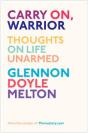
carry onCarry On Warrior: thoughts on life unarmed  by Glennon Doyle Melton – A New York Times essayist shares her journey from a self-destructive college student to a devoted family woman and teacher while illuminating the importance of trusting in a higher power and being truthful about life’s challenges.proof of
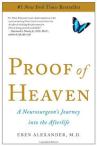
Proof of Heaven: a neurosurgeon’s journey into the afterlife  by Eben Alexander – A Harvard-trained neurosurgeon shares a minute-by-minute account of his religiously transformative near-death experience and revealing week-long coma, describing his scientific study of near-death phenomena while explaining what he learned about the nature of human consciousness.

10%10% Happier – how I tamed the voice in my head, reduce stress without losing my edge, and found self-help that actually works – a true story by Dan Harris – The Nightline anchor, who had a nationally televised panic attack on Good Morning America, takes readers on a rollicking ride through the outer reaches of neuroscience to the inner sanctum of network news during which he discovered a way to get happier that is truly achievable.untethered

The Untethered Soul: the journey beyond yourself by Michael A. Singer – Who are you? In this remarkable New York Times bestseller, author and spiritual guide Michael Singer explores this fundamental question, seeking the very root of consciousness in order to help readers learn how to dwell in the present moment. Written in an engaging and uncomplicated voice, this book will open readers up to the radical and powerful experience of simply being themselves.

Alphabet Books that Break the Mold

When children are small we all want them to learn their letters, and start reading and writing. However, the typical ABC books can get boring quickly, and not just for the adults. Sometimes is is fun to through a special alphabet book that shakes up the monotony that is A is for Apple, b is for ball, and so on. Here are some of the best books that I have found and shared with my own children that make the alphabet more fun for them and us.

  1. B is for Bookworm by Anita C. Prieto, illustrated by Renée Graef
  1. An Edible Alphabet by Carol Watterson, illustrated by Michela Sorrentino
  1. S is for Save the Planet by Brad Herzog and illustrated by Linda Holt Ayriss
  1. When Royals Wore Ruffles: a Funny and Fashionable Alphabet! by Chesley McLaren and Pamela Jaber, illustrated by Chesley McLaren
  1. The Alphabet Theatre Proudly Presents the Z was Zapped: a Play in Twenty-six Acts by Chris Van Allsburg
  1. Q is for Duck by Mary Elting & Michael Folsom; pictures by Jack Kent
  1. The Hidden Alphabet by Laura Vaccaro Seeger
  1. Y is for yowl! by Laura Purdie Salas
  1. The Beetle Alphabet Book by Jerry Pallotta, illustrated by David Biedrzycki
  1. A Isn’t for Fox by Wendy K. Ulmer ; illustrated by Laura Knorr

If you are still looking for some unusual letter fun may I also suggest; A Fabulous Fair Alphabet by Debra Frasier, G is for Gold Medal by Brad Herzog, A Gardener’s Alphabet by Mary Azarian, Z is for Zeus: a Greek Mythology Alphabet by Helen L. Wilbur,illustrated by Victor Juhasz, T is for Tutu  by Sonia Rodriguez & Kurt Browning, Alphabet Explosion!: Search and Count from Alien to Zebra by John Nickle, The Freshwater Alphabet Book by Jerry Pallotta, Action Alphabet by Shelley Rotner, Tomorrow’s Alphabet by George Shannon, or The Icky Bug Alphabet Book by Jerry Pallotta.


Everything I Know About Stonescaping I Learned from the Library

stones2It’s true. I didn’t know much about stonescaping when I began a little over ten years ago. And when I don’t know about something, the first thing I do is head for the book shelves.

The books I found were educational and inspiring. I marveled at all the creative ways gardeners had used stones in their landscapes. Ideas began to brew. I collected stones and left them in piles around my yard like the Blair Witch.

My love of rocks grew. From the boulders down to the gravel, I cherished every last bit of stone in my landscape. Some, like the rocks in the old stone wall that runs along the border of my property, have been there since that late 1800’s. Others, my husband and I purchased and carefully placed throughout the yard, guided by the beautiful pictures in the books we borrowed from the library.

How much do I really love rocks? Well one year for my birthday, my husband bought me a 5-ton dumpster full of broken slabs of granite that were destined for a landfill. It took me five years, but I found a place in our yard for every last piece, from the slab as large as I am to the small round sink cutouts. Some wound up as stepping-stones, others as part of the backyard patio. Some line my garden beds. A few ended up in unusual places, such as cascading down the side of a berm or encircling a small tree. Each piece is unique, and I like to think that they are better in my yard than being forever buried in a landfill.

Rocks are great in a yard. They don’t care if it is flooding or it hasn’t rained in a month. They never need to be trimmed. They look spectacular when it rains.

Together, my husband and I have moved several tons of stone, from gravel to boulders. Every time we are working with stone, he makes jokes (We’re really rockin’ now!), priding himself on his wit. I pride myself on the fact that I have never once given into the temptation to whack him with a shovel.

Want to be inspired to try stonescaping? Start with some great titles like these:

simple stonescaping          complete stonescaping          stonescaping ideas

You Can Turn Endless Political Talk into Election Education

With the political ads practically inescapable lately and midterm elections happening today, it is a perfect time to talk about voting with our children. Introducing the history, responsibilities, reasoning and ideals behind voting, and maybe a few laughs along the way, can turn the political ad season into a more enjoyable prospect for readers of all ages. I have broken the subject into two short lists, non fiction books and fiction.

Juvenile Nonfiction:

1.How Do We Elect Our Leaders by Willian David Thomas

2.Voting by Sarah De Capua

3.Today on Election Day by Catherine Stier

5. If I Ran for President by Catherine Stier

More nonfiction books that are solid resources in understanding the political process and the history behind it include: Eyewitness Vote by Phillip Steele, Getting Elected: a Look at Running for Office by Robin Nelson and Sandy Donovan, Heart on Fire: Susan B. Anthony Votes for President by Ann Malaspina, Rightfully Ours: How Women Won the Vote, 21 Activities by Kerrie Logan Hollihan, So You Want to be president? by Judith St. George, The Taxing Case of the Cows; A True Story About Suffrage by Iris van Rynbach and Pegi Deitz Shea, Running for Public Office by Sarah De Capua, Vote! by Eileen Christelow, You Want Women to Vote, Lizzie Stanton? by Jean Fritz, A Kid’s Guide to the Voting Process by Tammy Gagne, and America Votes: How our President is Elected by Linda Granfield.

Juvenile Fiction:

1. Grace for President by Kelly DiPucchio

5. Amelia Bedelia’s First Vote by Herman Parish

More stories about elections and the political process include: Election Day by Margaret McNamara,
President of the Whole Fifth Grade by Sherri Winston, Vote for Larry by Janet Tashjian (YA), Bad Kitty for President by Nick Bruel,Vote 4 Amelia by Marissa Moss, Pioneer Summer by Deborah Hopkinson, The Case of the Crooked Campaign by Lewis B. Montgomery, Otto Runs for President by Rosemary Wells, The Red, White, and Blue Crew by Lisa Mullarkey, The Hope Chest by Karen Schwabach, Babymouse for President by Jennifer L. Holm & Matthew Holm, Duck for President by Doreen Cronin,and Vote for Me! by Ben Clanton.

Halloween with the Autistic Child

autism-awareness-mini-ribbon-car-magnetHalloween is coming fast! Holidays are often confusing times for the autistic child. They want to participate like everyone else, but too much change in routine or clothing can create problems. While older, less-impaired children can have input into what they like or don’t like, what do you do with the young or more severely-impaired child? As the parent of a profoundly impaired son with autism, here are some of my holiday-saving tips:

1) It’s okay to say to no. Autism is fickle second to second. Halloween was a snap last year, this year everything is a meltdown. It’s okay to skip this year. Next year may be a winner again. If all else fails, have the child stay home and pass out the candy.
2) Keep costumes simple. No masks. Little to no face paint. Nothing that feels unnatural. Nothing out of the ordinary like giant wings or high heeled shoes. No gloves to decrease already shaky sensory input. No strings or fringe to obsess on. No beads that can be picked off and eaten. Make sure sleeves are close-fitting. Flapping is an issue with some children: don’t risk accidents in this season of open candles.
3) Allow the child the right to say no. If there’s a decoration at a house that scares them, allow them to skip that house.
4) Keep it short. Participating doesn’t mean you have to hit every house in a two-mile radius. The year of the October Blizzard, rockford-peaches-mens-jerseywhen no one had power for Halloween and the festivities were “canceled”, it was impossible to explain the situation to my younger foster son. We dressed him up anyway, stopped at both grandparent homes and a neighbor who was in on it, and he got to “trick or treat” on that all-important correct day. Three houses was enough. Meltdown avoided.

So what do you do, then? How can you have a costume without all the cool trappings? Keep it simple, keep it real. J. has a  baseball jersey. Paired with a ball cap and a pair of matching sweatpants, he’s gone as a baseball player several times. The clothes are normal to him. Firemen. Policemen. A barbecue chef in an apron. A nurse or doctor in scrubs. Any community job you can show the child in a book and they can relate to. Dancers, the lady who cuts hair, the bus driver, a mommy with a doll and a stroller or shopping cart. Bob the Builder, with a pair of jeans, a plaid shirt, a tool belt, and a yellow hard hat. Very simple, very easy.

fp-pumpkin-ponchoIf you want to get fancier, create something easy that goes over their clothes. We have an orange fleece poncho with a pumpkin face made out of felt and glued on the front. A couple of felt leaves and a brown stem sewn to a green hat, and we had a pumpkin costume. Because it’s a fleece poncho, it’s not only warm, but fit for several years. A cat costume out of black clothing, a pinned-on tail, and felt ears either glued to a headband or a hat.  A hobo clown, with mismatched plaid shirt, baggy jacket, and ragged pants with a rope belt and touch of red makeup to the nose was another year. Many times kids like capes, so an all-black-clothing Batman with a cape and a hood, or a vampire in white shirt, black pants and cape, and a red ribbon “Medal” made of tinfoil are often well-tolerated. One year we found a Hoodie with skeleton bones on it, added chalk “bones” on a pair of black sweatpants and we’d found our every-day-clothes costume.

Halloween doesn’t have to be a meltdown. Keep it simple, keep it calm, both for your child and yourself. Explain the day as you go: We will stop at ten houses and ask for candy, then we will go home. Try extra-hard to stop only at the homes of people your child knows; for a child with no awareness of stranger-danger, you want to reinforce who is safe and who is not. If all else fails, stay home, play some Halloween music, watch Charlie Brown,  and try again next year. It will get better.