Books and Shows to Confirm Your Growing Technological Anxiety

“Have I told you all about the time that I got sucked into a hole through a handheld device?” asks the narrator of a song from the Arctic Monkeys’ 2018 album Tranquility Base Hotel and Casino. Technological ambivalence (or perhaps anxiety?) is a recurring theme. I can relate. I spend too many nights sitting down to unwind for just a few minutes, and somehow two hours pass by, during which I’ve clicked link after link on my phone while the dirty dishes sit neglected in the sink and my toddler’s toys are still strewn across every floor. If you’ve ever lost an evening of your life to Wikipedia or Youtube, or ever looked up from staring at a screen to wonder if you still have long-distance vision, you can relate, too. 

While I can’t give you advice on how to stop the vicious cycle of passive consumption – every time I delete a time-sucking app, I seem to replace it with another one – what I can do is suggest some slightly more cerebral time-killers to add to your queues. 

To Read/Listen to:

The Shallows: What the Internet Is Doing to Our Brains by Nicholas Carr 

As we enjoy the Internet’s bounties, are we sacrificing our ability to read and think deeply? The printed book served to focus our attention, promoting deep and creative thought. In contrast, the Internet encourages rapid, distracted sampling of small bits of information. As we become ever more adept at scanning and skimming, are we losing our capacity for concentration, contemplation, and reflection? 

The Anxious Generation: How the Great Rewiring of Childhood Is Causing an Epidemic of Mental Illness by Jonathan Haidt 

Social psychologist Jonathan Haidt lays out the facts about the epidemic of teen mental illness, then investigates the nature of childhood, including why children need play and independent exploration to mature into competent, thriving adults. Haidt shows how the “play-based childhood” began to decline in the 1980s, and how it was finally wiped out by the arrival of the “phone-based childhood” in the early 2010s. He presents more than a dozen mechanisms by which this “great rewiring of childhood” has interfered with children’s social and neurological development. Most important, he describes steps that parents, teachers, schools, tech companies, and governments can take to end the epidemic of mental illness and restore a more humane childhood. 

Fahrenheit 451 by Ray Bradbury

Many folks would point to Aldous Huxley’s Brave New World as fitting in best with this post’s theme, but those screen-covered parlor walls in front of which Mildred parks herself in Bradbury’s book-burning dystopia come to my mind more often than the Shakespeare-quoting John. Plus, Bradbury’s foretold degradation of the human attention span has supposedly come true. 

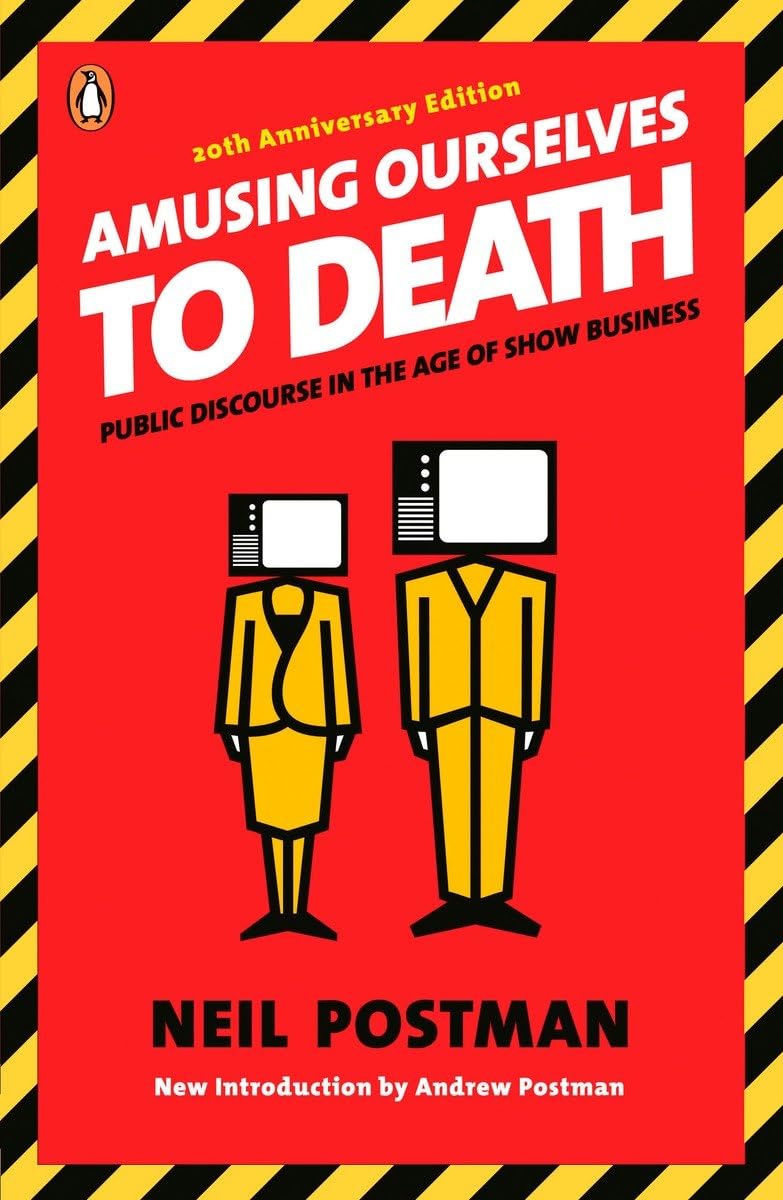
Amusing Ourselves to Death: Public Discourse in the Age of Show Business by Neil Postman 

It’s hard to believe this book is almost 40 years old, but the thesis is just as relevant now as it was back when Family Ties and 60 Minutes were among the top television shows. Postman posits that the visual medium of television has led to the decay of rational discourse by turning information into entertainment. On paper (or screen) it might sound like Postman is a technophobic curmudgeon, but one need only think back to how often misinformation under the guise of “news” has spread like wildfire via social media over the last ten years to see his point. 

Stolen Focus: Why You Can’t Pay Attention – And How to Think Deeply Again by Johann Hari 

Like so many of us, Johann Hari was finding that constantly switching from device to device and tab to tab was a diminishing and depressing way to live. So he went on an epic journey across the world to interview the leading experts on human attention – and he discovered that everything we think we know about this crisis is wrong. He introduces readers to Silicon Valley dissidents who learned to hack human attention, and veterinarians who diagnose dogs with ADHD. Crucially, Hari learned how we can reclaim our focus, if we are determined to fight for it. 

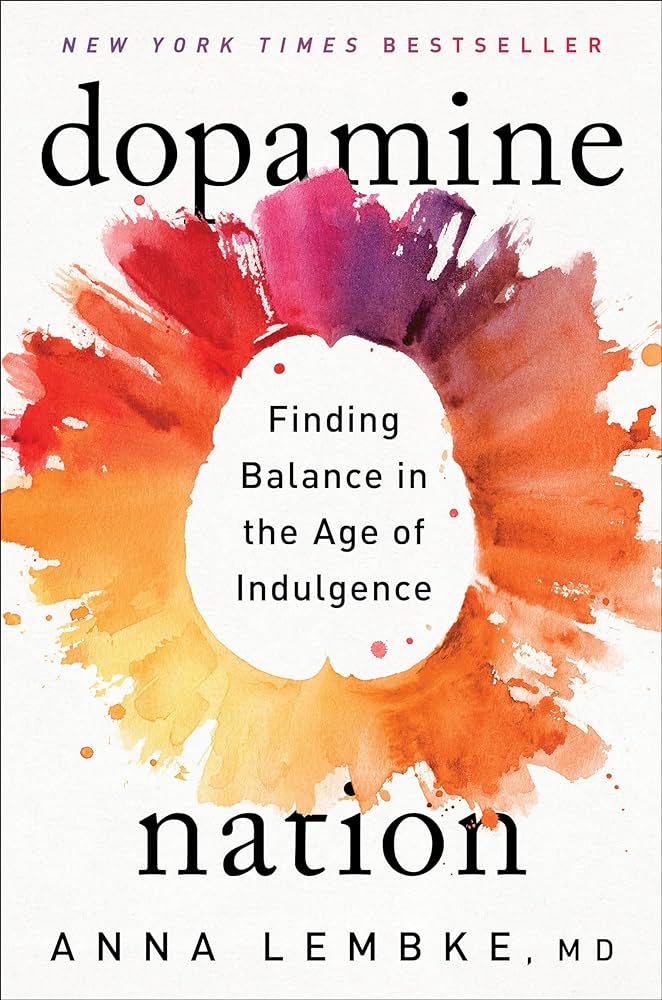
Dopamine Nation: Finding Balance in the Age of Indulgence by Anna Lembke 

This book is about pleasure. It’s also about pain. Most important, it’s about how to find the delicate balance between the two, and why now more than ever finding balance is essential. We’re living in a time of unprecedented access to high-reward, high-dopamine stimuli, and we’ve all become vulnerable to compulsive overconsumption. Dr. Anna Lembke, psychiatrist and author, explores the exciting new scientific discoveries that explain why the relentless pursuit of pleasure leads to pain . . . and what to do about it. 

To Watch:

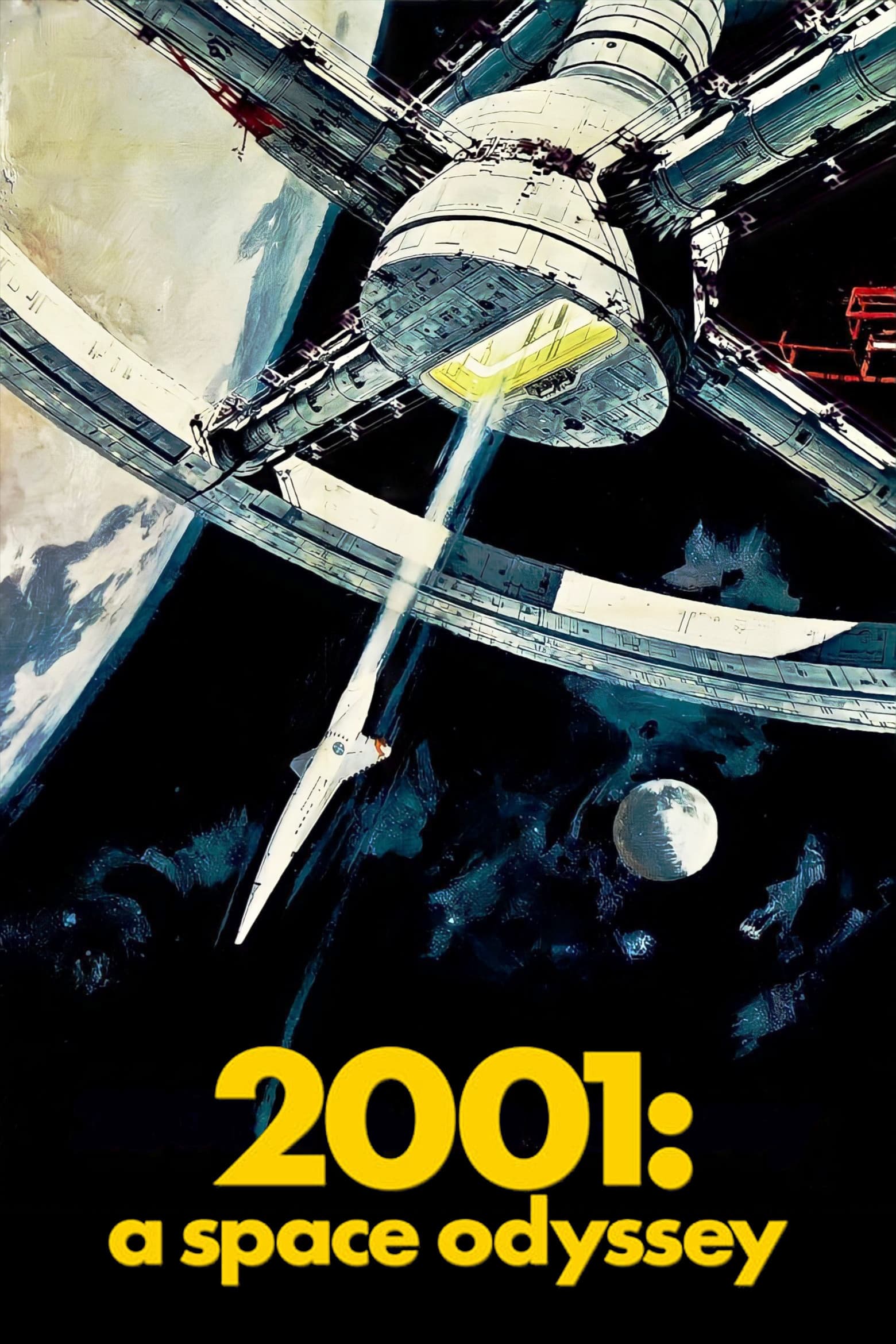
2001: A Space Odyssey 

Stanley Kubrick’s classic film, and its sentient computer that turns murderous, has been so influential that even AI voice assistants will often respond back with a knowing reply if you quote the film at them. This is a film that tells its story mostly through the visual medium with little dialogue, so you’ll have to put aside from time to watch this one without compulsively scrolling on your phone. 

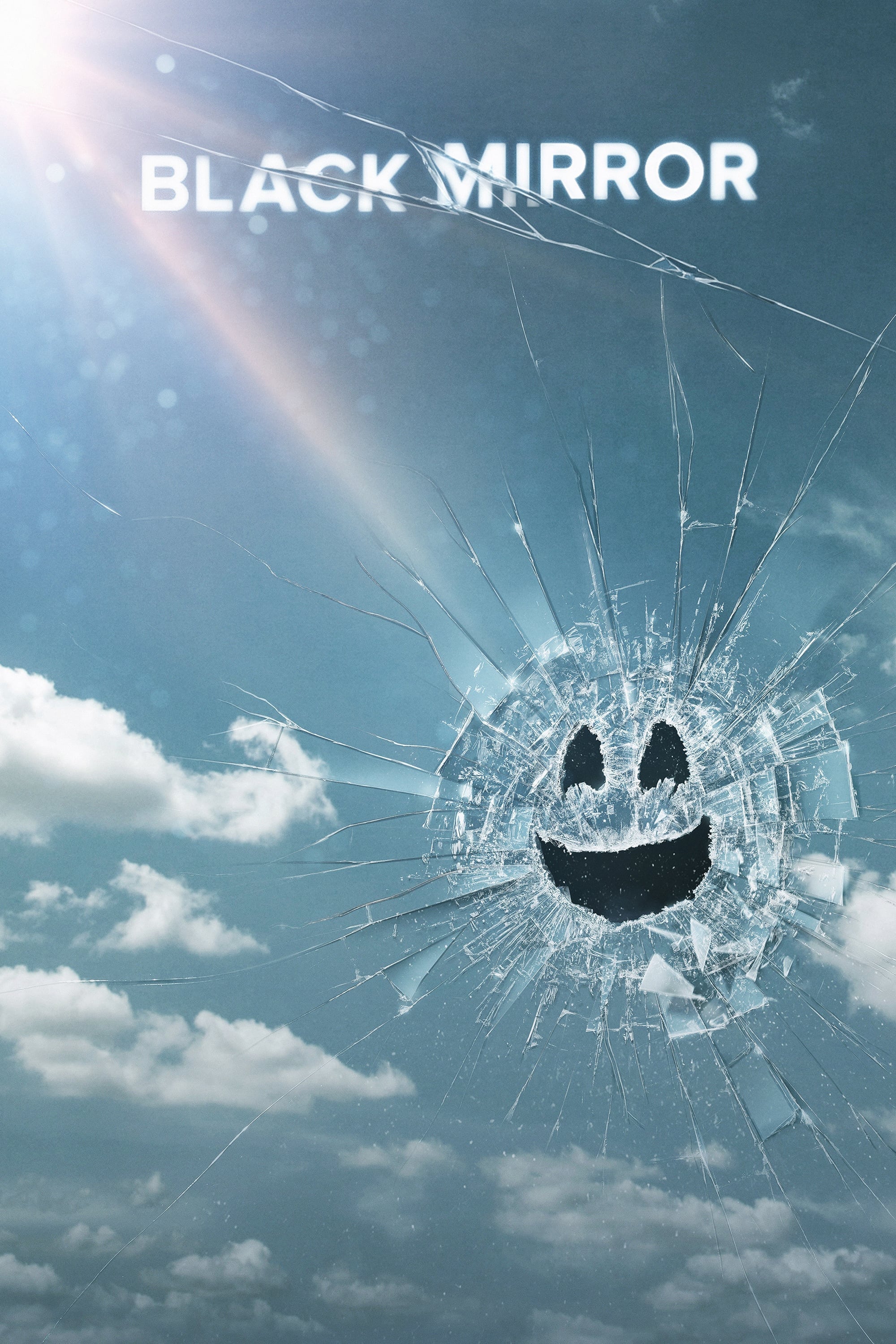
Black Mirror (available on Netflix) 

Twilight Zone for the information age. This Channel 4 / Netflix drama is composed of standalone episodes where technology complicates, or more likely completely destroy, the lives of the characters. In one story they can store, replay, and delete memories via an implanted device in their skin. In another, social interactions are given ratings, and they affect one’s socioeconomic status. Every once in a while you’ll have a happy ending, but you’re usually buckling in for a dystopian take on the computer-based tools we already use. Watch it via Netflix or purchase episodes through Amazon Prime. 

The Social Dilemma (available on Netflix) 

This docu-drama explores the dangerous human impact of social networking, with tech experts sounding the alarm on their own creations. It’s no mistake that Google’s own (former) design ethicist is a key narrator in this Emmy-winning documentary. Watch it via Netflix. 

10 Recent Favorites From Our Staff

What was the best book you read in 2022? I recently asked staff members this question and have compiled their answers here. Interestingly, there were no duplications, everyone had a different favorite. Some books were published in 2022, some were many years older, some were fiction, some were nonfiction. Without further ado, here’s a selection of 10 recent favorites from our library staff.

Lessons in Chemistry by Bonnie Garmus. In the early 1960s, chemist and single mother Elizabeth Zott, the reluctant star of America’s most beloved cooking show due to her revolutionary skills in the kitchen, uses this opportunity to dare women to change the status quo.

Neopolitan series by Elena Ferrante. Beginning in the 1950s in a poor but vibrant neighborhood on the outskirts of Naples, Ferrante’s four-volume story spans almost sixty years, as its protagonists, Lila and Elena, become women, wives, mothers, and leaders, all the while maintaining a complex and at times conflictual friendship.

Boneshaker by Cherie Priest. Commissioned to build a machine that will promote gold-rush land-breaking efforts between Civil War-era Seattle and Alaska, inventor Leviticus Blue inadvertently triggers the release of a deadly gas that transforms people into the living dead, a situation that prompts his teenage son to restore the family reputation years later.

Summer Sons by Lee Mandelo. When his best friend dies of an apparent suicide, Andrew uncovers lies and secrets left behind by the person he trusted most, discovering a family history soaked in blood and death.

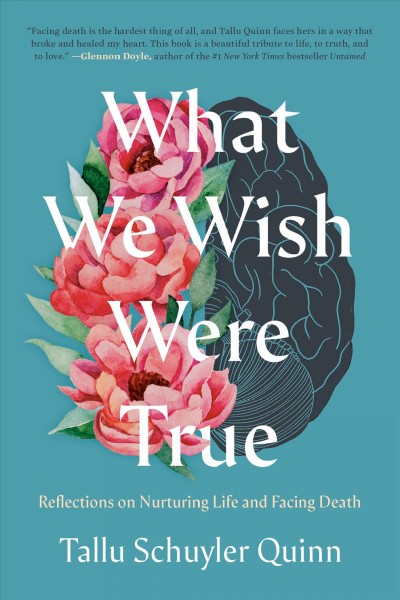
What We Wish Were True by Tallu Schuyler Quinn. A non-profit leader, humanitarian and minister, after being diagnosed with an aggressive form of terminal brain cancer, pens profound essays on what it means to live with a terminal diagnoses and still find meaning and how to discover beauty in life’s ordinary moments.

Foundryside by Robert Jackson Bennett. A thief in a city controlled by industrialized magic joins forces with a rare honest police officer to stop an ancient evil ritual that endangers thousands of lives.

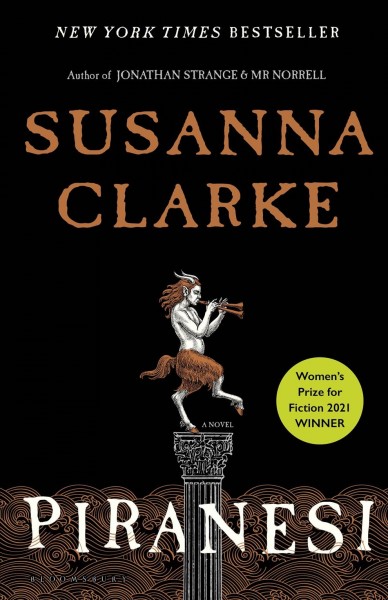
Piranesi by Susanna Clarke. Living in a labyrinthine house of endless corridors, flooded staircases and thousands of statues, Piranesi assists the dreamlike dwelling’s only other resident throughout a mysterious research project before evidence emerges of an astonishing alternate world

The Book Woman of Troublesome Creek by Kim Michele Richardson. During Kentucky’s Great Depression, Pack Horse Library Project member Cussy Mary Carter, a young outcast, delivers books to the hillfolk of Troublesome Creek, hoping to spread learning in these desperate times, but not everyone is keen on her or the Library Project.

Tomorrow and Tomorrow and Tomorrow by Gabrielle Zevin. A modern love story about two childhood friends, Sam, raised by an actress mother in LA’s Koreatown, and Sadie, from the wealthy Jewish enclave of Beverly Hills, who reunite as adults to create video games, finding an intimacy in digital worlds that eludes them in their real lives.

Finding the Mother Tree by Suzanne Simard. The world’s leading forest ecologist, in her first book, draws us into the intimate world of trees where she brilliantly illuminates the fascinating and vital truth — that trees are a complex, interdependent circle of life.

Book-to-Screen Adaptations Coming in 2023

If you love seeing your favorite books come to life on the big or small screen, 2023 is shaping up to be a great year. And if you’re a read-it-before-you-see-it person, you’ll want to take note of the screen adaptations slated for release this year, and add the following books to your reading list! (Release dates are given when known, though they are subject to change).

Dear Edward by Ann Napolitano (on Apple TV+ Feb. 3)

The Cabin at the End of the World by Paul Tremblay (in theaters Feb. 5)

The Black-Eyed Blonde by Benjamin Black (in theaters Feb. 15)

Daisy Jones & the Six by Taylor Jenkins Reid (on Amazon Prime Mar. 3)

Are You There, God? It’s Me, Margaret by Judy Blume(in theaters Apr. 28)

Text for You (movie title: Love Again)by Sofie Cramer (in theaters May 12)

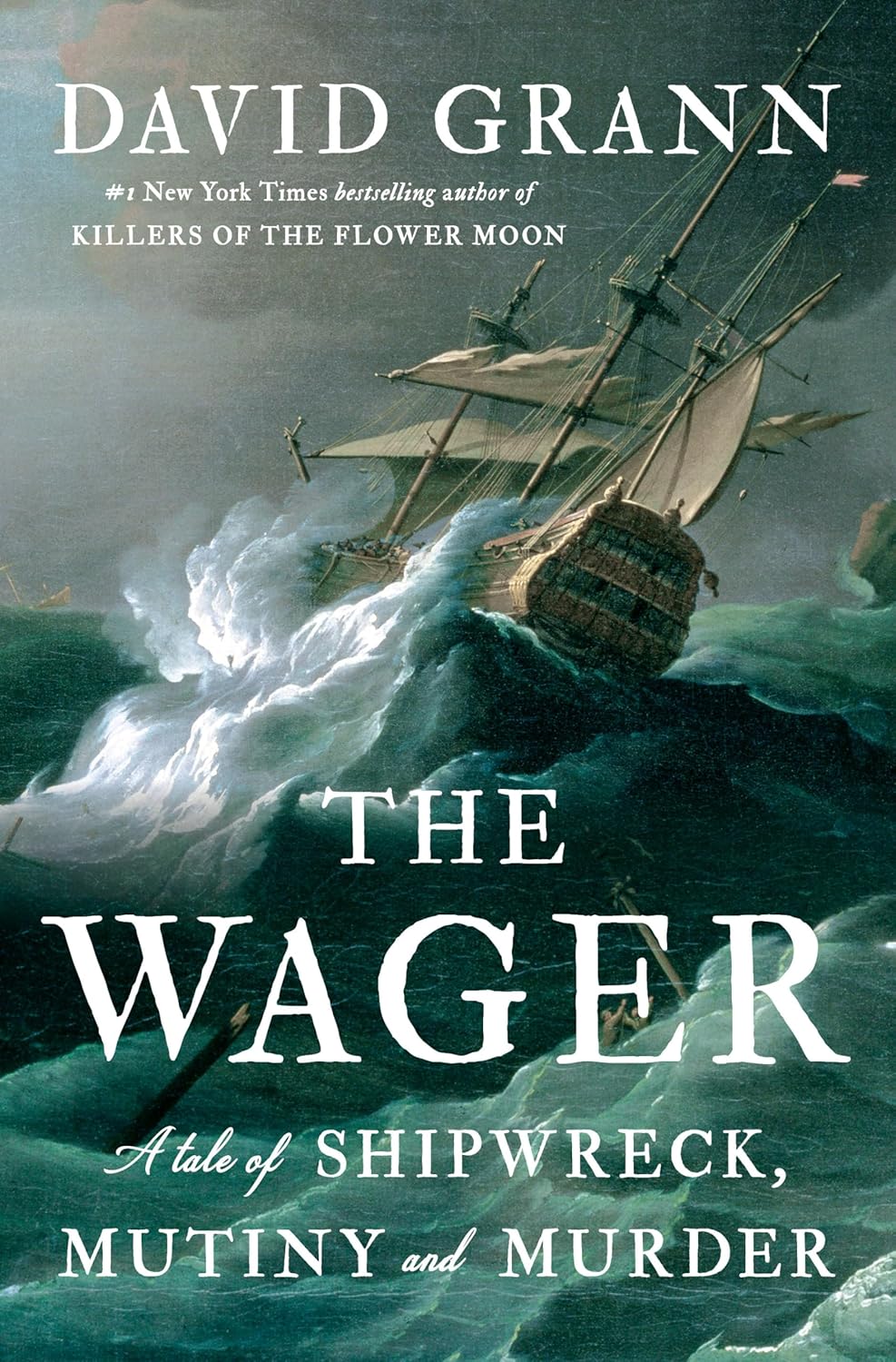
Killers of the Flower Moon by David Grann (in theaters May 2023)

Harold and the Purple Crayon by Crockett Johnson (in theaters June 30)

American Prometheus by Kai Bird and Martin J. Sherwin (in theaters July 21)

Hallowe’en Party (movie title: A Haunting in Venice) by Agatha Christie (in theaters Sept. 15)

Dune (Part Two) by Frank Herbert (in theaters Nov. 3)

The Ballad of Songbirds and Snakes by Suzanne Collins (in theaters Nov. 17)

Charlie And The Chocolate Factory (movie title: Wonka) by Roald Dahl (in theaters Dec. 15)

The Color Purple by Alice Walker (in theaters Dec. 20)

Expected to premier in 2023, but no release dates available yet for:

Red, White & Royal Blue by Casey McQuiston (on Amazon Prime)

The Last Thing He Told Me by Laura Dave (on Amazon Prime)

The Power by Naomi Alderman (on Amazon Prime)

Lessons in Chemistry by Bonnie Garmus (on Apple TV+)

American Born Chinese by Gene Luen Yang (on Disney+)

Romancing Mister Bridgerton by Julia Quinn (on Netflix)

The Three-Body Problem Series by Cixin Liu (on Netflix)

Three Women by Lisa Taddeo (on Showtime)

Learn a Little, Live a Little

Do love learning? Do you dream of taking college classes, but the cost and the time is too much? Are you taking a high school or college class and struggling to understand the material?  Did you cut your cable, and can’t find anything decent to watch anymore?

Fear not! The Great Courses are here!

Cheshire Public Library has always had a handful of these delightful media, but through a generous donation, we’ve been able to greatly expand our holdings to more than 70 titles.

What are the Great Courses?  Professional college-level lectures on audiobook or DVD on a variety of topics, given by actual college professors and experts (like Neil DeGrasse Tyson!), that will give you the equivalent of an entire college class in the comfort of your car or living room. Some come with study guides and questions to think about, but you will never have a test or a grade at the end!

The Great Courses was the brainchild of Thomas M. Rollins, the former Chief Counsel of the US Senate Committee on Labor and Human Resources (1985-89). Inspired by a 10-hour video lecture series he watched as a student at Harvard Law, he set about creating his own video series under the business label The Teaching Company. He recruited professors to record lectures on topics people were interested in learning about. Because the lectures were chosen by customers, they caught on quickly. There are currently more than 900 lectures available in a wide variety of topics. Some are short – four hours – while others (like the Civil War) can run to 14 discs.

Great Courses are expensive – that Civil War set is more than $500 to purchase yourself, but in 2016 the company began a $20/month streaming service, and then in 2021 rebranded itself under the name Wondrium. Wondrium not only offers more than 280 of the Great Courses, but also content from Magellan TV, Craftsy, and Kino Lorber, which carries art films, documentaries, world cinema, and classic films (silent films like Metropolis, Charlie Chaplin, and more).

If you don’t feel like yet another subscription to a streaming service, check out the library’s offerings downstairs in the adult department. We have more than 30 titles on DVD, and more than 35 on audiobook for learning on the go. As Fat Albert used to say, “If you’re not careful, you may learn something!”

Did you know that if you’ve already studied the material, you can often exempt a college class? It’s called the CLEP program – College Level Examination Program.  Basically, if you can pass the exit exam for a class, you can get college credit for that class. Not every school offers it, not every class is covered, but if a Great Courses lecture can help, you can save several hundred dollars!

Check out these great titles and more!

Some of our Audiobook titles:

Ancient Greek Civilization

Beethoven’s Sonatas

Books that Have Made History

Broadway Musicals

The New Testament

Italian Renaissance

Native People of North America

Rise and Fall of the British Empire

Some of our DVD titles:

The American Civil War

Einstein’s Relativity

Monet to Van Gogh

When Rome Ruled

Photography

The Louvre

Geology

Human Language

The Vikings

True Crime for the Faint of Heart

I used to love true crime. For my first research paper in high school, I wrote about the 1964 murder of Kitty Genovese and the phenomena of the bystander effect. In college, Investigation Discovery was my background noise while working. More recently, murder podcasts and true crime audiobooks accompanied my commute to work, and I unwound with Netflix miniseries that dissected cold cases.

But my tastes are changing. Death got a little too close to me over the last two years. A podcaster made me question the ethics of finding entertainment in another’s pain. And becoming a parent obliterated my tolerance for stories where terrible things happen to small and vulnerable beings. Don’t get me wrong – I’m still fascinated by the darkness. I just need to be more selective. Minimal death and violence. Minimal gore. Thefts, forgeries, con artists. White collar crimes. Maybe the occasional plane crash or disaster.

So I present you with an updated list of true crime stories in various formats for those who, like me, have to say “hard pass” to serial killers and kidnappers.

Flying Blind : The 737 MAX Tragedy and the Fall of Boeing by Peter Robison. A fast-paced look at the corporate dysfunction–the ruthless cost-cutting, toxic workplaces, and cutthroat management–that contributed to one of the worst tragedies in modern aviation.

Bad Blood : Secrets and Lies in a Silicon Valley Startup by John Carreyrou. Recounts the story behind Theranos, the medical equipment company that misled investors to believe they developed a revolutionary blood testing machine, detailing how its CEO, Elizabeth Holmes, perpetuated the lie to bolster the value of the company by billions.

Empire of Pain : The Secret History of the Sackler Dynasty by Patrick Radden Keefe. Presents a narrative account of how a prominent wealthy family sponsored the creation and marketing of one of the most commonly prescribed and addictive painkillers of the opioid crisis.

Midnight in Chernobyl : The Untold Story of the World’s Greatest Nuclear Disaster by Adam Higginbotham. Journalist Adam Higginbotham’s definitive, years-in-the-making account of the Chernobyl nuclear power plant disaster–and a powerful investigation into how propaganda, secrecy, and myth have obscured the true story of one of the twentieth century’s greatest disasters.

Confident Women : Swindlers, Grifters, and Shapeshifters of the Feminine Persuasion by Tori Telfer. The art of the con has a long and venerable tradition, and its female practitioners are some of the best– or worst. Telfer introduces us to a host of lady swindlers whose scams ranged from the outrageous to the deadly.

The Gardner Heist : The True Story of the World’s Largest Unsolved Art Theft by Ulrich Boser. Shortly after midnight on March 18, 1990, two men broke into the Isabella Stewart Gardner Museum in Boston and committed the largest art heist in history. But after thousands of leads, hundreds of interviews, and a $5-million reward, not a single painting has been recovered. Worth a total of $500 million, the missing masterpieces have become the Holy Grail of the art world and one of the nation’s most extraordinary unsolved mysteries.