 In January 1969, off the shores of Santa Barbara, California, on oil rig received a waiver to use a protective casing 61 feet shorter than Federal regulation allowed. The rig exploded with such force the sea floor cracked in 5 places. Three million gallons of crude left a 35-mile oil slick on California’s shores, and television brought images of ruined beaches and dying, oil-soaked animals into every home.
It was the flashpoint of the modern environmental movement.
So horrified were people that politicians banded together to pass the Environmental Protection Act (1970), the Clean Air and Water Act (1972), and the Endangered Species Act (1973) as they realized the impact pollution was having on the country. And spearheading that, as a result of that oil spill, Earth Day was born on April 22, 1970, to raise awareness and bring people together to discuss environmental issues.
The Troubling Truth
 Earth in 1970 was a very sorry place. We knew we were in trouble since Rachel Carson’s Silent Spring brought toxic issues to the forefront in 1962, but we did little. Air pollution killed scores of people through respiratory disease (a 1952 smog inversion killed 12,000 people in London. A 1966 attack in New York City killed 168 people in just 3 days. Smog.) Factories, farms, and mines dumped waste everywhere. Love Canal was killing children with 30-year old toxic waste. The Bald Eagle, symbol of our country, was hovering at less than 500 nesting pairs remaining, and (by 1987) the California Condor would drop to 27 remaining individuals, due to DDT (which made eggs fragile) and lead poisoning. The dropping rates of biodiversity were becoming obvious.
Environmental Victories
And with all the discussion and science, changes began to happen. DDT was banned in 1972. Leaded gasoline was phased out in 1973. Lead-based household paint was banned in 1978. Flame retardants were phased out of infant clothing (because babies have such capacity to spontaneously combust after sunset). Pesticides were examined, and many were quickly banned from use. And amazingly, the Earth began to recover. Today the Bald Eagle is off the endangered species list, with more than 5,000 nesting pairs noted – I almost drove off the highway when I saw one sitting on a light post in the Catskills. A living, wild, Bald Eagle. A few California Condors have been re-released into the wild, with more than 400 individuals now living wild or in captivity. New trucks and buses have 99% fewer emissions than those in 1970. The Hudson River now has fish again.
A Long Way Still to Go
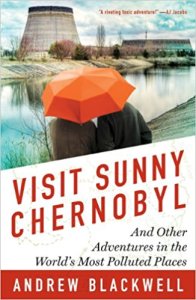 While Earth Day and a commitment to protecting our environment – and thus ourselves – has spread around the world, the world remains a very, very polluted place. Toxins from the 70’s still lurk in the oceans. Oil spills remain in beach sand and marshes. The US boasts more than 1300 Superfund sites for government clean-up – 26 in Connecticut, and a former one here in Cheshire. Around the world, developing countries lack regulations and power to deal with toxic waste – China’s air quality is deadly due to coal-fired factories belching out pollution. Africa is poisoned by heavy metal mining. India suffers from toxic manufacturing chemicals. Lake Karachay in Russia is the most polluted place on Earth: an old dumping ground for nuclear waste, standing on the shores of the lake will kill a human in no more than an hour – far more deadly than the radioactive Chernobyl or Fukushima disasters, which will haunt us for thousands of years to come. Microbeads are choking animal life. Pesticides believed to be linked to some forms of autism still hide in lakes, and toys, furniture, and clothing manufactured in Asia can still contain lead and chemicals long-banned elsewhere.
The Importance of Individuals
While we may blow off our green recycling bins and never return our bottles, those little things, combined, make a big impact. Recycling aluminum cans saves 95% of the energy needed to produce new ones from ore. One ton of recycled paper saves 17 trees, lessening the greenhouse effect. One ton of recycled plastic saves 16 barrels of oil – $1,000 per ton. Multiply that by all the people in your town, your state, your region – and think how that snowballs. So celebrate your cleaner environment on April 22. Plant a tree. Pick up garbage on the side of the road. Recycle your bottles. Take a walk and look at all the diversity of trees and flowers and birds around you, and breathe deep of air that doesn’t burn your nose and eyes and make you cough (does anyone else remember the stink of the Uniroyal plant when the wind would shift in 1970’s summers?) Marvel at the sight of fish in the Naugatuck River, where nothing survived before. A clean planet is in our grasp. Give a hoot, don’t pollute, and save paper by checking these books out from the library!





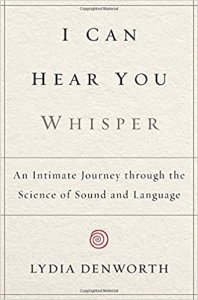
 I am a deep introvert. I’m perfectly fine talking only to the cat or TV. Hence, when my son was born, I figured if I didn’t start talking to him, he’d never learn to talk (my first mistake), and thus began thirty years of talking to myself and narrating what I’m doing.
 Based on these studies, along comes
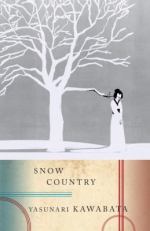
 Some people love winter, love the brisk air, the blinding glare, the crystal-clear night skies, soft fluffy snow and cups of steaming hot chocolate. Other people hate the freezing cold, the knifing winds, the treacherous roads, bare trees, and endless brown mud and slush clinging to shoes, cars, and pet feet tracking through the house.
 drapes (one of my favorite possessions), reading a book in a favorite chair while snow swirls outside the window and an animal lounges at my feet. It means a stew bubbling on the stove, fresh bread in the oven, or perhaps fresh shortbread cookies and a cup of Earl Gray tea by that fire. Perhaps it’s a holiday, with candles and lights and decorations, waiting for company to make it through the snow. Yeah, yeah, there’s no groundsman to shovel the walks when it’s over, I have to do it myself, but for a few hours I’m lost in an old English fantasy, there’s a mystery in the air, a challenge ahead, but love and fortune win in the end (note: I have never achieved this fantasy, but I keep hoping).
 English Tales of Winter
 historical
  Just because our snow stories don’t go back to King Wenceslas (ok, Wenceslas was Bohemian/ Czechoslovakian, but the song, 900 years later, is English) doesn’t mean American literature isn’t good, it just means it’s different. Maybe you’ll have to settle for cotton twill drapes and a medium double-latte with a space heater and a Snuggie. If you love gothic literature, delve into a classic or something newer; there are hundreds of books (and films!) to choose from. If you love reading about snowy days while curled in a chair listening to the winds howl, try some of these modern tales (and films):

 It’s almost impossible to get through the winter without hearing about the flu. While we often use the word flu to describe any miserable feverish head cold, a cold (rhinovirus) is NOT the same as the flu (influenza). A head cold is 10 days of misery. Flu will disable you for weeks, if not outright kill you.
 H2N3’s, H6N4’s. Now, not all of these can be caught by people (some are limited to animals), but viruses can mutate and change very rapidly. With all those combinations, the Centers for Disease Control have to make a best guess at what flu will prevail that winter, and make enough vaccine a year in advance. If your shot is for N1H1, and you catch H2N3 – you’ve got flu. Better flu shots (called trivalent or quadravalent) will give you immunity to the top three or four likely flus, quadrupling your chances of staying healthy. Even if you do manage to get a flu, your partial immunity will give you a much milder case.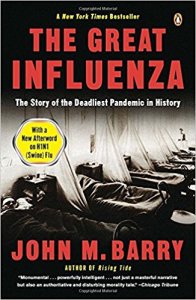
 people, chickens, and pigs are often living in close or crowded conditions, and many Asian cities are very densely populated. Pigs are very similar to people in their genetic makeup (surgeons can use pig organs in people for short times). A bird flu can mutate and jump to pigs, and from pigs it doesn’t take a lot of mutation to become a Human flu. This is why scientists worry every time there’s a breakout of swine flu or bird flu, and millions of animals may be slaughtered to keep it from spreading. All it takes is a new mutation to start a mega-deadly 1918-style pandemic.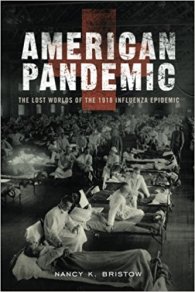




 The Cheshire Library Blog