CPL Staff’s Favorite Reads of 2019

As you might imagine, our library staff reads a lot of books! I recently asked CPL staffers what their favorite reads of the last year were, and the list was varied and long, a mix of fiction and nonfiction, older titles and new releases. If you’re looking for some “librarian-approved” reading, we’ve got quite a few suggestions for you!

Print Fiction:

Audiobook:

Graphic Novel:

Print Nonfiction:

Susan’s Best Reads of 2019

I don’t read as much as I wish I could; I just don’t have time at the moment. It doesn’t help that I wind up with sometimes 600 page books in my hands, and those take longer.  I never know what I’ll read next, and I read a bunch of good ones last year. Here are some of my favorites:

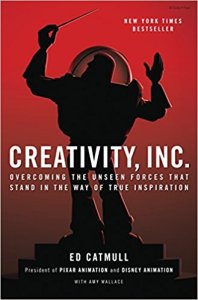
One of the two best books I read this year, I’ve already blogged about: Creativity, Inc, by Ed Catmull, was amazing. Not just a history of Pixar films, it’s also the best darned, most entertaining book on business and employee management you will read. Pixar is a 5-star company for a reason.

The second of my Best Reads this year is The Man from the Train: The Solving of a Century-Old Serial Killer Mystery by Bill James and Rachel McCarthy James.  From approximately 1898 to 1912, a serial killer traversed the US by train – coming through New Haven’s Union Station on the way – with an MO of bludgeoning his victims with the back of an axe. Because of communications at the time, few people were able to connect the murders. James painstakingly, with the utmost detail, traces the dozens of murders and examines them, deciding if they were likely by the same killer or not, and why. He traces the paths through the states and the seasons, chasing the trail to a man who was most likely the killer. By the time he’s done, you are convinced and amazed. I could not stop reading this book. I read it while waiting for the school bus. I read it while cooking. I would have read it in the shower if I could have. If you love a mystery, if you love history, if you love crime stories, this book is a must.

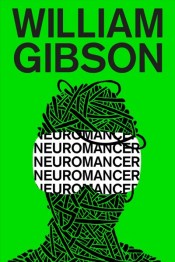
I’m only 30 years late in reading Neuromancer, the Hugo-winning cyberpunk novel by William Gibson. I can see why it is held as one of the greatest novels of our time. Gibson predicts and writes about today’s modern computers and internet and gaming – long before they existed. The scenarios he describes are both familiar and futuristic at the same time. While not only visionary, it’s written in  a flawless style and with realistic, interesting characters. If you loved Ready Player One or The Matrix (which has to have been influenced by this book), you will love Neuromancer.

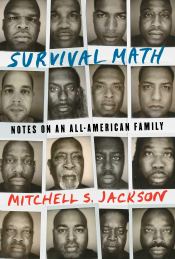
If you’re aware of social and racial issues, I strongly recommend Survival Math, by Mitchell S. Jackson. A professor of writing, in achingly beautiful prose worthy of Martin Luther King Jr., with the voice of a preacher without being preachy, Johnson breaks down the issues faced in his own family, examining how he came to where he is, how racism played into it without even being visible, and how despite all the odds, it’s possible to thrive. He covers harsh topics without flinching. The book is brilliant, spellbinding, and a superb read from a voice that soars with truth.

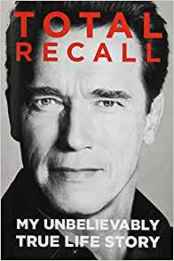
Far more than I expected, I loved Total Recall, an older door-stop of a biography on Arnold Schwarzenegger. From his birth in a tiny town in Austria (which still has only 2500 people) to his divorce from Maria Shriver, Arnold is witty and candid and down to Earth. No matter what you think of his politics or his movies or his personal life, this book may be older, but it was highly entertaining. His best friend just died in September of this year.

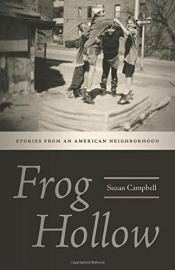
Not my favorite, but worth mentioning because of its local importance, is Frog Hollow  by Susan Campbell. Campbell, a former reporter with the Hartford Courant, digs into the history of the notorious Frog Hollow section of Hartford, and through tireless research shows the former glory of the neighborhood as not only an important area in Colonial times, but once a major manufacturing center (in 1898, Pope automotive made half the cars in the US). I was hoping for a deep sociologic dissection of the issues, but instead Campbell gives us an upbeat view from street level about the good aspects of Hartford and the people who live there, not just the doom and gloom of ad-selling news clips.

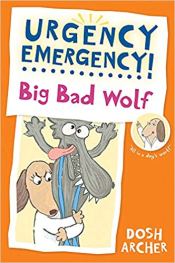
Last but not least, I’ll throw in a kid’s series you probably missed; with 18 years between my last two kids, I certainly did, but my youngest is so hooked on the British easy reader series Urgency Emergency! by Dosh Archer, I wound up buying most of them. The series is so witty and enjoyable you don’t mind reading them over and over again. Doctor Glenda, Nurse Percy, and the Pengamedics, in predictable melodrama, assist the maladies of Humpty Dumpty, The Big Bad Wolf, the Itsy Bitsy Spider, and many more. They are a delight. The library has several of the stories; be sure to read them all!

Book Review: Creativity, Inc


Every once in a while you come across a book you would never attempt to read but for some stupid reason you do, and you are so thankful you did. This is one of those times.

While researching material on writing, I came across a recommendation for a book, and I kind of scratched my head. This was a book on business, and there was just no way I would read a book on business – my eyes would glaze in the first page, the same way they do if someone is talking actuarial tables or student loan forms. What could such a book have to do with writing? It just so happened the library had a copy I was able to grab. And that book, despite being a couple of years old (2014), is the best book I have read so far this year.
Creativity, Inc. is written by Ed Catmull,  who was part of the driving force behind Pixar Studios, the film company known for making ground-breaking and award-winning (and record-breaking, with more than 14 Billion dollars in revenue) animated films, such as Toy Story, Monsters,Inc, A Bug’s Life, and more. When Pixar and Disney merged in 2006, he applied his same priciples to the flagging animation department at Disney, who hadn’t had a hit in 16 years. Disney shot right back up with films like Wall-E, Cars, Incredibles, Coco, Brave, etc. To read this book is to relive the last 30 years of animated film making. If it’s not a walk down memory lane for your childhood, it is a reminder of all the wonderful films you saw with your children. If you haven’t enjoyed any of them, run and grab one today. 

What is Catmull’s secret? Of course a strong bottom line is what investors want, and Catmull agrees, but he refuses to allow the creativity of the artists to be stymied in any way. There are no superstars – not even preferred parking. Everyone from the janitor to the lunch lady to the writer is allowed equal – respected – input. Employees are encouraged to do what it takes to keep happy and relaxed, because happy employees are productive employees. They are encouraged to take time for classes offered at work – art, archery, whatever. If they are producing a film in Africa, a team of writers and artists will take a field trip to Africa and experience what they are trying to portray. Films, from first idea pitch to final cut – are brought up for constant, honest review, where the ensemble team toss ideas off each other about the work, good or bad, and the film may take a twist for the better from it. Every artist is respected every step of the way. Written into the contracts is a proviso that if a film reaches a certain amount of return, a portion of that is given to the employees as a bonus.
Needless to say, Pixar and Disney Animation staff are  happy to go to work. 

So, how did that all relate to writing?

Remember that movies start as stories. Someone has to write them before they can be filmed. By keeping an atmosphere that encourages creativity, no matter how odd (come on – talking cars? Emotions? Bugs? A rat who likes to cook? ), by immersing yourself in a creative environment, by learning to take constructive criticism without imploding, you become a better writer. A writer needs feedback as they develop ideas, as they write the ideas, as they polish their ideas into a final copy.  

This book was a joy to read. Grab it, read it, whether you’re looking for a business model to follow, as a manager looking to improve productivity, as an artist looking for appreciation, as a movie person wanting to know more about Pixar and Disney films. It’s all there. 

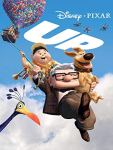
Be amazed at the process, and then check out one of the masterpieces Catmull’s presided over. Wall-E, Coco and Up are perfect for adults!

The Incredibles   –  Ratatouille  –  Cars  –  Shorts Finding Dory  –  Wall-E   

Inside Out –  Brave  –  Monsters, Inc  –  Toy Story  –  Coco  –  Up

Self-Help Books to Boost Positivity

Why wait for January’s New Year’s resolutions to be your best self? You can start any time during the calendar year. Small incremental changes work best, and this is where self-help books shine. Go at your own pace, ease in slowly, and you might find you don’t need a New Year’s resolution at all. This month’s Reader’s Depot focuses on self-help books to bring notes of gratitude and love into your daily life.

Almost Everything by Anne Lamott – Presents an inspirational guide to the role of hope in everyday life and explores essential truths about how to overcome burnout and suffering by deliberately choosing joy.


Outer Order, Inner Calm by Gretchen Rubin – Offers manageable steps for creating a more serene, orderly environment, which contributes to maintaining inner calm.


Let Love Have the Last Word by Common – Explores how love and mindfulness can guide people in living their lives and interacting with their communities, and calls upon readers to give and receive love in their lives.


Everything is F*cked by Mark Manson – A counterintuitive guide to hope looks at contemporary society’s relationships with religion, politics, money, entertainment, and the internet, and challenges people to be honest with themselves and connect with the world in ways they had not considered before.


Where the Light Enters by Jill Biden- The former second lady describes her marriage to Joe Biden and the role of politics in her life and teaching career, sharing intimate insights into the traditions, resilience, and love that have helped her family establish balance and endure tragedy.


Nanaville by Anna Quindlen – The author discusses her role as a grandmother and how she learned to support her grandson’s parents by stepping back and following their lead.


Brave, Not Perfect by Reshma Saujani – The founder of the Girls Who Code nonprofit shares insights into the toxic cultural standards affecting girls today, explaining how girls can transition from perfectionism to more courageous practices that understand the value of imperfection.


The Path Made Clear by Oprah Winfrey – Offers a guide for identifying one’s purpose and creating a framework for a life that is both successful and meaningful, sharing inspirational quotes by some of today’s most influential cultural figures.


Gmorning, Gnight! by Lin-Manual Miranda and Jonny Sun – The creator and star of “Hamilton” presents an illustrated book of affirmations to provide inspiration at the beginning and end of each day.


On Being Human by Jennifer Pastiloff – An inspirational memoir based on the popular workshop of the same name reveals how the author’s years of waitressing and hearing impairment taught her to recognize unexpected beauty, relinquish shame, and find love in the face of imperfection.

Happy Parents, Happy Kids

Perhaps one of the fastest ways to pick a fight with a stranger is to comment on their parenting style. Around the country, let alone around the world, each culture or region is convinced only their way is right. Yet, American education has been in decline for years, currently ranking 27th in the world.  On the world happiness index, the US only ranks 18th. How do we, as parents, raise happy, healthy, well-adjusted and productive children? Let’s take a look at a few approaches to child-rearing from beyond our shores…

Strict Helicopter

Parenting books number nearly as high as the number of parents, but several have made headlines. At one end is Battle Hymn of the Tiger Mother, by Amy Chua.  China, with more than a billion people vying for jobs, education, and housing, is perhaps the most cut-throat parenting system of all: children seen with potential are removed from homes as young as three, and raised by the state to become champion athletes, mathematicians, scientists. Parents are relentless in ensuring their child’s excellence, demanding study or practice eighteen or more hours a day in a method most Americans would label sheer abuse. Imagine the pressure on an entire class where being #2 is not an option. Chua has no qualms about pushing her daughters into being virtuosos and Ivy League scholars.

Don’t Bug Me, Kid

Bringing Up Bebe by Pamela Druckerman focuses on the ways the French raise their 

children. “The result of raising children French style, Druckerman writes, is “a fully functioning society of good little sleepers, gourmet eaters and reasonably relaxed parents.””  French parents have a me-first attitude – if the baby won’t sleep through the night by four months, let him cry. They don’t like to breastfeed, because it interferes with intimacy. They don’t speak to their infants in baby talk, treat patience and waiting as the highest virtue after social manners, and feed their infants table food, resulting in children who like to eat normal food. Are French children perfect? Bien sȗr, non, but they seem to have far fewer struggles than Americans.

One Big Happy

The Danish Way of Parenting, by Jessica Joelle Alexander and Iben Dissing Sandahl may just have a little more power behind it. The Danes often score #1 on the list of Happiest Country in the World. They have high taxes, but they get free education, healthcare, paid maternity leave, and more – those things that are crushing us. To discuss Denmark (and many of the Scandinavian countries), one has to first understand the concept of Hygge, which rules everything the Danish do: Hygge (pronounced hue-guh or hoo-guh) is that warm, huggy feeling of comfort you get when you’re doing something with your family: sitting by the fire drinking cocoa, playing a board game, or maybe decorating cookies together, in one of those commercial-like scenarios where everyone is happy and the kids aren’t fighting and the dog isn’t chewing the game pieces – except, in Denmark, this is actually reality. It’s the land where Norman Rockwell must have taken notes.

The Danes rear their children with this mindset, which transforms them into happy adults. In (very) short:

  1. Don’t overpraise. Find something specific and praise that one thing instead. “What a nice, straight line!” Encourage growth; don’t let your child think s/he’s perfect.
  2. Let your child play. Play. With sticks, rocks, toys, not electronics. Play builds thinking skills, motor skills, social skills, and spatial relations a child needs for education.
  3. Promote togetherness. Family game nights, dinner, movies, puzzles, walks or sports or just playing in the park. Do it together, or with friends. This promotes strong social ties and models appropriate behavior. 40% of American families eat dinner together less than three times a week – 10% never do.
  4. Reframe negative thinking. Dwell on good things, not bad. If your child says they hate school, remind them of the things they do like.
  5. Practice empathy and compassion. Talk about emotions, and help your child learn to recognize them in themselves and others. Compassion for people and animals makes for a caring society.
  6. Let children figure things out for themselves. Don’t hover. Let preschoolers settle their own squabbles (within reason. If Agatha is beating Bjorn with a shovel, you might want to step in). 

There are no absolutes to child rearing. Some children are just darling; others seem to come out of the womb looking for trouble. But in a time when Americans are fracturing at the seams from stress, when schools are failing, children are parenting themselves, and society itself seems to be tearing apart, perhaps it’s time to look elsewhere for advice. Considering the Danes were terrorized by two World Wars and are still the happiest people on Earth, maybe we should listen.

Also try: