Books and Shows to Confirm Your Growing Technological Anxiety

“Have I told you all about the time that I got sucked into a hole through a handheld device?” asks the narrator of a song from the Arctic Monkeys’ 2018 album Tranquility Base Hotel and Casino. Technological ambivalence (or perhaps anxiety?) is a recurring theme. I can relate. I spend too many nights sitting down to unwind for just a few minutes, and somehow two hours pass by, during which I’ve clicked link after link on my phone while the dirty dishes sit neglected in the sink and my toddler’s toys are still strewn across every floor. If you’ve ever lost an evening of your life to Wikipedia or Youtube, or ever looked up from staring at a screen to wonder if you still have long-distance vision, you can relate, too. 

While I can’t give you advice on how to stop the vicious cycle of passive consumption – every time I delete a time-sucking app, I seem to replace it with another one – what I can do is suggest some slightly more cerebral time-killers to add to your queues. 

To Read/Listen to:

The Shallows: What the Internet Is Doing to Our Brains by Nicholas Carr 

As we enjoy the Internet’s bounties, are we sacrificing our ability to read and think deeply? The printed book served to focus our attention, promoting deep and creative thought. In contrast, the Internet encourages rapid, distracted sampling of small bits of information. As we become ever more adept at scanning and skimming, are we losing our capacity for concentration, contemplation, and reflection? 

The Anxious Generation: How the Great Rewiring of Childhood Is Causing an Epidemic of Mental Illness by Jonathan Haidt 

Social psychologist Jonathan Haidt lays out the facts about the epidemic of teen mental illness, then investigates the nature of childhood, including why children need play and independent exploration to mature into competent, thriving adults. Haidt shows how the “play-based childhood” began to decline in the 1980s, and how it was finally wiped out by the arrival of the “phone-based childhood” in the early 2010s. He presents more than a dozen mechanisms by which this “great rewiring of childhood” has interfered with children’s social and neurological development. Most important, he describes steps that parents, teachers, schools, tech companies, and governments can take to end the epidemic of mental illness and restore a more humane childhood. 

Fahrenheit 451 by Ray Bradbury

Many folks would point to Aldous Huxley’s Brave New World as fitting in best with this post’s theme, but those screen-covered parlor walls in front of which Mildred parks herself in Bradbury’s book-burning dystopia come to my mind more often than the Shakespeare-quoting John. Plus, Bradbury’s foretold degradation of the human attention span has supposedly come true. 

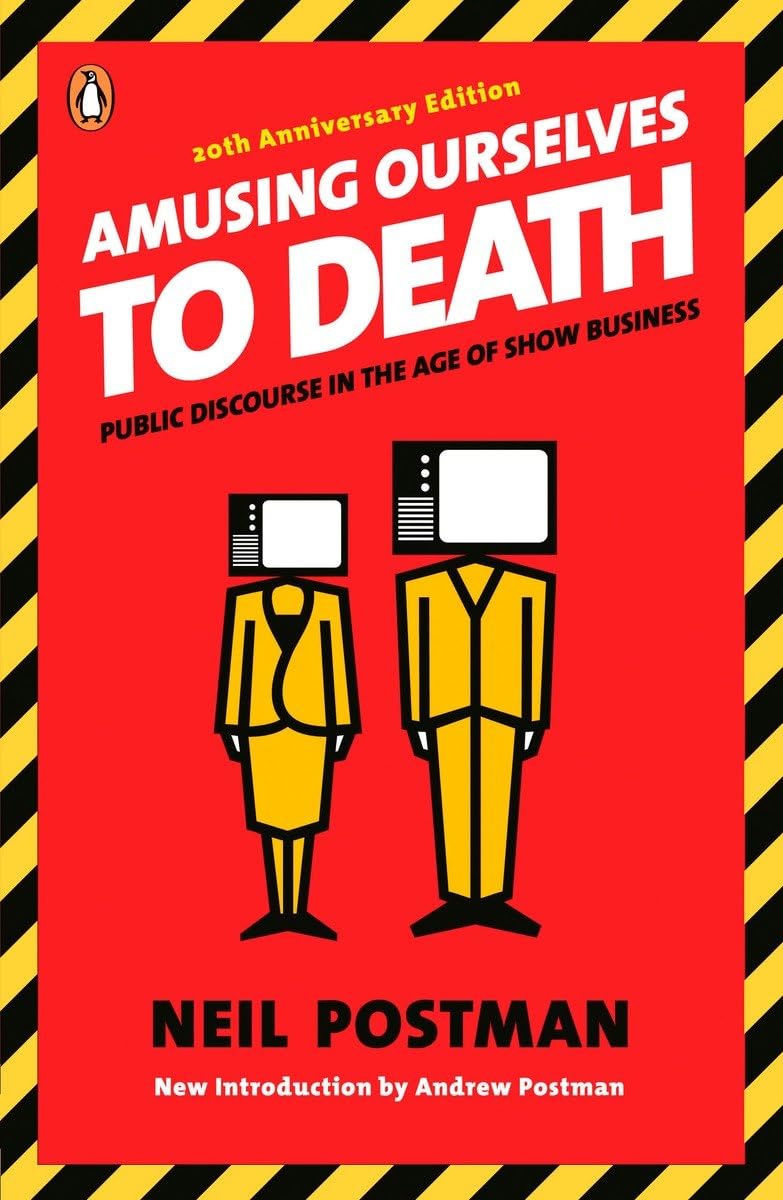
Amusing Ourselves to Death: Public Discourse in the Age of Show Business by Neil Postman 

It’s hard to believe this book is almost 40 years old, but the thesis is just as relevant now as it was back when Family Ties and 60 Minutes were among the top television shows. Postman posits that the visual medium of television has led to the decay of rational discourse by turning information into entertainment. On paper (or screen) it might sound like Postman is a technophobic curmudgeon, but one need only think back to how often misinformation under the guise of “news” has spread like wildfire via social media over the last ten years to see his point. 
Stolen Focus: Why You Can’t Pay Attention – And How to Think Deeply Again by Johann Hari 

Like so many of us, Johann Hari was finding that constantly switching from device to device and tab to tab was a diminishing and depressing way to live. So he went on an epic journey across the world to interview the leading experts on human attention – and he discovered that everything we think we know about this crisis is wrong. He introduces readers to Silicon Valley dissidents who learned to hack human attention, and veterinarians who diagnose dogs with ADHD. Crucially, Hari learned how we can reclaim our focus, if we are determined to fight for it. 

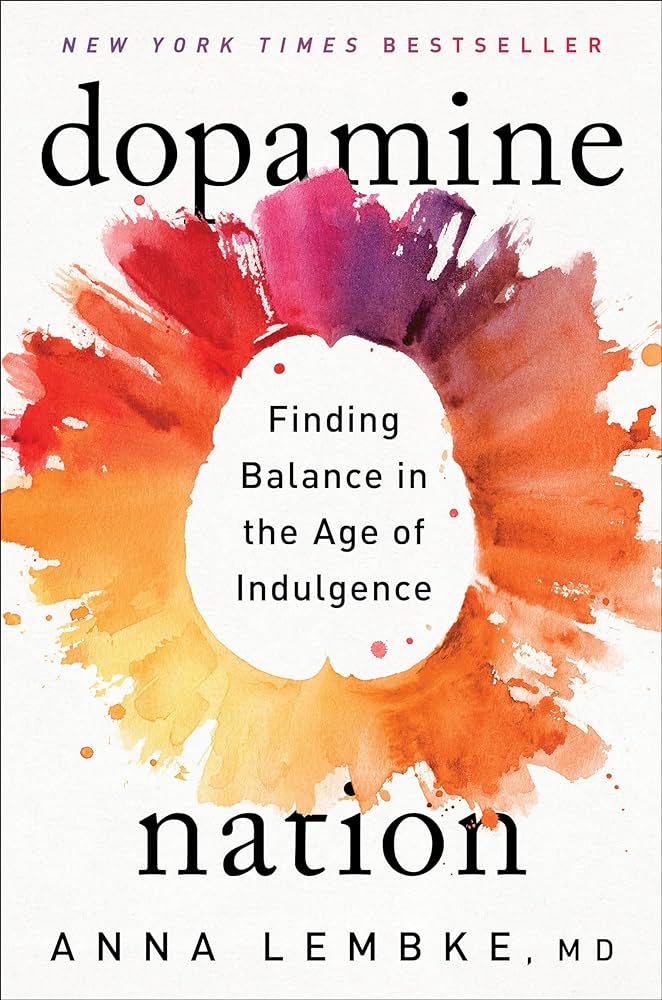
Dopamine Nation: Finding Balance in the Age of Indulgence by Anna Lembke 

This book is about pleasure. It’s also about pain. Most important, it’s about how to find the delicate balance between the two, and why now more than ever finding balance is essential. We’re living in a time of unprecedented access to high-reward, high-dopamine stimuli, and we’ve all become vulnerable to compulsive overconsumption. Dr. Anna Lembke, psychiatrist and author, explores the exciting new scientific discoveries that explain why the relentless pursuit of pleasure leads to pain . . . and what to do about it. 
To Watch:
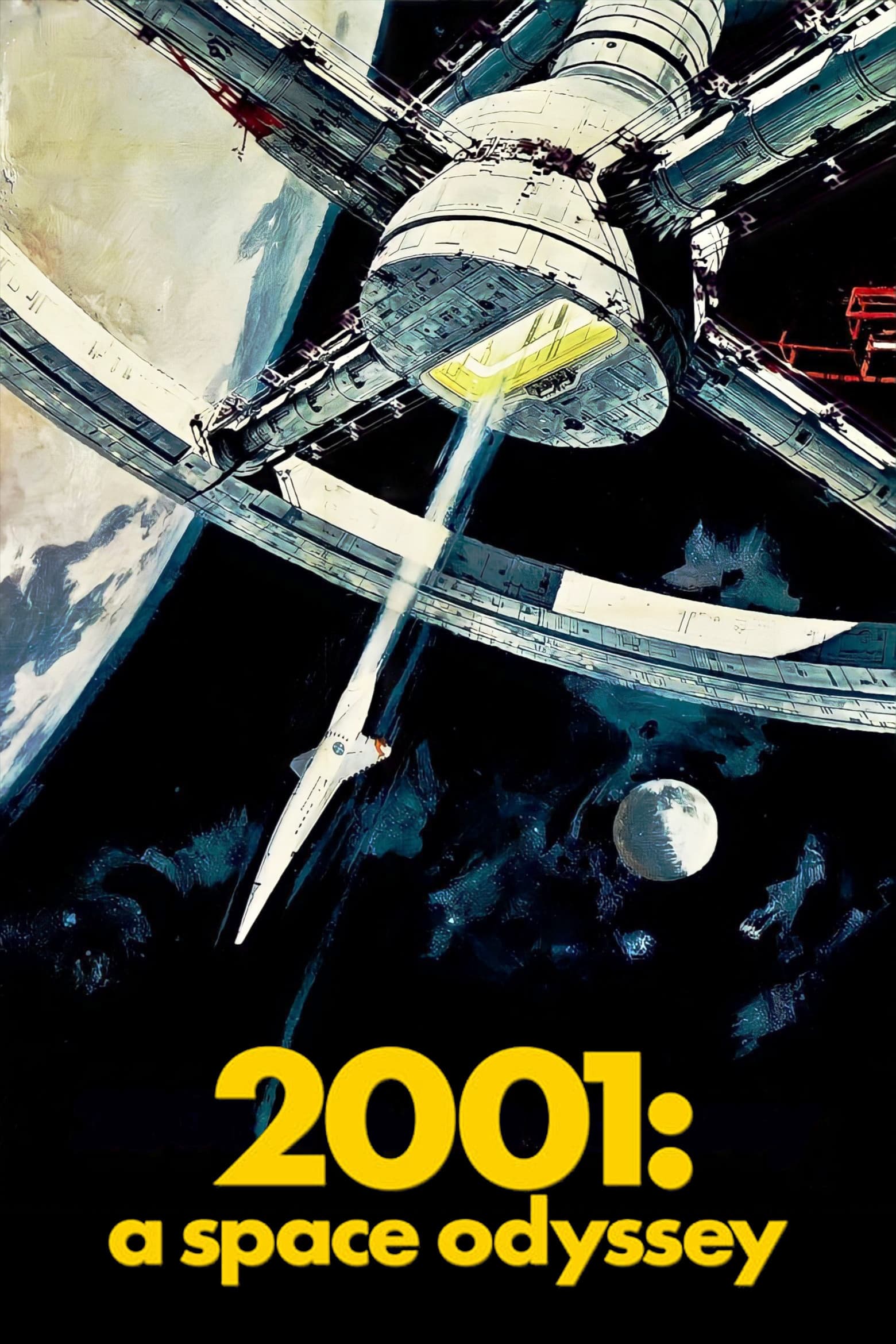
2001: A Space Odyssey 

Stanley Kubrick’s classic film, and its sentient computer that turns murderous, has been so influential that even AI voice assistants will often respond back with a knowing reply if you quote the film at them. This is a film that tells its story mostly through the visual medium with little dialogue, so you’ll have to put aside from time to watch this one without compulsively scrolling on your phone. 

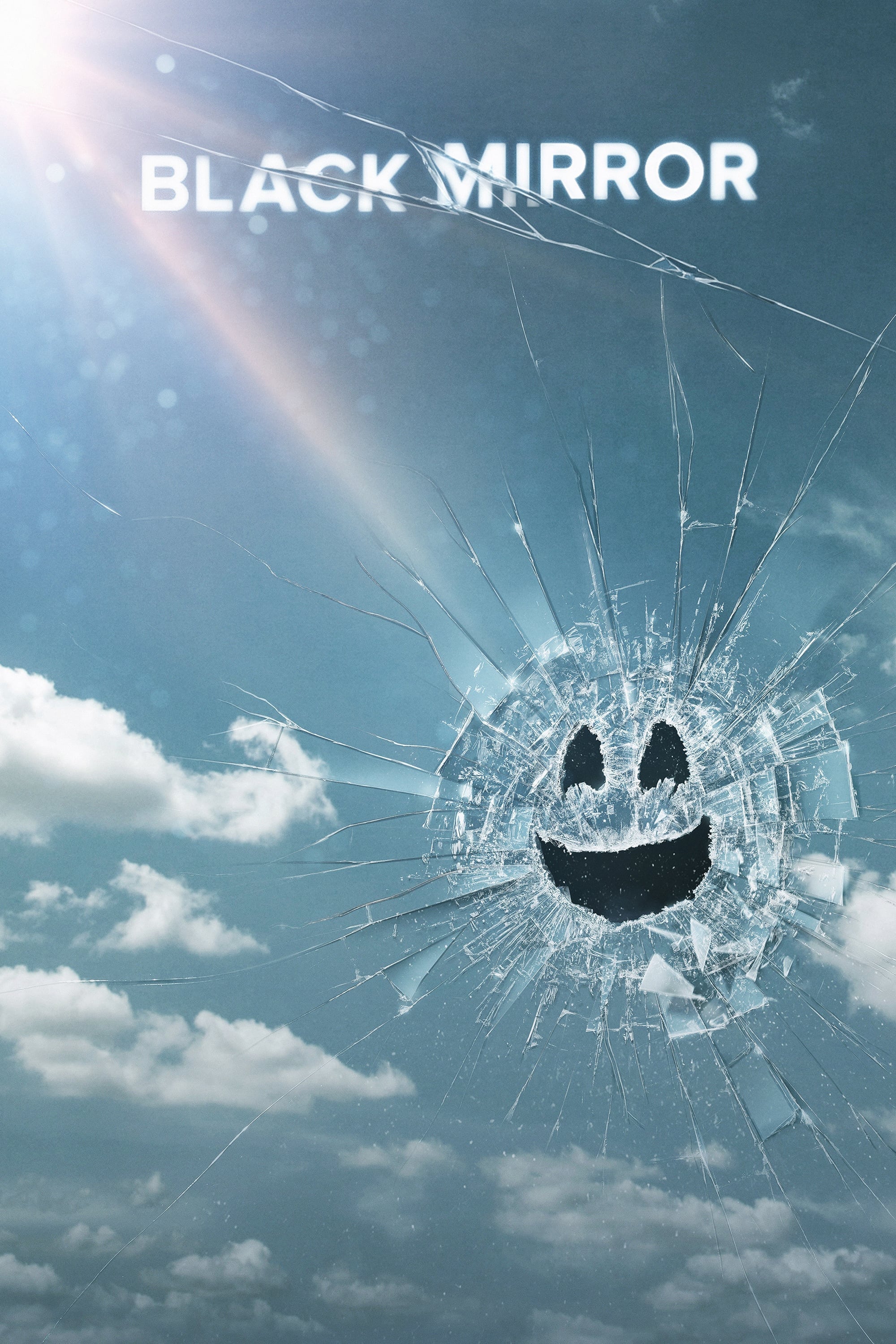
Black Mirror (available on Netflix) 

Twilight Zone for the information age. This Channel 4 / Netflix drama is composed of standalone episodes where technology complicates, or more likely completely destroy, the lives of the characters. In one story they can store, replay, and delete memories via an implanted device in their skin. In another, social interactions are given ratings, and they affect one’s socioeconomic status. Every once in a while you’ll have a happy ending, but you’re usually buckling in for a dystopian take on the computer-based tools we already use. Watch it via Netflix or purchase episodes through Amazon Prime. 
The Social Dilemma (available on Netflix) 

This docu-drama explores the dangerous human impact of social networking, with tech experts sounding the alarm on their own creations. It’s no mistake that Google’s own (former) design ethicist is a key narrator in this Emmy-winning documentary. Watch it via Netflix. 

Exploring the Rich History of Cheshire

Cheshire may be a small town, but it has an interesting and well documented history. Whether you have lived here all your life or just moved to Cheshire, you might have fun exploring the library’s local history collection.

You may be aware that the Farmington Canal ran through Cheshire and the rail trail goes right by Lock 12 park. If you have ever wanted to know more about the history of the Farmington Canal, we have the book: Reflections on the Canal in Cheshire, composed by Raimon L. Beard and published by the Cheshire Historical Society in June of 1976. This 81-page booklet gives a complete account of the inspiration, construction and usage of the Farmington Canal during a time when actual boats moved goods and people through the town of Cheshire. There are illustrations and some fun stories. It’s well worth the read and probably something to read while you’re sitting on one of the benches on the linear park.


If you’re curious about the earliest history of Cheshire, History of Cheshire Connecticut from 1694-1840, by Joseph Perkins Beach is a good one to read. It takes you from the arrival of the first ships in New Haven Harbor until 1840. The first half of the book is a historical narrative and the second half are records from various churches, tombstones, and the Town Hall, listing individuals who were born, baptized, married, and died in Cheshire.  The Cheshire Daughters of the American Revolution were responsible for getting this book finished and published. This is a good book for those who are looking for early history and it is also available for free online.

One book that I always love to read and reread is Landmarks of Old Cheshire, published by the Cheshire bicentennial committee in 1976. Landmarks is the go-to book for Cheshire history. It is logically laid out by geographical area and pulls from several historical accounts. It covers information and stories from the colonial area to the mid-20th century. Kathleen Gagnon did an incredible job providing about a hundred illustrations for this book. Even if you don’t read the book, just look at the pictures!

Glaciers to Greenhouses, the Changing Landscape of Cheshire Connecticut, from Mile-High Ice to Surburban Backyards is a recent book by local author Jeanne R. Stewart, our town historian from 2012-2019. This one takes quite a different spin on the history of the area. It begins with the ice age and the history of the Native Americans in our area, the Quinnipiac. The book includes many illustrations and is so wonderfully written that it is hard to put down.

The above are a few titles to get you started on your path to learn about Cheshire’s past. There are plenty of other very interesting books on Cheshire’s history that are available for checkout from the library. Come see us at the reference desk or give us a call at (203) 272-2245 ext. 33007 to learn more!

Holler Rat: Kentucky Meets Connecticut in Anya Liftig’s Memoir

Meet the author! Anya Liftig will come to the library on Thursday, August 1 at 6:30 pm for a conversation about her memoir. Cheshire residents can borrow the audiobook with Libby, and physical copies will be available for sale at the event. Reserve your spot for August 1st!

Anya Liftig grew up in Westport and graduated from Yale. She was an artist living in Brooklyn before it was cool. You wouldn’t expect her memoir to begin with a relative lying dead in a shack in rural Kentucky, cleaved in half by a piece of construction equipment. But as I learned from my recent reading (audiobook listening, really) of her memoir Holler Rat, Liftig defies expectations.

Liftig’s mother hails from that ramshackle home in Kentucky, and her father is from an upper-middle-class Jewish family in Connecticut. When school ends each year in Westport, the family drives down to the holler to spend summers with Mamaw, the family matriarch. The book initially caught my interest because it straddles the vastly different worlds of rural poverty and New England affluence. I’ve got my own history between those worlds, so I wondered how much of this book would resonate with me personally. Liftig’s narrative was so engrossing that from the first paragraph, I completely forgot about my search for parallels and just settled in to enjoy the ride.

She details medical traumas, cringeworthy adolescent romances, and her family’s quirks (her father plays the bagpipes and her grandmother won’t sell the old Studebaker that’s decaying in the middle of a potato field). Also, there was that time she made out with a dead fish in front of an audience and then put it in a blender and drank it. If it sounds both horrifying and hilarious, that’s a pretty good way to describe the memoir. Liftig moves from story to story with a masterful sense of pace, and her brilliant placement of her performance art pieces within the narrative helped me interpret and appreciate this art genre, which I knew only from parodies. The lead-up to the last chapter is heavy, and you don’t know how it’ll end until you reach the very last word. It’s the best memoir I’ve read recently, and I’m really looking forward to having a conversation with her at the library program on August 1!

It’s worth mentioning a book by another Yale alum and descendant of poor Kentuckians: Hillbilly Elegy, the 2016 memoir by J.D. Vance. This Ohio senator was announced as Donald Trump’s pick for VP candidate only a few days ago. Hillbilly Elegy was a bestseller upon release, but it was criticized for painting broad generalizations and reinforcing negative stereotypes about the rural poor. Now in 2024, it’s not hard to see Elegy as a calculated move from an aspiring politician. (It’s standard political playbook – Barack Obama made a similar move in 1995 when he released his memoir Dreams from My Father right before he ran for senate in Illinois.) Vance’s book is great if you want to better understand his politics, but if you’re looking for a more sympathetic and arguably more accurate portrayal of Appalachia, Holler Rat’s tight personal narrative from a longtime artist is a better pick.

The Delights of Pop Culture

It’s an awesome time to be a fan of pop culture. You can listen to podcasters going episode-by-episode through the shows you binge-watched on DVD in college. You can read delightfully bizarre theories about the characters in your preschooler’s favorite TV show. You can gather with other fans at venues like ConnectiCon. And as the main orderer of nonfiction books, I know this is an excellent time to read about pop culture, too. Here are some new and recent books to both entertain you and deepen your appreciation for your show / movie / franchise du jour. 

Did Arya, Maximus, or Chandler have the biggest surge in popularity as a baby name? How many parents start off dead in Disney movies? Is Ash Ketchum a better GM or coach? Find the answers in this book, which is a fun mix of visualized data and writing which explores how mere “entertainment” affects politics, the economy, and even shark populations. Pulitzer Prize-winning author Hickley used to be the Chief Culture Writer at FiveThirtyEight, and it shows in his love of statistics. 

The Blues Brothers: An Epic Friendship, the Rise of Improv, and the Making of an American Film Classic by Daniel DeVisé (2024) 

The saga behind The Blues Brothers is epic, encompassing the colorful childhoods of Belushi and Aykroyd, the comedic revolution sparked by Harvard’s Lampoon and Chicago’s Second City, the early years of Saturday Night Live where the Blues Brothers were born, and the indelible behind-the-scenes narrative of how the film was made. Based on original research and interviews of principals from director John Landis and producer Bob Weiss to SNL creator Lorne Michaels and Aykroyd himself, The Blues Brothers vividly portrays the creative geniuses behind modern comedy. 

On Locations: Lessons Learned from My Life On Set with The Sopranos and in the Film Industry by Mark Kamine (2024) 

Married and with a child, the author takes unpaid gigs to get a foot in the door, and eventually ends up working on all seasons of The Sopranos. The show’s setting and its creator’s insistence on accuracy placed the native New Jersey author in the right place at the right time to become part of television history, and to witness the effects of sudden fame and acclaim on the show’s principal players. Includes many stories about guest stars, as well as the cast, including new tales of James Gandolfini. 

Opposable Thumbs: How Siskel & Ebert Changed Movies Forever by Matt Singer (2023) 

Award-winning editor and film critic Matt Singer eavesdrops on the iconic balcony set of Gene Siskel and Roger Ebert, detailing their rise from making a few hundred dollars a week on local Chicago PBS to securing multimillion-dollar contracts for a syndicated series. Their partnership was cut short when Gene Siskel passed away in February of 1999, but their influence on in the way we talk about (and think about) movies continues to this day. 

I Like to Watch: Arguing My Way Through the TV Revolution by Emily Nussbaum (2019) 

In this collection, New Yorker columnist and Pulitzer Prize winner Emily Nussbaum writes about her passion for television beginning with Buffy–as she writes, a show that was so much more than its critical assessment–the evolution of female protagonists over the last decade, the complex role of sexual violence on TV, and what to do about art when the artist is revealed to be a monster. And, she also explores the links between the television antihero and the rise of Trump. The book is an argument, not a collection of reviews. Through it all, Nussbaum recounts her fervent search, over fifteen years, for a new kind of criticism that resists the false hierarchy that places one kind of culture over another. It traces her own development as she has struggled to punch through stifling notions of ‘prestige television,’ searching for a wilder and freer and more varied idea of artistic ambition. 

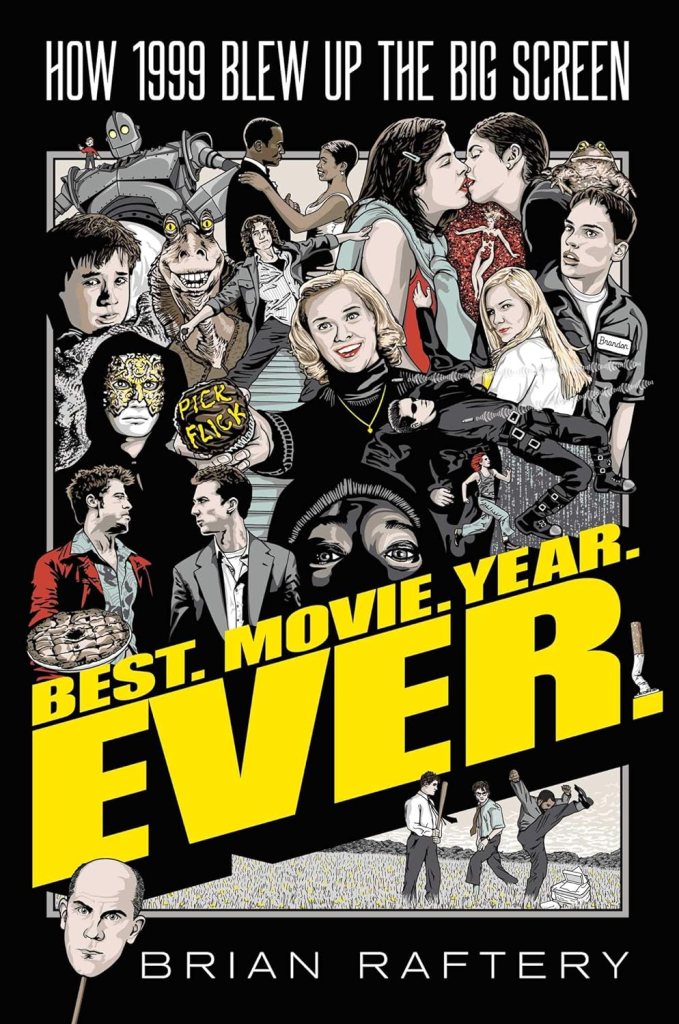
Best. Movie. Year. Ever.: How 1999 Blew Up the Big Screen by Brian Raftery (2019) 

In 1999, Hollywood as we know it exploded: Fight Club. The Matrix. Office Space. The Blair Witch Project. The Sixth Sense. Being John Malkovich. Star Wars: The Phantom Menace.  Those are just some of the landmark titles released in a dizzying movie year, one in which a group of daring filmmakers and performers pushed cinema to new limits—and took audiences along for the ride. Freed from the restraints of budget, technology (or even taste), they produced a slew of classics that took on every topic imaginable, from sex to violence to the end of the world. The result was a highly unruly, deeply influential set of films that would not only change filmmaking, but also give us our first glimpse of the coming twenty-first century. 

Surely You Can’t Be Serious: The True Story of Airplane! by David Zucker, Jim Abrahams, and Jerry Zucker (2023) (downloadable audiobook) 

An in-depth and hysterical look at the making of 1980s comedy classic Airplane! by the legendary writers and directors of the hit film. With anecdotes, behind the scenes trivia, and never-before-revealed factoids, these titans of comedy filmmaking unpack everything from how they persuaded Peter Graves to be in the movie after he thought the script was a piece of garbage, how Lorna Patterson auditioned for the stewardess role in the back seat of Jerry’s Volvo, and how Leslie Nielsen’s pranks got the entire crew into trouble, to who really wrote the jive talk. It also features testimonials and personal anecdotes from well-known faces in the film, television, and comedy sphere, proving how influential Airplane! has been from day one. 

Titles we don’t have but you can borrow from other libraries in our consortium: 

No Crying in Baseball: The Inside Story of A League of Their Own by Erin Carlson (2023) 

The Coen Brothers: This Book Really Ties the Films Together by Adam Nayman (2018) 

Movies (And Other Things): A Collection of Questions Asked, Answered, Illustrated by Shea Serrano, illustrated by Arturo Torres (2019) 

10 Recent Favorites From Our Staff

What was the best book you read in 2022? I recently asked staff members this question and have compiled their answers here. Interestingly, there were no duplications, everyone had a different favorite. Some books were published in 2022, some were many years older, some were fiction, some were nonfiction. Without further ado, here’s a selection of 10 recent favorites from our library staff.

Lessons in Chemistry by Bonnie Garmus. In the early 1960s, chemist and single mother Elizabeth Zott, the reluctant star of America’s most beloved cooking show due to her revolutionary skills in the kitchen, uses this opportunity to dare women to change the status quo.

Neopolitan series by Elena Ferrante. Beginning in the 1950s in a poor but vibrant neighborhood on the outskirts of Naples, Ferrante’s four-volume story spans almost sixty years, as its protagonists, Lila and Elena, become women, wives, mothers, and leaders, all the while maintaining a complex and at times conflictual friendship.

Boneshaker by Cherie Priest. Commissioned to build a machine that will promote gold-rush land-breaking efforts between Civil War-era Seattle and Alaska, inventor Leviticus Blue inadvertently triggers the release of a deadly gas that transforms people into the living dead, a situation that prompts his teenage son to restore the family reputation years later.

Summer Sons by Lee Mandelo. When his best friend dies of an apparent suicide, Andrew uncovers lies and secrets left behind by the person he trusted most, discovering a family history soaked in blood and death.

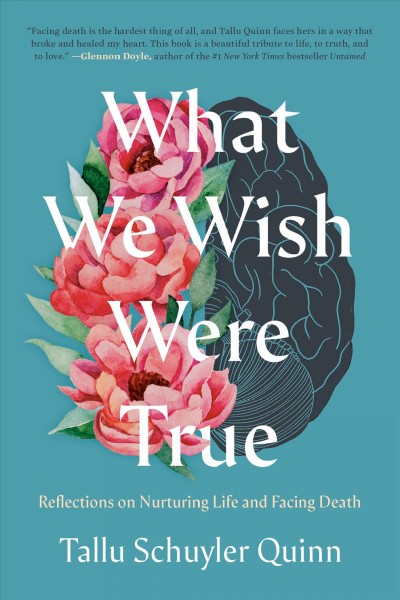
What We Wish Were True by Tallu Schuyler Quinn. A non-profit leader, humanitarian and minister, after being diagnosed with an aggressive form of terminal brain cancer, pens profound essays on what it means to live with a terminal diagnoses and still find meaning and how to discover beauty in life’s ordinary moments.

Foundryside by Robert Jackson Bennett. A thief in a city controlled by industrialized magic joins forces with a rare honest police officer to stop an ancient evil ritual that endangers thousands of lives.

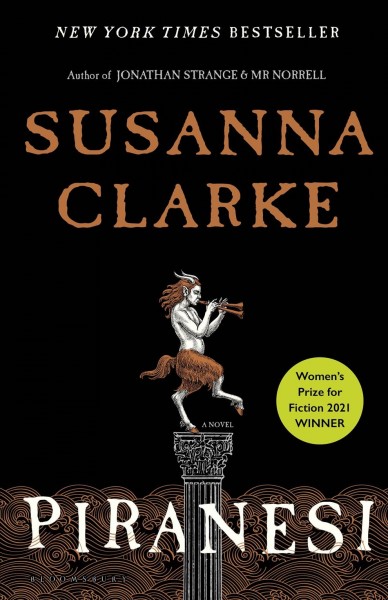
Piranesi by Susanna Clarke. Living in a labyrinthine house of endless corridors, flooded staircases and thousands of statues, Piranesi assists the dreamlike dwelling’s only other resident throughout a mysterious research project before evidence emerges of an astonishing alternate world

The Book Woman of Troublesome Creek by Kim Michele Richardson. During Kentucky’s Great Depression, Pack Horse Library Project member Cussy Mary Carter, a young outcast, delivers books to the hillfolk of Troublesome Creek, hoping to spread learning in these desperate times, but not everyone is keen on her or the Library Project.

Tomorrow and Tomorrow and Tomorrow by Gabrielle Zevin. A modern love story about two childhood friends, Sam, raised by an actress mother in LA’s Koreatown, and Sadie, from the wealthy Jewish enclave of Beverly Hills, who reunite as adults to create video games, finding an intimacy in digital worlds that eludes them in their real lives.

Finding the Mother Tree by Suzanne Simard. The world’s leading forest ecologist, in her first book, draws us into the intimate world of trees where she brilliantly illuminates the fascinating and vital truth — that trees are a complex, interdependent circle of life.